

How to Choose an AI Keynote Speaker for Your Next Corporate Event
About
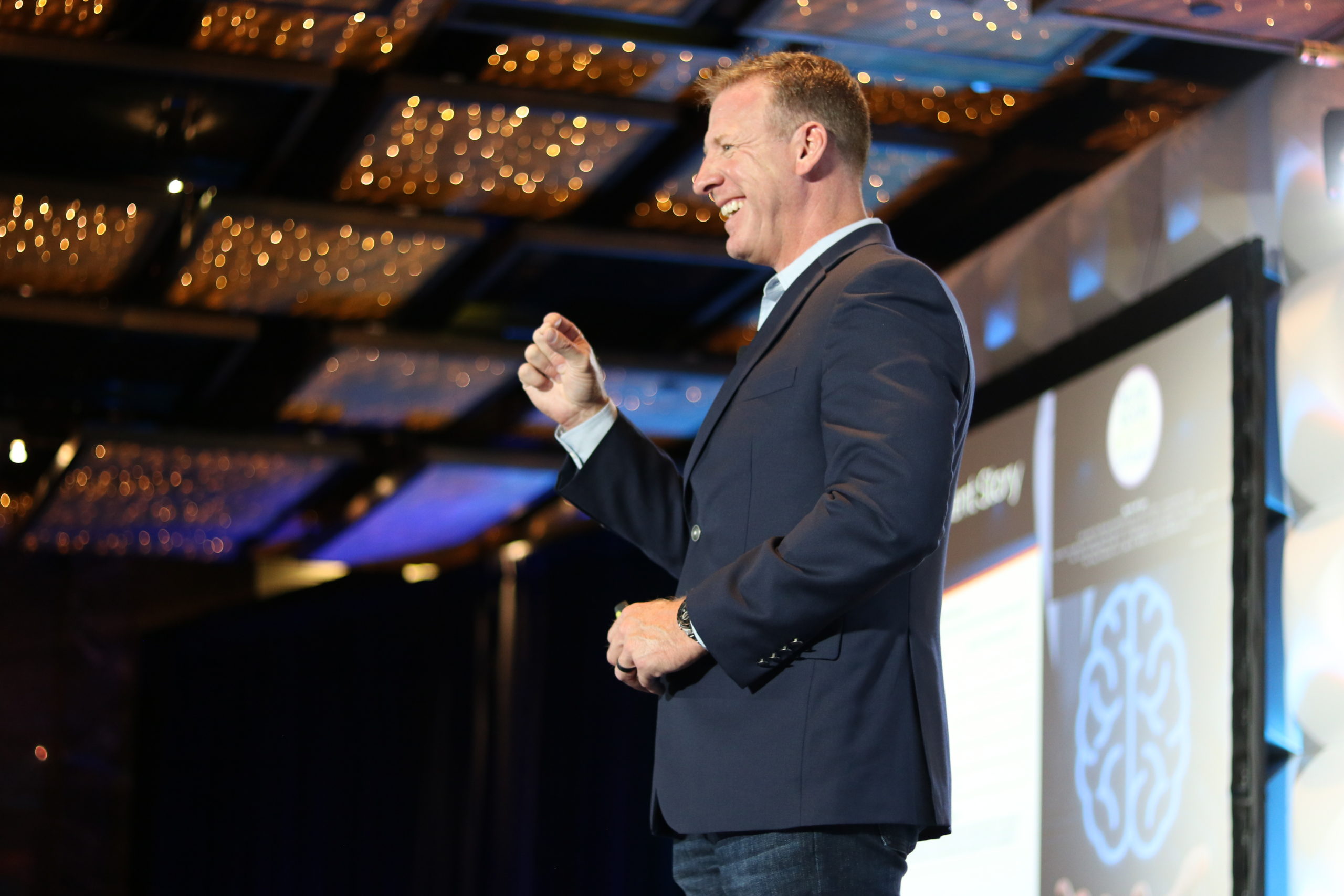
Jeff Bloomfield is a keynote speaker, Wall Street Journal bestselling author, and the founder of Braintrust. He has spent over 20 years helping Fortune 500 sales teams rewire how they communicate, using the neuroscience of trust, decision-making, and buyer behavior to drive results that training alone rarely produces.
Experience Highlights
- 500+ keynotes delivered across five speaking verticals
- Former biotech executive who led genetic cancer therapy launches
- Wall Street Journal bestselling author of NeuroSelling
- Clients include Johnson & Johnson, Salesforce, Deloitte, and Genentech
Areas of Expertise
Choosing the wrong AI keynote speaker does not just disappoint your audience. It sends them home more confused, more anxious, and less equipped to handle what is coming. The stakes of this decision have never been higher.
This guide walks you through exactly how to evaluate and select an AI keynote speaker who will send your audience home with clarity, confidence, and a framework they can actually use.
Step 1: Define What Your Audience Needs to Leave With
Before you look at a single speaker, answer this question: what is the one thing your audience needs to believe, understand, or feel differently about after this keynote?
That is not the same as "they should understand AI better." That is a topic. You need an outcome.
| Audience Need | Right Outcome | Wrong Framing |
|---|---|---|
| Fear about AI replacing jobs | Confidence that human skills matter more, not less | "AI is coming, adapt or die" |
| Leadership teams making AI investment decisions | A decision framework, not just awareness | A technology overview |
| Sales teams asking how AI changes their role | Clarity on the human edge that closes deals | A demo of AI tools |
| HR leaders planning workforce transformation | A roadmap for developing people through the shift | Generic future-of-work platitudes |
If you cannot articulate what your audience needs to believe differently after the keynote, you will not be able to evaluate whether any speaker will deliver it.
Step 2: Prioritize Business Relevance Over Technical Depth
Most corporate audiences are not AI engineers. They do not need a technical education on how large language models work. They need someone who can translate AI's implications into the language of their role: leadership, sales, culture, workforce planning.
Business-first framing means the speaker leads with the human and organizational implications of AI and uses the technology as context, not as the primary subject. The question "what is AI doing?" is far less useful for most audiences than "what should we do differently because of AI?"
Speakers who lead with technical depth are often excellent for technology conferences and product teams. For general corporate audiences, sales kickoffs, HR summits, and leadership events, that depth frequently becomes a barrier rather than a bridge.
My approach to this, developed over 500+ keynotes, is to anchor every AI presentation in a question your audience is already asking. Not a question about the technology. A question about themselves. What am I worth? What do I bring that a machine cannot? How do I lead through this? When you answer those questions, the room lights up.
Step 3: Demand Real Credentials, Not AI Enthusiasm
The keynote speaker market has been flooded with people who added "AI expert" to their bio after reading a few books and watching a few keynotes. Real credentials look different.
What real AI credibility looks like:
- Domain expertise: Former executives of AI companies, published researchers, or practitioners with documented track records of advising Fortune 500 organizations on AI strategy
- Client verification: Logos from enterprise companies, not just startup conferences
- Reproducible outcomes: Testimonials that describe specific behavioral or organizational change, not just generic praise for an entertaining talk
- Proprietary frameworks: Original thinking that audiences cannot get from a YouTube video or LinkedIn post
What to watch for: speakers who cite only consumer AI tools (ChatGPT prompting tips, productivity hacks) without translating to organizational strategy. That is a technology literacy talk, not a strategic keynote.
Step 4: Evaluate Customization Depth Before You Sign
A generic AI keynote is easy to spot. It has the same examples regardless of the industry. It references the same studies regardless of the audience's specific anxiety. It ends with the same call to action regardless of what the event is asking people to do next.
The best AI keynote speakers invest real time before the event. They want to know:
- What does your audience do every day?
- What are they most afraid AI will change in their work?
- What have you tried to communicate about AI that has not landed?
- What does success look like the morning after the keynote?
Ask every finalist speaker directly: "Walk me through your pre-event customization process." A strong answer includes specific questions they will ask, a discovery call with you or your team, and a clear process for weaving your organization's context into the presentation.
Pre-event engagement refers to the structured conversation a speaker has with the event organizer before the keynote is finalized. It is the difference between a talk that feels like it was written for your people and one that feels rented from a catalogue.
Step 5: Match the Speaker to Your Event's Emotional Outcome
Every great keynote has an emotional destination. Not just an intellectual one. Before you choose, decide where you want your audience to be emotionally at the end of the talk.
| Emotional Destination | Speaker Style | What to Look For |
|---|---|---|
| Inspired and energized | High-energy storyteller, personal experience | Proof of standing ovations, video clips showing crowd energy |
| Calm and confident | Data-grounded, methodical, reassuring | Testimonials from senior leaders who felt clarity afterward |
| Curious and forward-leaning | Visionary, trend-forward | Research credibility, original point of view |
| Ready to act on Monday | Practical framework provider | Evidence of behavior change, not just awareness |
Step 6: Assess the Speaker's Industry Fluency
AI applications look very different in pharmaceutical sales than in financial services or technology. A speaker who presents a generic AI narrative without acknowledging your industry's specific dynamics is working from a generalized script, not from genuine expertise.
Questions to ask:
- What industries have you spoken to in the past twelve months?
- Can you share one example of how you adjusted your AI keynote for a [your industry] audience?
- What are the specific AI-driven changes that most concern [your industry] leaders right now?
A speaker who cannot answer those questions specifically has not done the industry work. That may be fine for a general innovation theme, but it is a problem for an audience that will tune out the moment they sense the speaker does not understand what their world looks like.
Step 7: Consider Booking Lead Time and Event-Day Logistics
Top AI keynote speakers for 2026 are booking six to twelve months in advance. If your event is within 90 days, your options are limited.
Lead time recommendations:
- 12 months out: Full access to the speaker's calendar, maximum flexibility for customization, best pricing
- 6 months out: Good selection, reasonable customization window
- 90 days out: Limited availability, possible date conflicts, rushed onboarding
- 30 days out: Emergency booking only, expect a condensed preparation process
Step 8: Ask These Questions Before You Sign
Before finalizing any AI keynote booking, run through this checklist with the speaker or their team:
On content: What is the central premise of this keynote in one sentence? What will my audience believe differently after this talk that they do not believe now? How do you handle the anxiety in the room about job displacement?
On customization: What is your pre-event discovery process? Have you spoken to audiences in our industry before, and what did you adjust? Can I see a recent client reference who can speak to the customization process?
On proof: Can I see a recent video clip from a similar corporate event? What is the most common piece of feedback you receive from audiences after an AI keynote?
Frequently Asked Questions
How do I choose between a technical AI expert and a business-focused AI keynote speaker?
For most corporate audiences, choose business-focused. A technical expert is the right choice when your audience is building or deploying AI systems. For leadership conferences, HR summits, sales kickoffs, and general corporate events, you need someone who translates AI's implications for humans. Jeff Bloomfield's AI keynotes are built specifically for non-technical corporate audiences who need clarity on what AI means for their performance, leadership, and careers.
What is the most important criterion when selecting an AI keynote speaker?
Customization capability. A speaker who will genuinely adapt the content to your audience, your industry, and your event's specific goals will always outperform a more famous speaker delivering a generic talk. Ask directly about their pre-event discovery process and expect a real answer, not a vague reference to "research."
How much should I budget for an AI keynote speaker for a corporate event?
Budget $15,000 to $50,000 for an experienced AI keynote speaker with verified corporate credentials and a genuine customization process. Speakers at the higher end typically bring proprietary frameworks, deep industry fluency, and documented outcomes from comparable corporate events.
Can I book an AI keynote speaker for a virtual event?
Yes. Most experienced AI keynote speakers in 2026 offer virtual, in-person, and hybrid formats. For virtual events, ask specifically about how the speaker adapts their engagement approach for remote audiences, since the energy management required for a virtual keynote is meaningfully different from in-person delivery.
What should I ask to verify an AI keynote speaker's real credentials?
Ask for client references from Fortune 500 organizations, specific examples of how they have adjusted content for different industries, and video clips from recent corporate events at a similar scale. Also ask what proprietary frameworks or original research they bring that audiences cannot find elsewhere.
How far in advance should I book an AI keynote speaker?
Six to twelve months for top-tier speakers. The best AI keynote speakers for 2026 are already fielding bookings through the end of the year. The earlier you book, the more time you have for a thorough customization process and the better your access to the speaker's full calendar.
If you are in the process of evaluating AI keynote speakers for a 2026 corporate event, Jeff's team is ready to walk you through how the keynote would be built for your specific audience. Start the conversation at jeffbloomfield.com/contact-jeff-bloomfield.
Keynote Speaker
Jeff delivers keynotes at sales kickoffs, leadership summits, and corporate conferences, combining neuroscience, storytelling, and real-world selling experience into sessions that move people and stick long after the event ends.
