
How to Choose a Leadership Keynote Speaker for an Executive Summit
About
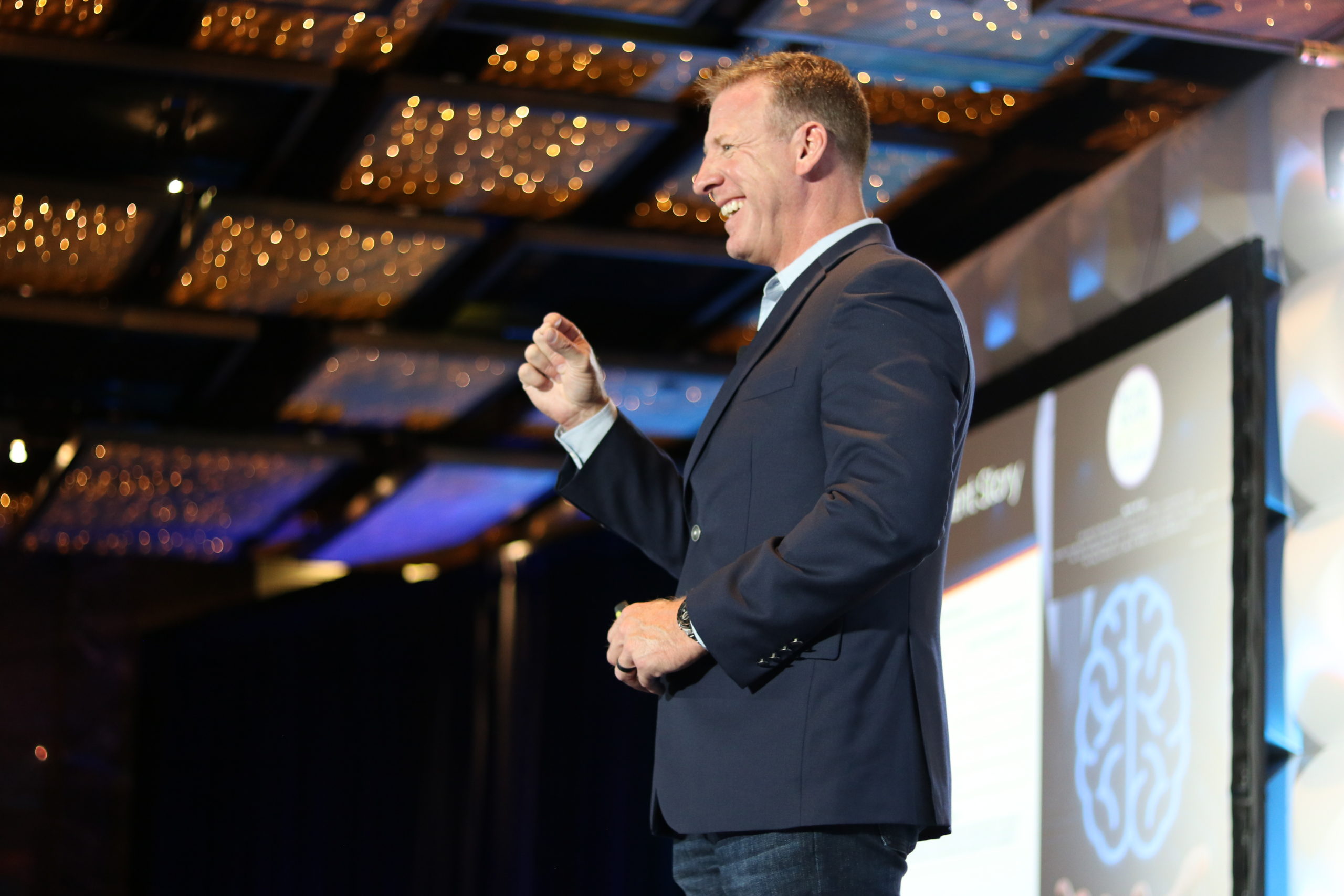
Jeff Bloomfield is a keynote speaker, Wall Street Journal bestselling author, and the founder of Braintrust. He has spent over 20 years helping Fortune 500 leadership teams rewire how they communicate using the neuroscience of trust, decision-making, and human behavior.
Experience Highlights
- 500+ keynotes delivered to executive and senior leadership teams
- Former biotech executive, Wall Street Journal bestselling author
- Clients include Deloitte, UnitedHealthcare, Nationwide, and John Deere
Areas of Expertise
The most expensive keynote speaker is not the one with the highest fee. It is the one who delivers an inspiring 60 minutes that your leadership team forgets by the following Tuesday.
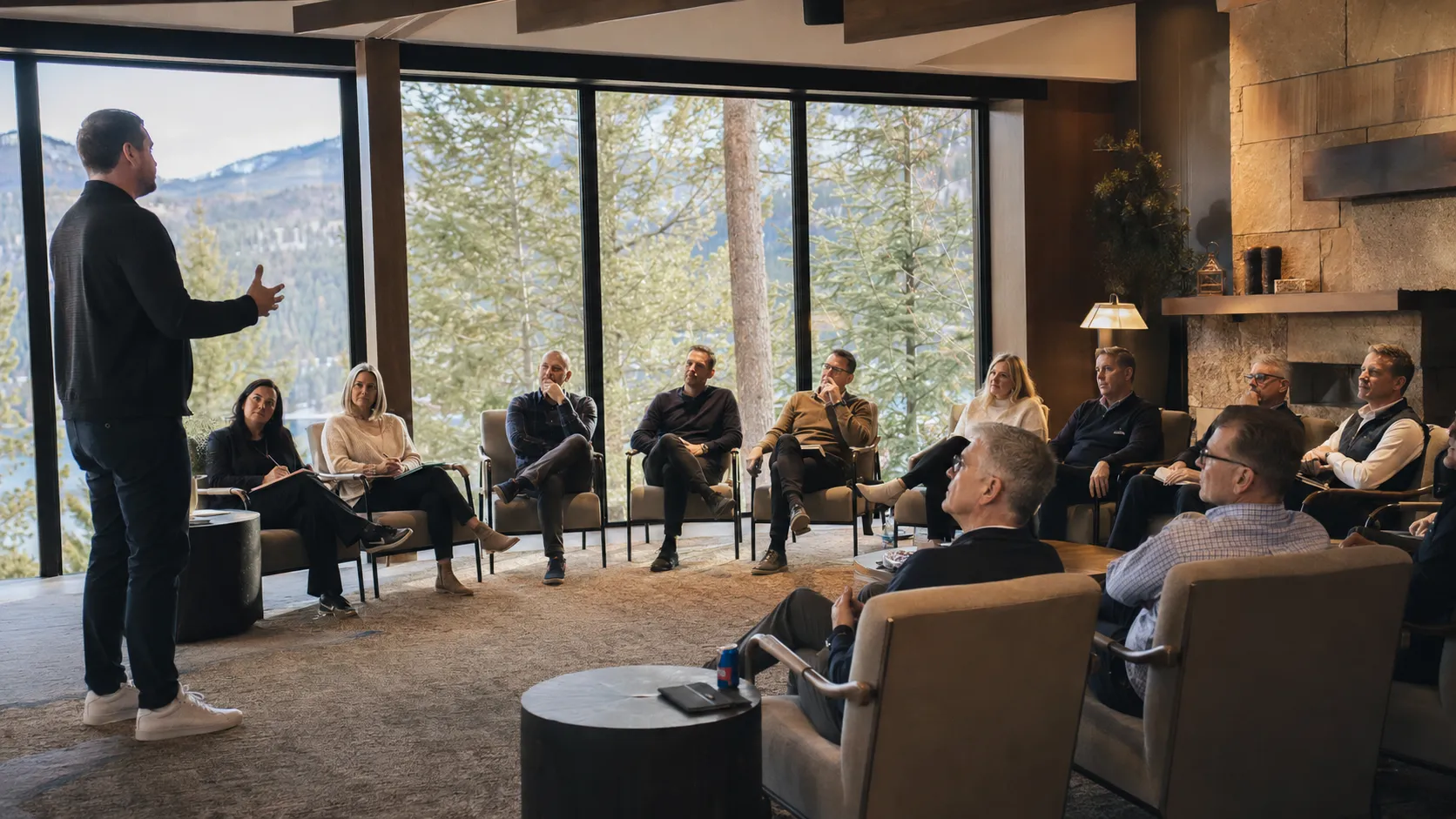
Executive summit keynotes are different from general conference keynotes in one critical way: the audience in the room has seen a lot of speakers. They have attended the events, read the books, and heard the frameworks. A talk that would energize a general corporate audience can fall flat with a room of experienced senior leaders who recognize recycled content when they hear it.
Step 1: Define Your Outcomes Before You Look at Speakers
The most common mistake in leadership keynote selection is starting with names. Start with outcomes.
Write a three-sentence success statement before you evaluate a single speaker: What should your leadership team believe differently after this keynote that they do not believe now? What conversation should this keynote start that your team has been avoiding or deferring? What should your leaders do differently in their first meeting back?
A specific brief transforms the selection process. "Challenge our senior team to rethink how they build trust with their teams through a period of change" narrows the field dramatically compared to "we need a leadership keynote."
| Summit Goal | Right Keynote Focus | Speaker Type |
|---|---|---|
| Align team on a change initiative | Trust and communication under uncertainty | Neuroscience-based, frameworks-first |
| Develop coaching culture | The science of behavioral change in teams | Methodology expert, evidence-grounded |
| Navigate AI and workforce disruption | Human leadership in the age of automation | Human-performance angle, not tech angle |
| Post-merger cultural integration | Trust, identity, and shared narrative | Storytelling-and-science hybrid |
| Reinforce performance standards | High-performance mindset and decision-making | Brain science of performance under pressure |
Step 2: Match the Speaker's Depth to Your Audience's Sophistication
Executive audiences are a different room. They attend multiple conferences per year. They have read the bestselling leadership books. They can spot a generalist with a polished presentation three minutes in.
What experienced senior leaders respond to:
- Original thinking that does not sound like a repackaged summary of someone else's framework
- Evidence that goes deeper than the one McKinsey study everyone cites
- Specificity about the actual challenges that people at their level face
- Honesty about the limits of frameworks and the irreducibility of human judgment
What experienced senior leaders tune out: generic inspiration, frameworks designed for middle managers, speakers who clearly do not understand what a C-suite decision environment actually looks like, and content that is emotionally engaging but intellectually thin.
Step 3: Look for Proprietary Frameworks, Not Just Stories
Stories are powerful. Stories built around original, proprietary frameworks that audiences can take back and use are more powerful.
A proprietary framework refers to an original conceptual model that a speaker has developed through their own research, practice, or observation, and that audiences cannot find described the same way in any book, article, or other speaker's presentation.
When evaluating leadership keynote speakers, ask directly: "What is the proprietary framework at the center of this keynote, and what can my leadership team do with it the morning after the event?" The quality of the answer tells you almost everything you need to know about the depth of the content.
Jeff Bloomfield's leadership keynotes are grounded in the neuroscience of how the brain actually processes trust, communication, and behavioral change. As Natalie Martini, Partner at Deloitte and Touche LLP, put it: "Jeff's passion shines through and he has the perfect balance of instruction and engagement with the audience. His message was very impactful to our team."
Step 4: Evaluate Customization Depth for Senior Audiences
A leadership keynote for a pharmaceutical company's senior leadership team should not be the same talk delivered to a technology company's VP cohort the week before. The best leadership keynote speakers for executive summits invest real time in understanding the room before they take the stage.
Questions to ask every finalist speaker about customization:
- "Walk me through what your pre-event preparation process looks like for an executive summit."
- "What is the most significant change you have made to a leadership keynote based on pre-event discovery?"
- "What information do you specifically need from us to make this talk work for this room?"
A speaker who cannot articulate what they need to know about your team in order to build a relevant presentation is working from a template, not from genuine customization.
Step 5: Assess Platform Command with Senior Audiences
Speaking to a room of experienced executives requires a specific kind of platform authority. Senior leaders respond to composure, not performance. They respond to intellectual confidence, not enthusiasm.
Specific things to look for in speaker video clips:
- Does the speaker make eye contact with individual audience members and hold it?
- Do they handle questions from senior leaders with intellectual rigor, not just warmth?
- Do they move from story to framework to application without losing the thread?
- Do they treat objections and pushback as legitimate, or deflect with a smile?
Step 6: Look for Post-Summit Reinforcement Options
The half-life of a great keynote without reinforcement is about 72 hours. The best leadership keynote speakers are set up for post-summit reinforcement through follow-on resources, virtual follow-up sessions, and leadership team application workshops.
Ask directly which post-event formats are available and what they cost. The answer gives you a signal about how the speaker thinks about their work: as a performance or as a genuine investment in your organization's development.
Step 7: Verify Credentials and Client Fit
For executive summits, the social proof that matters most is testimonials from leaders who are closest to the kind of leadership audience you are convening. Ask for two or three references from organizations at a comparable scale and industry, and ask specifically about repeat bookings. Repeat bookings are the most reliable indicator of real value delivered.
Frequently Asked Questions
What makes a leadership keynote speaker effective for senior executives?
The most effective leadership keynote speakers for senior executives combine intellectual depth with a proprietary framework that executives can apply immediately, platform authority that commands respect rather than just attention, and customization that demonstrates genuine understanding of the specific challenges that people at the leadership level actually face. Jeff Bloomfield's leadership keynotes are grounded in neuroscience-based frameworks specifically designed for executive audiences.
How far in advance should I book a leadership keynote speaker for an executive summit?
Book six to twelve months in advance for top-tier leadership keynote speakers. Executive summit keynotes often involve a more involved pre-event customization process than general conference keynotes, which requires adequate lead time for discovery conversations, content development, and review.
How much do leadership keynote speakers cost for executive summits?
Leadership keynote speaker fees for executive summits typically range from $15,000 to $60,000 or more for experienced speakers with proprietary frameworks and verified executive audience experience. The fee reflects the depth of customization, the speaker's track record with comparable leadership audiences, and the post-event support options available.
What is the most important criterion when choosing a leadership keynote speaker?
Fit for the specific room. The most important criterion is whether this speaker can deliver a presentation that your particular leadership team, with their specific level of sophistication and current organizational challenge, will find genuinely useful rather than merely engaging. That fit can only be evaluated by having a real conversation with the speaker about the room they will be walking into.
Can Jeff Bloomfield customize a leadership keynote for our specific organizational context?
Yes. Every keynote Jeff delivers includes a pre-event customization call, and 100% of his content is built around the specific audience in the room. His leadership keynotes draw on the neuroscience of trust, communication, and behavioral change, and the specific frameworks are adapted to the organizational challenges, industry context, and leadership development stage of each client.
What leadership topics are most in demand for executive summits in 2026?
The most requested leadership keynote topics for executive summits in 2026 include: leadership through uncertainty and ambiguity, building trust with high-performing teams, the human side of AI and workforce transformation, decision-making under pressure, executive communication and influence, and developing coaching cultures that drive sustainable performance change.
If you are planning an executive summit and want to explore what a leadership keynote built around the neuroscience of trust looks like for your specific audience, start the conversation at jeffbloomfield.com/contact-jeff-bloomfield.
Keynote Speaker
Jeff delivers keynotes at sales kickoffs, leadership summits, and corporate conferences, combining neuroscience, storytelling, and real-world selling experience into sessions that move people and stick long after the event ends.

One Comment