

How to Measure ROI from a Corporate Keynote Speaker
About
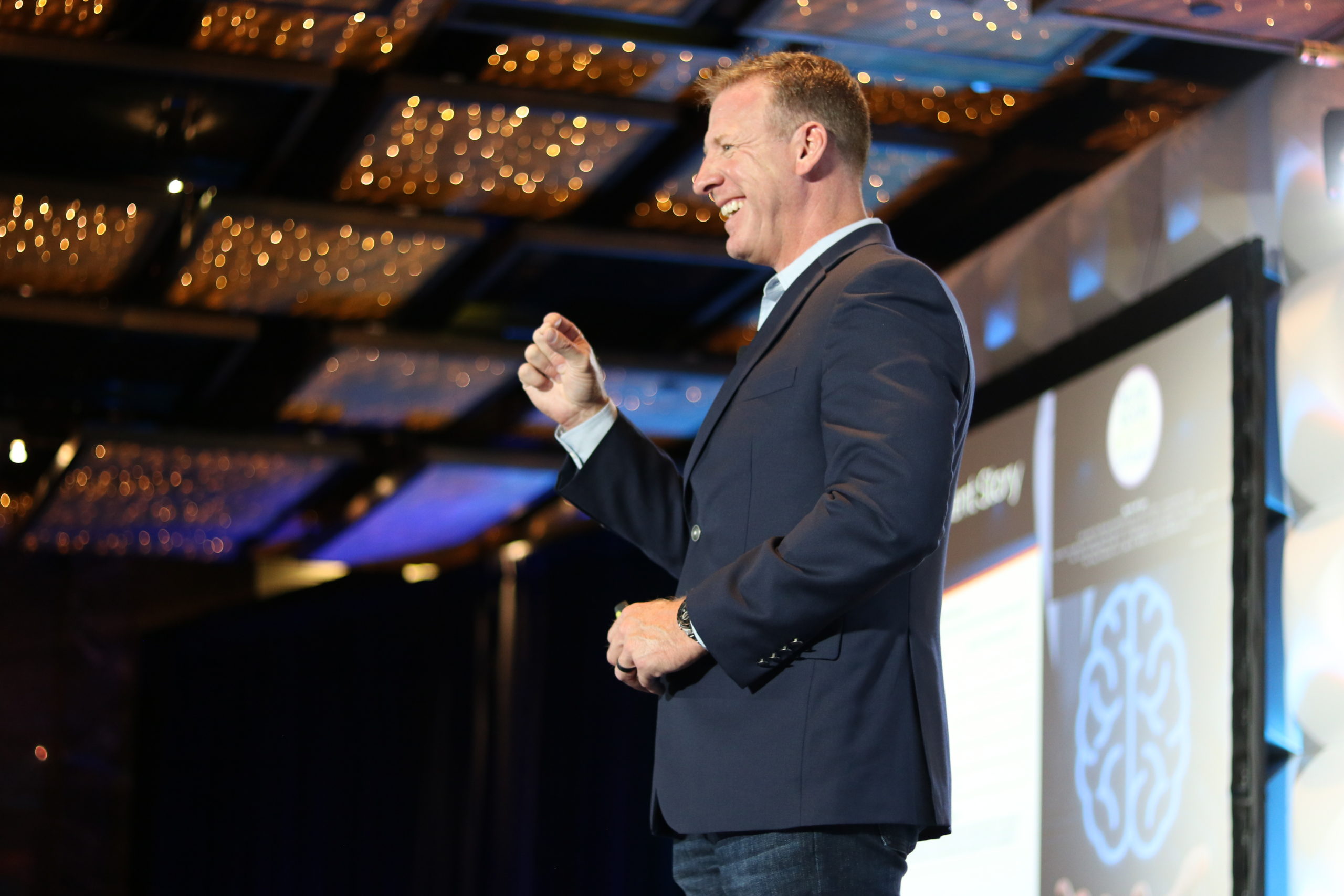
Jeff Bloomfield is a keynote speaker, Wall Street Journal bestselling author, and the founder of Braintrust. He has spent over 20 years helping Fortune 500 organizations apply the neuroscience of trust to how they communicate, lead, and sell.
Experience Highlights
- 500+ keynotes across five speaking verticals
- Former biotech executive, WSJ bestselling author
- Clients include J&J, Salesforce, Deloitte, UnitedHealthcare
Areas of Expertise
The return on investment of a corporate keynote speaker is among the most discussed and least measured line items in event budgets. Most event professionals have strong intuitions about whether a keynote "landed." Few have a systematic framework for quantifying whether it produced the return the investment promised.
This guide builds that framework.
What ROI Actually Means for a Keynote
Return on investment for a corporate keynote is not the same as return on investment for a marketing campaign. The outputs are different. A keynote investment returns value through behavioral change, cultural alignment, capability development, and strategic momentum. Quantifying those returns requires measurement at a different level than click-through rates and cost per lead.
The most useful framework for keynote ROI operates at three levels: immediate reaction, learning and retention, and behavioral change.
| ROI Level | What to Measure | When to Measure |
|---|---|---|
| Immediate reaction | Attendee satisfaction scores, specific content ratings | Within 24 hours of event |
| Learning and retention | Framework recall, key insight retention | 7 and 30 days post-event |
| Behavioral change | Specific behaviors addressed by keynote, manager coaching conversations, performance indicators | 30, 60, and 90 days post-event |
Level 1: Immediate Reaction Measurement
Immediate post-event surveys measure enthusiasm, not impact. They are useful for confirming that the speaker delivered professionally and that the content was well-received. They do not measure whether anything changed.
The most useful immediate measurement question: "What is one specific thing you plan to do differently as a result of this keynote?" This forces behavioral specificity rather than emotional rating and provides a baseline for the 30-day follow-up.
Level 2: Learning and Retention Measurement
At 7 days post-event: send a short survey to a sample of attendees. Ask them to describe the keynote's core framework in one sentence and identify one specific application they have already attempted. The quality and accuracy of these responses tells you whether the content was genuinely learned or just experienced.
At 30 days: follow up with the same sample. The decay rate of framework recall between day 7 and day 30 is a direct measure of the keynote's stickiness, which is primarily a function of whether the speaker provided a simple, memorable framework rather than a collection of interesting ideas.
Level 3: Behavioral Change Measurement
This is where real ROI lives. Behavioral change measurement requires pre-defined target behaviors that the keynote was expected to influence, a measurement vehicle (manager observation, call review, self-report), and a consistent measurement cadence (30, 60, 90 days).
For a sales audience: are reps opening buyer conversations differently? Is the rate of "deals going dark after good meetings" improving? Are managers using the keynote's language in coaching?
For a leadership audience: are leaders communicating about change with more specificity and human context? Are they naming the trust framework in their team conversations? Is meeting feedback reflecting different communication patterns?
How Keynote ROI Informs Speaker Selection
The ROI framework above makes clear that the most important speaker selection criterion is not who generates the most enthusiasm on the day of the event. It is who leaves the audience with a specific, memorable, behaviorally-applicable framework that managers can reinforce in the weeks following the event.
Jeff Bloomfield's corporate keynotes are built specifically for Level 3 ROI. The neuroscience-grounded frameworks are simple enough to be recalled and named 30 days later, specific enough to be coached in one-on-ones, and directly connected to the behavioral patterns that drive the business outcomes clients actually care about.
Frequently Asked Questions
How do you measure the ROI of a corporate keynote speaker?
Measure at three levels: immediate reaction (within 24 hours), learning and retention (7 and 30 days), and behavioral change (30, 60, and 90 days). The most meaningful measurement is behavioral: are specific behaviors that the keynote addressed showing up differently in how people work, communicate, and perform?
Are attendee satisfaction scores a reliable measure of keynote ROI?
Satisfaction scores measure enthusiasm, not impact. A keynote can receive excellent satisfaction scores and produce no behavioral change. The more meaningful measurement is whether attendees can describe the keynote framework specifically 30 days later and whether managers are using keynote language in their coaching conversations.
What makes a keynote framework "sticky" enough to measure 30 days later?
Three characteristics: simplicity (the framework can be described in one sentence), memorability (it has a name or a structure that anchors it in memory), and specificity (it connects directly to the behaviors and situations the audience encounters in their actual work). Generic inspiration does not meet these criteria. Science-grounded, application-specific frameworks do.
If your next corporate keynote investment should produce measurable behavioral ROI, explore what Jeff brings to that equation at jeffbloomfield.com/contact-jeff-bloomfield.
Keynote Speaker
Jeff delivers keynotes at sales kickoffs, leadership summits, and corporate conferences, combining neuroscience, storytelling, and real-world experience into sessions that move people and stick long after the event ends.
