
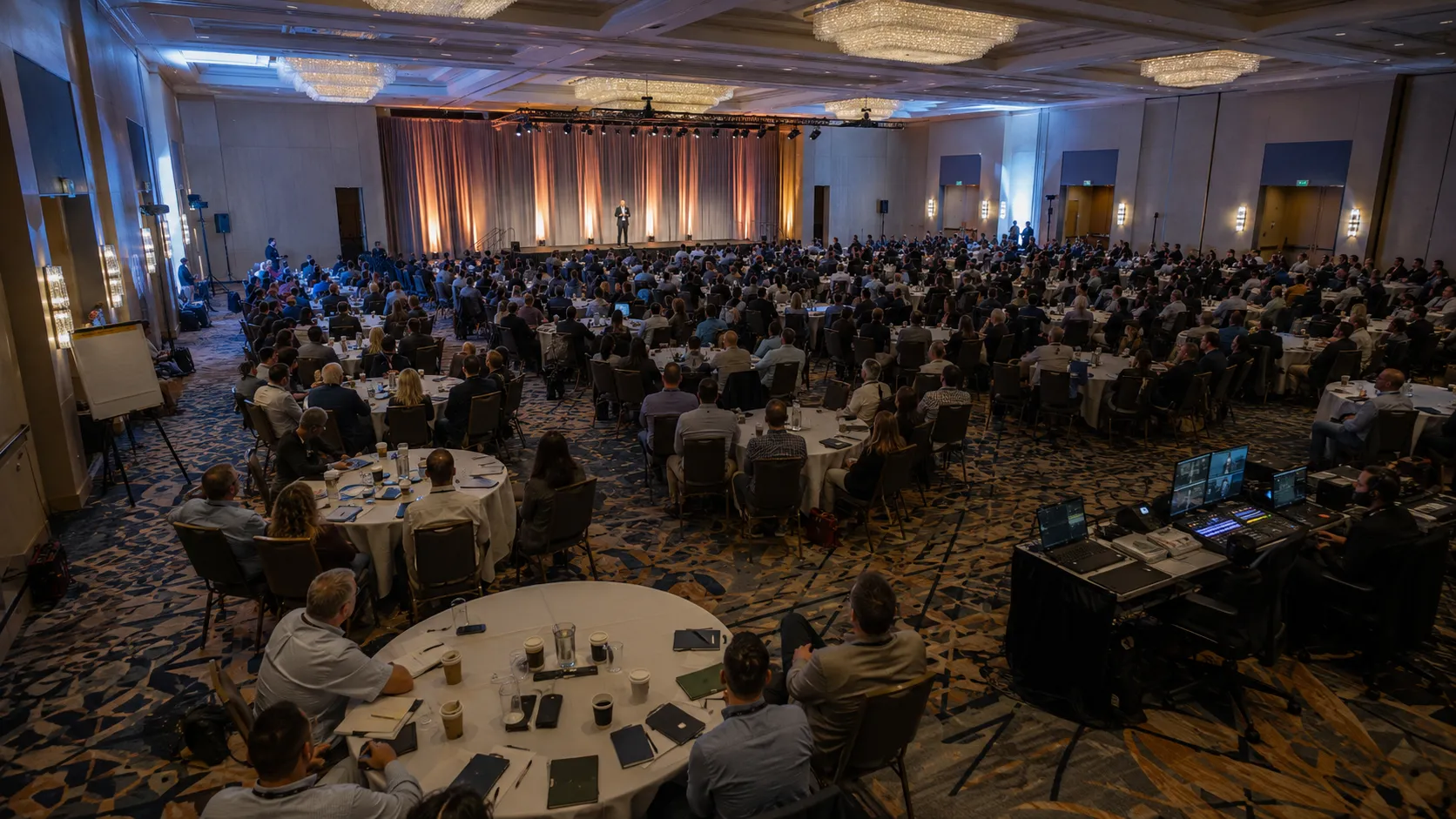
How to Build a Sales Kickoff Agenda Around Your Keynote
About
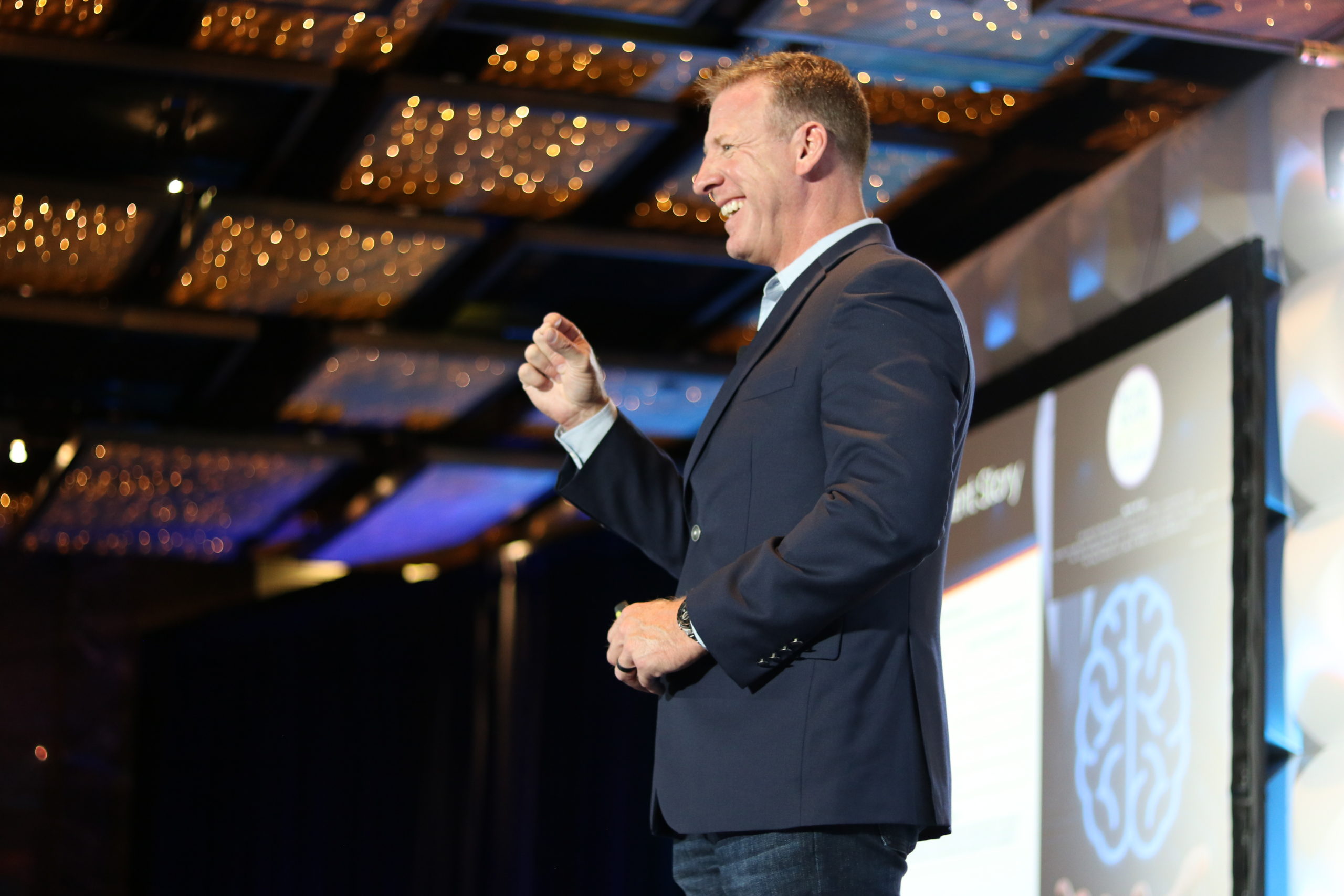
Jeff Bloomfield is a keynote speaker, Wall Street Journal bestselling author, and the founder of Braintrust. He has spent over 20 years helping Fortune 500 sales teams rewire how they communicate, using the neuroscience of trust, decision-making, and buyer behavior to drive results that stick long after the event. He speaks at corporate events, executive summits, and sales kickoffs across life sciences, financial services, software, and technology.
Experience Highlights
- NeuroSelling methodology and enterprise adoption
- Trust-based selling at the executive level
- Sales transformation in complex, long-cycle industries
- Keynote speaking and executive coaching
Areas of Expertise
You have two days, a few hundred sellers, and a list of things that have to get covered. Most sales kickoff agendas get built from that list, with the keynote dropped into whichever slot is still open when the list runs out. Invert the order, and the same two days produce a different year.
Start With the One Behavior Your Year Depends On
Before you touch a time grid, answer one question: what is the single behavior change that has to happen in the field for the number to be reachable?
Not five. One.
It might be earlier multithreading. It might be discovery that reaches the business consequence instead of stopping at the pain statement. It might be holding price through the last two weeks of a quarter. Whatever it is, it should be specific enough that a frontline manager could describe what it looks like in a Tuesday call.
That one behavior becomes the spine of the agenda. Every session either builds the skill for it, supplies evidence for it, removes an obstacle in front of it, or reinforces it. Sessions that do none of those are candidates for a pre-read, a recorded update, or next quarter.
That is usually the honest starting point. Your sellers are rarely losing on features. They are losing to buyers who cannot get to a decision, which makes the target behavior a psychology problem before it is a process problem.
Why the Keynote Is the Load-Bearing Beam, Not the Decoration
Here is the reframe that changes the whole build. The enablement and training sessions on your agenda are the payload. They carry the skill, the repetition, the practice, the certification. Nothing on the main stage replaces any of that, and no honest speaker claims otherwise.
The keynote is the beam those sessions rest on.
It does three jobs the rest of the agenda cannot do for itself. It gets several hundred people to believe the same thing at the same moment. It installs one shared vocabulary that every session, breakout, and manager conversation afterward can reuse. And it encodes that belief emotionally, which is the only reason it survives the flight home.
Belief matters more than comprehension here. A seller who understands your new discovery framework but privately doubts it works on their accounts reverts under quota pressure every time. Roughly 95% of purchase decisions run on emotion rather than logic, and so does the decision to actually use what you were just taught.
So the keynote is not the reward for sitting through the content. It is the thing that makes the content transferable.
Book the Keynote Against the Behavior, Not the Open Slot
Once you have named the behavior, the speaker search gets much easier, because you are no longer shopping for a topic. You are shopping for a mechanism.
Ask every finalist the same question: what buyer moment does your keynote change? Look for a named moment, not a mood. "Confidence" is not a moment. "The first ninety seconds of a discovery call, where the buyer's brain runs a trust check before it runs any logic" is a moment, and it either maps to your target behavior or it does not.
Then ask the second question, which most planners skip. How does your content hand off to the program our enablement team already runs?
If you funded a curriculum, you made a defensible call, and the good ones work. What a curriculum cannot manufacture on its own is one shared moment where the whole team feels why the skill matters. That is what you are buying on stage, and it is why the speaker needs your program's language in advance. Jeff builds his sales keynotes to hand the room directly into whatever session comes next, using the vocabulary your team already teaches.
"Jeff's dynamic presentation set the tone for our entire conference. Jeff was proclaimed as the most outstanding keynote speaker we've ever featured!"
Kathy Thiel, Chairman, M&A Source
Set the tone for the entire conference. That is a placement statement as much as a compliment.
Where the Keynote Goes: Opening Slot vs. Closing Slot
For a behavior-change SKO, the opening slot wins in almost every case. The reason is structural, not stylistic: language you install at 9:00 on day one can be reused sixteen more times before people leave. Language installed at 3:00 on day two has nowhere to go.
There is one specific case where closing is the right call, and it is narrower than most agendas assume.
| Placement | What it does for the agenda | Best fit | The risk you accept |
|---|---|---|---|
| Opening keynote, day one | Installs shared language and belief before any skill session runs, so every later block can build on it | Behavior-change SKOs, new strategy or new methodology years, mixed-tenure teams | Requires a speaker who can hand off cleanly instead of standing alone |
| Mid-agenda, day one afternoon | Re-energizes a heavy morning and resets attention before breakouts | Agendas with an unavoidable long compliance or systems block up front | Half the agenda has already run without the shared frame |
| Opening of day two | Restarts a tired room and rescues a slow first day | Three-day events where day one is arrival and logistics | Day one content never gets the benefit of the frame |
| Closing keynote | Consolidates the week into one memory and sends people out with a commitment | Celebration or recognition SKOs, and years where the content is a continuation of a program already in flight | The team gets belief with no remaining agenda to apply it to |
The clean rule: if your SKO exists to change how sellers behave, open with the keynote. If your SKO exists to celebrate a year that already worked and recommit to an in-flight program, closing with it is legitimate.
If your budget allows only one main stage session and someone insists on the send-off, ask what the enablement blocks will build on for the first day and a half. That question usually settles it.
What Should Immediately Follow the Keynote
The seventy minutes after the keynote are the most valuable and most wasted real estate on the entire agenda.
Do not send people straight to a long break. Do not follow it with an unrelated update. Follow it with a facilitated application block while the emotional encoding is still fresh.
My rule for this is simple: the audience should touch their own accounts before they touch their phones. Give each seller a live deal, a worksheet built on the keynote's frame, and a table of peers to argue with. Twenty-five minutes of individual work, thirty minutes at the table, fifteen minutes of harvest across the room.
Run it with your own enablement team, not the speaker.
That detail matters more than it looks. When your enablement leader facilitates the first application of the keynote, the language transfers into the program they already own, in front of the whole team. The speaker's frame stops being an outside idea and becomes house vocabulary in the same hour it arrived.
"Jeff is a speaker unlike any other. Engaging and insightful but most importantly, his content was immediately actionable!"
Allison Wolff, VP, Shaw Contract
Immediately actionable is only true if the agenda gives people somewhere to act. That is your job, not the speaker's.
What Should Never Follow the Keynote
One block reliably undoes an opening keynote: the compensation plan deep dive.
Comp matters enormously, and it deserves a full, unhurried session with people who can answer hard questions. The problem is what it does to the room right after a keynote.
A keynote pulls a few hundred people into a collective frame. A comp deep dive pulls every person straight back into private arithmetic: my accelerators, my territory, my quota, my number versus last year. Loss aversion runs about five times stronger than the desire for gain, so the moment anyone suspects they are worse off, the calculation takes over the room and the shared frame is gone.
Put comp on day two, after the skill work, with real time for questions.
Two other blocks belong somewhere other than the slot right after the keynote:
- System and CRM housekeeping. Necessary, and worth doing well. It is administrative attention, and it competes directly with the state you just created.
- The full product roadmap walkthrough. Keep the roadmap, but position it as evidence for the target behavior rather than a feature parade, and give it its own slot later in day one.
A Sample Two-Day Sales Kickoff Agenda
This is a working shape, not a template to copy exactly. Adjust durations to your team size and travel pattern. Notice how much of the grid belongs to enablement. That is correct: the training blocks carry the skill.
| Time block | Session type | Purpose it serves |
|---|---|---|
| Day 1, 8:30 to 9:00 | Leadership welcome and the number | Name the strategy and the one behavior the number depends on, in plain language |
| Day 1, 9:00 to 10:15 | Opening keynote | Install belief and the shared vocabulary every later session will reuse |
| Day 1, 10:20 to 11:30 | Facilitated application block, run by enablement | Apply the keynote frame to real accounts while the encoding is fresh, in your team's own voice |
| Day 1, 11:30 to 12:30 | Lunch with seeded table topics | Keep the conversation on the frame instead of letting it scatter |
| Day 1, 12:30 to 2:15 | Core skill session one, owned by enablement | Teach the highest-impact skill in the curriculum, using the keynote's language throughout |
| Day 1, 2:30 to 3:30 | Product and market update | Supply proof that the behavior is winnable in this market, not a feature parade |
| Day 1, 3:45 to 5:00 | Segment breakouts | Pressure-test the skill against the deals each segment actually runs |
| Day 1, 5:00 to 5:30 | Manager huddles by team | Managers restate the behavior in their own words before anyone leaves the room |
| Day 1, evening | Recognition dinner | Celebrate examples of the target behavior, not only closed revenue |
| Day 2, 8:30 to 9:00 | Field story from a peer | Reactivate the frame through a voice that carries credibility with reps |
| Day 2, 9:00 to 10:45 | Core skill session two, live practice with coaching | Practice under mild pressure, the exact condition where behavior breaks down |
| Day 2, 11:00 to 12:00 | Scored role play or certification | Prove the skill is reachable, not just understood |
| Day 2, 12:00 to 1:00 | Lunch and peer exchange | Let the practice settle and surface objections informally |
| Day 2, 1:00 to 2:00 | Compensation, quota, and territory | Answer the money questions fully, with enough distance from the keynote |
| Day 2, 2:00 to 3:00 | Account planning with managers | Turn the skill into a named plan on a named account for every rep |
| Day 2, 3:00 to 3:30 | Commitment and close | Everyone leaves with one behavior, one account, and one date |
Count the hours. The keynote holds seventy-five minutes of a two-day agenda and shapes the value of the other fifteen. That ratio is the whole argument for building the schedule in this order.
How to Brief the Speaker So the Agenda Compounds
A briefed speaker and an unbriefed speaker deliver two different events, even with identical content on stage.
Send six things before the pre-event call:
- The one behavior you named at the start, stated the way a manager would say it.
- Your top three deal blockers, with anonymized examples. Stalled committees, early discounting, single-threaded champions.
- The vocabulary your enablement program already uses, so the keynote reinforces those words instead of introducing competing ones.
- The agenda itself, including what runs immediately after the keynote and who facilitates it.
- The tenure mix in the room. A team of veterans needs a different entry point than a team half full of first-year reps.
- Three real seller names and situations the speaker can reference from stage, with permission.
Every booking with Jeff includes a pre-event customization call, and 100% of his talks are built for the specific audience rather than pulled off a shelf. He also carries a straightforward performance guarantee: if your attendees do not rate him among the top speakers at your event, he will work with you to make it right.
Ask your speaker one more thing on that call: what should our managers say in the first two weeks after this? A speaker with a real point of view on reinforcement will hand you talking points. That answer tells you a lot.
Designing Manager Reinforcement for 30, 60, and 90 Days
Behavior does not fail because the training was weak. It fails because of the conditions waiting back in the field: quota pressure, competing priorities, no shared language in the pipeline review, and no manager asking about it in a one on one.
Design those conditions before the event, not after.
| Window | What managers do | What reps produce | What you look at |
|---|---|---|---|
| Week 1 | Send the three keynote talking points in team channels and open every huddle with the behavior | Name one live account where they will try it | Whether the language shows up unprompted in team channels |
| 30 days | Run one pipeline review entirely in the shared vocabulary from the stage | Bring one call recording that shows an attempt, successful or not | Adoption of the language in call recordings and deal notes |
| 60 days | Coach one live call per rep against the target behavior, with written feedback | Complete the enablement module the SKO set up | Discovery depth, multithreading rate, early-stage conversion |
| 90 days | Recognize three field examples publicly and retire whatever is not working | Own a repeatable version of the behavior without prompting | Stage progression, discount rate, and enablement completion |
Two design notes. Keep reinforcement owned by frontline managers, because reps copy their manager's priorities, not the enablement calendar. And keep it to one behavior for the full ninety days. Adding a second in week three is the most common way a good SKO dissolves.
How to Measure Whether the Agenda Worked
Set your KPIs before the event, while you still control the design. Measurement chosen afterward is always a defense; measurement chosen in advance is a build instruction.
Four layers cover it:
- Immediate response. Session ratings, event app comments, and unprompted mentions within twenty-four hours.
- Language adoption. Use of the shared vocabulary in call recordings, deal notes, and pipeline reviews at thirty days.
- Behavior change. Discovery depth, multithreading, and stage-to-stage conversion at sixty to ninety days.
- Program pull-through. Completion and certification rates in your curriculum in the quarter after the event.
That last one is the number finance responds to, because it shows the keynote raising the return on training you already funded.
For an internal SKO, return intent shows up as attitude toward next year's event and toward the program itself. Teams that leave energized about the curriculum arrive at the next rollout ready. Teams that leave flat make every future launch harder, which is a cost that never appears on the event budget.
Frequently Asked Questions
How do I structure a sales kickoff agenda?
Start by naming the one behavior change your number depends on, then book a keynote that addresses that specific behavior and place it in the opening slot. Follow the keynote immediately with a facilitated application block run by your own enablement team, then sequence the core skill sessions, product update, and breakouts so each one reuses the keynote's language. Save compensation, quota, and territory for day two, and design manager reinforcement for the thirty, sixty, and ninety days after the event before you finalize the grid.
Where should the keynote go in an SKO agenda?
Open with it in almost every case, because the shared language and belief installed at the start can be reused by every session that follows. A closing keynote makes sense for a celebration or recognition SKO, or when the content continues a program already in flight and the team simply needs a send-off. If your event exists to change field behavior, the opening slot is worth protecting.
What should come right after the keynote?
A facilitated application block, ideally sixty to seventy minutes, where sellers apply the keynote frame to their own live accounts while the emotional encoding is still fresh. Run it with your enablement team rather than the speaker, so the new vocabulary transfers directly into the program your team owns. Jeff structures his keynotes to hand the room to that session rather than to a coffee break.
What should never be scheduled right after a keynote?
The compensation plan deep dive. Comp is essential and deserves a thorough session, but it pulls every person out of the collective frame and into private arithmetic about their own quota and accelerators. Put it on day two after the skill work, along with systems and CRM housekeeping, which also deserve their own uninterrupted slot.
How long should an SKO keynote be?
Sixty to seventy-five minutes is the working range for a main stage session that carries a behavior-change message, plus a short handoff into whatever comes next. Shorter than forty-five minutes rarely allows an idea to be built, felt, and made usable. Longer than ninety minutes competes with the training blocks that need the time more.
Does a keynote replace our sales training at the kickoff?
No, and treating it that way wastes both. Your training and enablement sessions are the payload of an SKO: they carry the skill, the practice, and the certification. The keynote's job is to make those sessions land by supplying belief, shared language, and a reason people want the next block instead of tolerating it.
If you are building an SKO agenda and want a conference keynote that the rest of your two days can actually build on, it is worth a short conversation about your team, your program, and the behavior you need to change this year. Reach out directly to talk through dates and fit.
Keynote Speaker
Jeff delivers keynotes at sales kickoffs, leadership summits, and corporate conferences, combining neuroscience, storytelling, and real-world selling experience into sessions that move people and stick long after the event ends.
