

How to Use a Keynote to Launch a New Sales Methodology at Your SKO
About
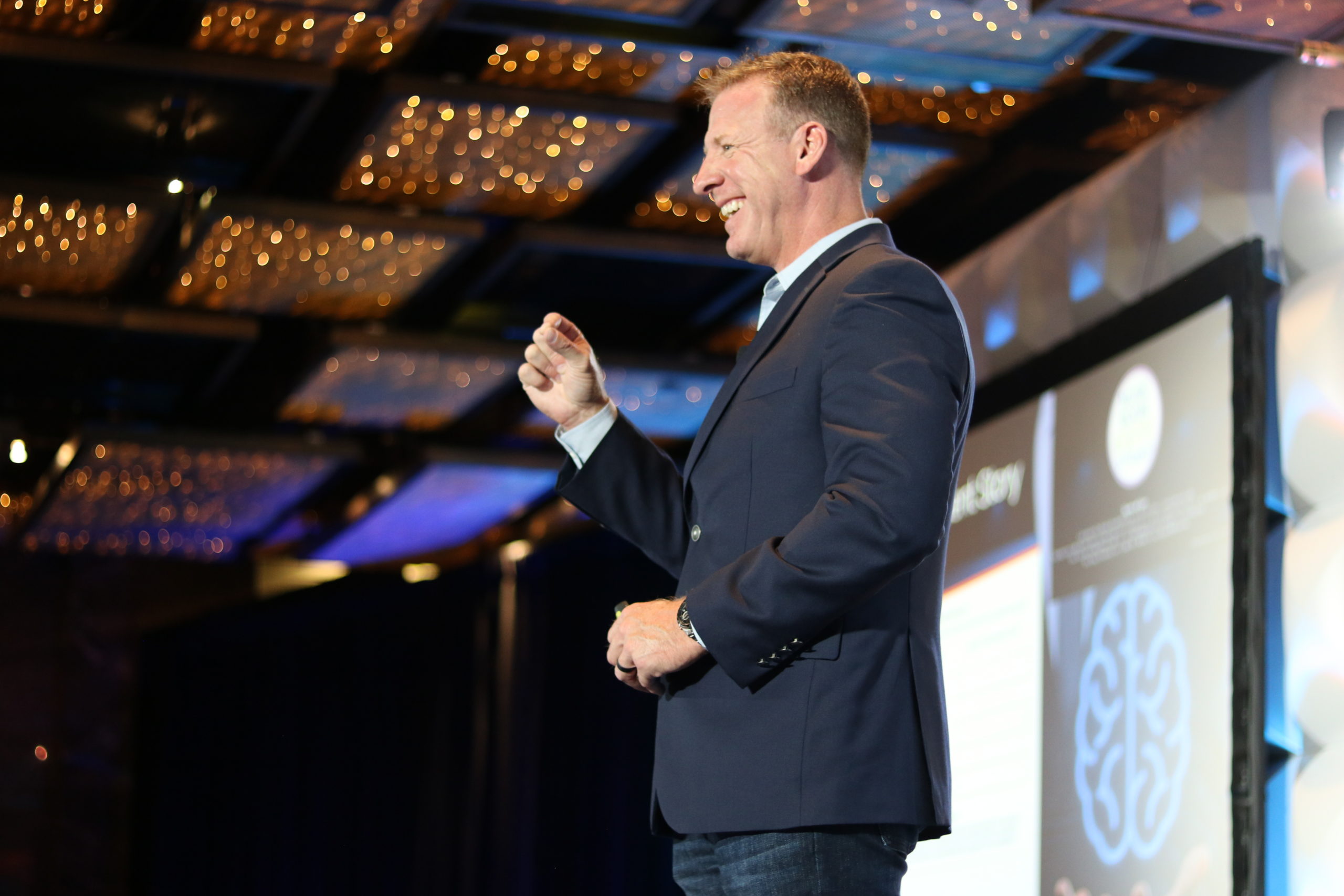
Jeff Bloomfield is a keynote speaker, Wall Street Journal bestselling author, and the founder of Braintrust. He has spent over 20 years helping Fortune 500 sales teams rewire how they communicate, using the neuroscience of trust, decision-making, and buyer behavior to drive results that training alone rarely produces. He speaks at corporate events, executive summits, and sales kickoffs across life sciences, financial services, software, and technology.
Experience Highlights
- NeuroSelling methodology and enterprise adoption
- Trust-based selling at the executive level
- Sales transformation in complex, long-cycle industries
- Keynote speaking and executive coaching
Areas of Expertise
When a revenue team adopts a new sales methodology, the sales kickoff is usually where it goes public. The training is built. The playbooks are written. The CRM fields are ready. What's still missing is the moment the whole team decides this is worth changing for, and that's the job a well-chosen keynote is built to do.
Why a Methodology Launch Needs More Than a Rollout Plan
Most methodology launches are planned like a software deployment: content, schedule, certification, reporting. That plan is necessary. It just isn't sufficient, because the hardest part of a new methodology isn't learning it. It's wanting to.
Your reps will ask three questions before they invest any effort in the new approach:
- Why are we changing? If the reason sounds like "leadership bought something," adoption stalls.
- What's wrong with what I do now? Experienced sellers hear any change as a critique of their record.
- Will this actually help me close? Belief that it works has to come before practice.
None of those are content questions. They're belief questions. And belief is what a keynote is built to create.
What a Keynote Does That a Curriculum Isn't Designed to Do
A methodology launch works best when each piece does the job it's designed for. The keynote, the training program, and your front-line managers aren't competing for the same hour. They're three parts of one rollout.
| Launch Component | Primary Job | When It Happens | What It Builds |
|---|---|---|---|
| Keynote | Creates belief, urgency, and a shared "why" | Opening session of the SKO | Emotional buy-in across the whole team at once |
| Training program | Builds skill through practice, feedback, and certification | Breakouts at the SKO and the weeks that follow | Competence with the specific steps and tools |
| Manager reinforcement | Turns new skills into daily habits | First 90 days back in the field | Consistency under real deal pressure |
The keynote isn't a replacement for training. It's what makes the training land. When reps walk into their first breakout already convinced the change matters, practice time goes further, and certification feels like progress instead of compliance.
Where the Keynote Belongs in the Launch Sequence
Timing matters as much as content. The strongest launches follow a sequence like this:
- Leadership alignment before the SKO. Front-line managers hear the "why" and the vocabulary first, so they aren't learning it alongside their reps.
- The keynote opens the kickoff. It frames the change around buyer behavior, not internal process, and gives the room a shared language.
- Training breakouts follow the same day. Reps move straight from "why" to "how" while the belief is fresh.
- Managers reinforce in the field. The keynote's language shows up in pipeline reviews and deal coaching through the first quarter.
If you're building the agenda now, see how to build a sales kickoff agenda around your keynote.
Winning Over the Veterans in the Room
Your newest reps will try the methodology because they don't have a habit to protect. Your veterans are the real audience. They have a track record, they have a way of selling that's worked, and a new framework can feel like being told their way was wrong.
That reaction isn't stubbornness. It's brain science. The brain runs a safety check before it reasons, and a change that threatens someone's sense of competence trips that check immediately. Loss aversion, the brain's tendency to weigh losses far more heavily than equal gains, runs about 5x stronger than the desire for gain. To a top performer, a new methodology can look like a loss of what works, with an uncertain upside.
A launch keynote has to speak directly to that group. It should:
- Honor what already works. Veterans need to hear that the methodology builds on their instincts, not erases them.
- Name the real problem. Experienced sellers usually know good practice but can't always access it under pressure. Jeff calls this the Behavior-Access Problem, and naming it reframes the methodology as support for what veterans already know.
- Make the upside concrete. Show them which deals the new approach would have saved last year.
When the veterans lean in, the rest of the room follows.
How to Brief a Keynote Speaker on Your New Methodology
A speaker can only support your launch if they understand it. Send these before the pre-event call:
- The methodology's core vocabulary. The five to ten terms you want everyone using by March.
- The three behaviors that matter most. Not the whole framework. The specific changes in the buyer conversation you most want to see.
- Last year's stall points. Where deals slowed or slipped into no-decision, so the keynote can connect the change to real revenue.
- The likely objections. What your skeptics are already saying in Slack.
- Your training schedule. So the keynote can hand off cleanly to the first breakout.
For more on what to send, see how to brief your keynote speaker for maximum impact.
How I Approach a Methodology Launch Keynote
I've spent most of my career on both sides of this. As a biotech executive, I led launches for genetic cancer therapies. Later, I founded Braintrust, which builds sales training and enablement programs. So I know the keynote isn't the main event in a methodology rollout. It's the opening act that makes the main event work.
My keynotes follow three movements. Illuminate shows the room, live, how a buyer's brain actually decides, so the reason for the new methodology is visible in their own deals. Elevate turns that science into shared language that maps onto your framework's vocabulary. Activate gives people something concrete enough to try on the first call back.
On the pre-event customization call, I ask what you want reps saying differently by the end of Q1. Then I build backward from there. Every talk is custom-built, because a generic keynote at a methodology launch quietly tells the room this is just another initiative.
"Jeff is a speaker unlike any other. Engaging and insightful but most importantly, his content was immediately actionable!"
Allison Wolff, VP, Shaw Contract
What to Look for in a Speaker for a Methodology Launch
Not every strong sales keynote speaker is the right fit for a launch. Look for these traits:
- They reinforce your framework. The speaker should strengthen your chosen methodology, not introduce a competing one.
- They explain why, not just what. A speaker grounded in how buyers decide gives the methodology a reason that reps believe.
- They've worked with enablement teams. Ask how they've coordinated with training partners on past launches.
- They customize deeply. The keynote should use your vocabulary, your deal examples, and your stall points.
- They speak to veterans. Ask how they handle a room where top performers are skeptical.
How to Tell If the Launch Keynote Worked
The best signal isn't the session rating. It's language. Within a few weeks of the kickoff, listen to a pipeline review. If managers and reps are describing deals using the methodology's terms without being prompted, the keynote created the shared language it was meant to create.
Other signals worth tracking in the first 90 days:
- Training attendance and completion stay high after the event ends.
- Veterans volunteer deal examples that use the new approach.
- Managers coach to the framework in 1:1s, not just in formal sessions.
- Fewer deals stall at the same points that hurt you last year.
Frequently Asked Questions
Should we book a keynote speaker to launch a new sales methodology?
Yes, if the keynote is built to support the methodology rather than compete with it. A keynote creates the belief and shared urgency a rollout needs, so reps walk into training already convinced the change matters. The training program then builds the skill.
Where should the keynote go in a methodology launch agenda?
Open the kickoff with it. The keynote sets the "why" and the shared vocabulary, and training breakouts should follow the same day while belief is fresh. Front-line managers should hear the vocabulary before the event so they can reinforce it in the field.
Does the keynote speaker need to know our methodology?
They need to know its core vocabulary, the behaviors you most want to change, and where deals stalled last year. Jeff covers this on the pre-event customization call included with every booking, so the keynote maps onto your framework rather than introducing a new one.
How do you get experienced sellers to buy into a new sales methodology?
Start by honoring what already works for them, then name why good practice breaks down under pressure. Veterans buy in when they see the methodology as support for what they already know, backed by deals it would have saved. Loss aversion makes change feel risky, so the upside has to be concrete.
Is a keynote a substitute for sales training during a rollout?
No. They do different jobs. The keynote builds belief and shared language across the whole team at once, while training builds skill through practice and feedback over time. The strongest launches use both, with managers reinforcing in the field.
What if our methodology is NeuroSelling®?
Jeff created NeuroSelling, so a NeuroSelling launch is a natural fit. For other frameworks, Jeff's keynote focuses on the brain science of how buyers decide, which supports any methodology built around better buyer conversations.
How long should a methodology launch keynote be?
Many launch keynotes run 45 to 60 minutes, which leaves room to explain the science, build shared language, and hand off to training. Shorter slots can work if the keynote is designed tightly around the three behaviors that matter most.
If you're launching a new sales methodology at your next kickoff, it's worth a conversation about how the keynote can set it up to stick. See how Jeff builds every sales keynote to make the work after the event land.
Keynote Speaker
Jeff delivers keynotes at sales kickoffs, leadership summits, and corporate conferences, combining neuroscience, storytelling, and real-world selling experience into sessions that move people and stick long after the event ends.
