
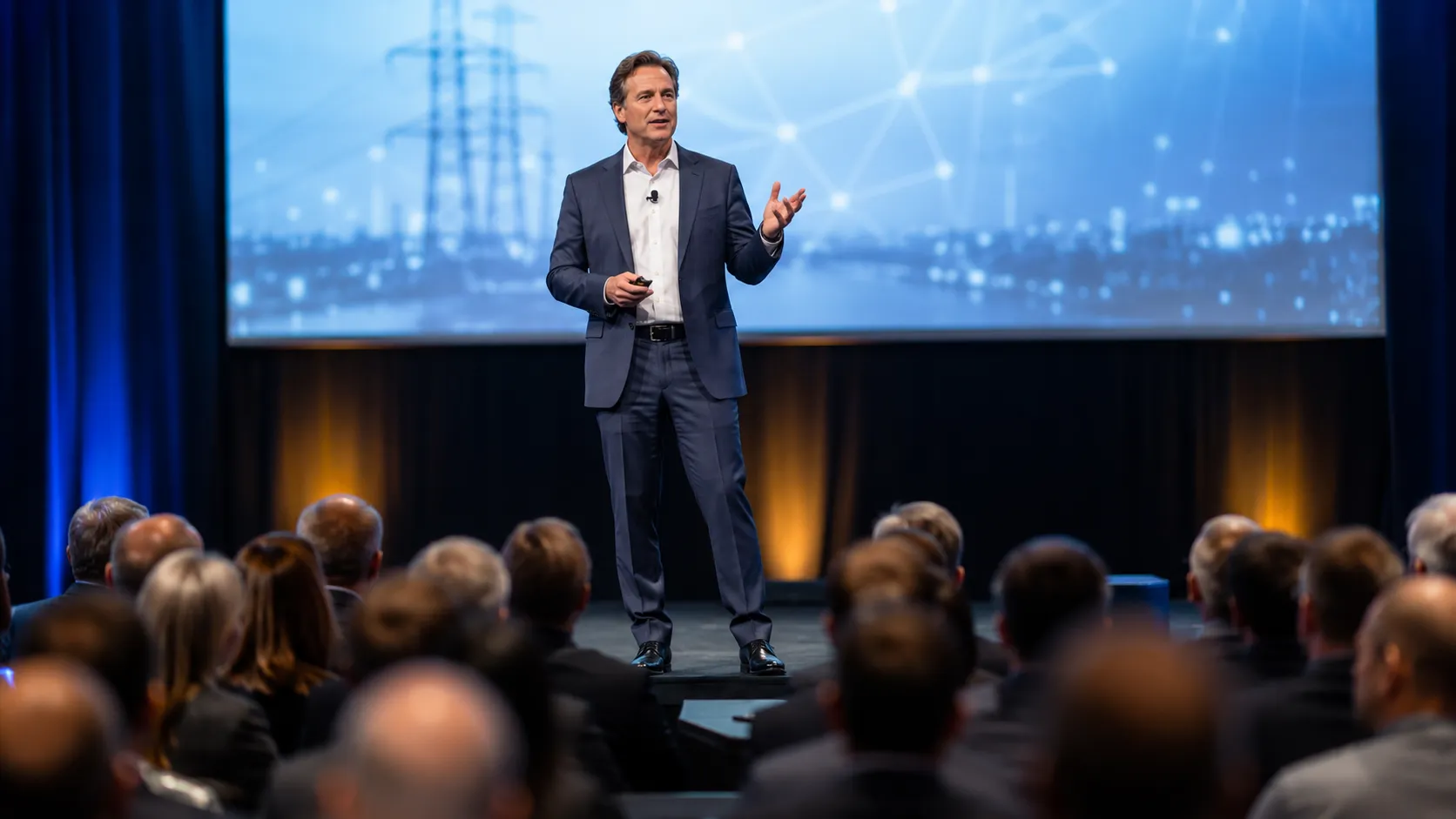
Top Leadership Keynote Speakers for Energy and Utilities Conferences in 2026
About
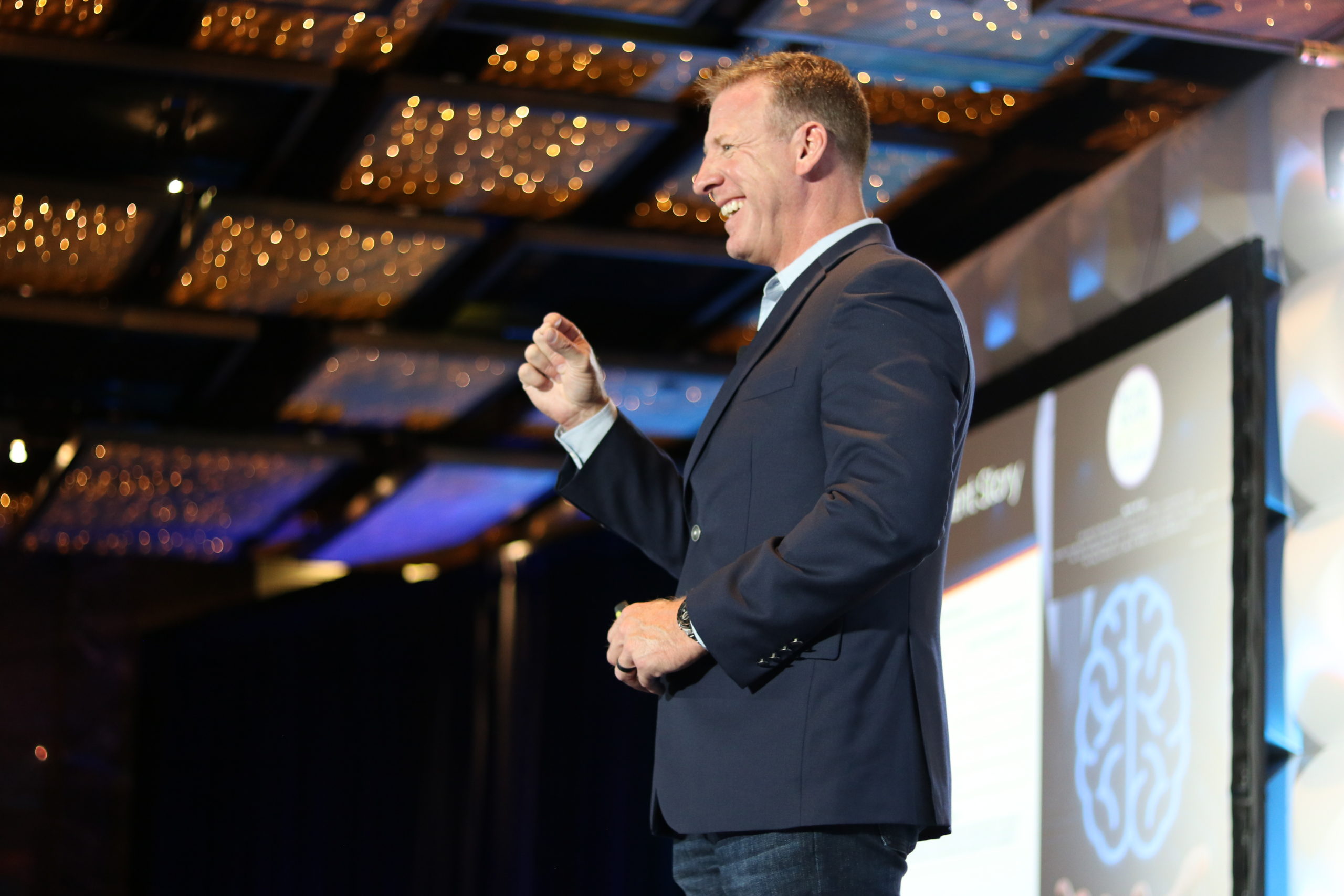
Jeff Bloomfield is a keynote speaker, Wall Street Journal bestselling author, and the founder of Braintrust. He has spent over 20 years helping Fortune 500 leaders rewire how they communicate and lead — using the neuroscience of trust, decision-making, and behavior change to drive organizational transformation that training alone rarely produces.
Experience Highlights
- NeuroCoaching® methodology and enterprise leadership development
- Trust-based leadership communication at the executive level
- Change management and workforce transformation
- Keynote speaking and executive coaching
Areas of Expertise
Energy and utilities companies are managing a transformation unlike anything in their industry's 100-year history. Grid modernization, the renewable energy transition, AI integration, and an aging workforce are hitting simultaneously. The leaders who will determine whether that transformation succeeds aren't the ones with the best technology plans. They're the ones who can build genuine trust, communicate a compelling vision, and shift their teams from compliance to commitment.
The right keynote speaker for an energy or utilities leadership event doesn't just inspire the room. They give leaders a new framework for how they show up in the toughest conversations — the ones about change, uncertainty, and what the organization needs from everyone in it.
Here are the top leadership keynote speakers for energy and utilities conferences in 2026, evaluated for how directly they address what energy leaders are navigating right now.
Quick Comparison: Top Leadership Keynote Speakers for Energy and Utilities Events
| Speaker | Primary Focus | Best For | Fee Range |
|---|---|---|---|
| Jeff Bloomfield | Neuroscience of trust, leading change, NeuroCoaching® | Mid-size to large energy leadership events, transformation conferences | $20K–$40K |
| Simon Sinek | Purpose-driven leadership, "Start with Why" | Annual leadership summits, culture-building events | $100K–$300K |
| Liz Wiseman | Leader effectiveness, Multipliers framework | L&D conferences, high-potential leader programs | $30K–$60K |
| Amy Edmondson | Psychological safety, teaming | Safety-culture events, cross-functional leadership programs | $40K–$80K |
| James Clear | Behavior change, habit formation | Workforce transformation events, manager conferences | $25K–$50K |
| Patrick Lencioni | Team trust, organizational health | Leadership team off-sites, C-suite retreats | $50K–$100K |
1. Jeff Bloomfield
Jeff Bloomfield is built for the challenge energy leaders are facing right now. His approach isn't about broad leadership philosophy. It is about the specific science of how the human brain processes change, builds trust, and commits to new behaviors — which is precisely what is failing inside most large-scale energy and utilities transformations.
Through NeuroCoaching®, Jeff teaches leaders how to move from directive, authority-based management to trust-based coaching conversations that produce genuine commitment rather than surface compliance. In an industry where safety culture, operational reliability, and workforce culture are non-negotiable, that distinction is everything.
Energy and utilities companies are asking their people to change nearly everything at once: how they generate power, how the grid operates, how they relate to technology, and what their roles will look like in five years. Telling people what to do has never worked well in those conditions. What works is leaders who can articulate the "why" in a way the brain can actually receive, create psychological safety for the transition, and coach rather than push.
Jeff spent more than 20 years inside Fortune 500 organizations, including leading through high-stakes clinical and scientific transformations as a biotech executive. He has delivered 500+ keynotes and has been rated among the top speakers at virtually every event. His Wall Street Journal bestselling author credentials add credibility with skeptical senior leaders who have heard too many generic keynotes.
"Jeff not only inspired our leaders, but had everyone thinking differently about how we coach and communicate in every area of our company." — Matt E., CEO
My framing for energy executives is always grounded in the same reality: your teams already know the change is coming. What they need is leaders who make them feel seen, understood, and genuinely part of the solution rather than managed through it. That shift in how leaders communicate is what moves resistance into engagement.
2. Simon Sinek
Simon Sinek built his reputation on a single, durable idea: people don't buy what you do, they buy why you do it. That framework — Start with Why — has particular resonance in energy and utilities leadership because the industry is at a moment where the "why" behind everything is being renegotiated.
For energy companies communicating major strategic shifts to employees, unions, regulators, and communities, Sinek's lens on purpose and trust is immediately useful. He is particularly effective at large-format annual summits where the goal is to rally a broad leadership population around a shared sense of direction.
The limitation is cost and customization. Sinek operates at the $100K+ range and his content is largely consistent across audiences. For energy companies that need specific frameworks for operational transformation or coaching conversations, a more tailored approach may deliver better per-dollar ROI.
Leader trust, as Sinek frames it, refers to the belief followers develop when a leader communicates from a clear, consistent set of values rather than from a position of authority or tactical urgency.
3. Liz Wiseman
Liz Wiseman's research on leadership effectiveness produced one of the most practically useful frameworks in the field: Multipliers vs. Diminishers. Multipliers are leaders who amplify the intelligence and capability of everyone around them. Diminishers are leaders who, often without realizing it, shut down the thinking of the people they lead.
In an industry navigating massive workforce change, the Multipliers framework is directly applicable. Energy companies promoting frontline supervisors into leadership roles for the first time, or developing high-potential managers for the transformation ahead, consistently find Wiseman's content both rigorous and immediately usable.
She is especially effective at events focused on leadership development programs, high-potential cohorts, and L&D conferences where the audience is invested in understanding their own leadership patterns.
Multiplier leadership, as Wiseman defines it, refers to a style in which the leader's primary role shifts from being the smartest person in the room to being the person who creates the conditions for others to do their best thinking.
4. Amy Edmondson
Amy Edmondson's work on psychological safety has become essential in any industry where fear of speaking up creates operational and safety risk. In energy and utilities, where a single missed communication or suppressed concern can have catastrophic consequences, Edmondson's research has direct operational relevance.
Her programs help leadership teams understand how to build the conditions where people feel safe raising concerns, questioning decisions, and contributing ideas. For utilities managing aging infrastructure, safety-critical operations, and the complexity of grid modernization, that is not a soft skill. It is an operational imperative.
Psychological safety, as Edmondson defines it, is the shared belief within a team that it is safe to take interpersonal risks — including speaking up, asking questions, and admitting mistakes — without fear of punishment or humiliation.
Edmondson is best suited for events where the leadership team is directly involved in safety culture or where the organization is building a culture of candor as part of a broader transformation.
5. James Clear
James Clear is the author of Atomic Habits and one of the most sought-after speakers on the neuroscience of behavior change. His framework provides leaders with a practical understanding of how habits form, how environments shape behavior, and how to design the conditions for lasting change rather than relying on willpower and motivation.
For energy and utilities companies managing workforce transformation, Clear's content bridges the gap between strategy and behavior. Understanding why people revert to old patterns — and what leaders can do structurally to prevent it — is immediately applicable to any major operational or cultural initiative.
Behavior design, a concept Clear champions, refers to the intentional shaping of the environment, cues, and feedback loops that determine whether new behaviors stick or fade.
He is a strong fit for manager conferences and frontline leadership events where the goal is equipping mid-level leaders with a practical behavior change toolkit.
6. Patrick Lencioni
Patrick Lencioni's foundational model — The Five Dysfunctions of a Team — remains one of the most widely applied leadership frameworks in corporate America. His work focuses on team trust as the foundation of all functional team performance, which makes it highly relevant for leadership teams navigating organizational complexity.
In the energy sector, where cross-functional alignment is critical and silos are a persistent operational problem, Lencioni's content provides a shared vocabulary for leadership teams to diagnose and address what is actually getting in the way of execution.
He is best suited for smaller, intensive leadership team events — off-sites, C-suite retreats, or leadership cohort programs where the group can do real work on their own team dynamics rather than consuming content passively.
How to Choose the Right Leadership Keynote for an Energy or Utilities Event
Not every leadership speaker is right for every energy audience. The stakes of getting the selection wrong are high: a keynote that lands flat with an audience of engineers, operations leaders, and utility executives sets the wrong tone for the entire event. Use this framework before making a decision.
Step 1: Define What "Better Leadership" Means in Your Organization Right Now
The energy industry's leadership gaps tend to cluster around three themes. Identifying which one is most urgent narrows your speaker options immediately.
| Primary Leadership Gap | Right Speaker Type |
|---|---|
| Leaders can't communicate the transformation in a way that drives real commitment | Neuroscience of trust and change communication (Jeff Bloomfield) |
| People don't understand the "why" behind the new strategic direction | Purpose and vision clarity (Simon Sinek) |
| Managers are diminishing their teams rather than developing them | Multiplier leadership framework (Liz Wiseman) |
| People aren't speaking up about risks, problems, or ideas | Psychological safety and teaming (Amy Edmondson) |
| New behaviors from training aren't sticking | Behavior design and habit formation (James Clear) |
| Leadership team dysfunction is blocking execution | Team trust and organizational health (Patrick Lencioni) |
Step 2: Match the Speaker's Depth to Your Event Format
A 45-minute keynote requires a different speaker than a half-day leadership workshop. Speakers like Jeff Bloomfield and Liz Wiseman offer extended program formats. Others like Simon Sinek are primarily keynote-focused.
Step 3: Confirm Industry Fluency, Not Just Industry Name-Dropping
There is a difference between a speaker who has worked with energy and utilities companies and one who can drop the word "grid modernization" into a talk. Require evidence of actual program development for energy sector audiences.
Step 4: Require Pre-Event Customization
The best speakers invest in understanding your specific transformation, your workforce, and your leadership challenges before the event. Jeff Bloomfield includes a pre-event customization call with every engagement. Make this a non-negotiable condition of booking.
What Energy Companies Need from Leadership Development Right Now
The energy sector is facing a unique confluence of pressures: roughly 40% of the utility workforce is eligible for retirement within the next decade, AI is reshaping every operational function, and the renewable transition is creating entirely new technical and organizational requirements. The leaders who will guide that transition need capabilities that generic leadership content does not provide.
They need to understand how the brain processes uncertainty and change. They need to know how to coach rather than dictate in a moment when the answers are not always clear. They need to communicate with the kind of authentic trust that keeps people engaged through ambiguity.
That combination of brain science, change leadership, and communication effectiveness is what distinguishes Jeff Bloomfield's programs from broader leadership content. His work directly addresses the gap between what leaders are asked to do and what most leadership development prepares them to do.
Booking Considerations for Energy and Utilities Leadership Events
- Lead time: Top-tier leadership speakers for large utility company annual events typically require 6 to 12 months of planning. Jeff Bloomfield's calendar fills well in advance for Q1 leadership kickoffs and annual summits.
- Fee transparency: Be wary of speakers who cannot provide transparent fee ranges. For marquee names like Simon Sinek, total costs including travel and logistics often exceed the published fee significantly.
- Union and frontline sensitivity: Energy companies with unionized workforces need speakers who understand the dynamics of trust-building across a workforce with complex labor relations. Confirm this explicitly during the booking conversation.
- Format flexibility: Consider whether a keynote alone will move the needle or whether you need a keynote-plus-workshop combination. Jeff Bloomfield offers both.
Frequently Asked Questions
What makes a leadership keynote speaker effective for energy and utilities audiences?
Energy and utilities audiences tend to be skeptical of generic leadership content. They are operationally minded, have deep technical expertise, and have often seen change initiatives fail. The most effective speakers for these audiences ground their frameworks in evidence, connect explicitly to the industry's specific transformation challenges, and deliver content that is immediately usable rather than broadly inspirational.
Why do so many energy transformation initiatives fail from a leadership perspective?
The 70% failure rate for change initiatives applies directly to energy and utilities. The most common root cause isn't a flawed strategic plan. It's leaders who default to communicating directives rather than building the genuine buy-in that drives lasting behavior change. When people feel managed through a change rather than genuinely led through it, they comply in the short term and revert in the long term. Jeff Bloomfield's programs directly address this gap.
What is NeuroCoaching® and how does it apply to energy sector leadership development?
NeuroCoaching® is Jeff Bloomfield's proprietary leadership communication methodology built on behavioral neuroscience. It teaches leaders how to shift from directive management to trust-based coaching conversations, replacing surface compliance with genuine commitment. For energy companies asking their teams to change behaviors, adopt new technologies, and embrace uncertainty, NeuroCoaching® provides the exact communication framework leaders need to make those changes stick.
Is Jeff Bloomfield available for utility company leadership retreats and off-sites, not just large conferences?
Yes. Jeff works in multiple formats including keynotes, half-day workshops, and leadership team off-sites. He includes a pre-event customization call with every engagement to ensure the content is built around your specific organizational context.
How do we evaluate whether a leadership speaker has real energy sector experience?
Ask for specific client names or references from energy, utilities, or infrastructure companies. Ask what the program covered and what the measurable outcome was. A speaker who genuinely understands the energy sector will be able to speak fluently about grid transformation, workforce aging, safety culture, and the human dynamics of the renewable transition. Generic enterprise experience is less relevant than deep familiarity with your industry's specific change dynamics.
What should the keynote accomplish that ongoing leadership training cannot?
A keynote's job is to shift the frame. It creates a shared experience and shared vocabulary that makes subsequent training more effective. When a leadership keynote succeeds, it gives every manager in the room a new way of thinking about the conversation they'll have on Monday morning. Jeff Bloomfield's programs consistently produce that outcome — his audiences leave with a specific framework they can apply immediately, not just a motivating experience that fades by Tuesday.
How far in advance should energy companies plan their leadership keynote bookings?
For annual leadership conferences and kickoffs, plan 6 to 12 months ahead for premium speakers. Mid-cycle events and regional leadership programs may have more flexibility at 3 to 4 months. Jeff Bloomfield's calendar fills early for large utility company events, particularly Q1 leadership summits.
If your energy or utilities organization is preparing leaders for what the next five years will demand, the neuroscience of trust and change communication Jeff Bloomfield brings has a direct track record with large-scale organizational transformation. Start the conversation about your event here.
Keynote Speaker
Jeff delivers keynotes at sales kickoffs, leadership summits, and corporate conferences, combining neuroscience, storytelling, and real-world experience into sessions that move people and stick long after the event ends.
