
Top Sales Keynote Speakers for Technology Companies and SaaS Organizations in 2026
About
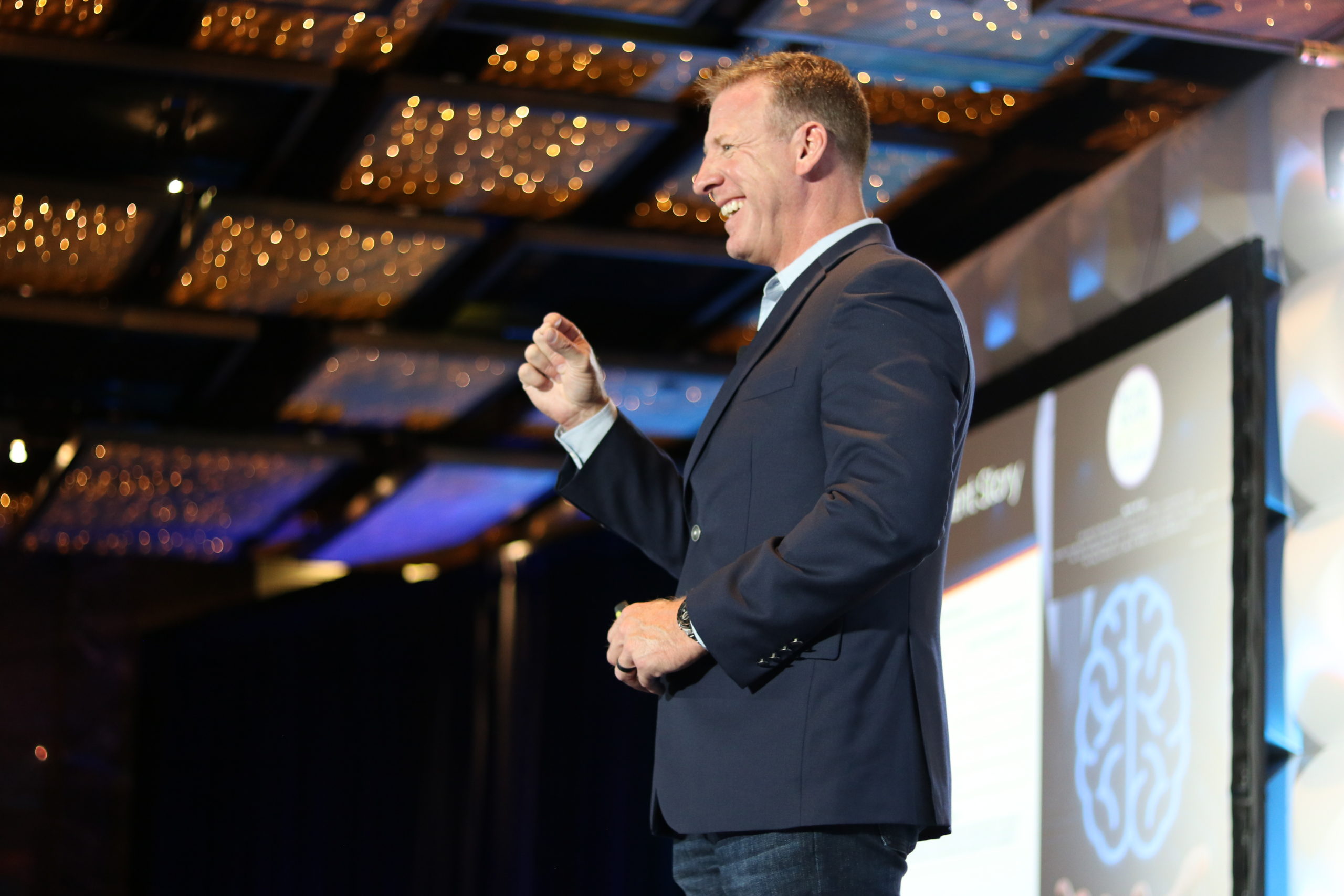
Jeff Bloomfield is a keynote speaker, Wall Street Journal bestselling author, and the founder of Braintrust. He has spent over two decades studying the neuroscience of buyer trust and helping enterprise sales teams at technology companies win complex deals by understanding how their buyers actually decide.
Experience Highlights
- The Neuroscience of Trust-Based Selling
- Why Buyers Ghost Your Best Reps
- How the Brain Decides in B2B
- Leading Revenue Teams Through Uncertainty
Areas of Expertise
Technology and SaaS sales is a different game. The buyers are more technically sophisticated. The sales cycles are longer. The competition is fiercer. And the pressure on CROs and VP Sales to hit number in an environment where budgets are tighter and buyer scrutiny is higher has never been more intense.
Generic sales keynote content doesn't move the needle for tech and SaaS sales teams. What works is a speaker who understands the specific dynamics of selling complex solutions to technical buyers, who can articulate why deals stall and how to unstick them, and who gives reps and leaders a framework they can actually apply on Monday morning.
Here are the top sales keynote speakers for technology companies and SaaS organizations in 2026, evaluated for how directly they address the real obstacles that tech sales teams face.
Quick Comparison: Top Sales Keynote Speakers for Tech and SaaS Events
| Speaker | Primary Focus | Best For | Fee Range |
|---|---|---|---|
| Jeff Bloomfield | Neuroscience of buyer trust, tech sales psychology | SKOs, revenue kickoffs, enterprise sales conferences | $20K–$40K |
| Tiffani Bova | Sales transformation, growth strategy | GTM leadership events, revenue summits | $30K–$60K |
| Jeb Blount | Sales fundamentals, pipeline and prospecting | SDR/AE conferences, tactical sales training events | $25K–$50K |
| Brent Adamson | Challenger Sale, commercial insight | Enterprise sales leadership, strategic account events | $30K–$60K |
| Anthony Iannarino | Strategic selling, revenue leadership | Mid-market to enterprise SaaS sales events | $25K–$50K |
| Keenan | Gap Selling methodology, SaaS sales process | High-growth SaaS sales kickoffs, revenue teams | $20K–$40K |
1. Jeff Bloomfield
Jeff Bloomfield addresses the problem that no other sales speaker for tech companies has cracked: why highly skilled, technically credible sales teams keep losing deals they should win.
The answer, grounded in behavioral neuroscience, is that the human brain doesn't make purchase decisions the way most tech sales training assumes. Your buyer isn't evaluating your product feature set with a rational, linear spreadsheet of pros and cons. They are making a decision based on how much they trust the person across from them, how well that person understands their situation, and whether the story they're telling connects emotionally as well as logically.
For technology and SaaS companies, that gap between how sales teams are trained to sell and how buyers actually decide creates a predictable pattern: deals that advance through discovery and demo, then stall at proposal, then end in no decision. Jeff helps tech sales teams understand exactly why that happens and exactly what to do differently.
As a Wall Street Journal bestselling author and founder of Braintrust, Jeff has spent two decades working inside Fortune 500 organizations helping enterprise sales teams apply the neuroscience of trust to complex, multi-stakeholder deals. His keynote programs are specifically designed for the conditions that define tech and SaaS selling: sophisticated buyers, long cycles, committee decisions, and deals where trust is the deciding factor when three vendors have comparable products.
"Jeff has a unique way of taking the complex concepts of the human brain and applying them in practical ways to how we can build trust and communicate more effectively with customers." — Gary Price, Global Director of Sales, CSZ
My work with tech sales teams consistently reveals the same root cause behind stalled deals and lost business: reps are leading with their product when they should be leading with the buyer's world. The neuroscience is clear on this. The brain's decision-making circuitry responds to trust and relevance before it responds to features or logic. Until reps understand that, they'll keep building technically impressive pitches that don't convert.
2. Tiffani Bova
Tiffani Bova is a two-time Wall Street Journal bestselling author and one of the most recognized voices in sales transformation for technology companies. Her programs are built around the intersection of sales strategy, GTM design, and customer experience, which makes her particularly effective for leadership-level events at tech companies navigating significant revenue model shifts.
Her content is especially relevant for SaaS companies wrestling with the transition from new logo acquisition to expansion revenue, from product-led growth to enterprise sales motion, or from single-product selling to portfolio cross-sell. She helps leadership teams build the strategic alignment between product, marketing, and revenue teams that makes growth sustainable rather than episodic.
Sales transformation, as Bova defines it, refers to the deliberate redesign of a company's go-to-market model to match how buyers actually want to buy rather than how the company has historically sold, including the customer success, renewal, and expansion motions that SaaS revenue increasingly depends on.
She is best positioned for VP Sales, CRO, and GTM leadership events where the conversation needs to go beyond individual rep performance into organizational design.
3. Jeb Blount
Jeb Blount is one of the most prolific and practically oriented sales speakers in the space. His focus is fundamentals: prospecting discipline, pipeline management, objection handling, and closing. For technology and SaaS companies whose SDR and AE teams are struggling with outreach quality, pipeline coverage, or conversion rates, Blount delivers immediately actionable content.
His programs work well when the goal is energizing a broad sales audience around the basics that drive top-of-funnel performance. He is particularly effective at companies where rep behavior and daily discipline are the primary levers for hitting number, rather than strategic account or enterprise-level selling.
Fanatical prospecting, one of his most widely cited frameworks, refers to the disciplined, multi-channel outreach cadence that keeps pipelines healthy by treating prospecting as a non-negotiable daily activity rather than a task delegated to when quota pressure rises.
Jeb Blount is best suited for high-energy SKOs where the focus is motivating reps and reinforcing the fundamentals that produce consistent pipeline.
4. Brent Adamson
Brent Adamson co-created the Challenger Sale framework, which remains one of the most influential models in enterprise B2B sales. His research-backed programs are built around a core insight: the highest-performing sales reps don't build relationships first. They teach first, bringing commercial insight that reframes how buyers think about their own business problems, then tailor that insight to each stakeholder, then take control of the purchase decision process.
For technology companies selling complex enterprise solutions, Challenger-based selling has direct application. Technical buyers and procurement teams in large enterprises have seen every vendor demo and every ROI model. What breaks through is a sales rep who can teach them something they didn't know about their own situation and make them feel uniquely understood.
Commercial insight, as Adamson defines it, refers to the specific, evidence-based reframe a seller brings to a buyer conversation that challenges the buyer's current thinking in a way that naturally leads toward the seller's solution, rather than simply confirming what the buyer already believes.
Adamson is most effective for enterprise sales and strategic account teams where the complexity and duration of the sales cycle make a teaching-based approach more valuable than a relationship-only approach.
5. Anthony Iannarino
Anthony Iannarino has built one of the most engaged followings in B2B sales through his writing, podcasting, and speaking on strategic selling and revenue leadership. His programs focus on the mindset, skills, and approaches that separate elite salespeople from average ones, with particular attention to the ability to create and win opportunities in competitive, complex selling environments.
His content resonates with SaaS and technology companies in the mid-market to enterprise segment where reps need to both open new opportunities and compete hard to win them. He is effective at events where the audience includes a mix of individual contributors and frontline managers who need to lead from the front.
Elite selling, as Iannarino frames it, refers to the combination of strategic thinking, business acumen, and relationship depth that allows a salesperson to create value for a buyer at every stage of the purchase process, not just at the point of proposal.
Anthony Iannarino is a strong fit for revenue conferences and sales leadership events where the goal is raising the floor of performance across the entire team.
6. Keenan
Keenan is the author of Gap Selling and one of the most visible sales voices in the SaaS community. His framework focuses on the specific discipline of identifying the gap between where a buyer is today and where they need to be, and making the value of that gap so clear that the decision to move forward becomes obvious.
For SaaS sales teams struggling with deals that stall at the proposal stage or prospects who go dark after a compelling demo, Gap Selling provides a diagnostic framework that helps reps understand the root cause. Buyers don't stall because they're indecisive. They stall because the gap wasn't made clear enough, or the consequence of staying at status quo wasn't made real enough.
Gap selling, as Keenan defines it, refers to the process of uncovering a buyer's current state with complete specificity, defining the future state they want to reach, and making the gap between those two states so tangible that the buyer experiences the cost of inaction rather than simply evaluating a vendor's features.
Keenan is particularly effective at high-growth SaaS sales events where the audience is technically minded, skeptical of traditional sales training, and looking for a framework that respects their intelligence.
How to Choose the Right Sales Keynote Speaker for a Tech or SaaS Event
Technology and SaaS sales audiences are demanding. Reps can tell within five minutes whether a speaker has actually sold complex deals or is just presenting research from a comfortable distance. These criteria help filter for the speakers who will actually land with your audience.
Step 1: Match the Speaker to the Stage of Growth Your Sales Organization Is In
| Company Stage | Primary Sales Challenge | Right Speaker Match |
|---|---|---|
| Early-stage / scaling fast | Prospecting discipline, pipeline consistency | Jeb Blount |
| Mid-market growth | Converting demos to decisions, reducing no-decision losses | Jeff Bloomfield |
| Enterprise expansion | Challenger-based insight selling, multi-stakeholder navigation | Brent Adamson |
| Revenue model transition | GTM redesign, new logo vs. expansion balance | Tiffani Bova |
| Competitive displacement | Creating and winning opportunities in crowded markets | Anthony Iannarino |
| SaaS-specific deal stall | Gap selling, status quo disruption | Keenan |
Step 2: Test for Authentic Tech and SaaS Fluency
There is a meaningful difference between a speaker who mentions SaaS in a slide title and a speaker who understands the specific mechanics of recurring revenue, expansion selling, multi-product cross-sell, and the psychology of technical buyers. Ask for a reference from a technology company client and ask specifically what shifted in the sales team's behavior after the program.
Step 3: Look for Frameworks, Not Just Inspiration
Tech sales teams are skeptical of motivational content that doesn't come with a specific model they can apply. The highest-value speakers for technology companies leave the room with a named framework and a clear behavioral change they can make in their next customer conversation. Ask the speaker to describe the three things your sales team will do differently after they leave the stage.
Step 4: Confirm Pre-Event Customization
SaaS sales dynamics at a 50-person startup are fundamentally different from enterprise software sales at a 3,000-person company. The speaker who takes the time to understand your ICP, your sales motion, your common objection patterns, and your market position will deliver a materially better program than one who delivers the same content regardless of audience. Jeff Bloomfield includes a customization call with every engagement.
Step 5: Align the Speaker to the Primary Decision Maker in the Room
A sales kickoff that includes SDRs, AEs, SEs, and sales leaders needs a different keynote than a revenue leadership summit for VPs and CROs. Know your dominant audience segment before selecting.
What Makes Buyer Psychology Critical for SaaS Sales
SaaS companies have a specific selling challenge that most generic sales content doesn't address. In enterprise and mid-market SaaS deals, the buyer is often highly technical, highly skeptical, and has been burned by software vendors who over-promised and under-delivered. The relationship between sales rep and buyer is adversarial by default, not by accident.
Rebuilding that relationship from adversarial to trusted advisor isn't a process question. It's a neuroscience question. Jeff Bloomfield's programs give SaaS sales teams a specific understanding of how buyer trust forms, why it breaks down, and what the seller can do at each stage of the sales process to accelerate it. In a market where every SaaS competitor runs the same PLG demo motion and the same ROI calculator, trust is the only true differentiator.
The companies that invest in helping their sales teams understand the human brain of their buyer don't just win more deals. They win faster, with fewer concessions, and with customers who are significantly more likely to expand.
Booking Considerations for Tech and SaaS Sales Events
Premium speakers for large-scale sales kickoffs and annual revenue conferences book 6 to 12 months in advance. For mid-year events and regional programs, 3 to 4 months is often workable. Most top sales speakers now offer purpose-built virtual formats — Jeff Bloomfield's virtual delivery is designed specifically for remote audiences, not a recording of an in-person talk. The difference between a generic keynote and a program your team quotes six months later is almost always customization depth. Require it as a condition of booking.
Frequently Asked Questions
What makes a sales keynote speaker effective for a SaaS or technology company audience?
SaaS and tech sales audiences have high skepticism and low patience for generic content. The speakers who land with these audiences combine three qualities: they understand the specific mechanics of tech selling, they deliver a specific framework rather than inspiration, and they've earned credibility either through experience in the space or through research with enough specificity that the audience can't poke holes in it.
Why do technical buyers behave differently from typical B2B buyers?
Technical buyers have professional skepticism built in. They evaluate claims differently, ask harder questions, and are more attuned to the gap between a vendor's pitch and actual product capability. They also have more internal credibility to lose if they champion a solution that underdelivers. Jeff Bloomfield's neuroscience lens addresses the specific challenge of building trust with buyers who are trained to be suspicious of vendor claims.
How is Jeff Bloomfield's sales keynote different from other keynotes at tech sales events?
Most sales keynotes for tech companies focus on tactics: better discovery questions, stronger objection handling, improved closing sequences. Jeff's programs go deeper, addressing the neuroscience of why buyers decide the way they do. When a sales team understands how the brain processes trust, relevance, and risk, they can diagnose why deals stall and know exactly what to do about it. That shift in understanding is durable in a way that tactical content typically isn't.
What is the right keynote format for a SaaS sales kickoff?
For a full-day SKO, the opening keynote should set the theme and emotional tone for the event. A strong structure is: opening keynote on the "why" that will drive the year, followed by tactical breakout content in the afternoon. Jeff Bloomfield's programs often anchor the opening keynote slot because they create the shared frame that makes all the tactical content that follows more likely to stick.
Should we prioritize motivating the team or teaching them something new?
The most effective sales keynotes do both, but the sequencing matters. Insight before inspiration: give the audience a new frame for understanding their own sales behavior and their buyers' decision-making, then connect that insight to the motivation to change. Speakers who lead with a genuine reframe produce behavioral change that shows up in the next quarter's pipeline.
How far in advance should we book a sales keynote speaker for a technology company event?
For annual events like SKOs and revenue kickoffs, 6 to 12 months of advance planning is standard for premium speakers. Jeff Bloomfield's calendar fills early, particularly for Q1 SKOs and events in the first half of the year. Reaching out in the prior summer or fall gives the most flexibility on date and customization depth.
Is Jeff Bloomfield a fit for smaller tech companies or only enterprise?
Jeff has delivered programs for technology companies across the growth spectrum, from high-growth Series B organizations building their first enterprise sales motion to Fortune 100 software companies with large, mature sales organizations. The neuroscience of buyer trust applies at every scale, and the specific application is always tailored to the company's actual sales context.
If your technology company or SaaS organization is preparing for a sales event and looking for a speaker who can shift how your team thinks about the buyer relationship, not just add tactics to their existing approach, it's worth exploring what a neuroscience-based sales keynote looks like for your specific situation. Start the conversation here.
Keynote Speaker
Jeff delivers keynotes at sales kickoffs, leadership summits, and corporate conferences, combining neuroscience, storytelling, and real-world experience into sessions that move people and stick long after the event ends.
