
Top Leadership Keynote Speakers for Technology and Innovation Summits in 2026
About
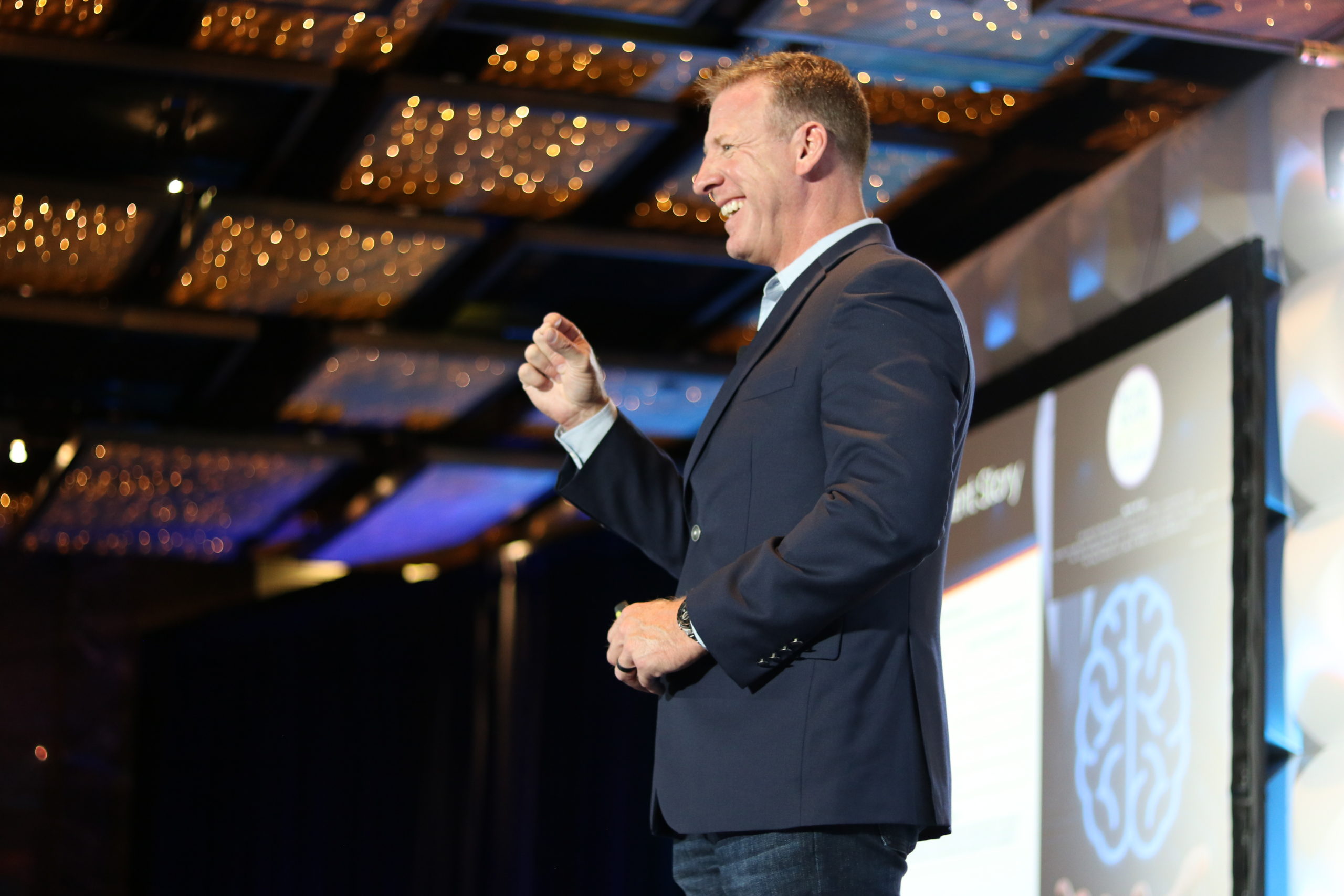
Jeff Bloomfield is a keynote speaker, Wall Street Journal bestselling author, and the founder of Braintrust. He brings the neuroscience of trust and human leadership directly to technology leadership audiences, giving CTOs, CPOs, engineering leaders, and innovation teams specific, evidence-based frameworks for the leadership behaviors that build high-trust, high-performance cultures.
Experience Highlights
- The Neuroscience of Trust-Based Leadership
- Leading Through Disruption Without Losing Your People
- Why Innovation Cultures Require a Different Kind of Leader
- From Compliance to Commitment: The Brain Science
Areas of Expertise
Technology companies don't just need leaders who can manage people. They need leaders who can build the conditions where innovation actually happens: where trust is high enough that people take risks, where communication is clear enough that people commit rather than comply, and where the pace of change doesn't erode the human relationships that make high-performing teams possible.
The right leadership keynote speaker for a technology or innovation summit doesn't talk abstractly about "culture" or "change." They give technology leaders a specific understanding of what produces trust, what produces commitment, and what separates the leaders whose teams push through disruption from the ones whose teams quietly disengage and wait it out.
Here are the top leadership keynote speakers for technology and innovation summits in 2026, evaluated for how directly they address the specific leadership challenges that technology organizations face when moving fast, managing uncertainty, and building the culture that innovation requires.
Quick Comparison: Top Leadership Keynote Speakers for Tech and Innovation Events
| Speaker | Primary Focus | Best For | Fee Range |
|---|---|---|---|
| Jeff Bloomfield | Neuroscience of trust, leading innovation culture | CTO/CPO summits, tech leadership conferences, all-hands | $20K–$40K |
| Brené Brown | Brave leadership, vulnerability and courage | Culture-defining events, leadership off-sites, diversity summits | $100K–$300K |
| Mike Walsh | Future-ready leadership, leading in an AI world | Innovation summits, technology strategy events | $40K–$80K |
| Simon Sinek | Purpose-driven leadership, infinite game mindset | Annual leadership conferences, culture transformation events | $100K–$300K |
| Adam Grant | Rethinking, intellectual humility, organizational psychology | Research-driven leadership events, executive programs | $50K–$100K |
| Liz Wiseman | Multipliers framework, leader effectiveness | L&D conferences, high-potential leader development | $30K–$60K |
1. Jeff Bloomfield
Technology companies are managing a leadership paradox. The pace of change they operate in demands that leaders move fast, make decisions under uncertainty, and communicate direction clearly when the direction itself keeps shifting. But those same conditions erode exactly the things that make people willing to commit: trust, psychological safety, and a genuine belief that their contribution matters.
Jeff Bloomfield addresses this paradox through behavioral neuroscience — specifically, through the brain science of how trust forms, how it breaks, and what leaders can do in their daily communication to create the conditions where innovation and high performance are sustainable rather than episodic.
His programs for technology leadership audiences focus on the communication patterns that distinguish leaders whose teams build trust quickly from those whose teams operate in guarded, self-protective mode. In technology companies, where team structures shift frequently, where remote and distributed teams are the norm, and where leaders are often promoted for technical excellence rather than people leadership, that distinction is the difference between teams that ship great work and teams that spend their energy on internal friction.
As a Wall Street Journal bestselling author and founder of Braintrust, Jeff brings more than 20 years of experience helping leaders at Fortune 500 organizations understand how the brain's trust circuitry shapes the way people follow, the way teams collaborate, and the way organizations respond to change. His programs are specific, neuroscience-grounded, and immediately applicable to the leadership conversations that technology leaders are having in the week after the event.
"Jeff not only inspired our leaders, but had everyone thinking differently about how we coach and communicate in every area of our company." — Matt E., CEO
The leaders who build the best innovation cultures aren't necessarily the most brilliant strategists or the most technically gifted people in the room. They're the ones who have learned how to make people feel safe enough to take risks, honest enough to surface problems early, and invested enough to bring their best thinking to the work. That's a neuroscience outcome before it's a management outcome.
2. Brené Brown
Brené Brown's research on vulnerability, courage, and shame has made her one of the most influential voices in leadership over the past decade. For technology companies, her work has particular resonance because she addresses the specific leadership behaviors that innovation cultures require but that traditional management development rarely teaches: the willingness to be wrong in public, the courage to have hard conversations, and the organizational conditions that allow people to take creative risks without fear of humiliation.
Her program "Dare to Lead" is built on a core insight: that courage is a skill, not a trait. The behaviors that produce brave leadership — clarity, empathy, accountability, and the ability to stay present in difficult conversations — can be learned and practiced. For technology companies where engineering and product culture often skews toward certainty and proof before commitment, that reframe has significant organizational relevance.
Psychological armor, as Brown defines it, refers to the defensive behaviors people adopt when the culture makes it unsafe to be vulnerable: perfectionism, cynicism, detachment, and the tendency to self-protect rather than collaborate. High innovation cultures require leaders who model the alternative.
Brené Brown is particularly effective at culture-defining events, leadership off-sites where trust and candor are core themes, and diversity and inclusion summits where the conversation about belonging requires depth.
3. Mike Walsh
Mike Walsh is the CEO of Tomorrow, a global consultancy focused on future-ready leadership, and has delivered keynotes in more than 60 countries on how to lead and build organizations in an era shaped by AI and emerging technology. His programs are specifically designed for the challenge that technology company leaders face: how to lead humans effectively while the tools, processes, and business models around them change at a pace no previous generation of leadership has experienced.
His content is distinguished by its global breadth and its focus on the behavioral and organizational patterns of the companies that are actually winning in the AI era, not by theorizing about what might happen but by documenting what is already working at the frontier.
Algorithm-driven organizations, as Walsh defines them, refer to companies that have fundamentally redesigned how decisions are made, how work is structured, and how value is delivered so that human judgment and machine intelligence are combined deliberately rather than layered on top of legacy management practices.
Mike Walsh is best suited for innovation summits, technology strategy events, and leadership conferences where the goal is preparing senior leaders to make better organizational decisions in an environment of continuous technological disruption.
4. Simon Sinek
Simon Sinek's framework on purpose and leadership has evolved significantly since "Start with Why." His current focus on the "infinite game" of leadership — building organizations to outlast any single product cycle, market shift, or competitive threat — has particular resonance for technology companies facing long-term competitive pressure from well-funded rivals.
For technology leadership events, Sinek's infinite game lens addresses a question that comes up repeatedly: how do you make decisions about culture, people, and long-term investment when short-term metrics are the primary accountability mechanism? His answer is grounded in the distinction between finite-minded leaders who optimize for quarterly results and infinite-minded ones who build the capacity to keep adapting and competing over time.
Just cause, as Sinek defines it, refers to a vision of a future state so compelling and specific that it can serve as a guiding north star for organizational decisions even when the path isn't clear — the kind of "why" that keeps talented people committed through the uncertainty that scaling technology companies inevitably face.
Simon Sinek is most effective at large-format annual leadership conferences and culture transformation events where the goal is aligning a broad leadership population around a shared sense of direction.
5. Adam Grant
Adam Grant is an organizational psychologist at Wharton and one of the most sought-after voices on the psychology of leadership, creativity, and organizational change. His recent work on "rethinking" — the cognitive discipline of reconsidering what we believe and updating our views based on new evidence — has direct application for technology leaders operating in environments where the playbooks keep changing.
His programs help leadership teams understand why the behaviors that made them successful at one stage of growth often become liabilities at the next stage, and how to build cultures that value intellectual humility, learning from failure, and the kind of constructive disagreement that produces better decisions.
Intellectual humility, as Grant defines it, refers to the combination of confidence in your capacity to learn and skepticism about the certainty of what you currently believe — the cognitive orientation that allows leaders to update their views in response to new evidence rather than defending their prior positions.
Adam Grant is a strong fit for research-driven leadership events, executive education programs, and technology leadership summits where the audience is intellectually engaged and wants to engage with the evidence base behind leadership practices.
6. Liz Wiseman
Liz Wiseman's research on leader effectiveness produced the Multipliers framework, one of the most practically actionable leadership models in widespread use. The core finding: some leaders amplify the intelligence and capability of everyone around them (Multipliers), while others, often unintentionally, diminish the thinking and contribution of their teams (Diminishers). The difference isn't about how smart leaders are. It's about how they use their intelligence.
For technology companies, the Multipliers framework addresses a pervasive leadership problem: the technical brilliance that gets people into leadership roles often produces Diminisher behaviors — solving problems others should solve, making decisions others should make, and inadvertently communicating that their way is the only way. That pattern is particularly costly in innovation environments where the diversity and quality of thinking across the team is what produces the best outcomes.
Multiplier leadership, as Wiseman defines it, refers to a style in which the leader's primary role shifts from being the smartest person in the room to being the person who creates the conditions for others to do their best thinking, which produces organizations that get more collective intelligence from the same talent.
Liz Wiseman is most effective at leadership development conferences, high-potential leader programs, and CTO/CPO leadership events where the audience is ready to examine their own leadership patterns with specificity and honesty.
How to Choose the Right Leadership Keynote for a Technology or Innovation Summit
Technology leadership audiences have high expectations and low patience for generic content. These selection criteria narrow the field to speakers who will actually produce a shift in how your leaders think and lead.
Step 1: Anchor the Keynote to Your Specific Leadership Challenge
| Leadership Challenge | Right Speaker Match |
|---|---|
| Trust is low; teams are guarded and playing it safe | Neuroscience of trust and communication (Jeff Bloomfield) |
| Culture doesn't support the risk-taking innovation requires | Brave leadership and vulnerability (Brené Brown) |
| Leaders struggling to navigate AI and disruption | Future-ready leadership (Mike Walsh) |
| Organization lacks a compelling "why" that holds people through change | Purpose and infinite game (Simon Sinek) |
| Leadership team stuck in patterns, resistant to rethinking | Intellectual humility and organizational psychology (Adam Grant) |
| Leaders inadvertently diminishing their teams | Multipliers framework (Liz Wiseman) |
Step 2: Distinguish Between Keynote-Level and Workshop-Level Needs
A 45-minute keynote is not a substitute for sustained leadership development. But a well-chosen keynote can create the shared vocabulary and shared frame that makes subsequent development work more effective. Speakers like Jeff Bloomfield and Liz Wiseman offer extended program formats that go beyond a single keynote session.
Step 3: Confirm Technology Sector Fluency
Technology leadership audiences — particularly CTO and CPO populations — are quick to dismiss speakers who speak about "culture" or "innovation" in a way that could apply to any industry. Look for specific examples from technology company clients, specific language that reflects an understanding of how tech organizations are structured, and content that addresses the tensions of leading in a fast-moving technical environment.
Step 4: Require a Customization Conversation Before Booking
The most effective leadership keynotes for technology events are built around the specific organizational context, not delivered as standardized programs. Jeff Bloomfield includes a pre-event customization call with every engagement to ensure the content is built around your leadership team's actual challenges.
What Technology Leaders Need That Generic Leadership Content Doesn't Provide
Technology organizations create a specific leadership environment that generic leadership development doesn't address. The pace of change is constant and compounding. Leaders frequently manage across time zones and functions. The people they lead are often technically superior to them in one or more critical areas. And the competitive dynamics of technology markets mean that the margin between a highly aligned team and a dysfunctional one shows up directly in the product and in talent retention.
The leadership behaviors that thrive in those conditions require a different set of capabilities than the ones most leadership programs develop. Understanding how trust forms under conditions of uncertainty. Knowing how to communicate direction when the direction isn't fully determined. Building psychological safety in teams that are remote, distributed, and under perpetual performance pressure.
These are the specific skills that Jeff Bloomfield's neuroscience-based programs address directly — and that most generic leadership content skips entirely.
Booking Considerations for Technology Leadership Events
Top-tier leadership speakers at major technology company events book 6 to 12 months in advance. For speakers like Brené Brown and Simon Sinek, slots fill a year or more ahead of large-format events. Consider whether your event needs a keynote, a workshop, or a leadership retreat format — Jeff Bloomfield and Liz Wiseman both offer extended formats beyond the standard keynote. The gap between a generic leadership keynote and one your team references months later is almost entirely a function of how deeply the speaker invested in understanding your organization before the event.
Frequently Asked Questions
What makes a leadership keynote speaker effective for a technology or innovation summit?
Technology leadership audiences tend to be skeptical of inspiration that isn't grounded in evidence. The most effective speakers for these events combine intellectual credibility with a specific, repeatable framework and evidence that the framework produces measurable outcomes in real organizations. Generic motivational content lands poorly with CTOs, CPOs, and engineering leadership populations.
Why is the neuroscience of trust particularly relevant for technology companies?
Technology companies operate under conditions that systematically erode trust: rapid organizational change, frequent team restructuring, remote work, performance pressure, and a tendency to promote technical experts into leadership roles without developing their human leadership skills. Understanding how trust forms and breaks at the neurological level gives technology leaders a specific, evidence-based framework for the behaviors that build it. Jeff Bloomfield's programs are built around exactly that framework.
How is Jeff Bloomfield's leadership keynote different from a general culture or management talk?
Most leadership keynotes address culture or management philosophy at a high level of abstraction. Jeff's programs go deeper, addressing the specific brain science of how people follow leaders, why communication fails even when the words are right, and what leaders can do in specific types of conversations to build genuine commitment rather than surface compliance. The outcome is a specific, immediately applicable behavioral shift rather than an inspiring message that fades.
Should the leadership keynote focus on individual leader development or organizational culture?
The most effective keynotes for technology leadership events anchor on individual behavior: the cultural outcomes that technology organizations want are the aggregate result of the leadership behaviors of every manager in the room. Helping individual leaders understand and change specific behaviors is the most direct path to cultural outcomes.
Is Jeff Bloomfield appropriate for technology leadership audiences who are skeptical of soft skills content?
Yes. The neuroscience framing specifically addresses the skepticism that engineering and technology leadership audiences often carry toward interpersonal leadership content. When leaders understand the brain science behind why trust affects performance, why communication patterns produce commitment or compliance, and why specific behaviors produce measurable team outcomes, the conversation shifts from soft skills to evidence-based practice. That reframe is one of the most consistent outcomes Jeff produces with technology leadership audiences.
How far in advance should technology companies book a leadership keynote speaker?
For major annual leadership conferences and technology summits, 6 to 12 months of advance planning is standard. For speakers in the highest fee tiers like Brené Brown and Simon Sinek, 12 to 18 months is more realistic. Jeff Bloomfield's calendar fills early for Q1 leadership events and major tech company summits.
If your technology or innovation leadership event is designed to shift how your leaders think about trust, communication, and the human conditions that produce innovation, the neuroscience-based approach Jeff Bloomfield brings has a specific track record with technology leadership populations at exactly this stage of that conversation. Start the conversation here.
Keynote Speaker
Jeff delivers keynotes at sales kickoffs, leadership summits, and corporate conferences, combining neuroscience, storytelling, and real-world experience into sessions that move people and stick long after the event ends.
