
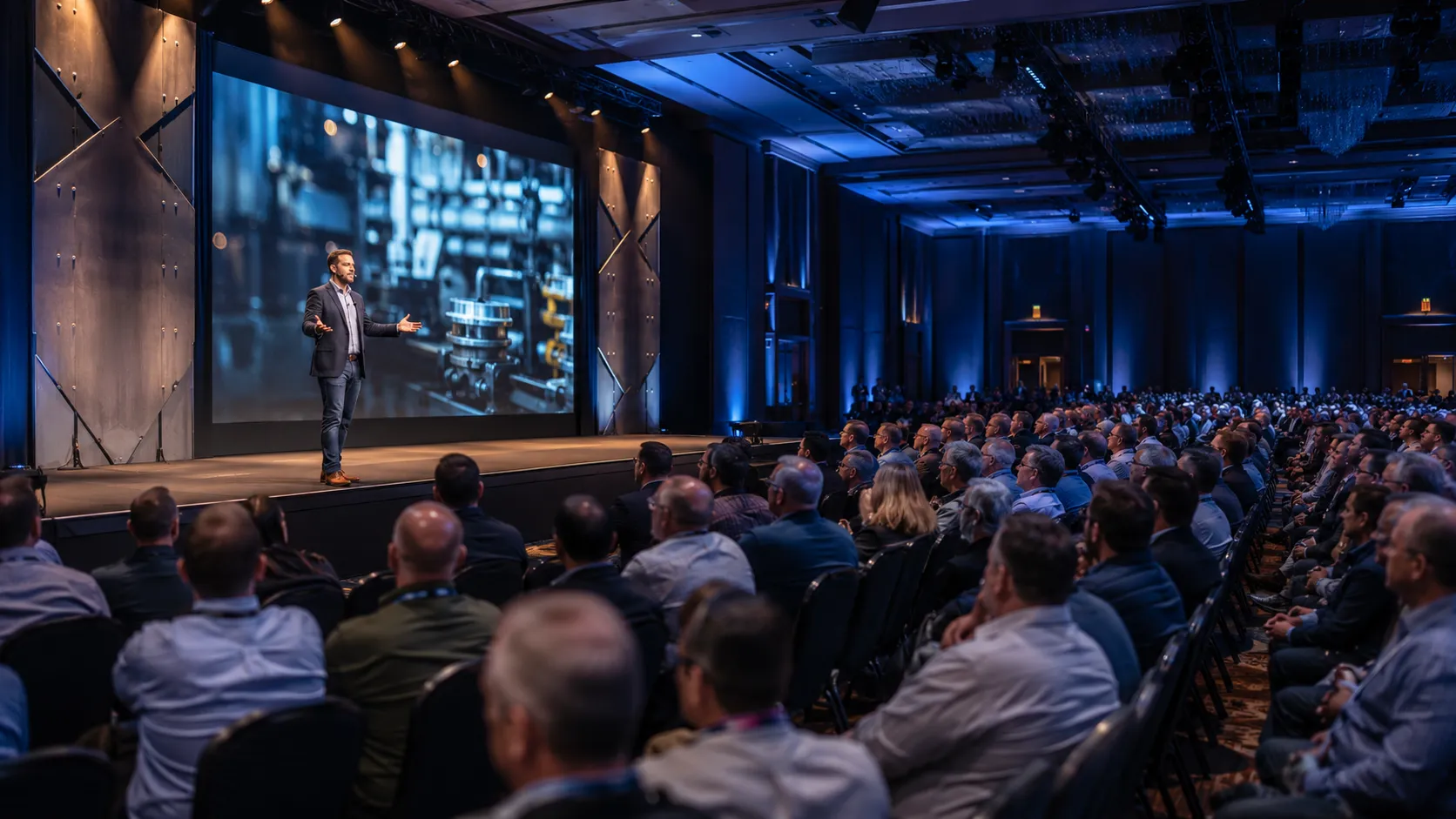
Top Leadership Keynote Speakers for Manufacturing and Operations Conferences in 2026
About
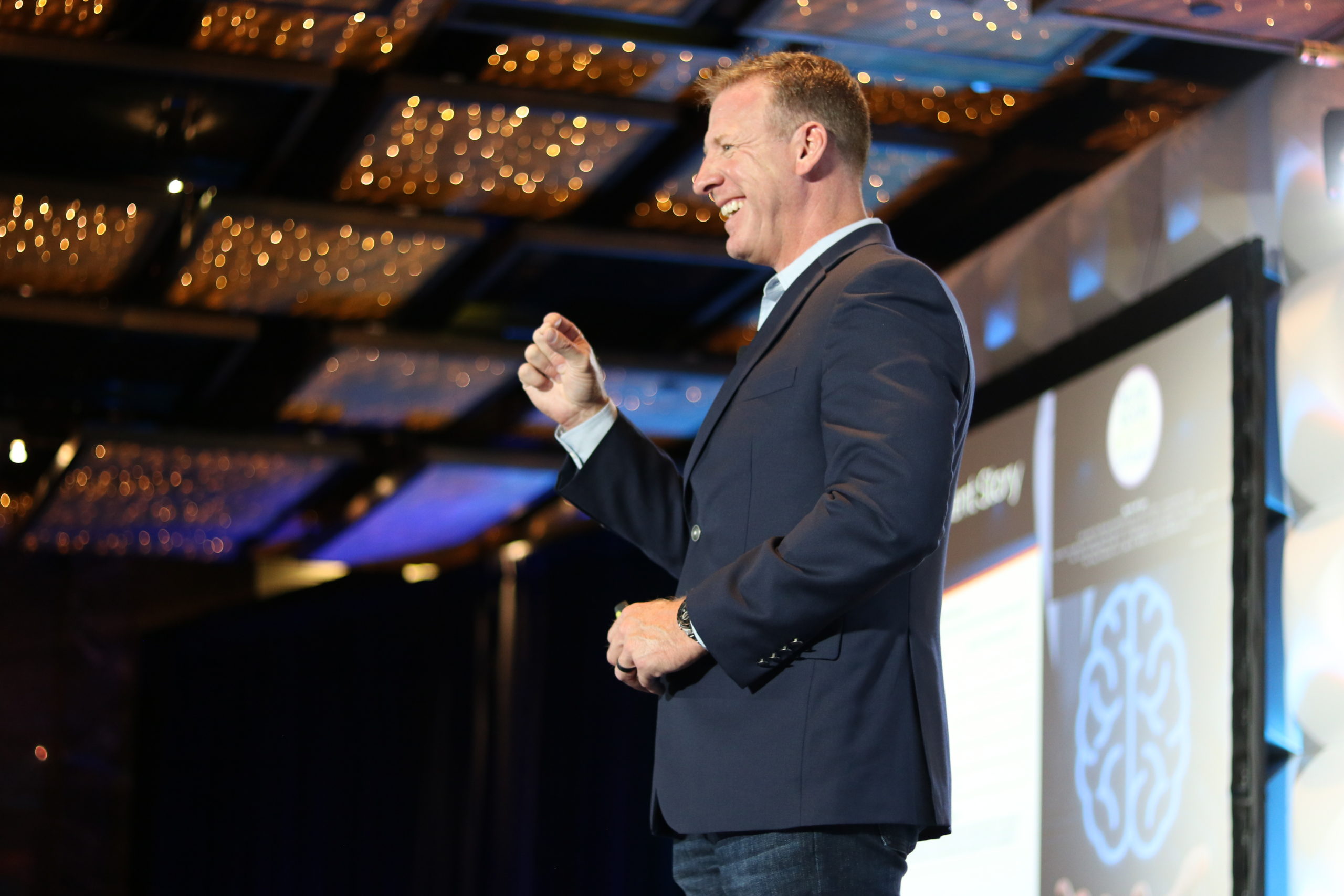
Jeff Bloomfield is a keynote speaker, Wall Street Journal bestselling author, and founder of Braintrust. He brings the neuroscience of trust and operational leadership to manufacturing and industrial audiences, giving plant managers, VPs of Operations, and COOs specific, evidence-based frameworks for building the trust, accountability, and communication that high-performance operational cultures require.
Experience Highlights
- The Neuroscience of Trust in Operational Leadership
- Why Front-Line Workers Disengage and What Changes It
- Communication Patterns That Build Commitment vs. Compliance
- Leading Through Operational Change Without Losing Your Culture
Areas of Expertise
Manufacturing and operations organizations face a leadership challenge that most leadership development programs were not built for. Their leaders manage complex, high-consequence environments where every shift, every line, and every plant requires precise coordination, strong safety culture, and the kind of distributed decision-making that keeps production running even when conditions change without warning.
The right leadership keynote for a manufacturing or operations conference doesn't talk about culture at an abstract level. It gives plant managers, VPs of Operations, COOs, and operational leaders a specific framework for the behaviors that build the trust, discipline, and accountability that high-performing manufacturing teams require.
Here are the top leadership keynote speakers for manufacturing and operations conferences in 2026, evaluated for how directly they address the specific leadership conditions that industrial organizations operate in.
Quick Comparison: Top Leadership Keynote Speakers for Manufacturing and Operations Events
| Speaker | Primary Focus | Best For | Fee Range |
|---|---|---|---|
| Jeff Bloomfield | Neuroscience of trust, operational leadership communication | VP Operations summits, plant leadership conferences, manufacturing all-hands | $20K–$40K |
| Jeffrey Liker | Toyota Way, lean leadership culture | Lean/continuous improvement conferences, operations excellence events | $30K–$60K |
| David Marquet | Distributed leadership, Turn the Ship Around framework | Safety culture events, plant manager summits, operational leadership programs | $25K–$50K |
| Stan McChrystal | Team of Teams, leadership in complex systems | Large-format manufacturing leadership conferences, COO/VP summits | $75K–$150K |
| Gary Hamel | Management innovation, rethinking operational culture | Executive leadership events, industry transformation conferences | $50K–$100K |
| Alden Mills | Building resilient high-performance teams | Operations team-building events, front-line leadership development | $25K–$50K |
1. Jeff Bloomfield
Manufacturing and operations organizations develop leaders differently from most sectors. They promote people who are technically excellent: engineers, production managers, plant supervisors who have mastered the process. But mastering the process and leading the people who run the process are fundamentally different disciplines. And in manufacturing, the gap between those two skill sets shows up in ways that are impossible to hide: in safety incidents, in turnover rates among experienced front-line workers, and in the slow erosion of the institutional knowledge that makes a plant competitive.
Jeff Bloomfield addresses that gap through the neuroscience of trust. His programs help manufacturing and operations leaders understand why their communication patterns produce either commitment or compliance from their teams, and what specific behavioral changes close the gap between leaders who retain and develop talent and those who watch experienced workers leave for a competitor.
His programs are particularly relevant for manufacturing organizations because the leadership challenge in these environments is not primarily strategic. It is relational. Front-line workers in manufacturing organizations decide every day how much discretionary effort they bring to work, how honestly they surface problems, and how much they trust that management will respond to their concerns. That decision is driven almost entirely by the quality of their relationship with their immediate leader. And that relationship is built or broken through the specific communication behaviors Jeff's programs change.
As a Wall Street Journal bestselling author and founder of Braintrust, Jeff brings more than 20 years of experience helping leaders at industrial and Fortune 500 organizations apply the neuroscience of trust to their most consequential leadership conversations. His programs are built for operational leaders who are skeptical of generic leadership content and who need something they can apply immediately on the plant floor.
"Jeff not only inspired our leaders, but had everyone thinking differently about how we coach and communicate in every area of our company." — Matt E., CEO
The leaders who build the strongest manufacturing cultures are not the ones with the most technical expertise. They are the ones whose teams will tell them the truth about what's happening on the line, who will bring their best thinking to safety and quality problems, and who will stay when a competitor offers marginally more pay. That's a trust outcome, and trust is a skill that can be learned.
2. Jeffrey Liker
Jeffrey Liker is the author of "The Toyota Way," one of the most influential management books in industrial history, and the definitive authority on lean leadership as a cultural system rather than a process toolkit. His programs are built around a core insight that most lean and continuous improvement initiatives miss: the tools of lean manufacturing cannot be sustained without a specific kind of leadership culture underneath them.
The failure mode Liker documents across hundreds of organizations is consistent. A company sends a team to Japan to learn about the Toyota Production System. They come back excited and implement 5S, value stream mapping, and standard work. Within 18 months, the gains have eroded because the leadership culture required to sustain those gains was never built. The tools require problem-solving at every level. Problem-solving at every level requires leaders who create the conditions where workers will surface problems honestly and managers will respond constructively.
Respect for people, as Liker defines it, is not a platitude about treating workers well. It is a specific operational practice: developing people's capability by challenging them to solve the problems they are closest to, rather than solving those problems for them. It is the leadership behavior that makes lean culture self-sustaining because it builds the problem-solving capacity of the organization from the bottom up.
Jeffrey Liker is the strongest choice for lean and continuous improvement conferences, operations excellence summits, and manufacturing leadership events where the organization is trying to build sustainable rather than episodic improvement.
3. David Marquet
David Marquet commanded the USS Santa Fe, a nuclear-powered submarine, and turned one of the worst-performing submarines in the US Navy fleet into the best — without replacing a single crew member. His book "Turn the Ship Around" has become required reading for operations leaders because the environment of a nuclear submarine closely mirrors the conditions that manufacturing organizations operate in: high stakes, high complexity, high interdependence, and enormous consequences for error.
His framework is built around a fundamental reframe of how authority is distributed in operational organizations. Most manufacturing organizations run on what Marquet calls a leader-follower model: leaders tell, followers do. That model is efficient at scale but fragile under conditions of complexity, change, or unexpected disruption. It also systematically underutilizes the judgment, knowledge, and problem-solving capacity of experienced front-line workers and first-line supervisors who know things that managers don't.
Intent-based leadership, as Marquet defines it, refers to the practice of pushing authority down to the level where information lives, rather than pushing information up to where authority lives. In manufacturing terms: instead of supervisors making every decision and workers executing, workers communicate intent and supervisors coach thinking rather than issuing instructions. The result is faster decisions, better problem detection, and a workforce that behaves as owners of their process rather than operators of equipment.
David Marquet is particularly effective at safety culture events, plant manager leadership summits, and any manufacturing conference where the goal is reducing error rates and increasing front-line ownership.
4. Stan McChrystal
General Stanley McChrystal commanded the Joint Special Operations Command during some of the most complex operations of the post-9/11 era, and used that experience to develop the Team of Teams framework, which has become one of the most cited models for leading complex organizations operating in rapidly changing environments. His programs are built around what he learned when the traditional command-and-control model failed to keep pace with a networked, adaptive adversary.
The lesson for manufacturing and operations organizations is direct: the traditional hierarchy that made industrial organizations competitive in stable, predictable environments becomes a liability when the environment changes faster than information can travel up the chain and decisions can travel back down. What replaces it is not chaos, but a specific kind of networked organizational design where trust is high enough, communication is frequent enough, and shared purpose is clear enough that distributed teams can act with coordination without requiring constant central approval.
Team of Teams, as McChrystal defines it, refers to an organizational structure in which each team maintains the cohesion and trust of a small unit while simultaneously being interconnected with other teams through shared information, shared purpose, and shared relationships, allowing the whole organization to adapt at the speed of its fastest-moving parts.
Stan McChrystal is most effective at large-format manufacturing and industrial leadership conferences where the audience is senior enough to make organizational design decisions and the event is focused on building adaptability and resilience rather than optimizing current-state processes.
5. Gary Hamel
Gary Hamel is the co-founder of the Management Lab and one of the most provocative and rigorously researched voices on management innovation. His work addresses a question that manufacturing and operations organizations face with particular urgency: why do so many organizations that are excellent at operational execution fail when the operating environment requires fundamental organizational change?
His research focuses on the design of management systems, specifically on how bureaucratic hierarchies were designed for an era of mass production and stable competition, and why those systems produce organizations that are competent at executing the past but incapable of adapting to the future. For manufacturing companies facing supply chain disruption, AI-driven automation, workforce transformation, and competitive pressure from global players with dramatically lower cost structures, that question is not academic.
Management innovation, as Hamel defines it, refers to the invention of new principles, processes, and practices of management, as distinct from operational or product innovation. The argument is that sustainable competitive advantage in a world of rapid change requires the ability to change how the organization is managed, not just what it produces.
Gary Hamel is most effective at executive leadership events for manufacturing companies navigating significant strategic transformation, where the audience includes C-suite leaders who are ready to question organizational assumptions, not just optimize current practices.
6. Alden Mills
Alden Mills is a former Navy SEAL, three-time Navy SEAL platoon commander, and the founder and CEO of a consumer products company that became one of the fastest-growing in history. His programs are built around the leadership behaviors that produce performance under the specific conditions of operational stress: how to keep teams cohesive when things go wrong, how to build the resilience that sustains performance through setbacks, and how to develop the individual accountability that makes high standards possible without creating a culture of blame.
His content translates directly to manufacturing and operations environments because the leadership challenges of a SEAL platoon — managing highly skilled specialists in high-stakes environments where error is consequential and cohesion is survival — are closer to the challenges of plant management than most speakers acknowledge.
Be-Know-Do leadership, one of Alden's foundational frameworks, refers to the principle that effective leadership requires first being the kind of person others will follow (character and credibility), then knowing what is actually required to accomplish the mission in the real conditions rather than the ideal ones, and finally doing the actual work of leading in the moment rather than delegating leadership upward or downward.
Alden Mills is particularly effective at operations team-building events, front-line leadership development conferences, and manufacturing summits where the goal is building the kind of team resilience and individual accountability that high-performance operational cultures require.
How to Choose the Right Leadership Keynote for a Manufacturing or Operations Conference
Manufacturing and operations audiences are practical and skeptical. They respond to specificity and dismiss abstraction quickly. These criteria help identify speakers who will actually produce a shift in how your operational leaders lead.
Step 1: Match the Speaker to the Primary Leadership Gap in Your Organization
| Leadership Gap | Right Speaker Match |
|---|---|
| Experienced workers not bringing problems forward; guarded culture | Neuroscience of trust and communication (Jeff Bloomfield) |
| Lean gains eroding because culture wasn't built | Toyota Way and lean leadership culture (Jeffrey Liker) |
| Too centralized; front-line judgment underutilized | Intent-based leadership and distributed authority (David Marquet) |
| Organization too slow to adapt to disruption | Team of Teams organizational design (Stan McChrystal) |
| Leadership model working for today but not for the next decade | Management innovation and rethinking hierarchy (Gary Hamel) |
| Team resilience and accountability breaking down under operational stress | High-performance team building (Alden Mills) |
Step 2: Confirm Operational Credibility, Not Just Leadership Credibility
Manufacturing audiences specifically respect speakers who have operated in conditions of real consequence. The combination of personal operational experience plus a transferable framework is the highest-value profile for these events. Be cautious of speakers who are credible as thought leaders but who have never managed the kind of high-stakes, high-accountability environments your leaders manage every day.
Step 3: Look for Frameworks That Survive the Plant Floor
The test of a good manufacturing leadership keynote is not what happens in the conference room. It's whether your front-line supervisors are still referencing the content six weeks later when they face a real situation that the framework applies to. Require that every speaker you evaluate can describe what your leaders will do differently the next day.
Step 4: Require Pre-Event Customization
The gap between a good leadership keynote and a great one is almost always customization depth. Jeff Bloomfield includes a pre-event conversation with every engagement to ensure the neuroscience content is anchored in the specific leadership situations your manufacturing leaders face.
What Manufacturing Leaders Need That Generic Leadership Content Doesn't Provide
Manufacturing and operations leadership exists in an environment that most general leadership programs never explicitly address. The consequences of leadership failure are immediate and visible: in safety statistics, in scrap rates, in line downtime, in turnover of operators who took years to develop. The feedback loop between leadership behavior and organizational outcome is shorter and sharper than in almost any other sector.
The leadership skills that thrive in that environment require a specific kind of development. How trust forms under conditions of physical risk and safety accountability. How to communicate direction clearly when the situation is changing on the floor in real time. How to build the psychological safety that makes workers willing to stop a line when something isn't right, even when production pressure is intense.
These are the specific conditions that Jeff Bloomfield's neuroscience-based programs address directly. The same brain science that governs how an engineer trusts their manager governs how a press operator trusts their shift supervisor. But the specific situations, the specific stakes, and the specific language of manufacturing require a speaker who understands both the neuroscience and the environment.
Booking Considerations for Manufacturing Leadership Events
Premium manufacturing conference speakers, especially those with military leadership backgrounds, book 6 to 12 months in advance for major annual events. McChrystal and Marquet fill particularly quickly for events where safety culture is the primary focus. Consider whether a keynote, breakout, or full-day workshop format serves your needs — Jeffrey Liker and Jeff Bloomfield both offer extended formats for deeper skill development. The most effective manufacturing leadership keynotes are built around the specific operational context, not delivered as off-the-shelf programs. Plant managers and operations leaders will disengage from content that sounds like it was written for a generic corporate audience.
Frequently Asked Questions
What makes a leadership keynote speaker effective for a manufacturing or operations audience?
Manufacturing and operations audiences are highly practical and skeptical of content that can't be applied in their actual environment. The most effective speakers combine operational credibility with a specific, named framework that gives leaders something to do differently the next time they face the situation the keynote addresses. Generic leadership inspiration without a transferable framework lands poorly with plant managers and operations leaders who have real problems to solve Monday morning.
Why is trust-based leadership particularly important in manufacturing environments?
In manufacturing, leadership effectiveness shows up in ways that are directly measurable: safety incident rates, voluntary turnover, quality yields, and the speed with which problems surface and get resolved. All of these outcomes depend on whether front-line workers trust their immediate leaders enough to be honest, to bring their full effort, and to stay. Jeff Bloomfield's neuroscience-based programs give manufacturing leaders the specific behavioral skills that produce that trust.
How is Jeff Bloomfield's leadership program different from a general management skills workshop?
Jeff's programs go directly to the brain science of why people follow, why communication produces commitment or compliance, and why specific leadership behaviors produce measurable team outcomes. That neuroscience framing is particularly effective with manufacturing audiences because it gives operational leaders a specific, evidence-based explanation for results they've observed on the floor for years but never had language for.
Should manufacturing leadership keynotes focus on culture, safety, or operational performance?
The most effective framing integrates all three, because in manufacturing environments they're not separate topics. Safety culture is a trust outcome. Operational performance is a culture outcome. And culture is a leadership behavior outcome. Keynotes that treat these as separate themes miss the integrated nature of what produces consistent results in industrial organizations.
Is Jeff Bloomfield a fit for front-line supervisor audiences or only senior leadership?
Jeff has delivered programs across the full organizational hierarchy in manufacturing companies, from plant manager development programs to C-suite leadership summits. The neuroscience of trust applies at every level, and the behavioral skills his programs develop are as valuable for a first-line supervisor managing a shift as for a VP of Operations managing a plant network.
How far in advance should manufacturing companies book leadership keynote speakers for annual conferences?
For major annual events and plant leadership summits, 6 to 12 months is standard for premium speakers. Speakers like Stan McChrystal fill well in advance for manufacturing safety and operations culture events. Jeff Bloomfield's calendar fills early for Q1 events and industry-specific manufacturing conferences.
If your manufacturing or operations conference is designed to shift how your leaders think about trust, communication, and the human conditions that produce safety and operational excellence, the neuroscience-based approach Jeff Bloomfield brings has specific relevance for the environments your leaders operate in every day. Start the conversation here.
Keynote Speaker
Jeff delivers keynotes at sales kickoffs, leadership summits, and corporate conferences, combining neuroscience, storytelling, and real-world experience into sessions that move people and stick long after the event ends.
