
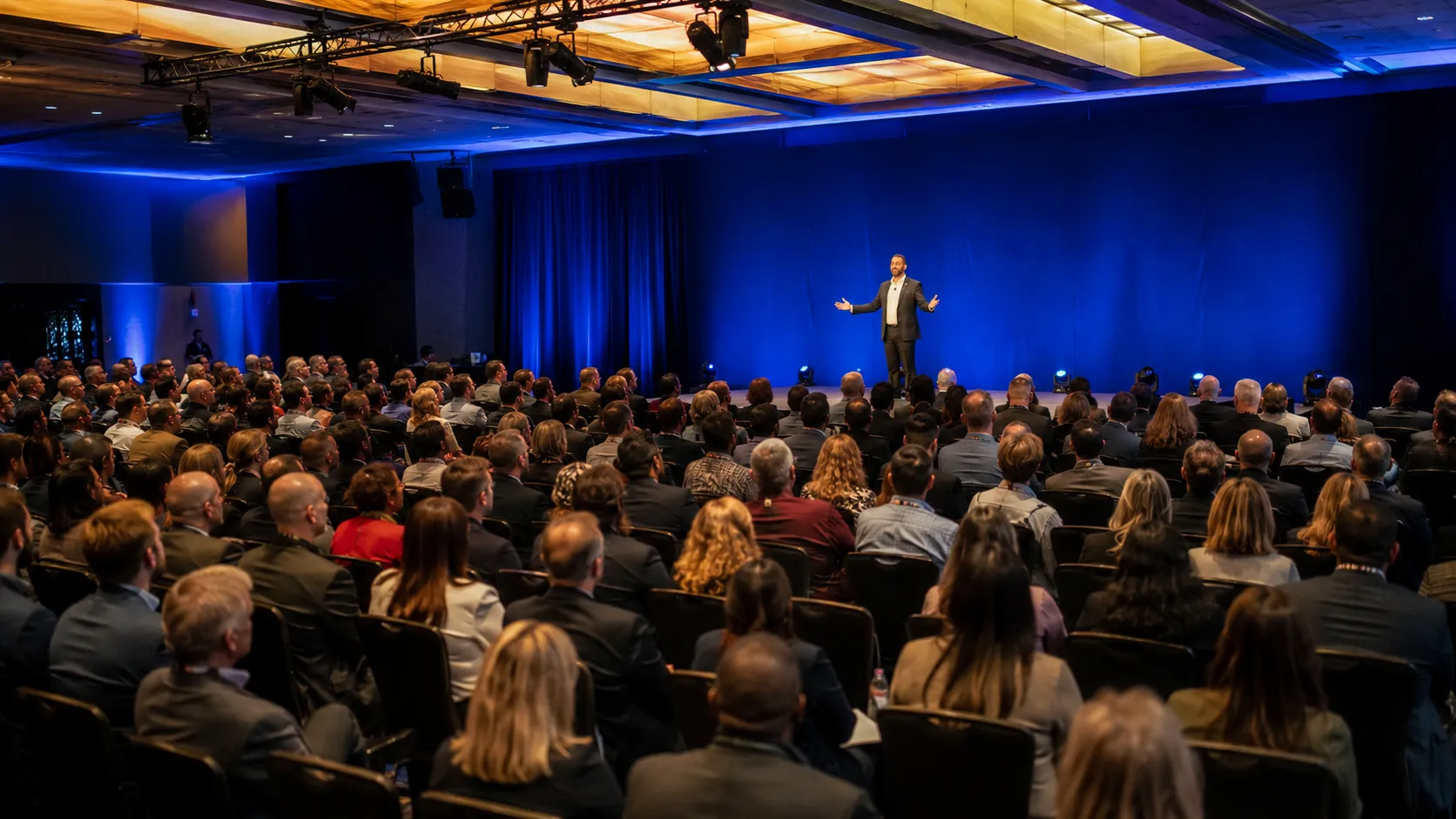
What Makes a Great Keynote Speaker for Association Conferences?
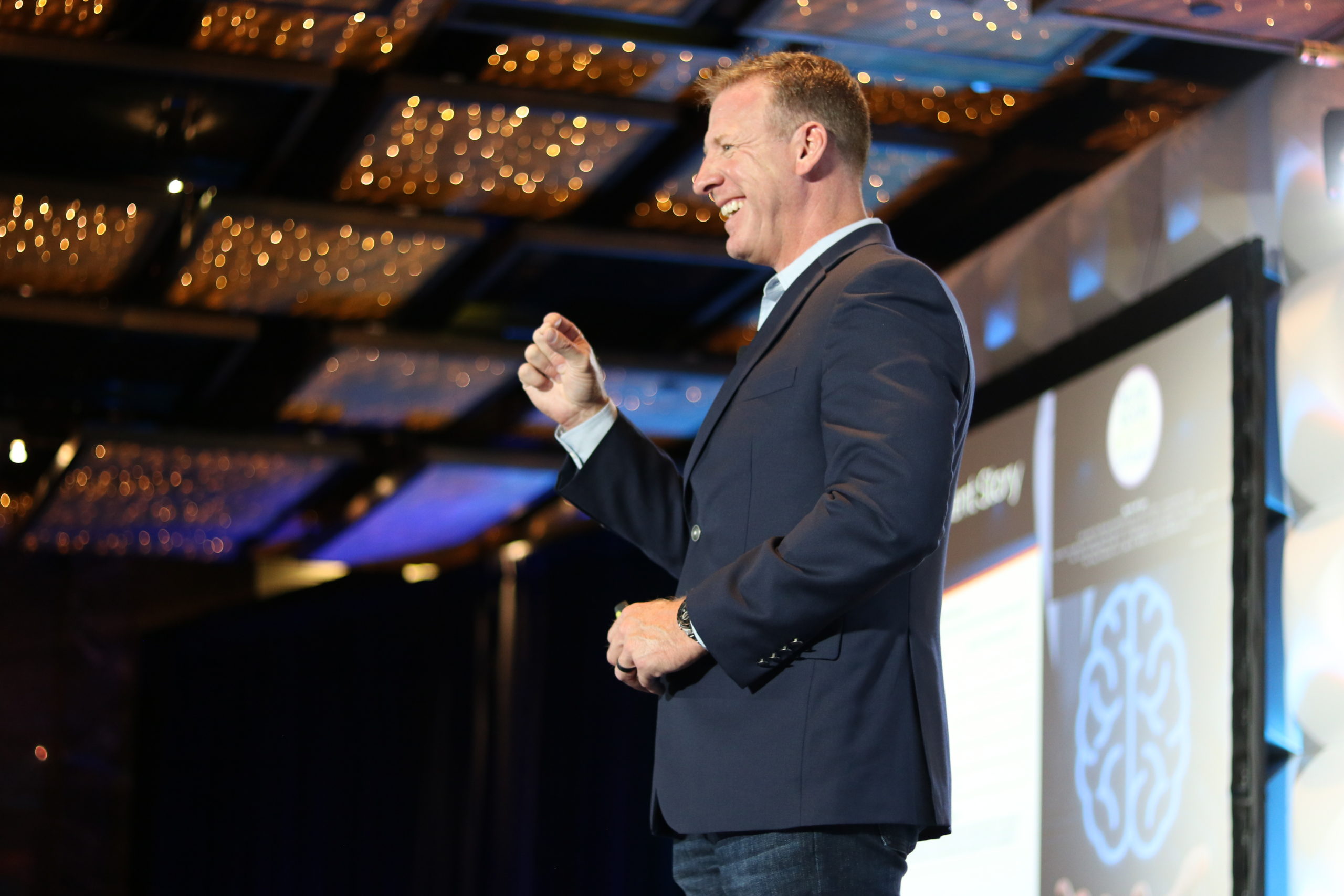
About
Jeff Bloomfield is a keynote speaker, Wall Street Journal bestselling author, and founder of Braintrust. He delivers keynote programs for association annual conferences, corporate events, and industry summits across sales, leadership, AI, and storytelling — combining brain science and real-world frameworks to produce sessions that stick long after the event ends.
Conference Keynote Topics
- The Neuroscience of Trust and Communication
- How Leaders Build Cultures Worth Staying For
- Story-First Communication for Sales and Leadership
- AI and the Human Edge: Leading in the Age of Intelligent Machines
Expertise
Association conference planning committees make one of the most consequential decisions in their annual calendar when they choose the opening keynote speaker. Get it right, and members leave energized, unified, and connected to why belonging to this association matters. Get it wrong, and the entire event tone suffers before the first breakout session begins.
The challenge is that the selection process is rarely well-structured. Most committees rely on name recognition, speaker bureau recommendations, or whoever made a strong impression at another event. These are not reliable proxies for what actually produces a great association conference keynote.
This guide gives association executives, conference directors, and planning committees a structured framework for identifying, evaluating, and booking speakers who will serve your membership, elevate your event, and produce outcomes you can point to when membership renewal season arrives.
The association audience is unique. Your members have attended this conference before. They have heard keynotes that inspired them for a week and changed nothing. They will evaluate your speaker selection quickly, and their verdict will shape how they talk about the event to colleagues who did not attend.
Why Association Conference Audiences Are Different From Corporate Event Audiences
Understanding this distinction before you begin your speaker search will save you from the most common and costly mistake association planners make: booking a speaker who crushes it at corporate sales kickoffs and delivers a forgettable session to your membership.
Association audiences are voluntary and member-driven. Attendees are not employees who were told to show up. They chose to register, pay dues, and spend time away from their work to be in your room. That voluntary nature creates both an opportunity and an expectation. These are people who care about their professional community. A speaker who connects to that shared identity, to the reasons these people chose this field, and to the specific challenges this industry faces right now will produce an entirely different response than a generic motivational presentation.
Association members also have institutional memory. Your longtime members have heard keynotes at this conference for years. They will notice immediately whether the speaker has done genuine homework on your industry or is delivering a generic program with a few industry buzzwords dropped in. Customization is not a courtesy for association conferences. It is a minimum threshold.
Finally, association audiences are diverse by definition. Your membership spans organizations of different sizes, career stages, and regional markets. The keynote has to speak to the veteran CEO in the front row and the first-year professional in the back of the room simultaneously. That is a higher degree of difficulty than a corporate keynote targeting a single audience segment.
The Five Qualities That Define a Great Association Keynote Speaker
1. A Specific, Defensible Point of View
Generic thought leadership is the death of association keynotes. The speaker who talks about "embracing change" or "leading with purpose" in broad strokes will produce polite applause and zero post-event conversation. The speaker with a specific, named perspective that audiences can agree or disagree with creates a much more electric dynamic.
A defined point of view means the speaker has a clear thesis, a body of evidence behind it, and content that holds up to follow-up questions. Members should be able to articulate the speaker's core argument the next morning, not just describe how the presentation made them feel.
When evaluating speakers, ask: "What is the one thing this speaker believes that not everyone would immediately agree with?" If you can't answer that question from their materials and videos, the point of view is not specific enough.
2. Frameworks Members Can Actually Use
Inspiration without application is entertainment. The most valuable association keynotes leave members with a named framework, a specific sequence, or a decision-making tool they can apply to a real problem they face in their work.
An actionable framework refers to a repeatable, named system that defines specific behaviors, steps, or criteria, as distinct from a general principle or a motivational message. "Lead with empathy" is a principle. A specific decision-tree for how to structure a difficult conversation with a direct report is a framework.
The test is simple: ask every speaker candidate to describe what a member who attended their session will do differently in the next 30 days. A speaker who can answer that question specifically is a speaker worth seriously considering.
3. Genuine Customization Capability
The best association keynote speakers do substantial pre-event research. They read your industry publications, study the topics your membership has been debating, and understand the specific tension points your members are navigating right now. That research shows up in examples that feel tailored to your membership, not borrowed from a different industry.
The practical test for customization is your pre-event conversation. A speaker who asks probing questions about your membership's specific pain points, the debates happening in your industry, the history of your association, and what you want members to do differently after the event is a speaker building a customized session. A speaker who asks for the date, venue, and audience size before sending a stock proposal is delivering a canned program.
Jeff Bloomfield conducts a dedicated pre-event conversation for every association conference engagement specifically to understand the human dynamics in the room before he walks on stage.
4. Relevance Across Career Stages
Your membership is not a homogeneous audience. The keynote must work for the first-time attendee who is still figuring out their career and for the 20-year association member who has seen everything.
This is a structural challenge, not just a content challenge. Speakers who work primarily with C-suite corporate audiences often pitch too high for early-career members. Speakers who work primarily with student and young professional audiences often pitch too low for your senior members. Look for speakers with evidence of successfully engaging mixed-experience audiences.
Watch a speaker's full-length videos, not just their highlight reel. The highlight reel shows the best moments. The full video shows whether the content holds across an entire 45 or 60-minute session.
5. Reputation for Post-Event Impact
Association conferences are evaluated not just on in-the-room energy but on what members carry out. This is where association keynote selection needs to go beyond "did the audience enjoy it" to "did the audience change something."
The most reliable proxy for post-event impact is reference checks with previous association event planners. Not corporate clients. Association planners specifically, because the audience dynamics are different enough that corporate keynote success doesn't reliably predict association keynote success.
Ask former clients two questions: "How did your membership talk about this session in the weeks after the event?" and "Did you see any behavior change or hear specific examples of members applying the content?" Those two questions will tell you more than any demo reel.
How to Structure Your Speaker Evaluation Process
Most association planning committees jump directly to names before they've defined their criteria. This produces a speaker selection driven by whoever has the most name recognition on the proposed list, which is not the same as the best speaker for your specific membership.
Step 1: Define the Outcome Before You Define the Speaker
What do you want your members to do, think, or feel differently after this keynote? Write it in one sentence. "We want members to feel energized" is not a sufficient answer. "We want members who have been resistant to adopting technology-based tools to leave with a specific framework for evaluating which tools are worth their time" is a sufficient answer.
That level of specificity will immediately narrow the universe of speaker candidates and give you a clear lens for evaluating everyone you consider.
Step 2: Match the Speaker Profile to the Outcome
| Desired Outcome | Speaker Profile to Seek |
|---|---|
| Members adopt a new mindset on a familiar challenge | Point-of-view speaker with a specific, challenging thesis |
| Members develop a skill they can apply immediately | Framework-first speaker with a transferable, named system |
| Members feel unified and proud of their professional community | Narrative speaker who connects to shared professional identity |
| Members feel equipped to navigate a specific disruption | Expert practitioner with direct experience in the relevant domain |
| Members feel the conference was worth attending | High-craft speaker with broad appeal and strong member audience track record |
Step 3: Build a Shortlist of Three, Not Fifteen
A shortlist of fifteen is not a shortlist. It is an avoidance strategy that delays the actual decision. Build a shortlist of three candidates who represent genuinely different approaches: perhaps one with deep industry expertise, one with a neuroscience or brain science approach to leadership and communication, and one with a broader human interest or social science perspective.
Then evaluate those three rigorously against your defined outcome, your audience profile, and your budget.
Step 4: Evaluate Video Critically
Every speaker has a highlight reel. What you need is a full-length association conference keynote video, not a corporate training clip or a TED-style talk. Association keynotes run 45 to 60 minutes. Watch the full session and specifically evaluate how the speaker handles the audience in the middle of the talk, after the opening hook and before the closing call to action. That middle section is where most speakers lose a diverse, voluntary audience.
Step 5: Run Reference Checks With Association Planners
Call at least two previous association event planners for any speaker in final consideration. Ask: "How did the membership respond in the weeks after the event?" This single question separates speakers who are great in the room from speakers who produce lasting impact.
What Association Audiences Respond to Most: The Neuroscience Behind Conference Engagement
Understanding why certain keynote formats consistently outperform others is not just interesting. It changes how you evaluate speakers before you book them.
The brain processes stories, frameworks, and personal relevance very differently from inspirational statements and abstract data. A keynote built around a compelling narrative with a specific framework anchored in real examples from the audience's world activates the kind of cognitive and emotional processing that produces retention and behavior change.
A keynote built around data, general principles, and broad inspiration activates attention and emotion in the room but produces dramatically lower retention by the following week. This is why association members often say "the conference was great" without being able to name a single thing they took away. The experience was positive. The content, presented in a format the brain doesn't retain well, didn't stick.
Jeff Bloomfield's conference keynotes are built on this neuroscience: every session combines a specific point of view, a named framework anchored in brain science, and stories that make the framework immediately recognizable in the audience's professional world. As a conference keynote speaker, his programs consistently produce the post-event conversations that association planners describe as their measure of success: members who are still referencing the content months later.
Common Mistakes Association Conference Planners Make When Choosing a Speaker
Booking for Name Recognition Instead of Fit
A famous name gets the event promoted and the registration page opened. But fame is not a proxy for relevance to your specific membership. Evaluate every speaker, regardless of their celebrity level, against your defined audience outcome. An A-list speaker who delivers a generic program to your membership will produce worse results than a less famous speaker who has done genuine homework on your industry.
Confusing High Evaluation Scores With Impact
End-of-session evaluations measure how the audience felt in the room. They do not measure behavior change, retention, or post-event application. Some of the highest-rated keynote speakers in the conference industry produce beautiful in-the-room experiences and minimal post-event impact. Weight reference checks from previous planners at least as heavily as the speaker's average evaluation scores.
Under-Budgeting and Over-Compromising
The keynote speaker sets the tone for the entire conference. Under-investing in this role to save budget that gets spent elsewhere is a consistent mistake in association conference planning. The keynote speaker is the single moment when your entire membership is in the same room at the same time. It is not the place to accept the third or fourth choice because the first two were out of budget.
Failing to Negotiate Customization Into the Contract
Customization should be a contractual requirement, not a verbal agreement. The contract should specify the number of pre-event conversations, the nature of the member research the speaker will conduct, and the expectation that industry-specific examples will be woven throughout the session.
Booking Too Late
Top association keynote speakers, especially those with established reputations in specific professional communities, book 9 to 12 months in advance for major annual conferences. Waiting until 3 to 4 months before the event means your first, second, and third choices may already be committed elsewhere.
How to Brief Your Speaker for Maximum Customization
Once you've selected your speaker, the quality of your pre-event briefing determines how well the keynote serves your specific membership. Provide the speaker with these inputs before your pre-event conversation:
Industry context: What are the two or three debates happening in your industry right now? What is changing in your members' world that they are navigating without a clear answer?
Membership profile: What is the typical career stage of your general session audience? What do your members do day-to-day? What is the biggest difference between your most senior members and your newest members in terms of what they need from this conference?
Event theme: If the conference has a theme, how did you arrive at it? What is the emotional and strategic logic behind it?
Previous keynotes: What have members responded to strongly in recent years? What has underperformed? The history of your event's keynotes is highly useful information for a speaker building a customized session.
Desired outcome: Restate your one-sentence outcome definition. The speaker should be able to tell you how their session serves that outcome after reviewing your briefing.
Booking and Logistics Considerations for Association Conferences
| Consideration | Best Practice |
|---|---|
| Booking lead time | 9 to 12 months for tier-1 speakers; 6 to 9 months minimum for tier-2 |
| Session length | 45 to 60 minutes for general session keynotes; 75 to 90 minutes for breakout follow-ons |
| Format | Keynote only vs. keynote plus Q&A vs. breakout workshop; define before the contract |
| Customization | Specify in writing: number of pre-event calls, research depth, industry examples |
| A/V and tech | Confirm requirements and rider details early; conflicts here create day-of complications |
| Honoraria structure | Speaker fee plus travel; negotiate all-in rather than fee-only to avoid surprises |
| Post-event follow-up | The best speakers will send a follow-up resource or summary tool members can reference |
Frequently Asked Questions
What is the difference between a keynote speaker and a breakout session speaker?
A keynote speaker addresses the full membership in the general session, typically for 45 to 60 minutes, with a broad message that serves the entire spectrum of your membership. A breakout session speaker addresses a specific segment around a specialized topic or skill area, with a narrower audience and deeper depth. The keynote sets the emotional and intellectual tone for the conference. Breakout speakers develop specific skills and competencies. Both roles matter, but the keynote speaker gets selected first because every other session happens in its wake.
How much should an association budget for a keynote speaker?
Keynote speaker fees for association annual conferences typically range from $15,000 to $50,000 for established professionals with strong association conference track records, and $50,000 to $100,000 and above for nationally recognized speakers and celebrities. Budget at the level that reflects the role the keynote plays in your conference strategy. If the general session keynote is the anchor that drives registration and sets member expectations, invest accordingly. Jeff Bloomfield's conference keynote fees are available directly; the right conversation starts with understanding your outcome, not your budget ceiling.
How do I evaluate a keynote speaker's association conference experience specifically?
Ask the speaker directly for three references from association planners, not corporate clients, in the last two years. Call those planners and ask the two questions that matter: how did members respond in the weeks after the event, and would they book this speaker again? Then watch a full-length association conference video, not a highlight reel. The full video shows how the speaker handles a diverse, voluntary audience across an entire session.
How far in advance should we book our association keynote speaker?
For major annual conferences, 9 to 12 months in advance is the standard for speakers at the level most associations are targeting for their general session. If your conference falls in spring or fall, which are the two peak conference seasons, book even earlier. The speakers who are most consistently requested for association events fill those dates first.
Should the keynote speaker have experience in our specific industry?
Not necessarily, but they must be willing and capable of doing genuine research on your industry. A speaker with deep association conference experience who conducts thorough pre-event research often outperforms an industry insider who speaks with subject expertise but limited conference craft. The sweet spot is a speaker who has a transferable framework that applies to your membership's challenges and who customizes the examples and context to make the framework immediately recognizable in your members' world.
How do I handle a speaker whose content didn't land well with our membership?
Post-event, debrief honestly with your planning committee. What specifically didn't land? Was it the content, the delivery, the customization depth, or a mismatch between what was promised and what was delivered? Use that debrief to tighten your selection criteria for next year. If the gap was significant enough, address it directly with the speaker; most professionals welcome honest feedback and some will make partial accommodations if the customization commitment was not fulfilled.
The best association conference keynote speakers are not the most famous names on a bureau's roster. They are the professionals who understand the unique nature of voluntary, member-driven audiences, who do genuine research on the communities they speak to, and who deliver content built to produce behavior change rather than momentary inspiration. If you're evaluating options for your next association conference, it's worth a conversation about what that looks like for your specific membership.
Keynote Speaker
Jeff delivers keynotes at association annual conferences, sales kickoffs, leadership summits, and corporate events, combining neuroscience, storytelling, and real-world experience into sessions that move people and stick long after the event ends.
