
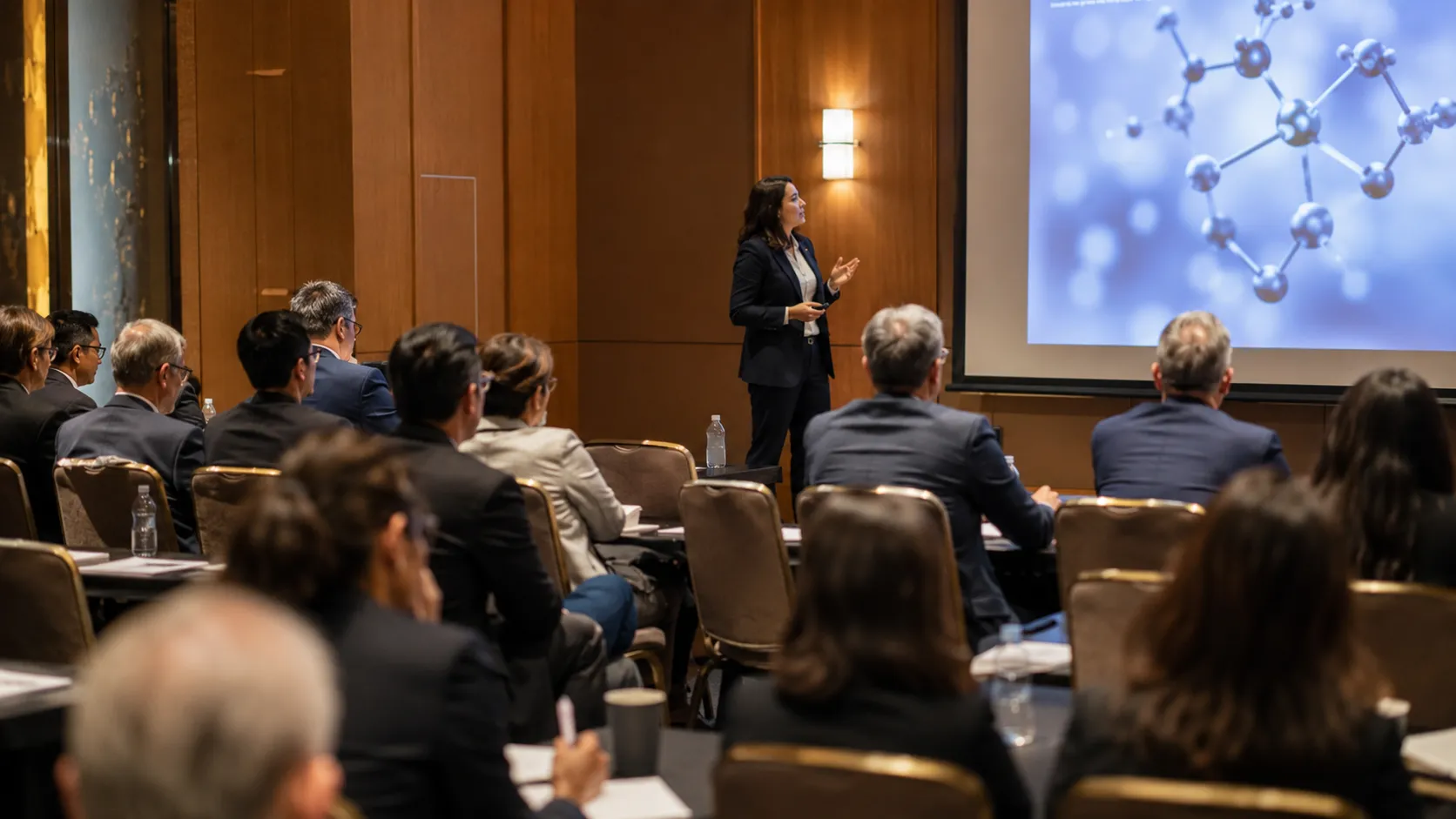
Top Storytelling Keynote Speakers for Healthcare and Life Sciences Conferences
About
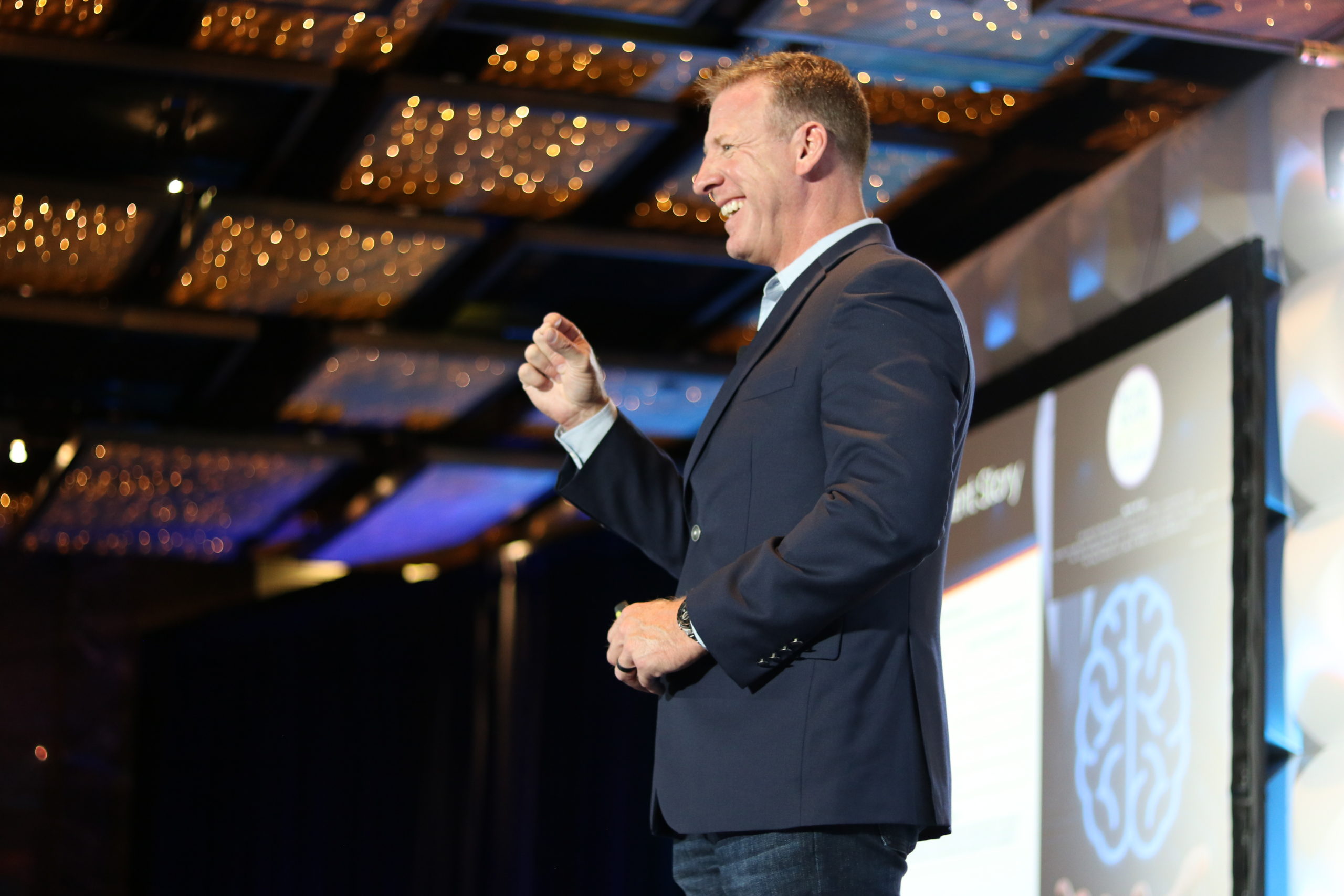
Jeff Bloomfield is a keynote speaker, Wall Street Journal bestselling author, and the founder of Braintrust. He has spent over 20 years helping Fortune 500 sales teams rewire how they communicate, using the neuroscience of trust, decision-making, and buyer behavior to drive results that training alone rarely produces. He speaks at corporate events, executive summits, and sales kickoffs across life sciences, financial services, software, and technology.
Experience Highlights
- 500+ keynotes delivered, rated the top speaker at virtually every event
- Wall Street Journal bestselling author
- Former biotech executive who led launches for genetic cancer therapies
- 20+ years of Fortune 500 client experience
Areas of Expertise
Healthcare and life sciences organizations are among the most data-rich industries in the world, and among the worst at getting anyone to act on that data. Choosing a storytelling keynote speaker for a medical affairs meeting, biotech sales kickoff, or health system leadership summit means finding someone who can explain why the data alone is not moving physicians, patients, or internal teams, and what actually works instead.
Why Healthcare and Life Sciences Events Need a Specialized Approach
Clinical and scientific audiences are trained to trust data and evidence, which creates a paradox: the more rigorous the industry, the more its communicators tend to over-rely on data alone and under-use narrative, even though narrative is what actually drives behavior change in physicians, patients, and internal stakeholders. A generic storytelling keynote built for a sales conference will not land with a room of medical science liaisons or clinical researchers who are skeptical of anything that sounds like a soft skill.
Narrative persuasion, as it applies to healthcare and life sciences, means using scientifically grounded storytelling techniques to communicate clinical and commercial information in a way the brain actually retains and acts on, without sacrificing scientific credibility. This is not about replacing data with anecdotes. It is about understanding that data alone activates far less of the brain than data embedded in narrative.
Key Challenges Healthcare and Life Sciences Audiences Face
- Data-heavy communication that does not stick. Clinical and commercial teams often over-index on data density at the expense of retention and behavior change.
- Physician and patient skepticism. Both audiences are regularly pitched with claims and data, making differentiation through pure information increasingly difficult.
- Complex scientific concepts that are hard to communicate clearly to non-specialist audiences, including patients, payers, and even internal cross-functional teams.
- Regulatory sensitivity around messaging, which makes some communicators reflexively avoid narrative techniques out of caution, even when used appropriately.
- Attention scarcity. With average attention spans now at 8 seconds, dense scientific presentations lose audiences quickly regardless of how important the content is.
What a Storytelling Keynote Should Address for Healthcare and Life Sciences Teams
| Criterion | Why It Matters | What to Ask a Prospective Speaker |
|---|---|---|
| Scientific credibility | Healthcare audiences disengage from storytelling that feels like it is replacing rigor with anecdote | Does the speaker understand how to pair narrative with data, not instead of it? |
| Neuroscience grounding | Clinical audiences respond better to evidence-based explanations of why storytelling works | Can the speaker explain the specific brain science behind narrative persuasion? |
| Regulatory awareness | Life sciences communicators need frameworks that work within compliance constraints | Has the speaker worked directly with pharma, biotech, or health system audiences? |
| Practical application | Medical affairs, sales, and clinical teams need frameworks they can use immediately | What specific narrative structure does the audience walk away able to apply? |
| Audience-specific framing | Physicians, patients, and internal teams each need different narrative approaches | Is the content customized per audience segment? |
Jeff Bloomfield's Healthcare and Life Sciences Experience
Jeff Bloomfield's storytelling keynote is grounded in a rare combination of scientific and narrative credibility. As a former biotech executive who led launches for genetic cancer therapies, Jeff has lived inside the exact tension healthcare and life sciences communicators face: how to honor scientific rigor while still communicating in a way that changes minds and behavior. His client roster includes Johnson & Johnson, GSK, Genentech, and Genomic Health, giving him direct, verifiable credibility with this audience.
His storytelling keynote, The Art and Science of Storytelling, explains the specific neuroscience behind why narrative activates far more of the brain than data alone, then shows healthcare and life sciences audiences how to apply that science without compromising scientific integrity. For storytelling-focused events, Jeff also offers an optional co-presentation format with Jimmy Yeary, a number one hit songwriter, adding a distinct creative dimension to events focused specifically on the craft of narrative.
My Approach to This Audience
I understand the instinct in healthcare and life sciences to distrust anything that sounds like a soft skill, because I came from that world myself before becoming a keynote speaker. My approach never asks scientific and clinical audiences to abandon data. It shows them why data embedded in narrative activates seven brain regions instead of two, and gives them a specific structure for pairing evidence with story so the message actually gets retained and acted on.
Audiences leave with a concrete framework for structuring their next physician conversation, patient communication, or internal presentation, not just an appreciation for storytelling as a concept. My storytelling keynote speaker work for this industry is built specifically around that translation from science to story without losing scientific credibility in the process.
How to Evaluate Storytelling Speakers for Your Healthcare or Life Sciences Event
- Ask how the speaker balances narrative with scientific rigor. A speaker unfamiliar with regulated industries may lean too far into anecdote without addressing credibility concerns.
- Confirm direct industry experience, not just general storytelling expertise. Healthcare and life sciences audiences can tell quickly whether a speaker understands their world.
- Look for neuroscience grounding behind the storytelling framework, not just craft-focused advice about narrative structure.
- Check whether the content is customized for your specific audience, whether that is medical affairs, clinical staff, sales teams, or patient-facing communicators.
- Ask for a practical takeaway framework, not just inspiration about the power of story.
Where This Goes Wrong: The Overcorrection Problem
Some healthcare and life sciences organizations, once they recognize the power of storytelling, overcorrect in the opposite direction, filling presentations with anecdotes and emotional appeals while quietly dropping the scientific rigor that gave them credibility in the first place. This is just as damaging as the original data-only problem, because it trades one form of ineffective communication for another. A physician or scientific audience that senses a presentation has become more performance than substance will disengage just as quickly as one bored by a data-only deck.
The correct application of narrative in this industry is additive, not a replacement. The strongest healthcare and life sciences communicators use story as the structure that carries the data, not as a substitute for it. A well-built clinical presentation might open with a specific patient scenario or research turning point, move into the supporting data with full scientific rigor intact, then close by returning to the human stakes established at the start. That structure respects both the audience's need for evidence and the brain's need for narrative to make that evidence memorable.
Frequently Asked Questions
Why does storytelling matter in a data-driven industry like healthcare?
Because data alone activates significantly less of the brain than data embedded in narrative, roughly 2 brain regions versus 7. Even the most rigorous scientific message benefits from narrative structure if the goal is retention and behavior change, not just information transfer.
Will storytelling techniques compromise scientific credibility in a regulated industry?
Not when applied correctly. Narrative persuasion in healthcare and life sciences is about structuring accurate data in a way the brain retains and acts on, not replacing data with anecdote. The strongest speakers for this audience are explicit about that distinction.
What makes Jeff Bloomfield qualified to speak on storytelling for healthcare and life sciences?
Jeff's background as a former biotech executive who led launches for genetic cancer therapies, combined with direct client experience at Johnson & Johnson, GSK, Genentech, and Genomic Health, gives him credibility that general storytelling speakers without industry experience typically lack.
Can a storytelling keynote work for both physician-facing and patient-facing teams?
Yes, though the framing should be customized. Physician-facing teams often need narrative techniques paired closely with clinical data, while patient-facing communication may lean more heavily into empathy and accessibility. A pre-event discovery call helps calibrate the right balance.
What is the neuroscience behind why stories are more persuasive than data alone?
Narrative activates multiple brain regions simultaneously, including those tied to emotion and sensory experience, while data alone primarily engages analytical processing. This is why a story paired with a statistic tends to be far more memorable and persuasive than the statistic presented on its own.
How far in advance should a life sciences conference book a storytelling keynote speaker?
Most life sciences and healthcare conferences book keynote speakers 6 to 9 months in advance, particularly when the speaker offers a pre-event discovery call to tailor content for a specific clinical, commercial, or patient-facing audience.
Worth a Conversation
If you are planning a healthcare or life sciences event and want a storytelling keynote that respects scientific rigor while still changing how your audience communicates, it is worth a conversation.
Keynote Speaker
Jeff delivers keynotes at corporate conferences, medical affairs meetings, and leadership summits, combining neuroscience, narrative craft, and real-world executive experience into sessions that make messages stick. Learn more about his storytelling keynote for corporate events.
