
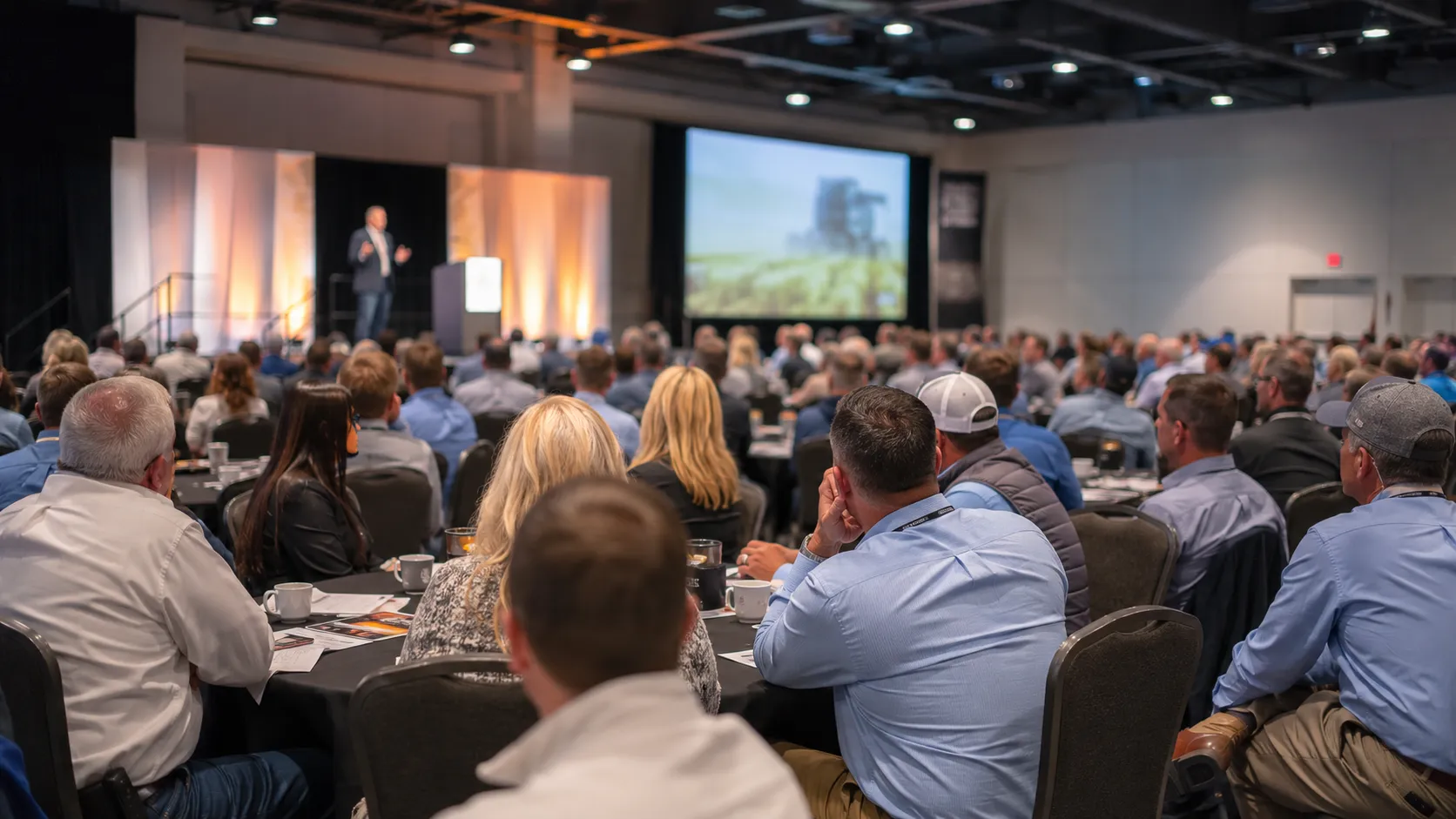
Top Sales Keynote Speakers for Agriculture and Equipment Dealer Conferences
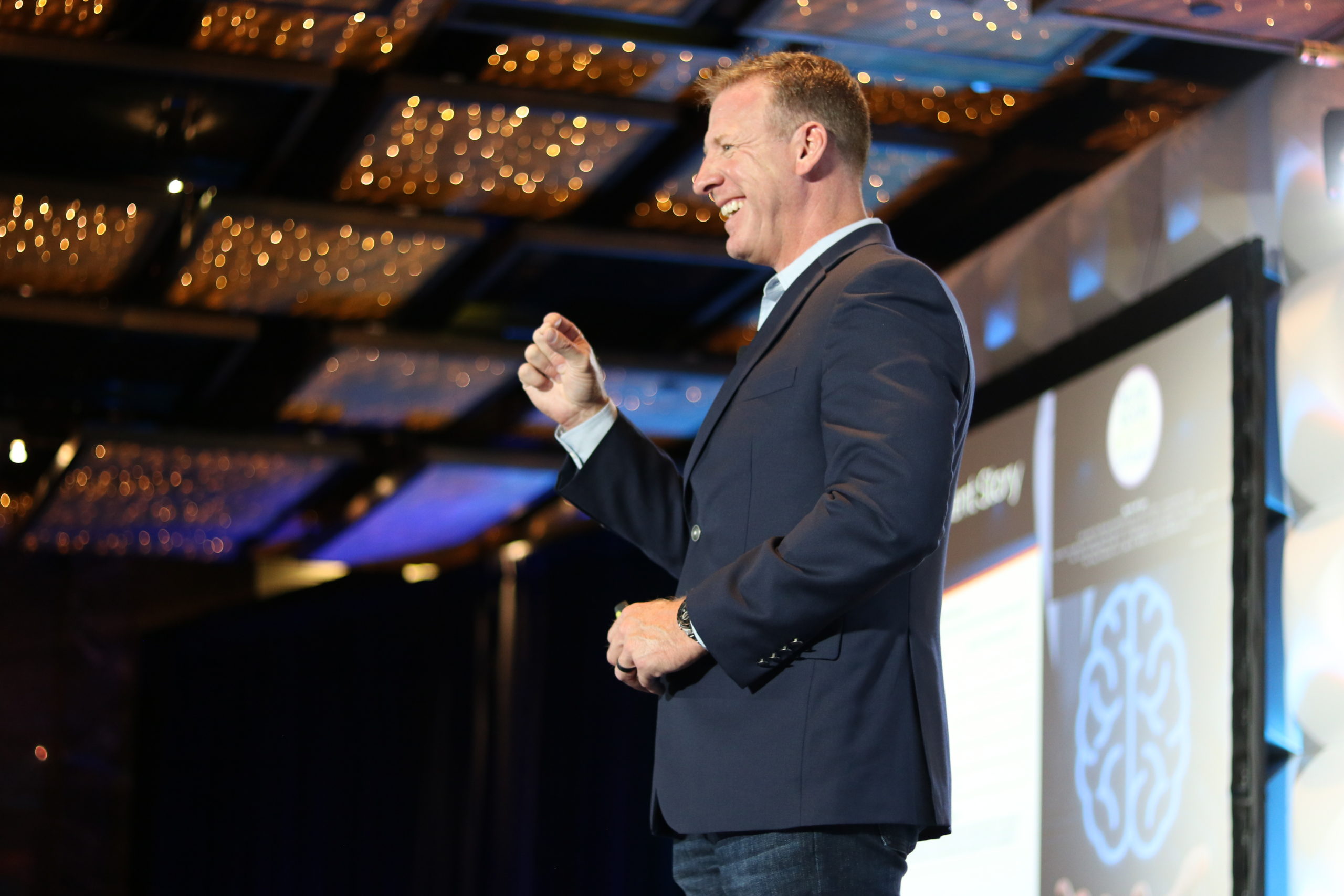
About
Jeff Bloomfield is a keynote speaker, Wall Street Journal bestselling author, and the founder of Braintrust. He has spent over 20 years helping Fortune 500 sales teams rewire how they communicate, using the neuroscience of trust, decision-making, and buyer behavior to drive results that training alone rarely produces. He speaks at corporate events, executive summits, and sales kickoffs across life sciences, financial services, software, and technology.
Experience Highlights
- 500+ keynotes delivered to Fortune 500 and association audiences
- Wall Street Journal bestselling author
- Former biotech executive who led launches for genetic cancer therapies
- 20+ years of Fortune 500 experience
- Founder of Braintrust
Areas of Expertise
Booking sales keynote speakers for agriculture conferences and equipment dealer meetings is a different exercise than booking for a software company's kickoff. These rooms are multi-generational, often family-business heavy, and full of people who have sold to the same customers for twenty years and expect to sell to their children. They detect corporate sales language in about four seconds, and once they do, the rest of the hour is gone. The speakers who succeed here understand that the sales conversation in this industry happens with someone the rep will see at church, at the county fair, and at the co-op counter. This list covers ten speakers who can hold that kind of room, and how to decide which one fits your event.
Why Agriculture and Dealer Audiences Are Different
Most sales keynote content is built for quarterly quotas, short cycles, and buyers the rep will never meet in person. Agriculture and equipment distribution do not work that way.
A dealer-network sale is a transaction inside a long-term relationship where the same buyer, the same territory, and often the same family stay involved for decades. Reputation compounds. A bad interaction travels through a farming community faster than any marketing campaign will.
Three structural realities shape what works on stage.
- Trust is generational, not transactional. The buyer may be the third generation running the operation, and the dealership the third generation serving it. Advice that treats trust as something built in one meeting misreads the room.
- Capital purchases carry personal risk, not corporate risk. When a farm buys a combine, the person signing is spending family money against a harvest they cannot control. That is a different load than an enterprise buyer spending someone else's budget.
- Slick reads as untrustworthy. In many industries polish signals competence. In agriculture it often signals distance. Speakers who over-perform lose credibility rather than gain it.
The Ten Speakers at a Glance
| Speaker | Core Territory | Fits Best When Your Audience Needs | Usual Format |
|---|---|---|---|
| Greg Martinelli | Agribusiness sales fundamentals | Tactical ag-specific skill building | Keynote and workshop |
| Jeff Bloomfield | Buyer neuroscience and trust | To understand why long-cycle deals stall | Keynote plus optional workshop |
| Jeb Blount | Prospecting and sales EQ | Discipline around new business activity | Keynote and training |
| Anthony Iannarino | Consultative, value-based selling | To move off price toward advisory selling | Keynote and workshop |
| Matt Mayberry | Culture and execution | Dealer-network alignment and follow-through | Keynote |
| Tiffani Bova | Growth strategy and channel | A top-down market and channel view | Keynote and fireside |
| Kindra Hall | Business storytelling | To tell the dealership's own story better | Keynote and workshop |
| Patrick Lencioni | Team health and clarity | Family-business leadership friction resolved | Keynote and facilitated session |
| Jon Gordon | Positive leadership | Morale repair after a hard market year | Keynote |
| Mike Bosworth | Story-based, solution selling | A structured sales process foundation | Keynote and training |
Greg Martinelli
Greg Martinelli works almost exclusively inside agriculture. His speaking and training focus on agribusiness sales: ag retail, cooperatives, input suppliers, and the field roles that call on growers directly. He also writes and podcasts on ag sales careers, so his examples come from the industry rather than a generic B2B playbook.
Agribusiness sales, his specialty, refers to selling inputs, equipment, agronomic services, and financing into farm operations, where the buyer is frequently both owner and operator. That dual role is what makes ag selling distinct, and it sits at the center of his material. He fits associations wanting tactical, sector-specific skill building, and his workshop works well as a breakout paired with a bigger-stage keynote.
Jeff Bloomfield
Jeff Bloomfield grew up on a farm in central Ohio, which is the least polished and most useful thing about his fit for these rooms. He knows what a bad year does to a family, why a handshake still carries weight, and why a grower will pay more to buy from someone who showed up in February when nothing was selling. That background is not a stage anecdote. It is where his framing of trust originates.
Professionally, Jeff spent more than 20 years in Fortune 500 roles, including as a biotech executive leading launches for genetic cancer therapies, before founding Braintrust. He is a Wall Street Journal bestselling author and has delivered 500+ keynotes. His client work includes John Deere, along with Johnson & Johnson, Salesforce, Nationwide, and Cox Automotive. He is also a cancer survivor, which shapes how directly he talks about high-stakes decisions.
His subject is buyer neuroscience: what the brain does when someone is asked to spend serious money on something they cannot fully control. That leads to topics ag and dealer audiences recognize immediately, including why an enthusiastic buyer goes silent and never says no. NeuroSelling® is the applied framework behind it.
What separates his session from a general sales talk is that the content is built for the specific room. Every talk is customized, and a pre-event call is included with every booking, which matters when your audience mixes dealer principals, service managers, and field reps. Formats are outlined on his sales keynote speaker page, and his conference keynote work covers multi-track association events.
"We had Jeff as our keynote speaker at our annual sales summit. His knowledge, stage presence and ability to connect with our team made an instant impact."
— Mark Schroeder, President, Omnicare, Inc.
Jeb Blount
Jeb Blount is the founder of Sales Gravy and the author of widely read sales books including Fanatical Prospecting, Sales EQ, and Objections. His central argument is that most revenue problems are pipeline problems, and pipeline problems are discipline problems.
Fanatical prospecting, the concept he is best known for, refers to consistent new-business activity maintained regardless of how busy or comfortable a rep currently feels. For dealer networks where reps inherited accounts and stopped hunting, that message lands hard and honest. He is direct and unapologetic about activity metrics, which suits a sales-focused general session more than a mixed-membership audience.
Anthony Iannarino
Anthony Iannarino writes and speaks on consultative selling and is the author of The Only Sales Guide You'll Ever Need, Eat Their Lunch, and Elite Sales Strategies. His work centers on how sellers create enough value in the conversation itself that price stops being the primary variable.
Value-based selling, his core territory, refers to shifting the conversation away from product comparison and toward the outcome the buyer wants. That is directly relevant to dealers losing deals on sticker price while competing on service, uptime, and parts availability. He works best as a keynote paired with a workshop.
Matt Mayberry
Matt Mayberry is a former NFL linebacker with the Chicago Bears who now speaks and writes on organizational culture, including the book Culture Is the Way. He has keynoted equipment dealer audiences directly, including the North American Dealer Conference.
His territory is execution: the gap between what leadership decides and what happens on the shop floor. Culture, in his usage, refers to the behaviors an organization repeats daily rather than the values printed on a wall. For dealer groups managing multiple locations with inconsistent standards, that framing is practical, and his athletic background carries credibility with audiences that respect earned effort.
Tiffani Bova
Tiffani Bova is a growth and innovation strategist and the author of Growth IQ and The Experience Mindset. She previously served as a growth evangelist at Salesforce and a research fellow at Gartner, and her material takes a market-level view of how companies grow.
Channel strategy, one of her areas, refers to how a manufacturer grows through distributors and dealers rather than direct sales. That is the structure most ag and equipment businesses run on, which makes her a good fit for manufacturer-hosted dealer meetings. Her sessions skew analytical, so balance the agenda with a relational speaker.
Kindra Hall
Kindra Hall is a storytelling specialist and the author of Stories That Stick. Her focus is helping organizations find and tell the stories that already exist inside their business rather than manufacturing new messaging.
Business storytelling, as she teaches it, refers to using a short, true, structured narrative to make a point data alone will not carry. Ag and dealer businesses are unusually rich in this material: the century farm, the storm year, the mechanic who drove out at midnight during harvest. Most tell those stories badly or not at all. Her workshop helps members leave with one they can use next week.
Patrick Lencioni
Patrick Lencioni is the founder of The Table Group and the author of The Five Dysfunctions of a Team and The Ideal Team Player. His subject is organizational health: whether a leadership team can be honest with each other and commit to decisions.
Organizational health, in his framing, refers to the absence of politics and confusion inside a leadership team, which he argues matters more to results than strategy. That is especially relevant in family-owned dealerships, where the leadership team and the family are the same people and unspoken conflict has decades of accumulated interest. He is a strong choice for a dealer-principal track.
Jon Gordon
Jon Gordon is the author of The Energy Bus and a large body of work on positive leadership and team culture. His approach is simple, repeatable, and built around optimism as a discipline rather than a mood.
Positive leadership, as he defines it, refers to leading through belief, encouragement, and consistency when conditions are difficult. Agriculture runs on cycles nobody controls, and after a hard commodity year an association audience carries real fatigue into the room. He is a strong closing general session choice when the goal is sending people home steadier.
Mike Bosworth
Mike Bosworth created Solution Selling and later co-authored What Great Salespeople Do, moving from process methodology toward story-based connection. He is a foundational figure in modern sales methodology, and rooms with veteran reps recognize his frameworks immediately.
Solution selling, the approach he originated, refers to diagnosing the buyer's problem thoroughly before positioning any product against it. For dealer teams that have drifted into feature-and-price conversations, that discipline is a useful reset. His story-based work pairs naturally with relationship-driven ag selling.
How to Choose the Right Speaker for Your Event
Work these five steps in order. Most bad keynote decisions come from skipping the first one.
- Define the single behavior you want changed. Not a theme. A behavior. "Our reps discount instead of defending value" points to a very different speaker than "our dealer principals do not talk honestly."
- Map who is actually in the room. Dealer principals, service managers, and field reps need different things. A single-function audience can take a tactical speaker. A mixed audience needs material that works at multiple altitudes.
- Test for industry credibility, not industry resume. A speaker does not need to have farmed. They do need to show they understand a buyer spending their own money on a decision that depends on weather.
- Check the polish calibration. Watch video and ask whether your members would trust this person at a parts counter. Most planners skip this, and it decides more keynotes here than any other criterion.
- Confirm what happens after the applause. Ask what the speaker provides for reinforcement: a workshop, a leader guide, a follow-up session. A keynote that ends at the ballroom door is a line item, not an investment.
| Speaker Type | What the Room Gets | Where It Lands With Ag and Dealer Audiences | Where It Falls Flat |
|---|---|---|---|
| Sector specialist | Tactical ag-specific skills | Field sales and ag retail teams | Can feel narrow in a mixed general session |
| Buyer psychology and neuroscience | Why long-cycle deals stall | Rooms that live with silent buyers | If delivered academically rather than plainly |
| Sales process and methodology | A repeatable framework | Newer reps and formal sales orgs | Veteran reps resist another process |
| Culture and leadership | Alignment across locations | Dealer principals and management tracks | Thin for reps who wanted sales content |
| Strategy and market outlook | Where the industry is heading | Manufacturer-hosted dealer meetings | Too abstract for a service audience |
| Storytelling | Language usable in real conversations | Rooms whose raw material already exists | If it stays theoretical with no practice |
Booking and Briefing Notes
Lead times here are tight for a specific reason: most annual meetings cluster from late fall through early spring, between harvest and planting. That compresses demand into a narrow window, so the speakers who fit these rooms best are often committed six to nine months out.
Three requests to make of any finalist.
- Ask for a customization call before you sign, not after. How a speaker handles a thirty-minute conversation about your membership tells you most of what you need to know.
- Supply the uncomfortable context. Commodity prices, a consolidation wave, a manufacturer program change that upset the network. Speakers who name what the room is carrying earn permission for everything else.
- Ask for one line they will not say. Every industry has language that reads as an outsider trying too hard. Give your speaker your list.
Frequently Asked Questions
Who are the best sales keynote speakers for agriculture conferences?
The strongest options combine real sales substance with credibility in front of a relationship-driven, family-business audience. Sector specialists like Greg Martinelli bring tactical ag-specific material, while speakers such as Jeff Bloomfield bring buyer psychology and a farm background that translates well to grower and dealer rooms. The right pick depends on whether your audience needs skills, strategy, or leadership alignment.
What should a keynote speaker understand about equipment dealer audiences?
That the buyer is usually spending family money on equipment whose payback depends on weather and commodity prices. Dealer reps sell inside communities where reputation is permanent and a bad interaction is remembered for years. A speaker who treats these as short-cycle transactional sales loses the room quickly.
How far in advance should we book a speaker for an ag association annual meeting?
Six to nine months is a practical minimum, and twelve is safer for popular late-winter dates. These meetings concentrate between harvest and planting, so demand spikes in a narrow window. Earlier booking also gives the speaker time for real customization rather than a surface-level name swap.
Does a sales keynote speaker need farming experience to be credible?
No, but they do need to show they understand the economics and emotional weight of the decisions your members make. Some earn that through background, and Jeff Bloomfield's upbringing on a farm in central Ohio is one example of how it shows up on stage. Others earn it through preparation, which is why the customization call is the real test.
Should we book a keynote or a workshop for a dealer meeting?
Book a keynote when you need a shared experience that aligns a whole room, and add a workshop when you need behavior to change afterward. The best agendas do both: a general session that reframes thinking, then breakouts where members practice. Several speakers here, including Jeff Bloomfield, offer both.
How do we measure whether the keynote was worth it?
Measure three things: session ratings against your other content, whether attendees can restate the core idea two weeks later, and whether any behavior changed in the field. The keynote is the number one factor in conference satisfaction, so its effect on return attendance is often the most meaningful measure.
Bring the Right Voice to Your Stage
If your next annual meeting needs a session your members will still be quoting at the parts counter in March, that is worth a conversation. Talk with Jeff about what a customized session looks like for your audience, or read more about his background.
Keynote Speaker
Jeff delivers keynotes at sales kickoffs, leadership summits, and corporate conferences — combining neuroscience, storytelling, and real-world selling experience into sessions that move people and stick long after the event ends.
