
The Human Skills No Algorithm Can Replace: What the Data Shows About AI-Proof Careers in 2026
About
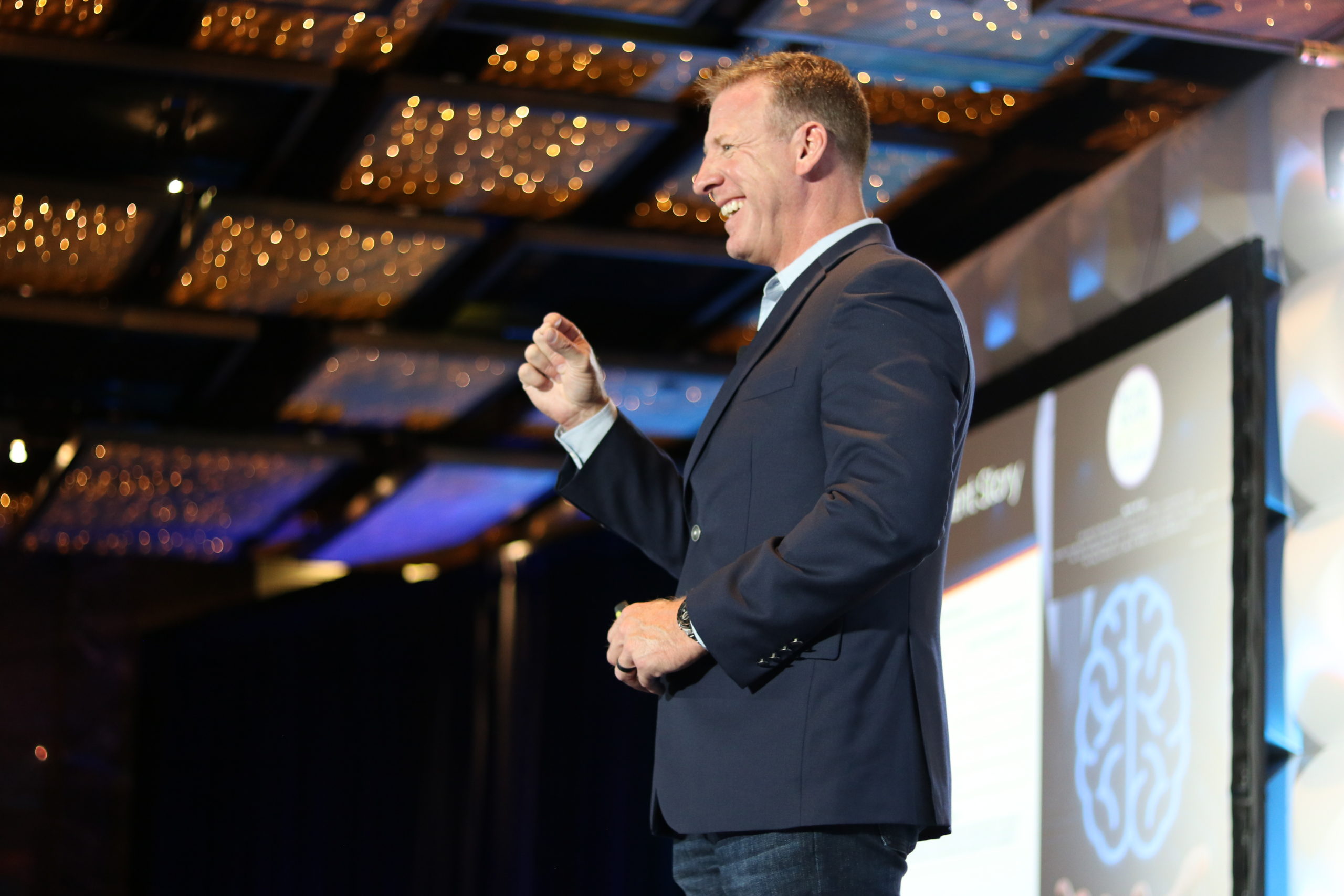
Jeff Bloomfield is a keynote speaker, Wall Street Journal bestselling author, and the founder of Braintrust. He has spent over 20 years helping Fortune 500 sales teams rewire how they communicate, using the neuroscience of trust, decision-making, and buyer behavior to drive results that training alone rarely produces. He speaks at corporate events, executive summits, and sales kickoffs across life sciences, financial services, software, and technology.
Experience Highlights
- 500+ keynotes delivered to Fortune 500 and association audiences
- Wall Street Journal bestselling author
- Former biotech executive who led launches for genetic cancer therapies
- 20+ years of Fortune 500 experience
- Founder of Braintrust
Areas of Expertise
Every leadership team is asking some version of the same question right now: what skills will AI never replace? The honest answer is not a slogan. It is a data pattern, consistent across sales, leadership, and workforce research. AI is getting faster at producing options. It is not getting better at trust, judgment under ambiguity, or the kind of communication that changes behavior. That gap is where AI-proof careers live, and the numbers below show exactly where it sits.
Trust and Emotional Connection
Trust is the first skill on any AI-proof list because it is the hardest to fake and the easiest to lose. The data on how humans actually build it explains why no model has closed this gap.
95% of persuasion happens at the unconscious level. Buyers, employees, and audiences are not deciding whether to trust someone through a rational checklist. Trust registers below conscious awareness, through tone, timing, and subtle social signals a screen cannot fully transmit. This is why a well-written AI summary can inform someone without ever moving them.
Loss aversion is roughly 5x stronger than the desire for gain. People weigh the risk of a bad decision far more heavily than the promise of a good one, which means trust is not built by presenting more information. It is built by someone credible reducing perceived risk in real time, reading resistance, and responding to it. That is a relational skill, not a data-delivery problem.
It takes 0.07 seconds to form a first impression. Human beings read competence and warmth from another person almost instantly, using cues that have nothing to do with content: posture, eye contact, vocal tone, timing of a pause. Algorithms can generate words. They cannot generate the split-second social read that determines whether a room leans in or checks out.
Judgment and Decision-Making Under Ambiguity
AI is genuinely good at pattern recognition inside known parameters. It is far weaker at the specific kind of judgment humans exercise when the situation is new, the data is incomplete, and the stakes are high.
60% of deals are lost to "no decision," not to a competitor. This single statistic undercuts the assumption that better information wins. Buyers with access to more data than ever still stall, because the barrier was never a lack of facts. It was uncertainty about who to trust and how to weigh a decision with incomplete information, exactly the terrain where human judgment operates and automated recommendation engines do not.
95% of purchase decisions are driven by emotion, not logic. Every dashboard, every AI-generated comparison chart, is aimed at the 5% of the decision that is rational. The other 95% runs on feelings about risk, identity, and relationship, territory that requires a human reading another human, not a model optimizing for the most defensible answer on paper.
Research consistently shows that judgment under ambiguity, the ability to make a confident call when the data does not fully resolve the question, is one of the capabilities employers report as most difficult to replace and most in demand as AI absorbs routine analysis.
Leading Change and Human Communication
Leadership is where the AI-proof argument gets tested hardest, because so much of leadership looks like communication, and AI is fluent in language. The data shows the gap is not fluency. It is behavior change.
70% of change initiatives fail to achieve their goals. Most of those failures are not caused by bad strategy. They are caused by a communication gap between what leadership announced and what employees actually believed and adopted. No AI system has been shown to close that gap, because closing it requires trust built over time, not a well-worded message delivered once.
95% of communication is processed unconsciously. Employees are not primarily responding to a leader's words during a change rollout. They are responding to tone, consistency between message and behavior, and whether the leader seems to actually believe what they are saying. That is read by the human brain in real time, and it is not something a generated script can substitute for.
Employees are 3.5x more engaged when leaders communicate with empathy. Empathy is not a tone setting. It requires reading a specific person's specific resistance and adjusting in the moment, a skill that compounds in value as AI takes over the parts of leadership communication that are purely informational.
50% of employees have quit because of a manager. Retention in an AI-augmented workplace increasingly depends on the one thing automation cannot deliver: a leader who builds a trust-based relationship rather than simply issuing directives through whatever channel is fastest.
Attention, Narrative, and Creative Meaning-Making
The last category is the one most leaders underestimate: the human capacity to make information stick through story, at a moment when attention itself has become the scarcest resource in the organization.
The average human attention span is now 8 seconds, down from 12 seconds before smartphones. Every communication problem in a modern organization starts here. Volume has gone up. Attention has gone down. Whatever skill helps a message survive that shrinking window is becoming more valuable, not less.
72% of workers say AI makes them question their own value. This statistic matters as much for what it reveals about the moment as for the number itself. Anxiety about relevance is now a workforce-wide condition, and addressing it requires a human leader who can name it honestly, a communication skill AI cannot perform on an organization's behalf.
Stories are 22x more memorable than facts alone, and narrative activates 7 brain regions compared to 2 for data alone. This is not a communication preference. It is a measurable difference in how the brain encodes information. A generated bullet-point summary engages a fraction of the neural activity that a well-told story does, which is why the information your team forgets by Friday is rarely the story you told them and almost always the slide.
5 seconds is roughly how long you have to capture or lose an audience's attention before they mentally check out. In an environment of AI-generated volume, the ability to earn those first 5 seconds and hold the room afterward is a specific, trainable human skill, and it is becoming one of the most commercially valuable skills in the workplace.
The Skills Matrix: What the Data Points To
The pattern across every category above resolves into a small number of specific, learnable human skills. Here is how they map to what AI can and cannot currently do.
| Human Skill | Why AI Falls Short | Business Outcome When Present |
|---|---|---|
| Trust-building in real time | Cannot read unconscious social signals or adjust mid-conversation | Faster buyer and employee commitment, fewer stalled decisions |
| Judgment under ambiguity | Optimizes for pattern match, not risk-weighted human context | Better calls when data is incomplete or contradictory |
| Empathetic, trust-based leadership | Cannot build a relationship, only deliver a message | Higher engagement, lower voluntary turnover |
| Narrative and storytelling | Generates text, does not create emotional meaning | Higher recall, faster buy-in, longer-lasting behavior change |
| Reading and holding attention | Cannot sense a room or adapt live to disengagement | Messages that survive an 8-second attention span |
None of these are "soft skills" in the dismissive sense. They are the specific, measurable capabilities behind the 97 million new roles the World Economic Forum expects AI disruption to create.
What These Statistics Mean for HR and People Leaders
For Chief People Officers, VPs of HR, and transformation leaders, the practical implication is straightforward even though the rollout rarely is. Workforce planning built only around tool adoption misses the actual shift. The organizations navigating AI disruption well are not the ones with the most licenses deployed. They are the ones investing, visibly and specifically, in the human capabilities the data above identifies: trust, judgment, empathetic leadership, and narrative communication.
That investment has to be named, not assumed. Telling employees "your job is safe" without explaining which specific human capabilities make them valuable is empty reassurance, and employees can tell the difference. Naming the exact skill, and building it deliberately, is what actually reduces the anxiety behind that 72% figure.
It also changes what a workforce development budget should fund. Technical AI training teaches people to use a tool. Development in trust-based communication, narrative, and judgment under ambiguity builds the capability that remains valuable regardless of which tool changes next quarter.
How I Address This From the Stage
My approach to this topic starts with the data, not with reassurance. I show audiences the actual research behind human attention, trust, and decision-making, and then I connect it directly to what is happening in their organization right now. Once people see the mechanism, the anxiety in the room changes shape. It becomes something they can act on instead of something they are quietly worried about.
I built my keynote "The Skills That Survive Automation" around exactly this pattern: which human capabilities the data shows are becoming more valuable as AI absorbs routine work, and what it takes to build them deliberately rather than hope they develop on their own. It sits alongside "AI, Judgment & Decision-Making" and the flagship session "The Human Brain in the Age of AI" on my AI keynote speaker page.
The goal is never to make an audience feel better about AI in the moment. It is to give them a specific, evidence-based answer to the question every one of them is quietly asking: what about me is still going to matter.
"Thanks to Jeff, we now have an understanding of the science of decision making and how the human brain actually builds connection and trust. This has made a huge impact on our results."
Gary Price, Global Director of Sales, CSZ
Frequently Asked Questions
What skills will AI never replace in the workplace?
The data points consistently to five categories: trust-building in real time, judgment under ambiguity, empathetic and trust-based leadership, narrative and storytelling, and the ability to read and hold a room's attention. These skills depend on unconscious social signaling, relationship-building, and emotional meaning-making that current AI systems cannot replicate.
What are AI-proof skills for the workplace in 2026?
AI-proof skills are the capabilities the World Economic Forum ties to the 97 million new roles created as AI disrupts routine cognitive work: complex judgment, trust-based communication, ethical reasoning, and creative and narrative synthesis. These are measurable, trainable skills rather than vague personality traits.
Why can't AI replace trust and human judgment?
Trust and judgment depend on reading unconscious signals, weighing risk in ambiguous situations, and adjusting in real time to a specific person's resistance or concern. Since 95% of persuasion happens at the unconscious level and 95% of communication is processed unconsciously, most of what builds trust is not contained in the words or data a system can generate.
How should companies prepare their workforce for AI disruption?
Companies should pair every AI tool investment with a visible investment in human skill development, specifically trust-based communication, judgment under ambiguity, and storytelling. Naming exactly which human capabilities remain valuable, rather than offering general reassurance, is what actually reduces workforce anxiety about AI.
Why do change initiatives involving AI so often fail?
Roughly 70% of change initiatives fail to achieve their goals, and AI rollouts are no exception. The failure point is almost always the same: a communication and trust gap between what leadership announced and what employees actually believed and adopted, not a flaw in the technology itself.
How does storytelling help make a message AI-proof?
Stories are 22x more memorable than facts alone and activate 7 brain regions compared to 2 for data-only communication. In a workplace where the average attention span has fallen to 8 seconds, narrative is one of the few communication tools proven to survive that shrinking window and drive lasting behavior change.
Give Your People a Real Answer
If your organization is trying to give employees a specific, honest answer to what makes them valuable in an AI-augmented workplace, start a conversation with Jeff's team about a keynote built around this exact data.
Keynote Speaker
Jeff delivers keynotes at sales kickoffs, leadership summits, and corporate conferences, combining neuroscience, storytelling, and real-world selling experience into sessions that move people and stick long after the event ends.
