

How to Measure Trust on Your Team When You Can't Just Ask
About
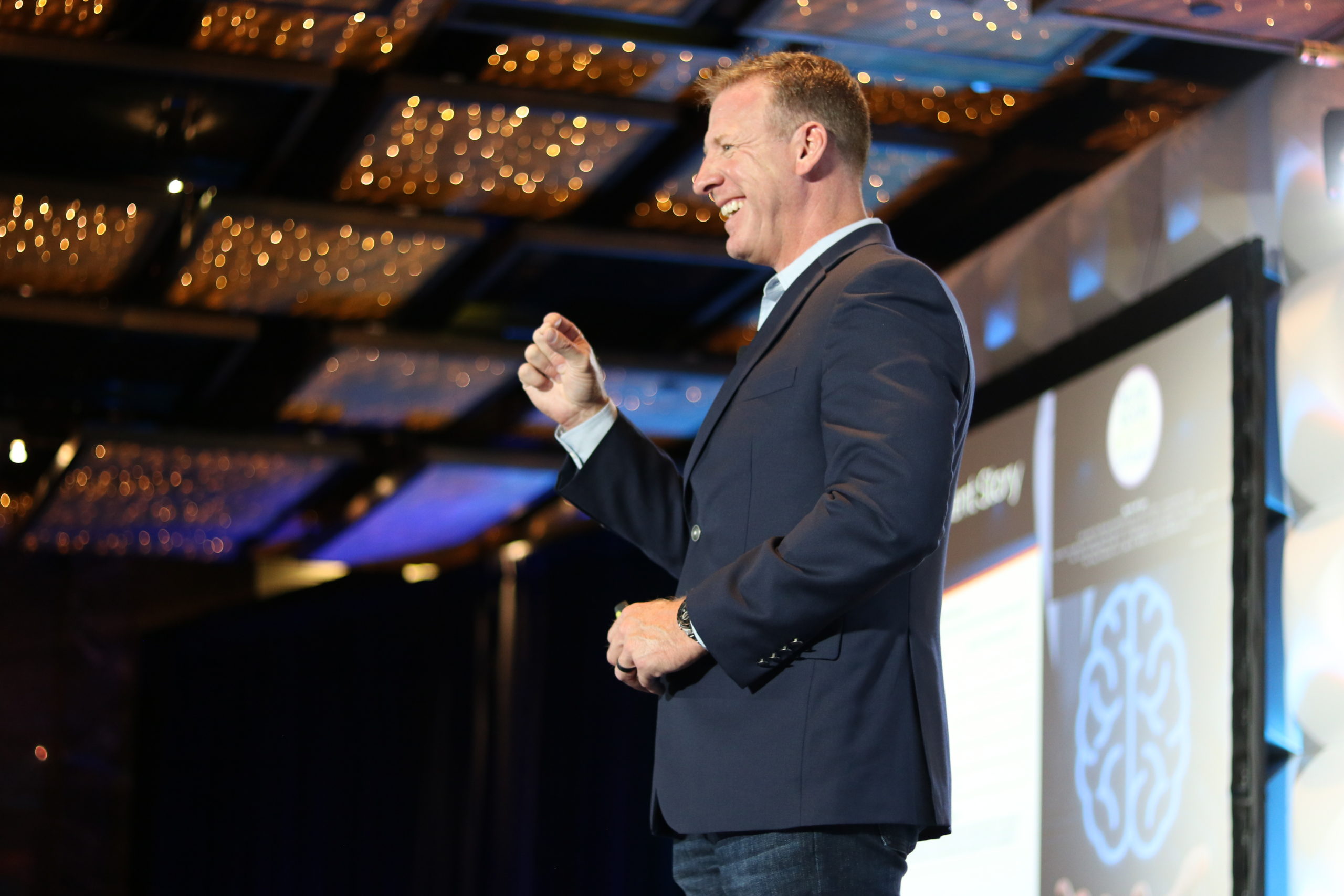
Jeff Bloomfield is a keynote speaker, Wall Street Journal bestselling author, and the founder of Braintrust. He has spent over 20 years helping Fortune 500 sales teams rewire how they communicate, using the neuroscience of trust, decision-making, and buyer behavior to drive results that training alone rarely produces. He speaks at corporate events, executive summits, and sales kickoffs across life sciences, financial services, software, and technology.
Experience Highlights
- 500+ keynotes delivered to Fortune 500 and association audiences
- Wall Street Journal bestselling author
- Former biotech executive who led launches for genetic cancer therapies
- 20+ years of Fortune 500 experience
- Founder of Braintrust
Areas of Expertise
Ask a team whether they trust their leader and you will get the answer that feels safest to give, not the one that is true. Trust surveys run into a well documented problem: social desirability bias, the tendency to answer in whatever way will be viewed favorably rather than accurately. Employees know who reads the results. They calibrate accordingly. If you want to know how much trust actually exists on a team, stop asking and start watching, because trust shows up in behavior long before it shows up in a survey score.
Why Trust Surveys Give You the Wrong Number
Most organizations measure trust the same way they measure satisfaction: an annual or quarterly survey, an eNPS-style question, maybe an anonymous comment box. The instinct makes sense. Trust feels like an attitude, so it seems reasonable to ask people what they think.
The problem is that trust is not primarily an attitude. Trust, in behavioral neuroscience terms, is the brain's continuous, largely unconscious assessment of whether another person is safe enough to be open with. It is not a belief someone holds and reports accurately on command. It is a state, generated in real time, that shifts with context, and people are notoriously bad at narrating their own unconscious calculations.
Layer social desirability bias on top of that, and the survey number becomes close to meaningless in low-trust environments, which is precisely the population you most need accurate data on. The employees least likely to trust leadership with an honest answer are the same employees least likely to trust that "anonymous" survey is actually anonymous.
This is not an argument against ever surveying a team. It is an argument for treating self-report as one input among several, and weighting behavioral evidence more heavily when the two disagree.
The Behavioral Signals Framework: What to Track Instead
Behavioral indicators of trust have a long track record in research on human teams and human-AI teams alike: compliance, reliance, information sharing, and voluntary disclosure. Each behavior requires the person to take on some risk based on the assumption that openness will not be punished. That is the tell. A behavioral trust signal, as I use the term with leadership teams, is any observable action that only makes sense if the person believed disclosure, dissent, or extra effort would not cost them something later.
Five signals give leaders the clearest read, and none of them require new software or a survey tool.
Signal 1: The Speed of Bad News Reaching You
Low-trust teams do not hide bad news forever. They delay it, polish it, and route it through a manager who can soften the delivery. High-trust teams tell you while the problem is still small and unflattering.
Track the gap between when a problem is discovered and when it reaches the level that can act on it. If that gap is shrinking over time, trust is likely rising. If people are increasingly waiting until a problem is undeniable before surfacing it, that is a trust signal, not a competence problem.
Signal 2: Where Questions Go When People Are Confused
Watch whether confusion and disagreement show up in the meeting, the shared channel, and the open thread, or whether they migrate to hallway conversations and private messages. A team that only asks hard questions privately has learned that public channels are not safe for uncertainty.
This is one of the fastest signals to observe and one of the easiest to misread. Leaders often interpret a quiet, agreeable meeting as alignment. Frequently it is the opposite: the real conversation already happened somewhere you were not invited.
Signal 3: Who Volunteers for Work With No Credit Attached
Watch participation in cross-team initiatives, informal mentoring, or process improvements that carry no direct career incentive. Discretionary contribution, work offered beyond what a role requires with no expectation of recognition, is one of the more reliable behavioral proxies for trust because it only happens when someone believes the extra effort will not be exploited or ignored.
A team where the same three people always volunteer, and everyone else opts out, is telling you something about who feels safe enough to be generous with their time.
Signal 4: What Happens After a Decision Doesn't Go Their Way
Trust is easiest to read in the sixty seconds after someone loses an argument. Do they re-engage on the next issue, or do they go quiet and start managing the relationship instead of the work? Withdrawal after a lost decision, especially when it becomes a pattern, is one of the clearest signs that trust took a hit and was never repaired.
Build a Trust Signal Scorecard
The five signals above are more useful together than alone, since any single behavior can have an innocent explanation. A short scorecard, reviewed monthly, turns scattered observations into a trend line.
| Signal | What You're Watching For | Rising Trust Looks Like | Falling Trust Looks Like |
|---|---|---|---|
| Speed of bad news | Time between discovery and escalation | Shrinking gap, earlier flags | Delayed, polished, or buried updates |
| Location of hard questions | Public channel vs. private message | Debate happens in the open | Real concerns surface only in DMs or hallways |
| Discretionary contribution | Volunteering with no credit attached | Broad, rotating participation | Same few people, or no volunteers |
| Recovery after a lost decision | Re-engagement in the next 1-2 interactions | Quick return to normal engagement | Withdrawal, minimal follow-up questions |
| Upward feedback outside reviews | Unprompted input to a leader | Feedback offered without being asked | Silence until the formal review window |
Score each signal red, yellow, or green for a given team once a month. A pattern of yellow-to-red movement across three or more signals is a far more honest early warning than a single annual survey number, and it gives you something a survey never will: a specific behavior to address instead of a mood to interpret.
What Low Scores Actually Mean and What to Do About It
A red scorecard does not mean people dislike their leader personally. More often it means the team's collective threat response has been elevated for long enough that self-protective behavior has become the default. That distinction matters because the fix is different. You are not trying to be more likeable. You are trying to reduce the perceived cost of honesty, dissent, and extra effort.
The fastest lever is almost always the leader's own response to bad news and disagreement in the moment it happens, not a policy change. Employees are 3.5x more engaged when leaders communicate with empathy, and empathy shown specifically in the first reaction to unwelcome information is what resets the signal fastest. One calm, curious response to a piece of bad news does more to move the scorecard than a quarter of stated values on a wall.
How I Use This Framework With Leadership Teams
My approach to trust measurement is grounded in behavioral neuroscience rather than sentiment. I show leadership teams that trust is not a soft, unmeasurable thing they have to take on faith. It leaves a behavioral trail, and once you know where to look, that trail is more honest than anything a survey can capture.
In keynotes built around trust and leadership development, including The Science of Trust, I walk audiences through exactly which behaviors to watch and why the brain produces them. NeuroCoaching®, the leadership framework I built at Braintrust, gives leaders a repeatable structure for reading these signals and responding to them before trust erodes further, rather than after an exit interview confirms the damage.
"Jeff not only inspired our leaders, but had everyone thinking differently about how we coach and communicate in every area of our company."
Matt E., CEO
That shift, from managing an abstract concept to tracking specific behaviors, is what changes how leadership teams operate the week after the keynote rather than the quarter after.
Putting It Into Practice This Quarter
You do not need a new tool to start. You need thirty minutes a month and a habit of noticing.
- Pick one team and build the five-row scorecard above.
- Score it honestly at the end of each month, using specific instances, not general impressions.
- When a signal moves from green to yellow, address the specific behavior within the week, not at the next scheduled check-in.
- Keep the annual survey if you already run one, but treat a disagreement between the survey and the scorecard as a reason to trust the scorecard.
- Repeat quarterly with a wider group of teams once the habit is established.
Trust that is tracked gets protected. Trust that is only assumed gets spent without anyone noticing until it is gone.
Frequently Asked Questions
Why don't employee engagement surveys accurately measure trust?
Surveys rely on self-report, and trust-related questions are especially vulnerable to social desirability bias because employees calibrate their answers based on who might read the results. The people with the least trust in leadership are often the least willing to report that honestly, even anonymously.
What are the best behavioral indicators of trust on a team?
The most reliable indicators include how quickly bad news reaches leadership, whether hard questions stay in public channels or migrate to private messages, who volunteers for work with no credit attached, and how people re-engage after a decision doesn't go their way. Each behavior requires someone to take on risk, which is what makes it a genuine trust signal rather than politeness.
How often should leaders check trust signals?
Monthly is frequent enough to catch a trend before it becomes a resignation and infrequent enough to stay sustainable. Reviewing the five-signal scorecard once a month, using specific recent instances rather than general impressions, produces a usable trend line within one quarter.
Can you measure trust without running any surveys at all?
Yes. Behavioral signals can be tracked entirely through observation: escalation timing, where questions get asked, participation in optional work, and recovery after disagreements. Surveys can still add value as one input, but they should never be the only input, especially on teams where trust is already in question.
What is the fastest early sign that trust is breaking down on a team?
Meetings that get shorter and more agreeable are one of the most commonly misread signals. Leaders tend to interpret that as alignment, when it frequently means dissent has moved underground and people are optimizing to look right rather than raising real concerns.
How is trust different from engagement or psychological safety?
Engagement measures energy and commitment to the work itself. Psychological safety measures whether people believe they can take an interpersonal risk without punishment. Trust sits underneath both. It is the brain's ongoing read on whether a specific person or leader is safe, and it can be high in one relationship on a team and low in another even when overall engagement scores look fine.
Worth a Conversation?
If you are trying to get an honest read on where trust actually stands on your team, or your leaders, before it shows up as a resignation or a stalled initiative, it's worth a conversation. Start a Conversation with Jeff about building a leadership team that can read these signals in real time.
Keynote Speaker
Jeff delivers keynotes at sales kickoffs, leadership summits, and corporate conferences — combining neuroscience, storytelling, and real-world selling experience into sessions that move people and stick long after the event ends.
