

What Is Loss Aversion? Why Buyers Say No More Often Than They Say Yes
About
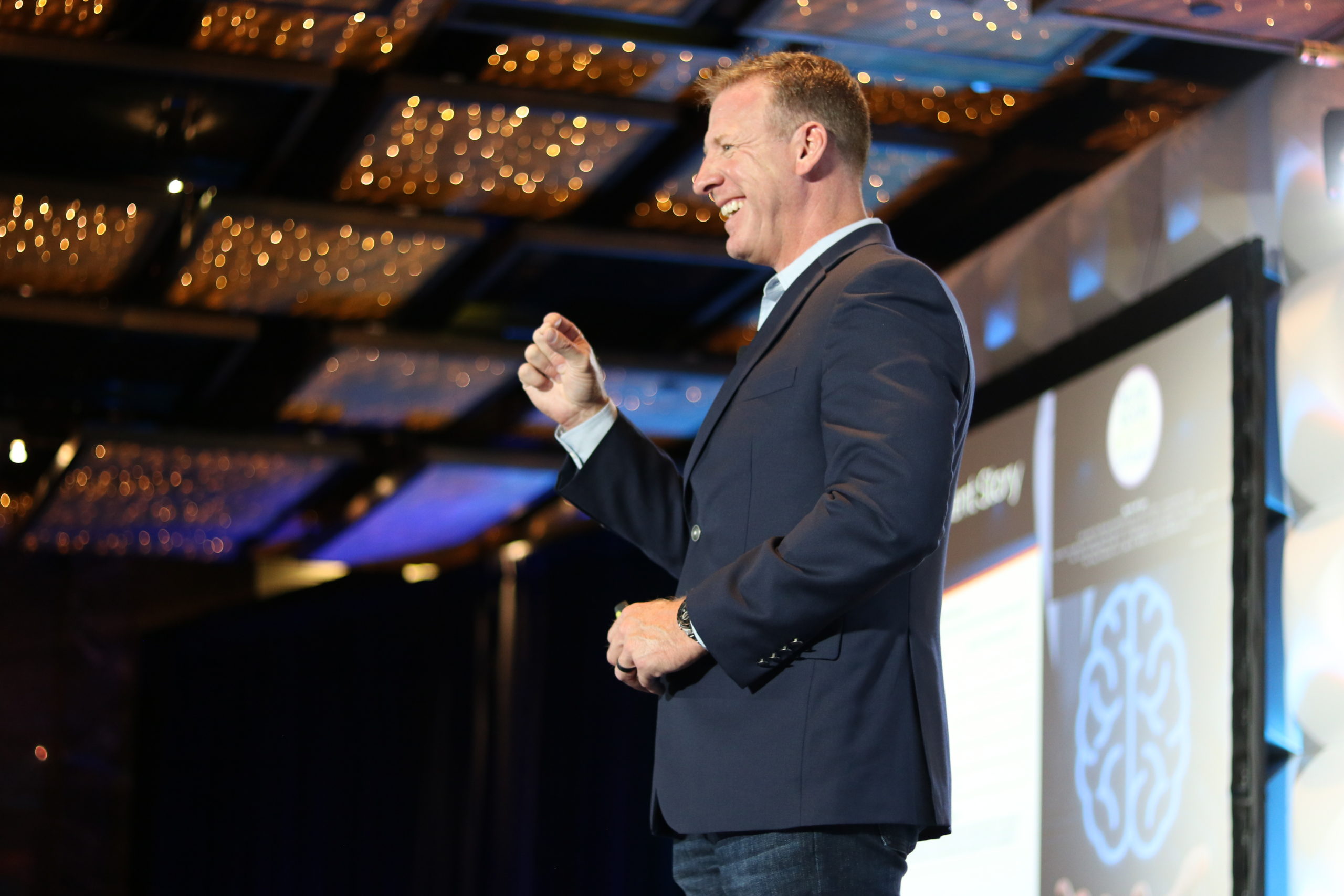
Jeff Bloomfield is a keynote speaker, Wall Street Journal bestselling author, and the founder of Braintrust. He has spent over 20 years helping Fortune 500 sales teams rewire how they communicate, using the neuroscience of trust, decision-making, and buyer behavior to drive results that training alone rarely produces. He speaks at corporate events, executive summits, and sales kickoffs across life sciences, financial services, software, and technology.
Experience Highlights
- 500+ keynotes delivered to Fortune 500 and association audiences
- Wall Street Journal bestselling author
- Former biotech executive who led launches for genetic cancer therapies
- 20+ years of Fortune 500 experience
- Founder of Braintrust
Areas of Expertise
Loss aversion is the tendency of the human brain to weigh a potential loss about twice as heavily as an equivalent gain, a principle the behavioral economists Daniel Kahneman and Amos Tversky formalized in 1979. It is the real reason buyers say no, or say nothing, far more often than they say yes. A buyer can agree the problem is real, like the proposal, and still do nothing, because in the brain's accounting, doing nothing rarely registers as a decision at all.
The Origin and Science Behind Loss Aversion
Loss aversion comes out of prospect theory, the model Kahneman and Tversky built to replace the assumption that people evaluate outcomes in strictly rational, absolute terms. Their research found that people judge outcomes relative to a reference point, usually the current state of things, rather than by calculating total benefit. A gain above that reference point feels good. A loss below it feels considerably worse, even when the two are mathematically identical.
Kahneman was awarded the Nobel Memorial Prize in Economic Sciences in 2002 largely on the strength of this work, and prospect theory remains one of the most replicated findings in behavioral economics. Academic estimates of the effect typically put a loss at one and a half to two and a half times more psychologically weighty than an equivalent gain, and that gap widens further in the kind of high-stakes, reputationally exposed decisions that define enterprise buying.
Loss aversion also underpins a close relative most sales leaders have heard of without knowing its root cause: status quo bias, the preference for the current arrangement simply because it is current. Loss aversion is the mechanism. Status quo bias is the behavior it produces. Together they explain why staying put so often beats a demonstrably better option on paper.
Why Loss Aversion Explains "No Decision" More Than Any Competitor
Most sales training treats a lost deal as something a competitor won. The data tells a different story.
Loss aversion is the reason. If a buyer switches vendors and the new solution underperforms, they own that outcome personally: the budget, the internal recommendation, the credibility spent convincing a boss or a committee. If they do nothing, none of that exposure materializes, at least not in a way anyone can trace back to a choice they made. The brain treats an active decision that goes wrong as a far bigger loss than a passive outcome that also goes wrong, even when the passive outcome quietly costs more.
That number matters more to a quota-carrying rep than any competitive win rate. It means a buyer does not need a better alternative to say no. They only need enough uncertainty about whether change is worth the exposure.
How Loss Aversion Shows Up in a Sales Conversation
In practice, loss aversion rarely announces itself. It shows up as delay, added conditions, requests for more data, or plain silence. A few patterns repeat across almost every pipeline:
- The proposal creates a defendable position the buyer did not have before. A verbal interest costs nothing to abandon. A signed proposal has to be justified to a boss, a budget committee, or a team that will feel the change.
- A second stakeholder enters and the calculus shifts. What felt like manageable risk to one champion becomes visible risk to a group, and groups tend to be more loss averse than individuals because more reputations are attached to the outcome.
- The current vendor or process, however flawed, has a known failure mode. A new option has an unknown one. Even a worse known quantity can feel safer than a better unknown.
- Timing gets vague. "Let's revisit next quarter" is often a soft version of no, issued because an explicit no requires defending a decision, while a delay requires defending nothing at all.
None of these moments are really about price or features. They are the brain protecting itself against being the one who chose wrong.
Loss Aversion vs. Traditional Sales Persuasion
| Traditional Approach | What It Assumes | Loss-Aversion-Aware Approach | What It Assumes Instead |
|---|---|---|---|
| Lead with ROI and upside | Buyers act on the size of the gain | Lead with the cost of staying the same | Buyers act to avoid a clearer, closer loss |
| Handle objections as they surface | Hesitation means missing information | Surface the buyer's personal exposure before they have to raise it | Hesitation is often unstated risk, not missing facts |
| Push for a faster decision timeline | Urgency increases motivation | Slow down and build the internal case with the buyer | Urgency without safety increases avoidance, not speed |
| Compete against the other vendor | The main competitor sells something similar | Compete against inaction | The main competitor is doing nothing |
Where Loss Aversion Runs Strongest in B2B Buying
Loss aversion is not distributed evenly across every sale. It runs strongest wherever three conditions overlap: the buyer carries personal career risk in the outcome, the purchase requires defending a recommendation to other people, and switching away from the current approach has a visible cost even before results are known.
That describes most enterprise software, financial services, healthcare, and other long-cycle B2B categories. It also describes internal champions more than end users, since the champion is the one whose name is attached to the recommendation. A rep who sells only to the end user's enthusiasm, without addressing the champion's exposure, is solving for the wrong risk profile entirely.
The inverse is also true. Transactional, low-commitment purchases with little organizational exposure show a much smaller loss aversion effect, which is exactly why tactics built for consumer marketing, urgency banners, countdown timers, limited-time framing, tend to fall flat in complex B2B sales. The buyer's brain is not weighing a small convenience against a small inconvenience. It is weighing a career-relevant decision against the comfort of not making one.
How to Work With Loss Aversion Instead of Against It
Most sales training still treats hesitation as an objection to be overcome. My approach starts from a different premise: hesitation driven by loss aversion is not resistance to push through. It is information about where the buyer feels exposed, and the conversation has to address that exposure directly or it resurfaces later as silence.
In practice this means three shifts. Reps make the cost of staying the same as concrete and specific as the cost of switching, instead of leaving it implied. Reps ask directly who else has to be convinced and what that person personally stands to lose if the decision goes wrong, rather than waiting for a stalled deal to reveal it. And reps build the internal business case with the buyer, in language the buyer can use without the rep in the room, so the champion is not carrying the exposure alone.
This is the foundation of NeuroSelling®, the methodology I built around how buyers actually decide rather than how sales processes assume they decide. Reframing a conversation around risk, not just reward, is one of the recurring themes in the sales keynote work I do with revenue teams trying to close the gap between pipeline and forecast.
What Changes When Reps Sell to the Risk of Staying, Not Just the Competition
Teams that build loss aversion into their sales conversations, rather than ignoring it, tend to see the same shifts. Forecasts get more accurate, because deals get disqualified on evidence of real risk instead of dying quietly at quarter end. Discounting drops, because price stops being the only lever reps know how to pull when a deal stalls. Renewal conversations get easier, too, since a customer who understands what they would lose by leaving does not need to be resold from zero every cycle.
None of this works if a rep treats loss aversion as a manipulation tactic, inventing risk that is not real. It works because it is honest: staying the same is rarely risk-free, and most sales conversations never say so out loud.
"Jeff's scientific approach to decision making and the customer conversation has changed our approach forever."
Eddie Young, VP of Sales, Sunny Delight
Frequently Asked Questions
What is loss aversion in simple terms?
Loss aversion is the brain's tendency to feel a loss more intensely than an equally sized gain, so avoiding a bad outcome motivates people more than achieving an equivalent good one. In sales, it explains why buyers often protect what they have rather than pursue something better.
Why do buyers choose to do nothing instead of switching to a better option?
Because doing nothing carries no traceable personal risk, while switching does. If a new vendor underperforms, the buyer owns that outcome. If they never switch, the same failure, however costly, never gets attributed to a decision they made.
Is loss aversion the same as risk aversion?
They are related but not identical. Risk aversion is a general preference for certainty over uncertainty. Loss aversion is more specific: it describes why a potential loss carries more psychological weight than a same-sized potential gain, even when the odds are identical.
How is loss aversion different from status quo bias?
Loss aversion is the underlying mechanism. Status quo bias is the behavior it produces. Because losses feel worse than equivalent gains feel good, people default to keeping things as they are, which shows up as status quo bias in a buying decision.
Can loss aversion actually help close deals instead of stalling them?
Yes, when it is addressed honestly rather than exploited. Naming the real cost of staying the same, and helping a buyer build the internal case for change, works with the brain's wiring instead of hoping the buyer overcomes it on their own.
What's an example of loss aversion in a sales conversation?
A buyer who says a proposal looks great and then goes quiet for three weeks is a common example. The enthusiasm was real. So is the exposure of being the person who championed it if it does not work out, and for many buyers that exposure outweighs the enthusiasm.
Worth a Conversation?
If your pipeline has more "no decision" in it than losses to any named competitor, that is a loss aversion problem, not a pipeline problem. Start a conversation with Jeff about what it looks like to build that understanding into how your team sells.
Keynote Speaker
Jeff delivers keynotes at sales kickoffs, leadership summits, and corporate conferences, combining neuroscience, storytelling, and real-world selling experience into sessions that move people and stick long after the event ends.
