
What Is the Behavior-Access Problem? Why Your Best Sellers Freeze Under Pressure

About
Jeff Bloomfield is a keynote speaker, Wall Street Journal bestselling author, and the founder of Braintrust. He has spent over 20 years helping Fortune 500 sales teams rewire how they communicate, using the neuroscience of trust, decision-making, and buyer behavior to drive results that stick long after the event. He speaks at corporate events, executive summits, and sales kickoffs across life sciences, financial services, software, and technology.
Experience Highlights
- NeuroSelling methodology and enterprise adoption
- Trust-based selling at the executive level
- Sales transformation in complex, long-cycle industries
- Keynote speaking and executive coaching
Areas of Expertise
If you are booking a speaker for a sales kickoff, you are usually trying to solve one frustration: your team knows what to do and does not do it when the deal gets hard. That gap has a name. The behavior-access problem is the difference between what a seller knows in a classroom and what that seller can actually reach in a live, high-pressure conversation.
What Is the Behavior-Access Problem?
The behavior-access problem is the failure to retrieve a known skill at the moment of highest stakes. The seller has the framework. The seller passed the certification. Then a CFO joins the call unannounced, the buyer says "send me pricing," and the seller reverts to the behavior they used for the first ten years of their career.
Not a gap in what they know. A gap in what they can reach.
This is why the pattern shows up most often in your veterans, not your new hires. Old habits are what the brain grabs first when the room gets tense, and experienced sellers have the most of them. The newer rep has less to revert to. The tenured rep has twenty years of muscle memory sitting underneath six months of new language.
Revenue leaders describe the symptom in consistent terms:
- Discovery goes shallow. Three questions instead of eight, then straight to the demo.
- Urgency fades. Nobody establishes what happens to the buyer if nothing changes.
- Price arrives early, and the conversation becomes a negotiation before it was ever a decision.
- Deals slip into discounting or into no-decision, the more expensive of the two.
Why This Is an Access Problem, Not a Knowledge Problem
This is worth stating plainly, because it changes the entire diagnosis.
Your team's training investment was correct. The curriculum you bought is not the issue. Sit any of your top twenty sellers in a quiet conference room and ask them to walk you through your discovery methodology, and most of them will do it well. They will name the stages. They will explain exactly why the methodology works.
The knowledge is in there. It is just not available at 2:14 p.m. on Thursday when the buyer's procurement lead asks a question nobody rehearsed.
That is a condition problem, and conditions are fixable. The conditions that break access are consistent across organizations:
| Condition | What it looks like on the floor | What it does to access | What repairs it |
|---|---|---|---|
| Pressure spikes | Unexpected exec on the call, quarter-end, a competitor named out loud | Retrieval narrows to oldest habits | Rehearsal under emotional load, not just cognitive review |
| No shared language | Every manager coaches the framework with different words | Sellers cannot cue each other in real time | One vocabulary the whole room adopts in the same hour |
| Reinforcement gaps | Strong launch, then nothing for two quarters | New behavior never outlasts the old default | A cadence that repeats the same language weekly |
| No manager follow-through | Deal reviews revert to pipeline math | Coaching stops reaching behavior | Managers trained on the same cues their sellers hear |
| Competing priorities | Three initiatives launched in one quarter | Attention fragments, belief never forms | One clear message the leadership team stands behind |
Notice what is not on that list. The curriculum. The vendor. The people who chose them.
The Neuroscience of Why Access Degrades Under Threat
Here is the part audiences remember, because it takes the blame off the seller.
The brain runs a safety check before it runs a reasoning check. That check is fast, automatic, and uninterested in your enablement calendar. When a conversation registers as threatening, and a high-stakes deal absolutely registers as threatening to the person whose comp depends on it, the brain shifts resources toward speed and away from deliberation.
Deliberate, learned behavior lives in the slower, effortful system. It needs working memory, attention, and a sense of safety. Old behavior lives in the fast, automatic system, and it needs almost nothing. Under load, the fast system wins.
So the seller does not choose to abandon the framework. It simply becomes harder to reach, and something older and cheaper arrives first.
The same physics runs on the buyer's side of the table, which is the part most revenue teams miss.
In a Princeton study, people judged a stranger's trustworthiness in roughly a tenth of a second, faster and more consistently than any other trait tested. Your buyer has formed a read on your seller before the agenda slide loads. If that read lands as unsafe, the buyer's own reasoning narrows too, and now you have two nervous systems in the room doing threat management instead of decision-making.
That is a stalled deal. Not a bad product. Not a lazy rep.
What Buyers Actually Need in Order to Move
Every stalled deal I have reviewed is missing at least one of three things. These three are exactly what a seller stops delivering when access degrades.
1. They have to trust the seller. Not like the seller. Trust is the brain's permission slip to move forward, and it gets granted or withheld well before the value conversation starts.
2. They have to feel the cost of inaction. Feel, not calculate. Loss aversion runs stronger than the pull of gain, so a buyer who cannot feel what staying put costs them will stay put and call it prudence.
3. They have to see a safe path forward. Not a compelling one. A safe one. Most buying committees are not choosing between you and a competitor. They are choosing between motion and stillness, and stillness has no implementation risk.
With full access, a seller builds all three in one conversation. When access degrades, the seller skips to the third and pitches a path to someone who has not yet trusted them or felt anything.
"Jeff's scientific approach to decision making and the customer conversation has changed our approach forever."
Eddie Young, VP of Sales, Sunny Delight
Illuminate, Elevate, Activate: How I Structure the Keynote
My approach to this problem is not to add another framework on top of the one your team already learned. It is to make the one they already learned reachable when it counts. I build every sales keynote in three moves.
Illuminate. I show the room the neuroscience live, using their own reactions as the demonstration. People stop defending their behavior the moment they understand it was never a character flaw. A seller who believes they are bad under pressure stays bad under pressure. A seller who understands what their brain is doing can work with it.
Elevate. The science becomes a repeatable skill with shared language attached. This is the step that makes your existing curriculum stick, because the room leaves with one vocabulary instead of nine regional dialects of it. When a manager and a seller can name the same moment with the same word in a deal review, coaching finally reaches behavior.
Activate. Nothing leaves the room theoretical. Attendees walk out with something concrete enough to use in the next live conversation, which turns a Monday keynote into Tuesday pipeline movement.
Why the Keynote and the Curriculum Do Different Jobs
A keynote and a training program are not competing purchases. They solve different halves of the same equation, and the smartest revenue leaders I work with buy both on purpose.
Training builds capability. It teaches the model, drills the reps, and gives your team the technical skill to run a better conversation. That work is essential, and if you have already made that investment, you made the right call.
A keynote builds belief and shared language. It is the moment where four hundred people adopt the same words at the same time, with the same emotional charge attached. That is not a substitute for the curriculum. It is what gets the curriculum past the resistance layer, so the skills your team already paid to learn become reachable under load.
| What you are trying to move | Curriculum and reinforcement | The keynote moment | Best result |
|---|---|---|---|
| Technical skill and repetition | Primary driver | Supporting | Sellers can execute the model |
| Belief that the model applies to them | Slow, seller by seller | Primary driver | Resistance drops across the whole room at once |
| Shared language across regions | Uneven without an anchor event | Primary driver | Managers and sellers cue each other in real time |
| Access under pressure | Builds with reinforcement | Unlocks the shift | Behavior holds in the hard conversation |
| Manager coaching consistency | Primary driver | Sets the vocabulary | Deal reviews reach behavior, not just numbers |
Run them together and the SKO stops being an annual event and becomes the launch point of a system.
What This Looks Like at a Sales Kickoff
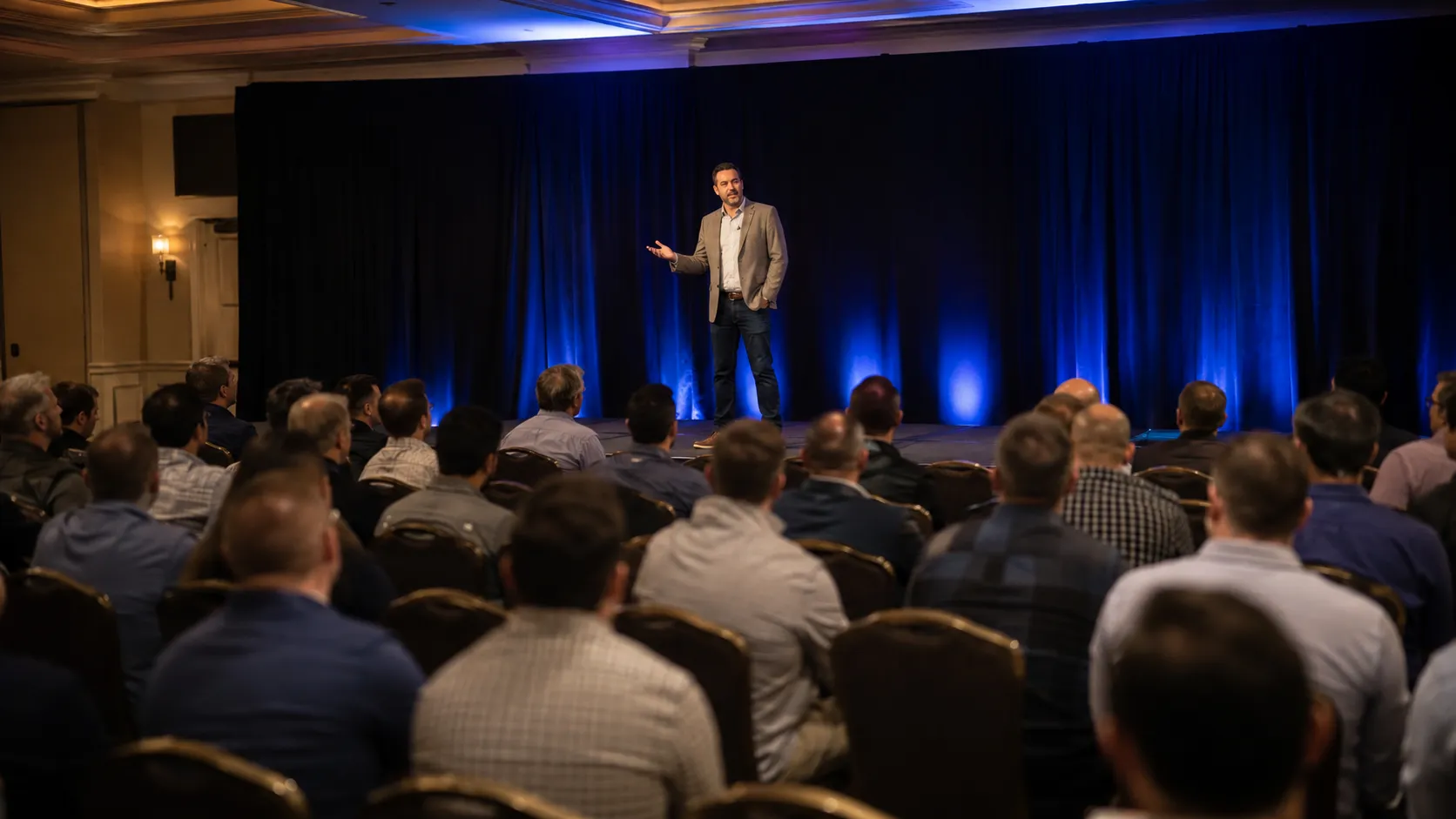
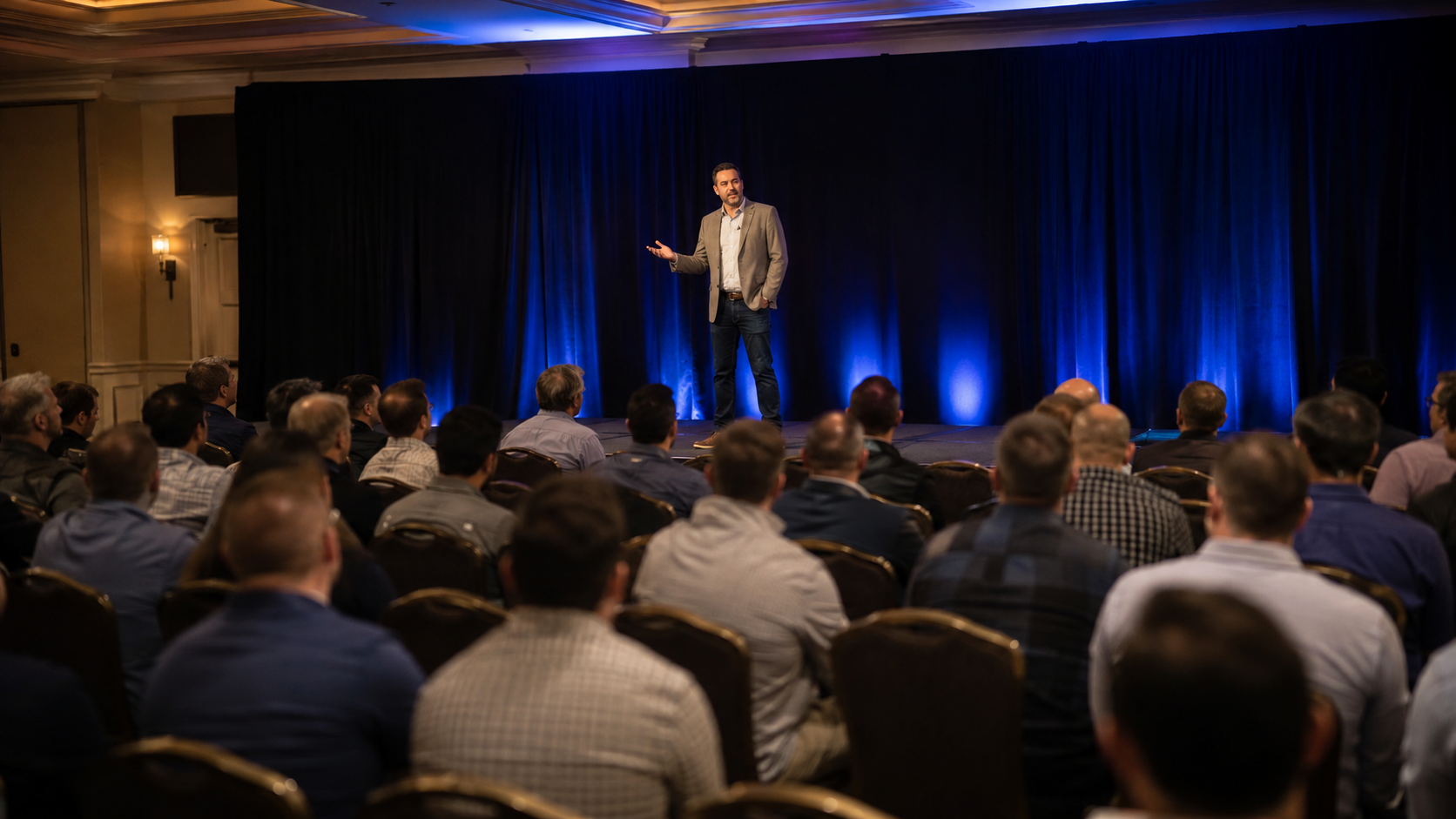
The behavior-access problem is a live-audience problem, which is why the SKO stage is the right place to attack it. You have the entire revenue organization in one room, with attention you will not get again for twelve months.
Three things have to happen in that window.
First, the room has to feel the problem before it hears the fix. Sellers who are told they revert under pressure get defensive. Sellers who experience their own reversion in a live demonstration get curious.
Second, the language has to be simple enough to use in a hallway. Complexity dies on contact with a Tuesday.
Third, leadership has to be in the room, not in a breakout. Shared language stays shared only if the people running deal reviews heard it the same way.
"We had Jeff as our keynote speaker at our annual sales summit. His knowledge, stage presence and ability to connect with our team made an instant impact."
Mark Schroeder, President, Omnicare, Inc.
What to Look for in a Speaker Who Addresses Behavior Access
Most sales keynotes deliver information. Information is not the constraint. Your team is already saturated with it and still reverting under pressure.
Here is what I would screen for if I were the one booking.
- Do they name a mechanism, or just a mindset? A speaker who can explain why the behavior degrades gives your team something to work with. A speaker who tells them to want it more does not.
- Do they ask about your existing methodology before the call ends? A speaker who plans to reinforce your curriculum will want to know what it is. One who never asks is planning to replace it, which leaves your managers coaching two vocabularies.
- Do they demonstrate, or do they describe? Watch for whether the audience experiences something. Description produces nodding. Demonstration produces belief.
- Can they hand your managers language they will actually use? Ask for the specific phrases the room will leave with. If the answer is vague, the reinforcement will be too.
- Do they customize before they arrive? Ask whether a pre-event call is included and what they do with it. Generic content cannot reach the specific pressure your team faces in your specific deals.
- Is there evidence from rooms like yours? Look for revenue leaders, not just event planners, describing what changed.
For a fuller view of how this shows up on stage for revenue teams, see the sales keynote speaker page.
Questions to Ask on the Vetting Call
Use these verbatim.
- What will my sellers do differently in their next live conversation?
- How will this reinforce the methodology we already have in place?
- What will my frontline managers be able to say in a deal review on Monday?
- What do you need from us before the event to make the content specific to our buyers?
- How do you handle a room where a third of the audience has fifteen-plus years of tenure?
- What does the ninety days after the keynote look like if we want the language to hold?
The answers tell you whether you are buying an hour of content or the unlock for everything you already bought.
Frequently Asked Questions
Why do experienced salespeople revert to old habits under pressure?
Because pressure narrows what the brain can retrieve. Learned behavior lives in the slower system that needs working memory and a sense of safety, while old habits live in the fast, automatic system that needs almost nothing. Under threat, the fast system wins, so the seller reaches for the behavior they have run ten thousand times instead of the one they learned last quarter.
Why doesn't what a seller learned show up when the deal gets high stakes?
The knowledge usually did stick. What breaks down is access to it under load, and access depends on conditions: pressure, shared vocabulary, manager reinforcement, and whether the change had room to take hold against competing priorities. Fix the conditions and the curriculum you already invested in starts showing up in live conversations.
What causes salespeople to freeze in high-stakes deals?
A high-stakes deal registers as a personal threat, and the brain runs its safety check before its reasoning check. That pulls resources away from deliberate thinking, which is exactly where discovery skill, patience, and question discipline live. The freeze is physiological, not a motivation gap, which is why exhortation does not fix it.
Is the behavior-access problem the same as a skills gap?
No, and the distinction matters for how you spend budget. A skills gap means the seller never learned the behavior. A behavior-access problem means the seller learned it and cannot reach it when it counts. Skills gaps call for instruction. Access problems call for belief, shared language, and rehearsal under emotional load.
Can a single keynote really change seller behavior?
A keynote does one thing extremely well: it moves an entire room to the same belief and the same vocabulary in the same hour. That is the piece reinforcement alone struggles to produce. Jeff builds his sales keynotes to hand managers language they can use in the next deal review, so the change has somewhere to live afterward.
How should I brief a keynote speaker so the talk supports our existing program?
Send your methodology, your current terminology, and two or three real stalled deals ahead of the event, and ask the speaker to use your vocabulary rather than a parallel one. Every Jeff Bloomfield booking includes a pre-event customization call for exactly this reason. A keynote that echoes your program is worth more than one that competes with it.
If you are planning an SKO or revenue kickoff and your team already knows more than it is using under pressure, that is a solvable problem and worth a conversation. Reach out directly to talk through your event.
Keynote Speaker
Jeff delivers keynotes at sales kickoffs, leadership summits, and corporate conferences, combining neuroscience, storytelling, and real-world selling experience into sessions that move people and stick long after the event ends.
