

How to Justify a Keynote Speaker's Cost to Your Finance Team: A Planner's ROI Case
About
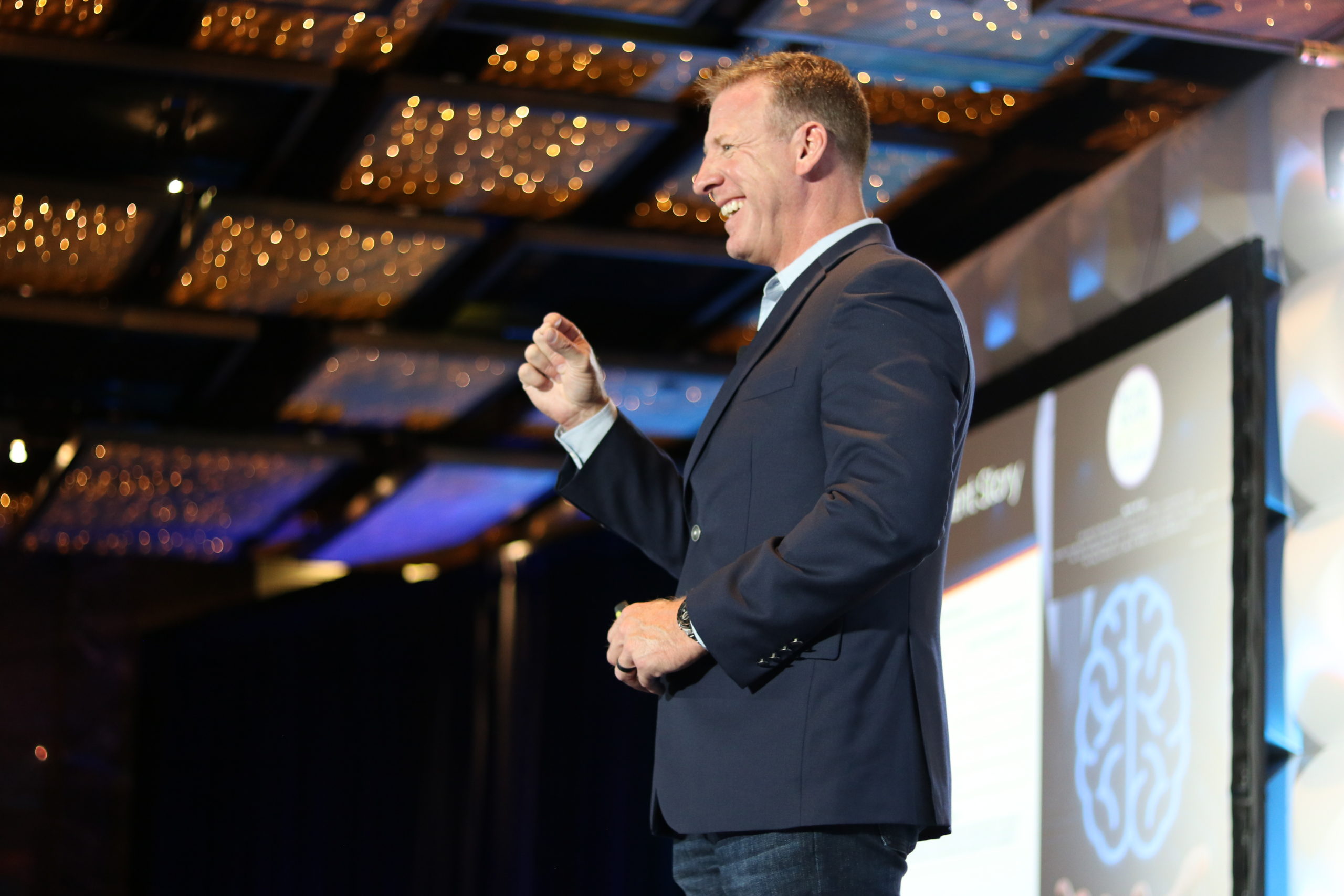
Jeff Bloomfield is a keynote speaker, Wall Street Journal bestselling author, and the founder of Braintrust. He has spent over 20 years helping Fortune 500 sales teams rewire how they communicate, using the neuroscience of trust, decision-making, and buyer behavior to drive results that training alone rarely produces. He speaks at corporate events, executive summits, and sales kickoffs across life sciences, financial services, software, and technology.
Experience Highlights
- 500+ keynotes delivered, rated the top speaker at virtually every event
- Wall Street Journal bestselling author
- Former biotech executive who led launches for genetic cancer therapies
- 20+ years of Fortune 500 client experience
Areas of Expertise
Every event planner eventually hits the same wall: the budget line for a keynote speaker gets flagged, and someone in finance asks a version of the same question. What do we actually get for this? Answering with "great feedback" or "high energy" doesn't hold up in a budget review anymore. What holds up is a structured case that connects the speaker's fee to a measurable business outcome finance already cares about.
This guide walks through exactly how to build that case, step by step, so you can defend a keynote speaker's cost the same way you'd defend any other line item on the P&L.
Understand What Finance Is Actually Asking
Before building a business case, it helps to understand the real objection underneath "why does this cost so much." Finance teams aren't questioning whether a keynote can be good. They're questioning whether a five- or six-figure fee for a single hour of stage time is the best use of a limited events budget compared to everything else competing for it: travel, AV, catering, sponsorships, headcount.
That's a fair question, and it deserves a fair answer. The mistake most planners make is responding with enthusiasm ("attendees loved him last time") instead of a framework. Finance doesn't need convincing that a great keynote feels good in the room. They need a way to compare this cost against other costs using the same language they use everywhere else: inputs, outputs, and expected return.
Keynote speaker ROI, as it applies here, refers to the measurable value an organization gets back from a keynote investment, not just attendee applause but downstream effects on retention, engagement, sales behavior, or conference attendance itself. Framing the conversation around that definition from the start changes how the rest of the case gets received.
Reframe the Cost as an Investment Category, Not an Expense Line
Most budget pushback happens because the keynote speaker fee sits in the same bucket as catering or signage, a fixed cost with no clear return. The first move in building your case is moving it into a different mental category: an investment in a specific outcome, with its own expected return, just like a marketing campaign or a training program would have.
This isn't a rhetorical trick. It changes what questions you ask before you even pick a speaker. Instead of "what can we afford," the question becomes "what outcome do we need, and what's the right investment to reliably produce it." Once you can answer that, the conversation with finance shifts from defending a number to presenting a plan.
Not "this speaker costs $25,000." Instead: "this $25,000 investment is projected to move attendee return rate, which drives next year's registration revenue, and improve post-event survey scores by a set number of points based on comparable events."
Build Your ROI Case in Three Layers
A finance team will trust a business case more if it's built in layers rather than a single number. Each layer answers a different version of "so what."
- Experience layer: Did the keynote meet or exceed attendee expectations? Measured through post-event survey scores and speaker ratings.
- Behavior layer: Did anything change in the 30 to 90 days after the event? Measured through follow-up surveys, manager check-ins, or tool adoption data if the topic connects to a specific skill or process.
- Business outcome layer: Did the event drive a downstream result finance already tracks, such as conference registration renewal, sponsorship retention, or reduced turnover?
The third layer is where most planners stop short, and it's exactly where finance wants the conversation to end up. Since the keynote is the number one factor in overall conference satisfaction, and satisfaction is the leading predictor of whether someone registers again next year, the third layer connects directly back to revenue finance already models.
The Keynote Speaker ROI Case Table
Use a table like this to walk finance through the case in one page. It maps the investment to the layer of return it's expected to produce.
| Investment Component | What It Buys | Layer of Return | How You'll Measure It |
|---|---|---|---|
| Speaker fee (base) | The keynote itself, built for your audience | Experience | Post-event survey score, speaker rating |
| Pre-event customization call | Content shaped to your organization's specific challenges | Experience + Behavior | Attendee feedback on relevance ("this felt built for us") |
| Travel and logistics | Delivery in person vs. virtual, which affects engagement | Experience | Attendance rate, engagement during session |
| Total keynote investment | The full line item finance sees | Business outcome | Year-over-year return/renewal rate, survey trend over time |
This table does the work that a single number can't. It shows finance that the fee isn't one undifferentiated cost. It's several components, each tied to a specific, trackable outcome.
Calculate the Full Investment, Not Just the Fee
One of the fastest ways to lose credibility with a finance team is presenting a number that turns out to be incomplete. If the honorarium is $20,000 but travel, AV requirements, and a customization call add real cost and value, say so upfront. A complete picture builds more trust than a clean number that gets revised later.
| Cost Category | What's Included | Why Finance Should See It |
|---|---|---|
| Base speaker fee | The keynote delivery itself | The anchor cost most budgets already plan for |
| Travel and accommodations | Flights, ground transport, lodging | Often the most variable cost; ask early to avoid surprises |
| Pre-event discovery/customization | Time spent learning your audience and shaping content | This is what separates a tailored keynote from a stock talk |
| AV and production | Staging, mics, screens, recording if needed | Usually already in the event budget, but worth naming |
| Opportunity cost of a weaker choice | The cost of a keynote that doesn't land | Rarely quantified, but real: a flat keynote affects the whole event's perceived value |
Opportunity cost, in this context, refers to what an organization gives up by choosing a lower-fit speaker to save money upfront. It's the argument that connects the case back to the 72% return-rate statistic: an underwhelming keynote doesn't just fall flat in the room, it can quietly cost the next year's attendance.
Connect the Keynote to a Specific Business Metric Before You Book
Finance teams approve budgets more easily when the expected return is tied to a metric that already exists in a report they see monthly or quarterly. Before you build the case, decide which metric the keynote is meant to move, and make sure it's one finance already tracks.
Common metrics to anchor to, depending on your event type:
- Conference or association events: year-over-year registration renewal rate, exhibitor/sponsor retention, post-event NPS
- Sales kickoffs: pipeline activity or CRM usage in the 60 to 90 days following the event
- Internal all-hands or culture events: employee engagement survey scores, voluntary turnover in the following two quarters
Pick one primary metric and one secondary metric. Trying to claim credit for everything makes the case weaker, not stronger. A specific, believable claim tied to one or two metrics will hold up better in a follow-up conversation than a broad claim tied to five.
Build a 30/60/90-Day Measurement Plan Before the Event, Not After
A business case that ends at the post-event survey is incomplete, and finance teams increasingly know it. Build a simple measurement plan before the event happens, so you have data to bring back regardless of how the keynote lands in the room.
- Day of event: Capture a post-session survey score and open-ended feedback on relevance and applicability.
- 30 days out: Check whether managers or team leads report any behavior change connected to the keynote's core message.
- 60 to 90 days out: Compare the metric you anchored to in the prior section (registration intent, pipeline activity, engagement score) against the same period last year.
- Post-cycle: Bring the full picture back to finance, not just the applause-line moment, but the trend line.
This plan does double duty. It gives you real data for next year's budget conversation, and it signals to finance that you're treating this like any other measured investment rather than a one-time expense you hope pays off.
Anticipate the Pushback: Common Finance Objections and How to Answer Them
| Objection | How to Respond |
|---|---|
| "We can't measure something this soft." | Point to the layered framework: experience score, behavior change, and a business metric finance already tracks. It's not softer than a marketing campaign's brand-awareness metrics. |
| "Couldn't we get similar value for less?" | Show the full investment breakdown, and be direct about what a lower-fit or less-customized speaker risks: a flatter session that doesn't move the return-rate metric. |
| "How do we know this will land with our audience?" | Point to the pre-event customization call as a built-in step, not an optional upsell. A speaker who won't do discovery work before the event is a bigger risk than the fee itself. |
| "What did we get from last year's keynote?" | This is why the 30/60/90-day measurement plan matters. Bring the trend data, not just last year's survey scores. |
My approach with planning teams is to walk through this exact table before the event even gets booked, not after finance already has questions. When a planner can answer all four of these before they're asked, the budget conversation moves faster and the speaker selection gets easier to defend later.
Present the Case in a Format Finance Will Actually Read
Long narrative memos rarely get read in full. Build your case as a single page with four sections: the objective, the full investment (using the cost table above), the expected return (using the ROI case table), and the measurement plan. Attach comparable data from a past event if you have it. If you don't, use industry benchmarks and be transparent that this year establishes the baseline.
I tell planning teams the same thing I tell audiences from the stage: the strongest case isn't the one with the biggest claims, it's the one with the clearest chain of logic from investment to outcome. A one-page business case that a CFO can read in two minutes and immediately understand the logic of will get approved more often than a ten-page deck defending the number after the fact.
For planners looking for a keynote built specifically to support this kind of business case, from the pre-event discovery call through the measurement conversation afterward, it's worth reviewing what a fully custom conference keynote speaker engagement actually includes before the budget conversation happens, not after.
Putting It All Together: A Quick Checklist
Before you bring the number to finance, confirm you have:
- A clear objective and one primary metric the keynote is meant to move
- A full investment breakdown, not just the base fee
- An ROI case table connecting each cost component to a layer of return
- A 30/60/90-day measurement plan already built, before the event happens
- Answers ready for the four most common objections finance will raise
- A one-page summary, not a lengthy memo
Frequently Asked Questions
How do I justify the cost of a keynote speaker to my finance team?
Build the case in layers: show the experience-level return (survey scores, engagement), the behavior-level return (30 to 90 days after the event), and the business-level return (a metric finance already tracks, such as registration renewal or engagement scores). Present it on one page with a full cost breakdown rather than a single fee number.
What's a reasonable way to calculate keynote speaker ROI?
Compare the total investment, including the fee, travel, and customization time, against a specific metric you defined before the event: attendee return rate, survey score trends, or a behavior change tied to the keynote's topic. Track it 30, 60, and 90 days after the event rather than relying only on same-day feedback.
What if we don't have last year's keynote data to compare against?
Use this year as your baseline. Build the measurement plan now, track the metrics honestly, and bring back real data for next year's budget conversation. A missing baseline is a reason to start measuring, not a reason to skip the business case.
Does a more expensive keynote speaker automatically mean better ROI?
No. Fit matters more than fee level. A well-matched speaker who understands your audience and customizes the content will generally outperform a bigger name delivering a generic version of the same talk. That's why the pre-event discovery process belongs in your cost table as its own line item.
What metric should I use to prove the keynote's value to leadership?
Pick one metric that already appears in a report leadership reviews regularly, such as conference registration renewal, sponsorship retention, or an engagement survey score. Since the keynote is the number one factor in overall conference satisfaction, and 72% of attendees say it determines whether they return the following year, tying the case to a return-rate metric is often the most direct connection to make.
How specific should the pre-event objectives be before we book a speaker?
Specific enough that you could measure whether they were met. "Inspire the team" isn't measurable. "Improve post-event survey scores by a set number of points and see measurable change in team engagement within 90 days" is something you can actually report back on.
Should the measurement plan be shared with the speaker before the event?
Yes. A speaker who takes the pre-event customization call seriously will want to know what outcome you're measuring, since it shapes what the content needs to accomplish. Jeff builds every keynote around this kind of pre-event conversation, since 100% of his talks are custom-built for the specific audience rather than delivered as a stock presentation.
Worth a Conversation?
If you're building a budget case for your next event and want a keynote designed from day one around a measurable outcome, not just a memorable hour on stage, it's worth a conversation.
Keynote Speaker
Jeff delivers keynotes at annual conferences, sales kickoffs, and association events, combining neuroscience, storytelling, and real-world executive experience into sessions built specifically for each audience. Learn more about his conference keynote for corporate events.
