
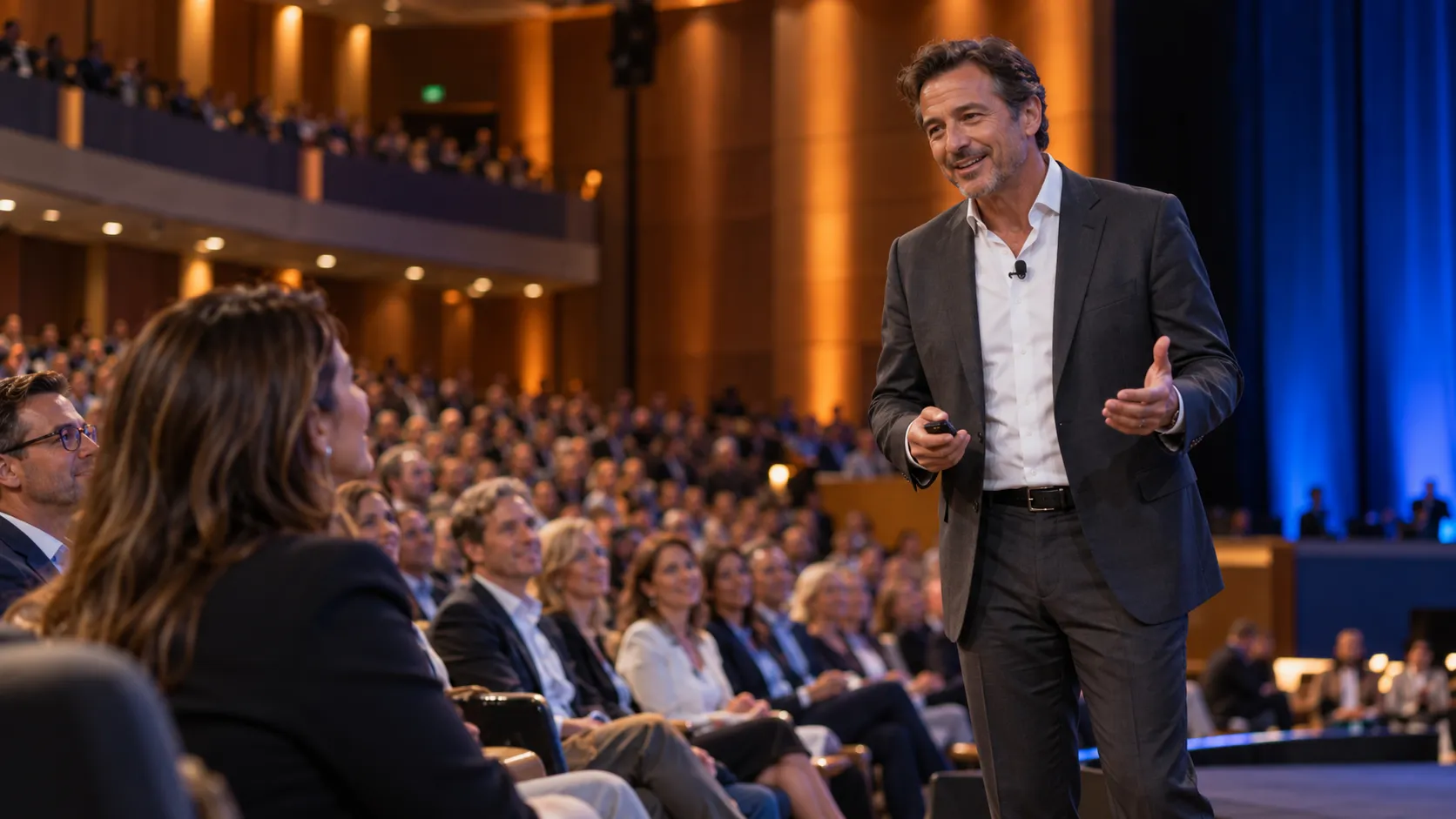
How to Choose a Trust Keynote Speaker: A Buyer's Guide for 2027 Events
About
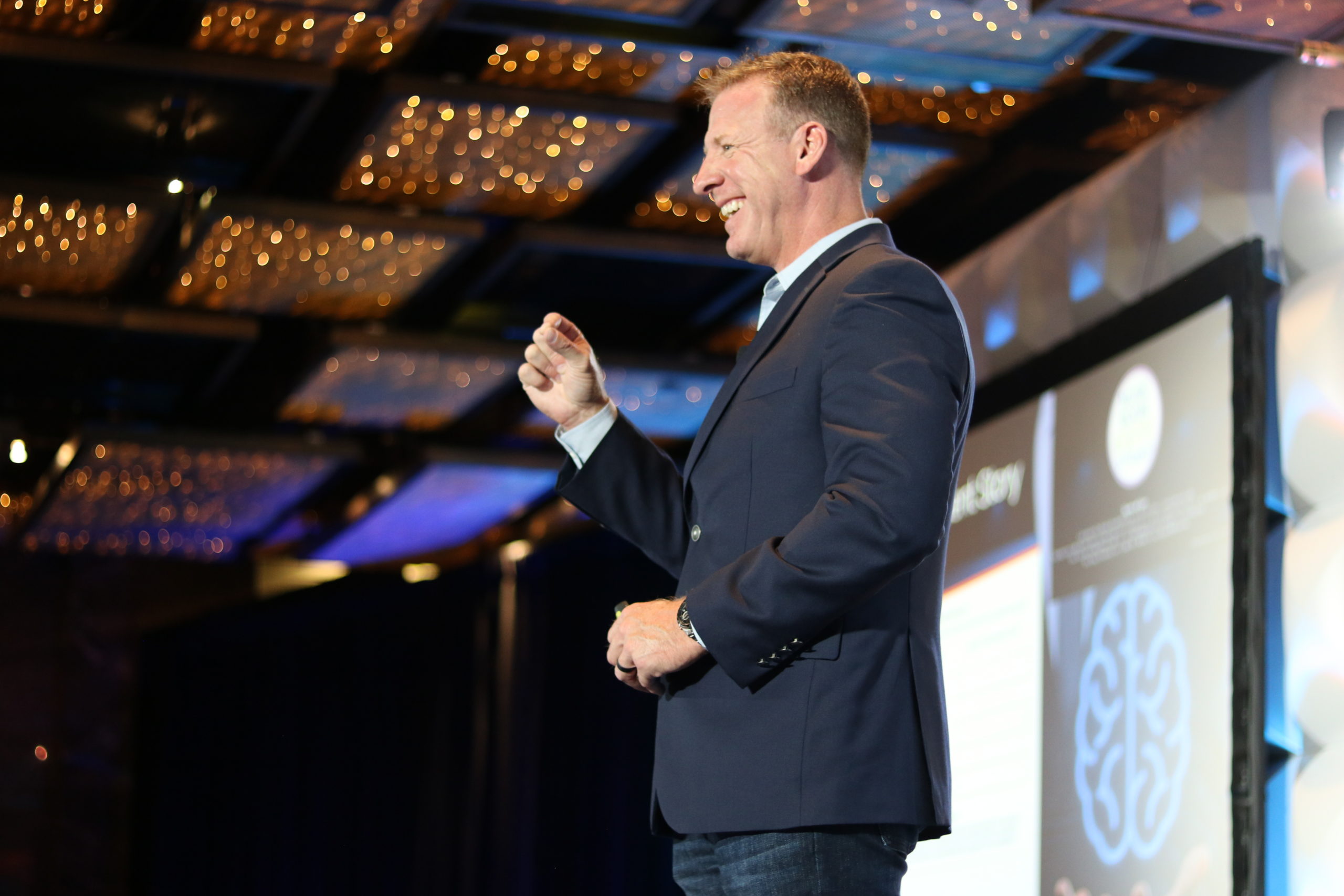
Jeff Bloomfield is a keynote speaker, Wall Street Journal bestselling author, and the founder of Braintrust. He has spent over 20 years helping Fortune 500 sales teams rewire how they communicate, using the neuroscience of trust, decision-making, and buyer behavior to drive results that training alone rarely produces. He speaks at corporate events, executive summits, and sales kickoffs across life sciences, financial services, software, and technology.
Experience Highlights
- NeuroSelling methodology and enterprise adoption
- Trust-based selling at the executive level
- Sales transformation in complex, long-cycle industries
- Keynote speaking and executive coaching
Areas of Expertise
Trust has become one of the most requested keynote topics for sales kickoffs, leadership summits, and annual conferences. That's made it harder to choose well, because "trust" now covers everything from culture talks to customer-experience keynotes to personal stories about integrity. The right trust keynote speaker gives your audience a clear definition, real science, and behavior they can change on Monday. The wrong one gives them a feel-good hour and a word they already knew.
Why Trust Became a Keynote Category of Its Own
A few years ago, trust was a section inside a leadership or sales talk. Now it's a booking category on its own, and the reason is commercial. Buyers have more information than ever and more options than ever, and they still stall. 60% of deals are lost to "no decision." Inside organizations, change efforts stall for the same reason: people don't move until they trust where they're being asked to go.
The upside is just as measurable. In Paul Zak's research published in Harvard Business Review (2017), employees at high-trust companies reported 74% less stress, 106% more energy at work, 50% higher productivity, 76% more engagement, and 40% less burnout than employees at low-trust companies.
That's why the planners booking trust keynotes today are rarely culture committees alone. They're CROs, CHROs, and event directors who see trust as the thing standing between their strategy and their results.
The Three Kinds of Trust Keynotes
Before you compare speakers, decide which kind of trust keynote your event needs. Most trust speakers lean toward one of three audiences, and a mismatch is the most common booking mistake.
| Type of Trust Keynote | Best For | The Audience's Core Question | What to Listen For in a Speaker's Demo Reel |
|---|---|---|---|
| Trust in the sales conversation | Sales kickoffs, revenue summits, channel partner events | "Why do buyers believe us and still not buy?" | How buyers decide, why deals stall, what changes in the conversation |
| Trust in leadership | Leadership offsites, executive summits, manager conferences | "Why won't my team follow, speak up, or change?" | Psychological safety, consistency, how leaders earn credibility |
| Trust across the organization | Annual conferences, all-hands, association meetings | "How do we rebuild trust after change or disruption?" | How trust breaks, how it's rebuilt, what everyone owns |
Jeff delivers versions of all three: The Trust Advantage for sales audiences, The Science of Trust for leadership audiences, and The Science of Building Trust for conference and corporate audiences. Each starts from the same science and lands on different behavior.
Criterion 1: The Speaker Can Define Trust in One Sentence
If a speaker can't define trust clearly, the audience will leave with a feeling instead of a framework. Ask any trust speaker you're considering for their definition. A strong answer is short, specific, and points at behavior.
Jeff's definition: trust is "the brain's permission slip to buy, follow, change, speak up and move forward." That definition works on stage because it connects an abstract word to decisions every person in the room makes daily, whether they're a buyer, a rep, or a manager.
Criterion 2: The Content Is Built on Research, Not Anecdote
Stories matter in a trust keynote. But a trust talk built only on personal stories gives your audience nothing to apply to their own situation. Look for a speaker who grounds the stories in research your audience can trust in turn.
Strong trust keynotes typically draw on findings like these:
- Speed of judgment. In a Princeton study, people judged a face's trustworthiness in about a tenth of a second, the fastest and most consistently judged trait tested.
- Team performance. Psychological safety was the #1 driver of performance in Google's study of 180 teams (Project Aristotle).
- Business outcomes. The most trusted workplaces have outperformed the S&P 500 by more than 2,000% in cumulative returns since 1998 (Great Place To Work, 2025).
A speaker who cites sources like these, accurately and with context, is a speaker your skeptical executives will take seriously.
Criterion 3: The Talk Explains How Trust Breaks and Rebuilds
Most audiences don't need to be told trust matters. They need to understand why it breaks and what rebuilding it actually takes. A useful trust keynote covers the full arc.
Jeff frames it in four stages: Predicted, Earned, Broken, Rebuilt. The brain predicts whether someone is safe before any evidence comes in. Trust is then earned through consistent behavior over time. It breaks faster than it builds. And rebuilding it follows a different path than building it the first time.
If your event follows a reorganization, a missed year, a merger, or a leadership change, this criterion matters most. For more on the rebuild stage, see what trust repair is and how leaders rebuild credibility.
Criterion 4: It Connects Trust to Behavior Your Audience Owns
A trust keynote should leave every attendee knowing what they personally control. If the takeaway is "leadership needs to build more trust," everyone below the executive team checks out.
Jeff organizes this around three trust conditions:
- Safety Always Comes Before Reasoning. A faster-than-reasoning safety check gates everything else. If people don't feel safe, they don't process the logic.
- Reliability Is Proven With Consistency. People follow whoever's behavior has held up over time, not the most qualified person in the room.
- Trust Is Earned When the Upside Is Clear. Missing confidence, not missing information, usually blocks a decision.
Every person in the room can act on all three, whether they're selling to a buyer or leading a team. That's what makes a trust keynote useful past the closing applause. For a full walkthrough, see the three conditions of trust.
Criterion 5: The Speaker Has Lived Trust Under Pressure
Audiences can tell the difference between a speaker who researched trust and one who's had to earn it when the stakes were real. Look for a background that includes high-pressure decisions, not just a career on stage.
My own path runs through a few of those moments. I grew up on a farm in central Ohio. I spent 20+ years in Fortune 500 environments, including leading biotech launches for genetic cancer therapies, where the stakes of every conversation were high. And I'm a cancer survivor. I don't tell those stories for their own sake. I tell them because they make the science feel true.
My forthcoming book, TRUSTED, carries the subtitle "The Hidden Science of Becoming Worthy of What Cannot Be Demanded." That premise runs through every trust keynote I deliver: trust can't be required. It has to be earned.
"Thanks to Jeff, we now have an understanding of the science of decision making and how the human brain actually builds connection and trust. This has made a huge impact on our results."
Gary Price, Global Director of Sales, CSZ
Criterion 6: Customization and Accountability
Trust looks different in a medical device sales force than in a credit union leadership team. A trust keynote that isn't built around your audience's specific trust gaps will feel generic within minutes.
Ask every finalist:
- Is a pre-event customization call included? Jeff includes one with every booking.
- How much of the talk changes for us? All of Jeff's talks are custom-built for the audience.
- What happens if it doesn't land? Jeff's performance guarantee: "if your attendees don't rate Jeff among the top speakers at your event, he'll work with you to make it right."
- Do you offer both virtual and in-person formats? Useful for hybrid events and distributed teams.
Questions to Ask a Trust Speaker Before You Book
Use these on your shortlist calls to separate a strong trust keynote from a general inspiration talk:
- What's your definition of trust, in one sentence?
- What research is your content built on?
- How do you address trust after it's been broken?
- What will a front-line employee or rep do differently after your keynote?
- How would you adapt this talk for a sales audience versus a leadership audience?
- Can you share a recent event where you spoke to a similar audience?
Frequently Asked Questions
How do I choose a keynote speaker on trust?
Start by deciding whether your event needs a sales, leadership, or organizational trust keynote. Then evaluate finalists on six criteria: a clear definition of trust, research-backed content, coverage of how trust breaks and rebuilds, behavior every attendee owns, lived experience under pressure, and deep customization.
What should a trust keynote cover?
A strong trust keynote defines trust clearly, explains the science of how the brain decides whom to trust, covers how trust breaks and rebuilds, and gives every attendee specific behaviors they control. Jeff's keynotes are built around three conditions: safety before reasoning, reliability proven with consistency, and a clear upside.
Is a trust keynote a good fit for a sales kickoff?
Yes. Trust is one of the most direct levers on sales results, because buyers move when they trust the seller, feel the cost of inaction, and see a safe path forward. Jeff's sales trust keynote, The Trust Advantage, connects trust directly to why deals stall and how buyers decide.
What's the difference between a trust keynote and a leadership keynote?
A leadership keynote covers how leaders set direction, coach, and drive change. A trust keynote focuses on the specific condition that makes all of that work: whether people believe they can safely follow. Many events book a trust keynote as their leadership session because trust is often the real gap.
Who is a good trust keynote speaker for corporate events?
Look for a speaker who combines research-backed content with real business experience. Jeff Bloomfield has delivered 500+ keynotes, is a Wall Street Journal bestselling author, and has 20+ years of Fortune 500 experience. His trust keynotes draw on the neuroscience of how the brain decides whom to trust.
Should a trust keynote be research-based or story-based?
Both. Stories make trust feel personal, and research makes it credible to skeptical executives. The strongest trust keynotes use stories to illustrate findings, so the audience feels the point and can defend it later.
How far in advance should I book a trust keynote speaker?
For a sales kickoff or annual conference, start the search four to six months out, since peak SKO dates in January and February fill quickly. Jeff is now booking 2026 and 2027 events.
If you're comparing trust keynote speakers for your next event, it's worth a conversation about where trust is breaking down for your audience. See how Jeff builds every trust keynote around the science of how people decide whom to follow.
Keynote Speaker
Jeff delivers keynotes at sales kickoffs, leadership summits, and corporate conferences, combining neuroscience, storytelling, and real-world selling experience into sessions that move people and stick long after the event ends.
