

What Are the Three Conditions of Trust?
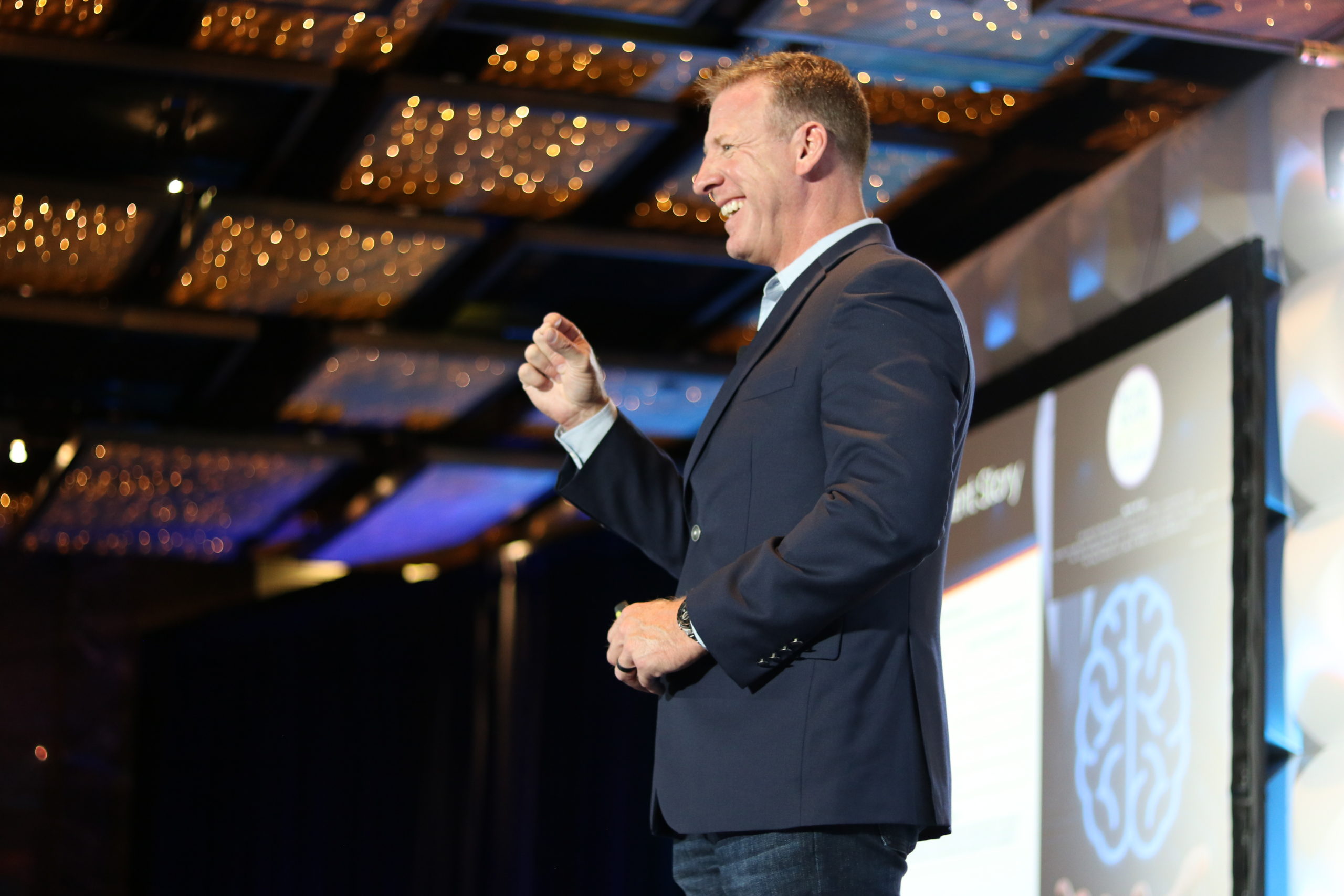
About
Jeff Bloomfield is a keynote speaker, Wall Street Journal bestselling author, and the founder of Braintrust. He has spent over 20 years helping Fortune 500 sales teams rewire how they communicate, using the neuroscience of trust, decision-making, and buyer behavior to drive results that training alone rarely produces. He speaks at corporate events, executive summits, and sales kickoffs across life sciences, financial services, software, and technology.
Experience Highlights
- NeuroSelling methodology and enterprise adoption
- Trust-based selling at the executive level
- Sales transformation in complex, long-cycle industries
- Keynote speaking and executive coaching
Areas of Expertise
Most leaders and sales teams treat trust as a byproduct of likability or tenure: be consistent, be nice, put in the years, and trust will follow. Neuroscience tells a more specific story. Trust is not a feeling that accumulates slowly. It is the brain's permission slip to buy, follow, change, speak up, and move forward, and it is granted or withheld based on three specific conditions. Jeff Bloomfield built this framework to give leaders and sales teams a precise way to read, and deliberately build, trust in any high-stakes conversation.
Why "Be Consistent and Wait" Isn't a Strategy
The advice to "just build trust over time" is not wrong, but it is too vague to act on. It gives a leader or a seller nothing to actually do in the room during a specific conversation where trust is either present or missing. The three conditions framework exists to replace that vagueness with something observable and actionable.
The Three Conditions of Trust
Safety Always Comes Before Reasoning
The brain runs a safety check before it runs any logical analysis, and that check happens faster than conscious thought. In a Princeton study, people judged a face's trustworthiness in about a tenth of a second, the fastest and most consistently judged trait researchers tested. No argument, data point, or credential can override a safety check that fails. If a buyer, employee, or team member does not feel safe with you, nothing you say next gets a fair hearing.
Reliability Is Proven With Consistency, Not Credentials
People do not follow whoever is most qualified in the room. They follow whoever's behavior has actually held up over time. This is why a newly promoted leader with the strongest resume can still struggle to earn a team's trust immediately, while a manager with a track record of following through, even on small things, earns it faster. Reliability is demonstrated, never claimed.
Trust Is Earned When the Upside Is Clear
The condition most leaders and sellers skip is also the one that resolves the most hesitation. What blocks a decision is usually missing confidence, not missing information. A buyer or employee needs to see a genuinely clear, credible upside before trust converts into action. Piling on more facts does not fix an unclear upside. Making the upside concrete does.
What Traditional Trust-Building Advice Gets Wrong
| Traditional Advice | What the Three Conditions Framework Adds |
|---|---|
| "Be more likable" | Safety is judged in milliseconds, before likability even registers |
| "Prove your credentials" | Reliability comes from consistent behavior, not stated qualifications |
| "Share more data and proof points" | More information does not resolve missing confidence about the upside |
| "Trust takes time" | Trust is granted or withheld condition by condition, not accumulated passively |
| "Just be authentic" | Authenticity alone does not answer whether the path forward is safe |
Where This Shows Up: Sales, Leadership, and Change
In a sales conversation, the three conditions explain why a technically excellent pitch can still fail to close: the buyer's safety check failed early, so nothing afterward landed the way it was intended to. In a leadership conversation, the same framework explains why 70% of change initiatives fail to achieve their goals. Employees are not usually resisting the logic of the change. They are missing a clear read on whether the new direction is safe, whether leadership's behavior has been reliable enough to follow, and whether the upside is concrete enough to commit to.
Psychological safety, specifically, was identified as the number one driver of team performance in Google's own internal study of 180 teams (Google re:Work, Project Aristotle), which lines up directly with the first condition: safety has to be established before anything else a leader says gets a fair hearing.
How to Tell Which Condition Is Missing
When trust seems absent from a conversation, whether with a buyer, a direct report, or an entire team during a change effort, it helps to diagnose which of the three conditions is actually unmet rather than treating trust as one undifferentiated problem.
| If You Observe... | The Missing Condition Is Likely... | What Tends to Help |
|---|---|---|
| Guardedness, short answers, reluctance to share real concerns | Safety | Slow down, remove any sense of evaluation or judgment from the room before continuing |
| Skepticism toward your proposal despite a strong track record elsewhere | Reliability | Point to specific, recent, consistent follow-through, not general credentials |
| Agreement in principle but no forward movement | Clarity of upside | Make the benefit concrete and tied to their specific situation, not a general value proposition |
| A mix of all three, often after a broken promise | All three, in sequence | Rebuild safety first, then demonstrate reliability over time, then reintroduce a clear upside |
How to Apply the Three Conditions in a Real Conversation
- Diagnose the safety check first, before addressing content. If a conversation feels stuck, ask whether the other person feels genuinely safe, not whether your argument is strong enough.
- Audit your own reliability record before a high-stakes ask. Inconsistent follow-through in small moments quietly erodes trust long before a big moment arrives.
- Make the upside concrete and specific, tied to the other person's actual situation, rather than generic or abstract.
- Slow down when a decision stalls. A stall is frequently a sign that one of the three conditions, not the pitch itself, is unresolved.
- Train the whole team on the same three conditions, so managers and sellers are diagnosing trust gaps the same way, not relying on individual instinct.
Measuring Whether Trust Conditions Are Being Met
High-trust environments are not just more pleasant. Employees at high-trust companies report 74% less stress, 106% more energy at work, 50% higher productivity, 76% more engagement, and 40% less burnout than those at low-trust companies (Paul Zak, "The Neuroscience of Trust," Harvard Business Review, 2017). At the organizational level, the most trusted workplaces have outperformed the S&P 500 by more than 2,000% in cumulative returns since 1998 (Great Place To Work, 2025). These are not soft outcomes. They are measurable business results tied directly to whether the three conditions are consistently present across a team or a sales organization.
Leaders who build the three conditions into how they run their teams describe a similar shift in how their organizations function.
"Jeff not only inspired our leaders, but had everyone thinking differently about how we coach and communicate in every area of our company." — Matt E., CEO
Frequently Asked Questions
What are the three conditions of trust?
Safety always comes before reasoning, reliability is proven with consistency rather than credentials, and trust is earned when the upside is genuinely clear. All three must be present before a person's brain grants trust, whether the context is a sales conversation, a leadership relationship, or an organizational change.
Why does safety matter more than a strong argument?
Because the brain runs an unconscious safety check before it engages in logical reasoning at all. Research shows people judge trustworthiness in a face in about a tenth of a second. If that fast, automatic safety check fails, no argument delivered afterward gets a fair hearing.
How is reliability different from having strong credentials?
Credentials are claimed. Reliability is demonstrated through consistent behavior over time. People follow whoever's actions have held up, not necessarily whoever has the most impressive title or resume in the room.
What does it mean that trust is earned when the upside is clear?
It means hesitation is usually a sign of missing confidence, not missing information. Adding more data rarely resolves this. Making the specific, credible benefit concrete and relevant to that person's situation is what actually moves a decision forward.
How does this framework apply to leading change?
Since 70% of change initiatives fail to hit their goals, and the usual explanation is employee resistance, the three conditions offer a more precise diagnosis: employees are often missing a clear read on safety, a reliable track record from leadership, or a concrete upside, not simply resisting logic.
Can this framework be taught to an entire sales or leadership team at once?
Yes, and that is precisely how Jeff Bloomfield builds it into his keynotes on trust and leadership. Teaching the three conditions as shared language lets managers and sellers diagnose trust gaps the same way, rather than relying on individual instinct that varies person to person.
Is this the same as general advice to "build rapport"?
No. Rapport is about likability and connection. The three conditions are about the specific, sequential gates the brain uses to decide whether to grant trust at all, which is a more precise and more actionable model than rapport alone.
If your team needs a shared, science-based way to read and build trust, whether in the sales conversation or across a leadership team navigating change, it's worth a conversation about bringing this framework to your next event. Explore how Jeff builds this into every trust keynote.
Keynote Speaker
Jeff delivers keynotes at sales kickoffs, leadership summits, and corporate conferences — combining neuroscience, storytelling, and real-world selling experience into sessions that move people and stick long after the event ends.
