

Does AI Erode Buyer Trust in the Sales Process?
About
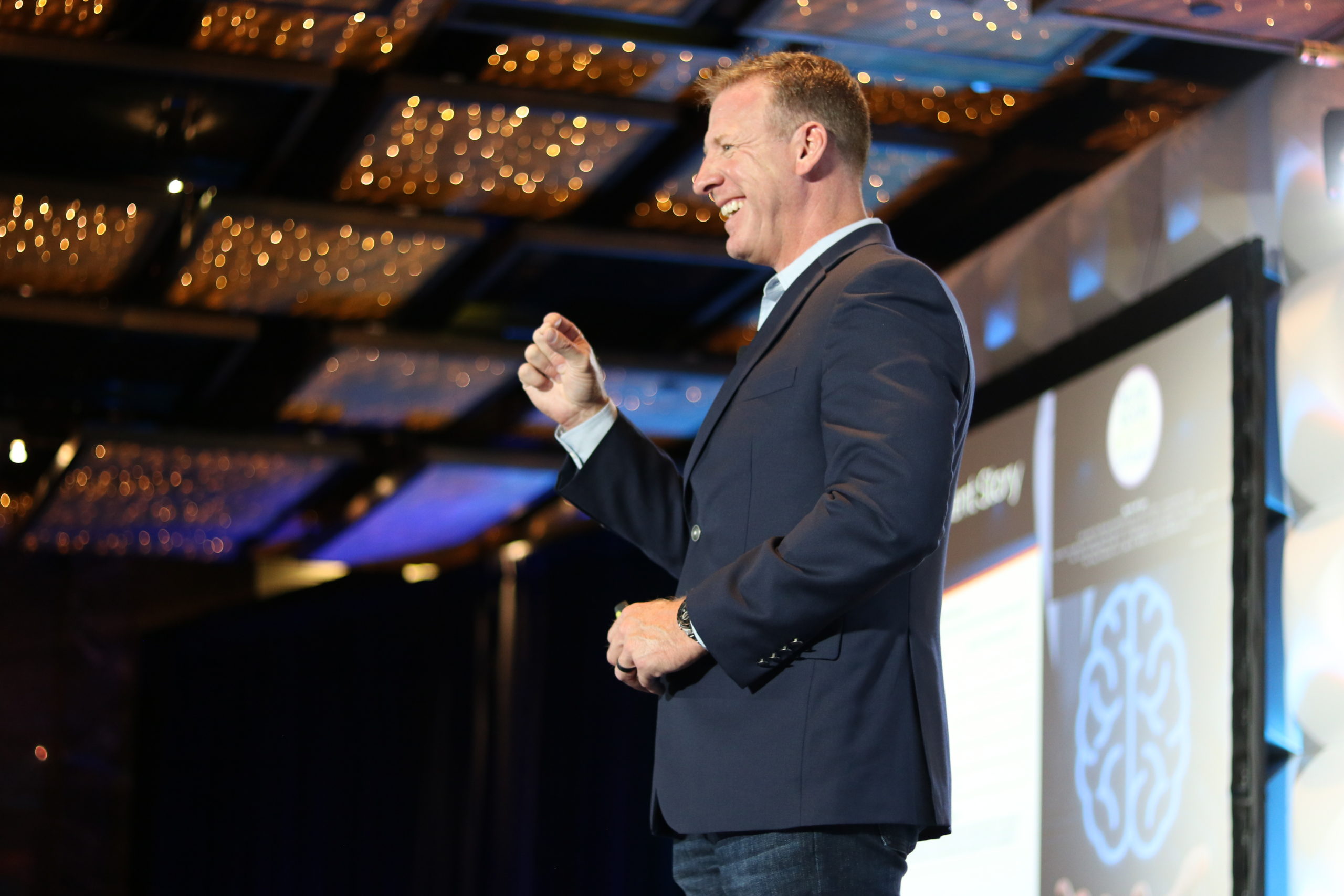
Jeff Bloomfield is a keynote speaker, Wall Street Journal bestselling author, and the founder of Braintrust. He has spent over 20 years helping Fortune 500 sales teams rewire how they communicate, using the neuroscience of trust, decision-making, and buyer behavior to drive results that training alone rarely produces. He speaks at corporate events, executive summits, and sales kickoffs across life sciences, financial services, software, and technology.
Experience Highlights
- NeuroSelling methodology and enterprise adoption
- Trust-based selling at the executive level
- Sales transformation in complex, long-cycle industries
- Keynote speaking and executive coaching
Areas of Expertise
AI tools now write the first outreach email, summarize the discovery call, and draft the proposal before a rep even opens the deck. Adoption is moving faster than most sales organizations can build guardrails for it, and a real question is surfacing behind the productivity gains: does handing more of the buyer conversation to AI quietly cost sellers the trust that actually closes deals? The data suggests the risk is real, but it is not the tools themselves that erode trust. It is where sales leaders let AI stand in for the parts of the conversation only a human can carry.
The Root Cause: AI Can Speed Up Information, Not Judgment
Most sales organizations rolled out AI to solve a speed problem: faster research, faster follow-up, faster proposals. That is a real and valuable gain. But speed was never the reason deals close. Buyers do not say yes because information arrived quickly. They say yes when they feel safe, see a clear cost of staying where they are, and trust the person and path forward. AI accelerates the first half of a sales process and does nothing for the second half, and sales teams that lean on it too heavily start to feel the gap.
What the Brain Does When a Trust Judgment Is on the Line
Trust decisions happen faster, and more unconsciously, than most sales leaders assume. In a Princeton study, people judged a face's trustworthiness in about a tenth of a second, the fastest and most consistently judged trait tested. That kind of split-second, embodied trust read has no equivalent in an AI-generated email or chatbot response. A buyer can appreciate a well-written, AI-assisted proposal and still withhold the trust that actually authorizes a purchase, because that judgment is being made about the human relationship, not the document.
This lines up with a broader shift already visible in buyer behavior: 75% of B2B buyers are expected to prefer sales experiences that prioritize human interaction over AI by 2030 (Gartner, 2025). That is not a rejection of AI as a tool. It is a signal about where buyers want the human to stay firmly in the loop.
How to Keep Trust Intact as AI Adoption Grows
The goal is not to slow down AI adoption. It is to be deliberate about which parts of the sales conversation stay human and which parts AI is genuinely suited to handle. Jeff Bloomfield's approach to this, built into his AI-focused keynotes, starts from the three conditions that govern whether a buyer's brain grants trust at all: safety has to come before reasoning, reliability is proven through consistency rather than polish, and trust converts into action only when the upside is genuinely clear. None of those three conditions are things an AI tool can establish on a seller's behalf. They are established, or lost, in the human moments of a sales relationship: the discovery call, the follow-through on a commitment, the direct conversation about what a buyer stands to lose by waiting.
My approach to this with sales organizations is straightforward: let AI do the research, the drafting, and the summarizing. Never let it stand in for the moments where a buyer is deciding whether to trust you specifically. Those moments are exactly where the Behavior-Access Problem shows up hardest, because sellers who lean on AI to skip discovery often lose the very skill of reading a room and building trust live, under pressure.
What the Broader Research Signals About Trust and AI
Jeff's own client conversations line up with what independent research firms are now saying publicly. Forrester's 2026 predictions for B2B buying explicitly name trust as the deciding currency as AI reshapes how buyers gather information and evaluate vendors, a framing that reinforces the same conclusion the Gartner data points to: capability alone no longer differentiates a sales process, and the organizations that protect the human trust-building moments in an increasingly AI-assisted buying journey will be the ones buyers actually choose.
This matters because it reframes an internal debate many sales leaders are having backwards. The question is rarely "how much AI should we adopt." It is "which specific moments in our sales process would lose the most trust if we automated them," and that is a much more precise, and more useful, question to bring to a sales team.
Where AI Helps vs. Where It Quietly Erodes Trust
| Sales Activity | AI's Role | Risk to Buyer Trust |
|---|---|---|
| Account and buyer research | Strong fit; speeds up prep significantly | Low, as long as the seller still personalizes the outreach |
| First outreach message | Useful for drafting, risky if sent unedited | Moderate; buyers increasingly recognize generic AI phrasing |
| Discovery conversation | Should remain fully human | High; this is where safety and reliability are actually judged |
| Proposal drafting | Strong fit for structure and speed | Low, provided the seller still walks the buyer through it personally |
| Objection handling and stall diagnosis | AI can suggest, should not decide | High; this requires reading unspoken hesitation, not just data |
| Post-sale follow-through | Automation is fine for logistics, not for relationship check-ins | Moderate to high depending on how impersonal it becomes |
What Changes When Sales Teams Get This Balance Right
Sales organizations that are explicit about where AI stops and human judgment starts tend to see two things happen at once: faster cycle times on the research and drafting side, and no erosion in close rates on the relationship side. The teams that struggle are the ones that let AI quietly creep into discovery and objection handling because it is faster, only to find buyers stalling for reasons that look like disengagement but are actually unresolved trust.
What This Means for How Sales Teams Are Structured Going Forward
Some sales organizations are starting to formally separate roles around this line: research and drafting increasingly sit with revenue operations or specialized enablement functions using AI tools directly, while quota-carrying reps are coached to spend a growing share of their time in the trust-building moments AI cannot replicate. This is not a headcount reduction story. It is a reallocation of where human attention goes, toward the parts of the sales process where it is actually irreplaceable.
Sales leaders who make this reallocation explicit, rather than letting it happen by accident as AI tools get adopted piecemeal across a team, tend to protect trust and close rates at the same time they gain real efficiency from the tools themselves.
Practical Steps for Sales Leaders
- Draw an explicit line between AI-assisted tasks (research, drafting, summarizing) and human-only moments (discovery, trust-building, objection conversations).
- Audit outreach for authenticity. If a buyer can tell an email was fully AI-generated, it has likely already cost some trust before the conversation even starts.
- Protect discovery time. Do not let AI-generated call summaries replace a rep's own active listening and follow-up questions during the call itself.
- Coach reps on reading hesitation, since this is a skill AI genuinely cannot replicate and one that erodes fastest when reps lean too heavily on tools.
- Revisit this balance regularly. AI capability is moving quickly, and what was purely administrative six months ago may now tempt teams to let it handle more of the relationship than it should.
Audiences who have sat through Jeff's keynote on this exact tension tend to describe it as reframing rather than alarming.
"Jeff doesn't just talk about AI, he makes you rethink what it means to be human in the age of automation." — Conference Attendee
Frequently Asked Questions
Does using AI tools in sales actually hurt buyer trust?
Not inherently. The data shows buyers are comfortable with AI assisting research, drafting, and summarizing. Trust erodes specifically when AI is allowed to stand in for moments that require a human judgment call, like discovery, objection handling, or reading hesitation.
Why do buyers still want a human salesperson if AI can answer their questions?
Because 69% of B2B buyers say they still want a human to validate AI-generated insights before acting on them (Gartner, 2026). Buyers are not rejecting AI's usefulness. They are signaling that the final trust judgment still needs a human they can hold accountable.
What parts of the sales process are safest to hand to AI?
Account research, first-draft outreach (with human editing), and proposal formatting are generally low-risk. Discovery conversations, objection handling, and stall diagnosis should remain fully human, since these are where trust is actually being judged.
Will buyers eventually prefer AI-driven sales experiences over human ones?
The data points the opposite direction. Seventy-five percent of B2B buyers are expected to prefer sales experiences that prioritize human interaction over AI by 2030 (Gartner, 2025), which suggests the premium on human judgment in sales is growing, not shrinking.
How can sales leaders train reps to use AI without losing trust-building skills?
By being explicit about where AI stops and human judgment begins, and by continuing to coach reps on discovery, hesitation-reading, and trust-building as core skills rather than assuming AI tools will compensate for gaps in them. This is exactly the balance addressed in keynotes on staying human as AI adoption accelerates.
Is this the same issue as AI replacing sales jobs?
No. This is narrower and, for most sales leaders, more immediately relevant: not whether AI replaces sellers, but whether AI is quietly allowed to erode the trust-building moments that still require a human, even while sellers keep their jobs.
How does this connect to a keynote for a sales kickoff or leadership event?
Because AI adoption is moving faster than most teams' shared understanding of where to draw the line, a keynote that gives the whole team the same framework for what stays human is directly actionable, not theoretical. It turns an abstract worry about AI into a concrete set of guardrails a team can apply immediately.
If your sales team is adopting AI tools faster than it has agreed on where the human still needs to lead, it's worth a conversation about building that shared framework into your next event. Learn more about Jeff's AI keynote built specifically around what stays human in the sales conversation.
Keynote Speaker
Jeff delivers keynotes at sales kickoffs, leadership summits, and corporate conferences — combining neuroscience, storytelling, and real-world selling experience into sessions that move people and stick long after the event ends.
