
7 Misconceptions About Storytelling Keynote Speakers (and What to Ask Instead)
About
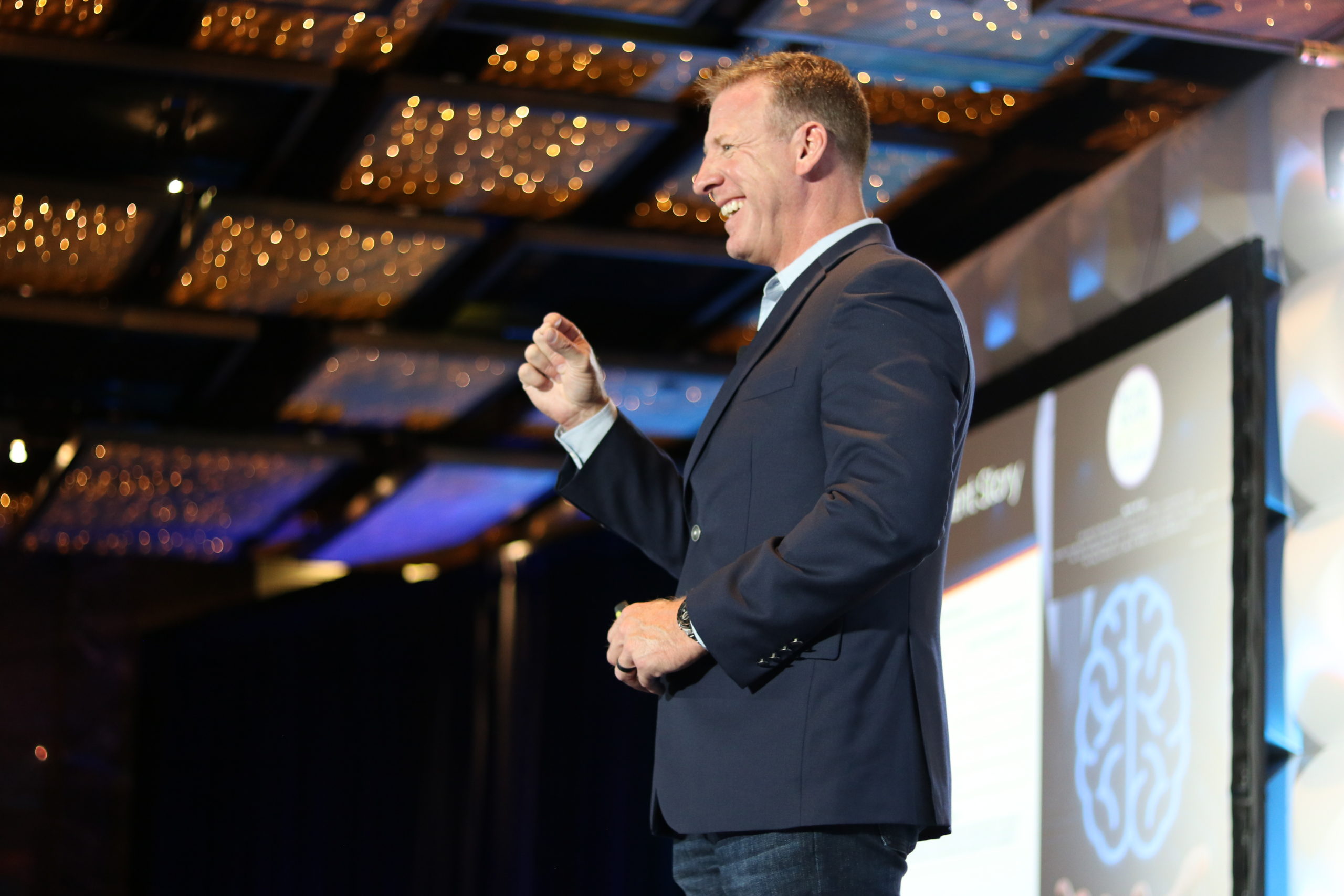
Jeff Bloomfield is a keynote speaker, Wall Street Journal bestselling author, and the founder of Braintrust. He has spent over 20 years helping Fortune 500 sales teams rewire how they communicate, using the neuroscience of trust, decision-making, and buyer behavior to drive results that last. He speaks at corporate events, executive summits, and sales kickoffs across life sciences, financial services, software, and technology.
Experience Highlights
- NeuroSelling methodology and enterprise adoption
- Trust-based selling at the executive level
- Sales transformation in complex, long-cycle industries
- Keynote speaking and executive coaching
Areas of Expertise
Storytelling keynotes are some of the most requested and most misunderstood sessions on a conference agenda. Planners often book one expecting a good time and get exactly that, with little to show for it a week later. Other planners skip storytelling altogether because they assume it's soft, or wrong for a data-driven audience. Both mistakes come from the same place: a set of assumptions that don't hold up against how the brain actually processes a message. Here are seven worth clearing up before you book.
1. Misconception: A Storytelling Keynote Is Just Entertainment
The belief: A good storyteller will keep the room engaged for an hour, and that's the goal.
The correction: Engagement is the entry fee, not the outcome. Narrative activates 7 brain regions, compared with 2 for data alone. That's why stories change what people remember and do, not just how they feel in the moment. A storytelling keynote that only entertains wastes the most valuable property stories have.
What to ask the speaker: "What will attendees do or believe differently a week from now, and how does the story get them there?"
2. Misconception: Storytelling Is a Soft Skill, Not a Performance Driver
The belief: Storytelling is nice to have for marketing, but sellers need hard skills.
The correction: 95% of purchase decisions are driven by emotion, not logic. Buyers decide emotionally and justify rationally. Stories are one of the most direct ways to reach the part of the brain that decides. For a sales audience, a story isn't decoration on the content. It's the delivery system.
What to ask the speaker: "How does your content connect storytelling to how buyers actually decide?"
3. Misconception: The Best Speaker Is the One With the Best Stories
The belief: If the speaker's personal stories are gripping, the keynote will work.
The correction: Great stories serve a point. A speaker with a powerful personal story but no clear link to your audience's work leaves the room moved and unchanged. What matters is how the story is chosen, and whether it builds toward an idea your team can use. For more on selecting a speaker, see how to choose a storytelling keynote speaker for your event.
What to ask the speaker: "How do you choose which stories to tell for an audience like ours?"
4. Misconception: Our Data-Driven Audience Won't Respond to Stories
The belief: Engineers, finance leaders, and analysts want facts, not narratives.
The correction: Data-driven audiences are still human audiences. Narrative activates 7 brain regions compared with 2 for data alone, so the same data lands harder inside a story. A good storytelling speaker doesn't replace data. They show the room how to make data memorable and persuasive. See storytelling vs. data: which persuades executives.
What to ask the speaker: "Have you worked with analytical audiences, and how do you adapt?"
5. Misconception: A Storytelling Keynote Hands Reps a Template to Memorize
The belief: Attendees will leave with a formula and start telling better stories on Monday.
The correction: A keynote explains why stories work and creates belief and shared language. Building the craft takes practice, which is what workshops and ongoing enablement are for. The two work together. The keynote makes the room want to practice, and enablement gives them the structure to do it. See conference keynote vs. workshop.
What to ask the speaker: "How does your keynote set up the training and enablement we already have planned?"
6. Misconception: A Bigger Name Means a Better Fit
The belief: The most famous storyteller will deliver the strongest session.
The correction: Fame tells you the speaker is well known. It doesn't tell you the talk is built for you. Look for customization. 100% of Jeff's talks are custom-built for the audience, and a pre-event customization call is included with every booking. A lesser-known speaker who builds the session around your team often outperforms a headliner who delivers the same talk everywhere.
What to ask the speaker: "What changes in the talk for our audience, and how do you learn about us?"
7. Misconception: Storytelling Is for Marketing and Leadership, Not for Sellers
The belief: Sellers need product knowledge and process. Stories belong in the brand team's toolkit.
The correction: Every sales conversation is a story the buyer is deciding whether to be part of. 95% of persuasion happens at the unconscious level, and sellers who understand that stop relying on features and start building the narrative a buyer can picture themselves in. In the first few seconds, the room decides whether to listen: you have about 5 seconds to capture or lose your audience's attention.
What to ask the speaker: "How does your keynote translate to a selling conversation?"
Misconceptions at a Glance
| Misconception | The Reality | What to Ask the Speaker |
|---|---|---|
| It's entertainment | Stories change memory and behavior, not just mood | What will attendees do differently next week? |
| Storytelling is a soft skill | Buyers decide emotionally, and stories reach that part of the brain | How does this connect to how buyers decide? |
| The best stories make the best speaker | Stories must serve a point for your audience | How do you choose stories for us? |
| Data audiences won't respond | Data lands harder inside a narrative | How do you adapt for analytical rooms? |
| It hands out a template | A keynote builds belief, and enablement builds craft | How does it set up our training? |
| A big name means a better fit | Customization matters more than fame | What changes for our audience? |
| It's only for marketing | Selling is storytelling in real time | How does it apply to sellers? |
A 15-Minute Screen for Any Storytelling Speaker
You don't need a long process to avoid these mistakes. A short, structured conversation with each finalist will surface most of them.
- Ask for the one-sentence idea. Not the speaker's biography, the idea. If it takes a paragraph, the talk may not be focused.
- Ask how they would adapt the talk to your audience. Specific answers beat enthusiasm.
- Ask what changes in the room afterward. You're listening for behavior, belief, or shared language, not just "they'll love it."
- Ask how the keynote connects to your next steps. A good speaker thinks about what happens after the applause.
- Ask for a named reference from a similar event. Then call them.
If a speaker handles all five well, the misconceptions above are unlikely to cost you the room.
How I Approach a Storytelling Keynote
My role in a storytelling session is to deliver the keynote, and the practice that follows is built by your enablement team or a workshop. I use story as a vehicle for the science. In the keynote, I show the audience, live, how the brain processes a story differently from a list of facts, and why that difference changes what buyers and colleagues do next. My sessions follow three movements: Illuminate, where the neuroscience is demonstrated live; Elevate, where the science becomes shared language; and Activate, where the impact is concrete enough to use right away.
Every talk is built for the specific audience, with a pre-event customization call included. Before the event I want to know who is in the room, what they sell or lead, and what you hope they leave believing.
For the science behind it, see the neuroscience of storytelling.
"Jeff's message was so well received by our group, we're already discussing bringing him back next year!"
Chloe S., VP of Marketing
Frequently Asked Questions
What does a storytelling keynote speaker actually do?
A storytelling keynote speaker uses narrative to deliver a message that sticks. The strongest ones tie the stories to the science of why they work and to a business outcome your audience cares about. Jeff Bloomfield combines storytelling, neuroscience, and selling experience in every keynote.
Is a storytelling keynote worth it for a sales team?
It can be, because buyers decide emotionally and sellers who understand narrative connect more clearly. The value comes from a speaker who ties story to buyer behavior, not one who only entertains.
How is a storytelling keynote different from a storytelling workshop?
A keynote builds belief and shared language for a large group in one session. A workshop builds craft through practice with smaller groups. Many teams use a keynote to kick things off and a workshop or enablement to follow through.
How do I know if a storytelling speaker is right for a data-heavy audience?
Ask for examples of work with analytical audiences and how the talk adapts. A good speaker will explain how stories make data more memorable, not argue against data.
How long should a storytelling keynote be?
Most run 45 to 60 minutes. See how long a keynote should be for planning ranges by event type.
Can a storytelling keynote be delivered virtually?
Yes. Narrative translates well to virtual formats when the speaker plans interaction and pacing. Jeff delivers keynotes both in person and virtually.
How far in advance should I book a storytelling speaker?
Four to six months is a good target for most events. Jeff is now booking 2026 and 2027 events.
If you're weighing a storytelling keynote for your next event, it's worth a conversation about what you want your audience to remember. See how Jeff builds every storytelling keynote around the science of why stories work.
Keynote Speaker
Jeff delivers keynotes at sales kickoffs, leadership summits, and corporate conferences, combining neuroscience, storytelling, and real-world selling experience into sessions that move people and stick long after the event ends.
