

How to Use AI in Sales Without Sounding Like a Bot
About
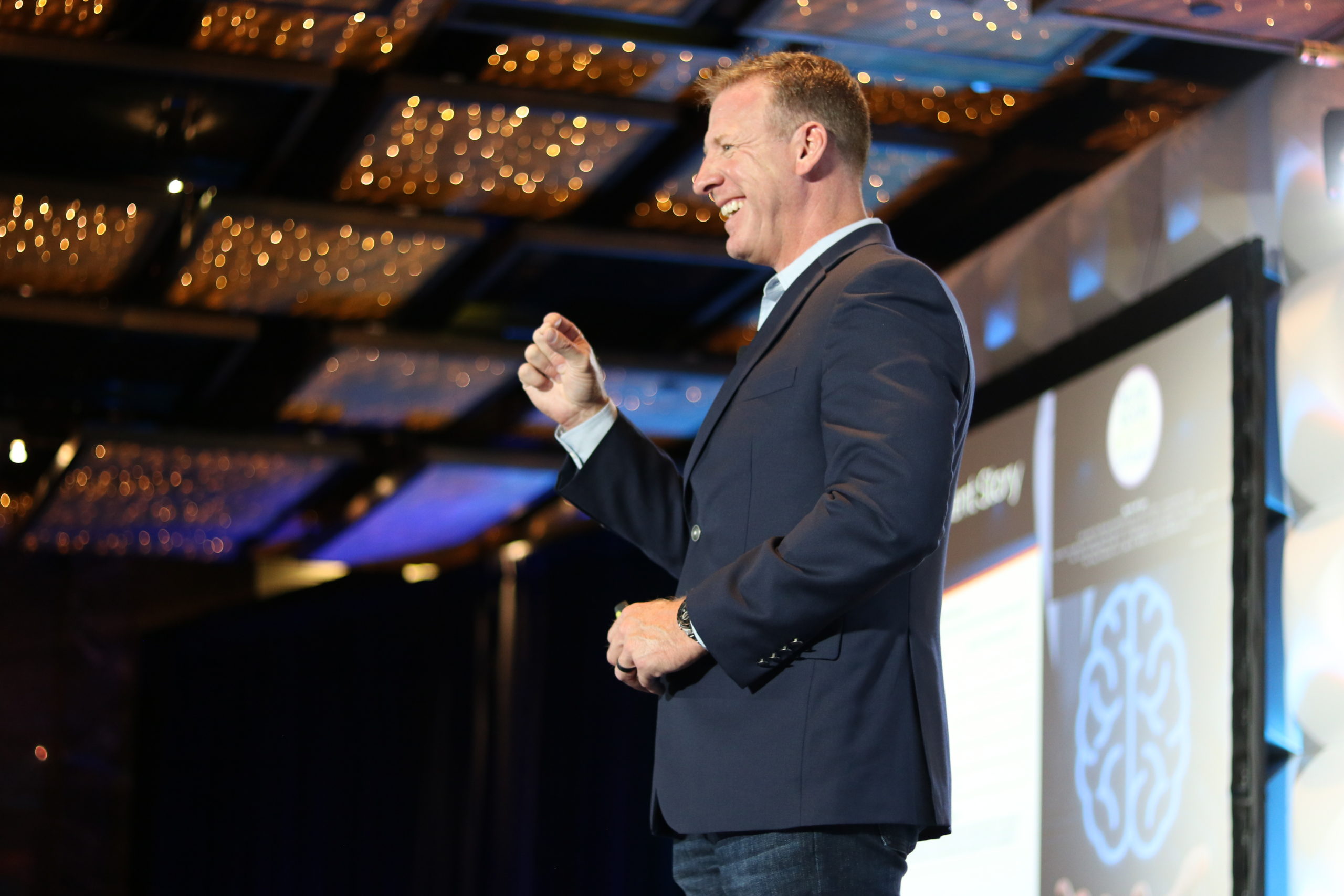
Jeff Bloomfield is a keynote speaker, Wall Street Journal bestselling author, and the founder of Braintrust. He has spent over 20 years helping Fortune 500 sales teams rewire how they communicate, using the neuroscience of trust, decision-making, and buyer behavior to drive results that training alone rarely produces. He speaks at corporate events, executive summits, and sales kickoffs across life sciences, financial services, software, and technology.
Experience Highlights
- NeuroSelling methodology and enterprise adoption
- Trust-based selling at the executive level
- Sales transformation in complex, long-cycle industries
- Keynote speaking and executive coaching
Areas of Expertise
AI can draft a prospecting email in seconds, summarize a call, and personalize an opening line using a prospect's LinkedIn activity. What it cannot do on its own is pass the specific, split-second safety check a buyer's brain runs the moment a message arrives. That check is looking for one thing: does this feel like a real person paying real attention to me. When the answer is no, nothing else in the message gets a fair hearing, no matter how well-researched or well-written it is.
Why Sounding Like a Bot Breaks the Safety Check Before the Content Even Lands
Trust always starts with an unconscious safety check that happens before reasoning kicks in. A message that follows an obvious template, "I noticed you recently posted about X, and I thought Y," triggers that check to fail immediately, because the buyer recognizes the pattern from a hundred other messages that used the same structure. Once the safety check fails, the actual offer inside the message rarely gets read carefully, regardless of how relevant it might have been.
What Buyers Actually Notice
Buyers are not evaluating whether AI was involved in writing a message. Most assume some AI assistance is normal now. What they notice is whether a human clearly reviewed, adjusted, and took ownership of what got sent. Three patterns give it away almost every time: personalization that references something surface-level and generic rather than something specific, phrasing that is technically correct but emotionally flat, and a structure that mirrors dozens of other messages a buyer has already seen that week.
The Data: Buyers Still Want a Human in the Loop
The shift toward AI in sales has not reduced how much buyers value a human seller. Gartner reports that 75% of B2B buyers will prefer sales experiences that prioritize human interaction over AI by 2030, and that 69% of B2B buyers still turn to a salesperson directly to validate AI-generated insights they've already found on their own. Buyers are not rejecting AI. They are rejecting sellers who let AI replace the parts of the conversation that require an actual human to be present.
Where AI Helps and Where It Hurts
AI is genuinely useful for the parts of selling that are mechanical: pulling together background research, summarizing a long call, drafting a first pass at an email a rep will then rewrite. It becomes a liability the moment it's used to skip the parts of selling that require judgment, timing, and emotional read, the actual moment of connection where trust is either built or lost.
| Sales Task | AI-Assisted (Works Well) | AI-Replaced (Backfires) |
|---|---|---|
| Prospect research | Pulling together public information before a call | Writing the entire outreach message with no human review |
| Follow-up notes | Summarizing a call for CRM entry | Sending an AI-drafted recap directly to the buyer unedited |
| Objection prep | Brainstorming possible objections in advance | Responding live to a real objection with a scripted AI answer |
| Meeting scheduling | Coordinating logistics and reminders | Negotiating pricing or terms through an automated exchange |
| Personalization | Surfacing a relevant detail to consider mentioning | Auto-inserting that detail into a templated sentence structure |
The Three-Step Check Before Sending Anything AI Helped Write
- The specificity check. Could this exact sentence have been sent to five other people with the name swapped out? If yes, it needs a genuinely specific detail added before it goes out.
- The voice check. Read it out loud. If it doesn't sound like something you would actually say to this person on a call, rewrite the phrasing until it does.
- The safety check. Would this message make the recipient feel individually seen, or processed? If it feels processed, the message needs a human pass before it's sent, not just a spell check.
Before and After: Making AI-Assisted Messages Sound Human
| AI-Generated Draft | Human-Reviewed Version |
|---|---|
| "I noticed your company recently expanded into new markets and wanted to reach out." | "Saw the news about your Denver office opening, congrats. Curious how that's changing your team's priorities this quarter." |
| "I hope this message finds you well. I wanted to follow up on our previous conversation." | "Following up on what you mentioned about your renewal timeline, has anything shifted since we spoke?" |
| "Our solution can help you achieve your business goals more efficiently." | "Based on what you told me about the manual reporting process, this would save your team roughly the two hours a week you mentioned." |
Why This Matters More as AI Adoption Increases
As more sellers adopt AI tools, the bar for what reads as generic keeps rising, and buyers get faster at spotting the pattern. I tell sales and leadership teams that AI doesn't lower the importance of the human moment in a sales conversation, it raises it, because the messages that clearly took real human attention now stand out more than they used to, not less. The sellers who win are not the ones avoiding AI. They're the ones who use it for the mechanical work and protect the moments that require a real person for everything else.
"Jeff doesn't just talk about AI, he makes you rethink what it means to be human in the age of automation." — Conference Attendee
What This Means for Sales Leaders
Banning AI tools outright is not a realistic or useful response, and rolling them out without guardrails is just as risky. The more durable approach is training reps on where the line sits: AI drafts, humans decide what actually gets sent, especially at the specific moments, an objection, a stalled deal, a first outreach, where trust is being actively built or tested.
Building This Into a Team-Wide Standard
Individual reps making good judgment calls about AI use is a start, but it doesn't scale reliably across a large sales organization without a shared standard everyone is trained on. That standard doesn't need to be complicated. It needs to name, specifically, which moments in the sales process always require a human review before anything goes out, and which tasks are safe to leave largely automated. Sales leaders who build this distinction into onboarding and ongoing coaching see far less variation in how "AI-sounding" their team's outreach feels, because the standard isn't left to each rep's individual instinct about what feels appropriate.
This is also where sales kickoffs and team events earn their keep. A shared framework for where AI helps and where it hurts lands very differently when it's introduced as a company-wide standard everyone hears together, rather than a policy memo reps skim once and forget.
Frequently Asked Questions
How do you use AI in sales without sounding like a bot?
Use AI for the mechanical parts of selling, research, summarizing, first drafts, but have a human review and personalize anything that will actually reach a buyer, especially outreach, objection responses, and follow-ups. The goal is to keep AI out of the specific moments where trust is being built or tested.
Do buyers actually notice when a message was written by AI?
Buyers may not know for certain that AI was involved, but they do notice when a message feels generic, templated, or emotionally flat, which is often the actual giveaway rather than the writing itself.
Does using AI in sales reduce how much buyers trust a seller?
Not inherently. Gartner reports that 75% of B2B buyers will prefer sales experiences that prioritize human interaction over AI by 2030, and 69% still turn to a salesperson to validate AI-generated insights. The issue isn't AI use itself, it's letting AI replace the human judgment buyers are still looking for.
What sales tasks are safest to fully automate with AI?
Background research, call summarization, and scheduling logistics are generally safe to automate, since they don't require reading a specific person's emotional state or building trust in real time.
What's the biggest mistake sales teams make when adopting AI tools?
Using AI to draft messages that go out to buyers without a human personalization and voice check first. The result often reads as technically correct but emotionally generic, which trips a buyer's trust check before the content is even considered.
Should sales reps avoid AI tools altogether to protect authenticity?
No. Avoiding AI entirely usually just means losing efficiency on tasks that don't require a human touch anyway. The more effective approach is being deliberate about which specific moments in the sales process still require a real, present human being.
How can sales leaders train their team to use AI well without creating generic outreach?
Build a simple, shared check, does this feel specific, does it sound like something I'd actually say, would the buyer feel seen or processed, into the review process before anything AI-assisted goes out. Teaching this as a shared standard works better than case-by-case correction after the fact.
If your team is rolling out AI tools faster than they're training reps on where the human still has to show up, it's worth a conversation about building this into your next sales or leadership event. See how Jeff frames what stays human in the sales conversation in every AI keynote.
Keynote Speaker
Jeff delivers keynotes at sales kickoffs, leadership summits, and corporate conferences, combining neuroscience, storytelling, and real-world selling experience into sessions that move people and stick long after the event ends.
