

What Breaks Trust in a Sales Conversation? 7 Trust Breakers
About
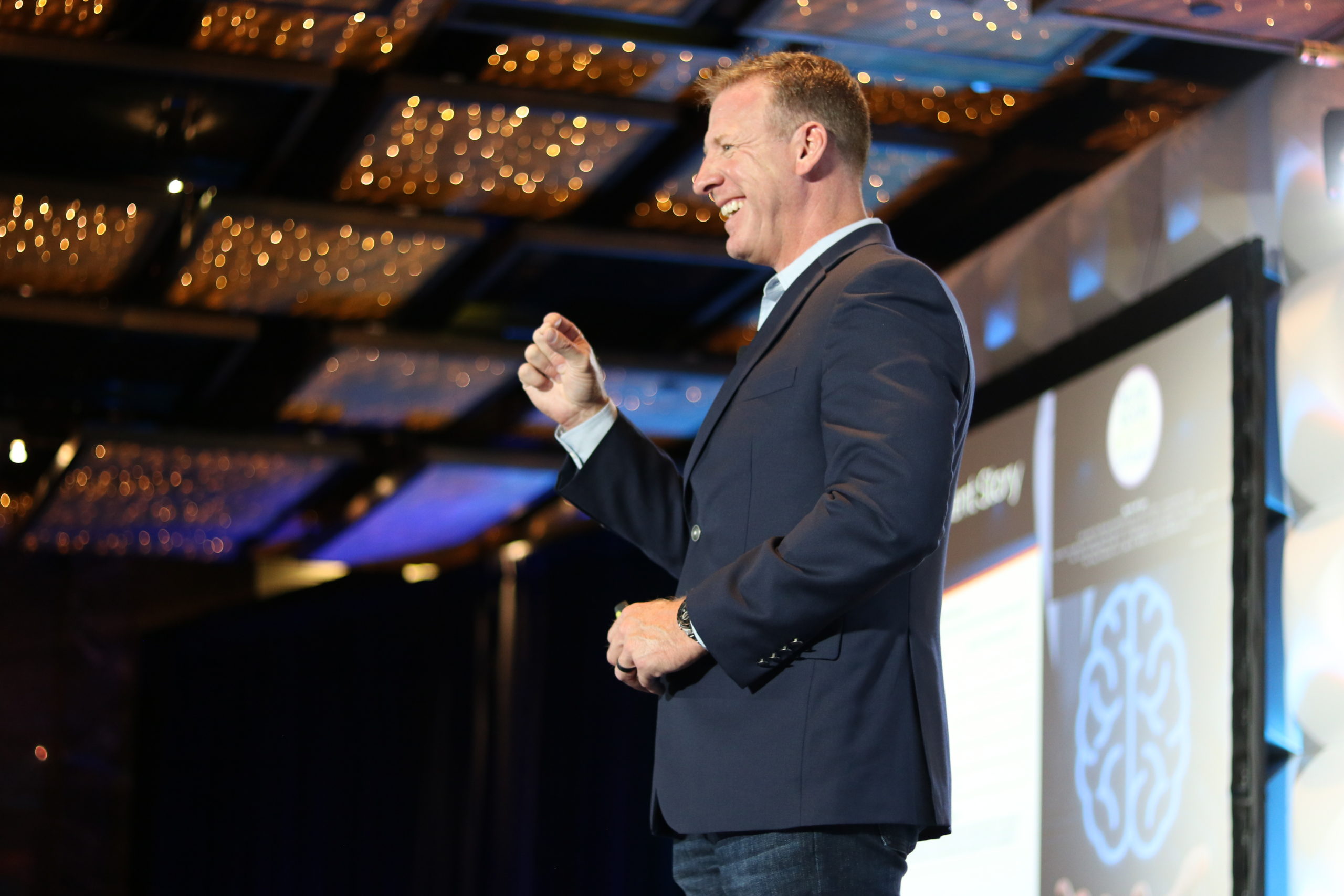
Jeff Bloomfield is a keynote speaker, Wall Street Journal bestselling author, and the founder of Braintrust. He has spent over 20 years helping Fortune 500 sales teams rewire how they communicate, using the neuroscience of trust, decision-making, and buyer behavior to drive results that training alone rarely produces. He speaks at corporate events, executive summits, and sales kickoffs across life sciences, financial services, software, and technology.
Experience Highlights
- NeuroSelling methodology and enterprise adoption
- Trust-based selling at the executive level
- Sales transformation in complex, long-cycle industries
- Keynote speaking and executive coaching
Areas of Expertise
Trust in a sales conversation rarely breaks in one dramatic moment. It breaks in small, unremarkable moves that the seller does not notice and the buyer never mentions. The buyer's brain runs a safety check faster than it runs reasoning, so a trust break registers as a feeling long before the buyer can explain it. That is why a lost deal goes quiet instead of going hostile, and why sellers lose trust without ever hearing about it. Below are the seven trust breakers that show up most often in a live sales conversation, the condition each violates, and the move that repairs it.
What a Trust Break Actually Is
Trust is the brain's permission slip to buy, follow, change, speak up and move forward. It is a status the brain assigns and re-checks constantly, not a mood and not the same as being liked. A trust break is the moment that check returns a different answer than it did sixty seconds earlier. That check is fast. In a Princeton study, people judged a face's trustworthiness in about a tenth of a second, the fastest and most consistently judged trait tested. By the time a buyer could articulate why a seller felt off, the judgment is made and the conversation has changed shape.
Every trust break violates one of three conditions. Safety Always Comes Before Reasoning: if the safety check fails, no argument gets a fair hearing. Reliability Is Proven With Consistency: people follow whoever's behavior has held up, not the most qualified person in the room. Trust Is Earned When the Upside Is Clear: what blocks a decision is usually missing confidence, not missing information.
Trust moves through four states in a deal: predicted, earned, broken, rebuilt. Most sellers plan for the first two and get ambushed by the third, because a break does not announce itself. The buyer does not object. The buyer withdraws. Roughly 60% of deals are lost to no decision, and many were lost in a moment nobody logged.
The 7 Trust Breakers in a Sales Conversation
1. The Dodge
The buyer asks a narrow question. The seller answers a broader, more flattering one. "Does it handle multi-entity billing?" becomes two minutes on platform flexibility. The brain registers evasion before content, so the buyer now has two open items: the question, and whether you answer questions. Violates safety. Repair: answer the literal question in one sentence, then add context. If the answer is no, say no first. A clean no restores safety faster than a decorated maybe.
2. The Rehearsed Answer
The buyer raises a concern in their own words and gets back a block of language that has obviously been delivered many times before. The brain concludes it is being handled rather than heard, so real concerns get replaced by polite ones, which are unsolvable. Violates safety. Repair: say their concern back in their words first, then answer the version that is actually theirs.
3. The Premature Close
The seller reaches for the next step while something is still unresolved on the buyer's side. The ask is reasonable. The timing is not. The brain reads the push as a signal that your calendar outranks their risk, and loss aversion runs about five times stronger than the desire for gain, so a pressured buyer protects instead of advancing. Violates safety. Repair: replace the ask with a check. "What is still unresolved for you?" Then close that item instead of stepping over it.
4. The Overclaim
A partial capability gets described as complete. Usually not a lie, just a confident "yes, we do that" on something closer to "yes, with two caveats." Nothing happens at first. The damage lands later, in implementation review or a reference call, and it re-scores every claim you made. Violates reliability. Repair: name the boundary before they find it. Volunteered limits are the cheapest reliability you will ever buy.
5. The Small Broken Promise
You said Thursday. It arrived Monday. Nobody mentioned it, so it looks like nothing happened. The brain quietly updates its prediction. Small promises are the only ones a buyer can test before signing, so a missed follow-up is data about how you will behave after the contract. Violates reliability. Repair: name the miss before they do, set a new date, and hit it. A corrected miss builds more reliability than a promise that was never tested.
6. The Vague Upside
Value gets described in categories. Efficiency. Visibility. Growth. Everyone nods. Nothing is written down. The brain cannot convert an abstraction into confidence, and confidence is what a decision runs on. Your champion then has to defend this in a room you are not in, in language that will not survive a CFO. Violates a clear upside. Repair: build the upside in their numbers, out loud, and invite them to correct it. A buyer who edits your business case has started defending it.
7. The Manufactured Deadline
Urgency that belongs to your quarter gets presented as urgency that belongs to their business, usually a discount with an expiration date attached to nothing they care about. The brain switches to the wrong problem. Instead of evaluating the offer, the buyer evaluates whether the price was ever real. Violates a clear upside. Repair: make the deadline real and explain the mechanism behind it, or drop it and tie timing to an outcome they already want.
The Trust Breaker Diagnostic Table
Use this to diagnose a specific conversation, not a relationship. The tell is the observable signal that a break just happened.
| Trust Breaker | Condition It Violates | The Tell in the Room |
|---|---|---|
| The Dodge | Safety before reasoning | The buyer repeats the question more quietly, or drops it entirely |
| The Rehearsed Answer | Safety before reasoning | Concerns get politer and less specific after your response |
| The Premature Close | Safety before reasoning | Scheduling suddenly becomes complicated for reasons never mentioned |
| The Overclaim | Reliability through consistency | The buyer writes it down verbatim, or asks the same question twice |
| The Small Broken Promise | Reliability through consistency | Reply times stretch from hours to days, with no change in tone |
| The Vague Upside | Clear upside | Full agreement in the meeting, no forward movement after it |
| The Manufactured Deadline | Clear upside | The next question is about pricing mechanics, not about outcomes |
How to Tell a Trust Break Has Already Happened
Buyers almost never say "I trust you less than I did." They change behavior instead, and the changes are consistent enough to read.
- Replies get shorter. Paragraphs become sentences. Sentences become "Thanks, will review." Length is a proxy for willingness.
- The champion goes quiet. The person forwarding your material internally stops volunteering what is happening inside the account.
- New stakeholders appear late. Someone is brought in to check your work. That is a risk response, not a buying signal.
- Process questions arrive suddenly. Security review, legal terms, procurement steps, all reasonable, all at once after a stretch where none mattered.
- References are requested again. A buyer asking for references after that stage had closed is re-opening a question they had settled.
None of these is proof alone. Two or three together, right after one conversation, usually mean a condition failed in it. Find the likely breaker in the table and run the repair move, instead of a follow-up that ignores what happened.
What This Costs Beyond a Single Deal
Trust breaks get treated as one seller's problem. They are not. With no shared way to name what happened, every rep diagnoses a stall differently, and the fixes land on the wrong things: more follow-up, more collateral, more discount.
The organizational research is blunt about what trust is worth. Employees at high-trust companies report 74% less stress, 106% more energy at work, 50% higher productivity, 76% more engagement, and 40% less burnout than those at low-trust companies (Paul Zak, "The Neuroscience of Trust," Harvard Business Review, 2017). People also concentrate trust in the humans they deal with directly rather than in institutions, which is why the rep in the room carries more of the trust load than the brand behind them.
The fix is shared language. When a sales organization names the seven breakers the same way, coaching shifts from "the deal feels soft" to "you dodged the integration question in minute nine, and their replies got shorter after that." That precision is what makes an existing enablement program land. Jeff Bloomfield builds that vocabulary into every trust keynote, so a room leaves with one model instead of thirty personal theories.
"Thanks to Jeff, we now have an understanding of the science of decision making and how the human brain actually builds connection and trust. This has made a huge impact on our results."
Gary Price, Global Director of Sales, CSZ
Frequently Asked Questions
What breaks trust in a sales conversation?
Seven moves account for most of it: dodging a direct question, giving a rehearsed answer, closing too early, overclaiming a partial capability, missing a small promise, describing value in vague categories, and manufacturing a deadline. Each violates safety, reliability, or a clear upside.
Why do buyers lose trust in a salesperson without saying anything?
Because the brain's safety check runs faster than reasoning. The buyer feels the shift before they can explain it, and there is no comfortable way to say "that felt evasive," so they withdraw instead.
What is the fastest way to break trust in a sales meeting?
Answering a question the buyer did not ask. It takes seconds, and it creates a second problem on top of the first, because the buyer now has to weigh whether your other answers were straight.
Can trust be repaired in the same conversation where it broke?
Often, yes, if the repair happens close to the break. Naming it and correcting it in the same meeting beats a polished follow-up days later, because the buyer's brain is still holding the moment open.
What causes a buyer to stop trusting a rep after a strong first meeting?
Usually a reliability failure, not a safety one. The first meeting set a prediction. A missed deliverable or a capability that turned out to be partial contradicts it, and a contradicted prediction costs more than a low one ever did.
How do you know a buyer has stopped trusting you?
Watch behavior, not tone. Shorter replies, a quiet champion, new stakeholders appearing late, a sudden wave of process questions, reference requests after that stage had closed. Two or more right after one meeting usually points to a break in it.
Can a whole sales team learn to spot trust breaks the same way?
Yes, and that is the point of teaching it as a shared model rather than individual instinct. When everyone names the same seven breakers, coaching gets specific, deal reviews get honest, and existing reinforcement has something precise to work on.
Bring a Shared Language for Trust to Your Team
Sellers do not lose trust because they lack effort or knowledge. They lose it in small moments they were never taught to see, under pressure, in real time. One shared way to name those moments changes what managers coach and what reps catch while the conversation is still live. If that is what your team needs at your next kickoff or leadership event, start a conversation with Jeff Bloomfield.
Keynote Speaker
Jeff delivers keynotes at sales kickoffs, leadership summits, and corporate conferences, combining neuroscience, storytelling, and real-world selling experience into sessions that move people and stick long after the event ends.
