

AI Anxiety in the Workplace: What the 2026 Data Really Shows
About
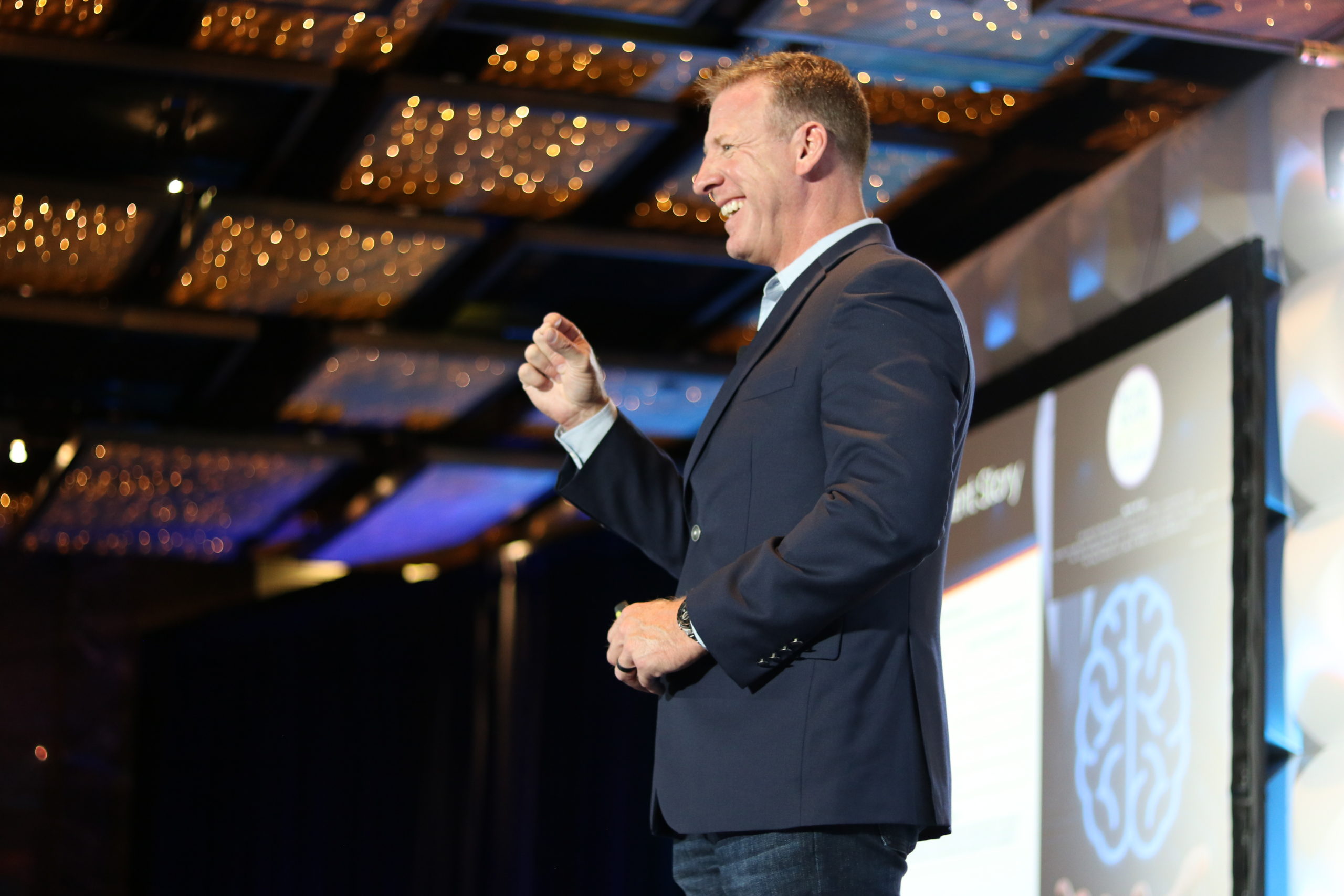
Jeff Bloomfield is a keynote speaker, Wall Street Journal bestselling author, and the founder of Braintrust. He has spent over 20 years helping Fortune 500 organizations navigate change by applying the neuroscience of trust, decision making, and adoption to how leaders communicate. He speaks at corporate events, executive summits, and transformation kickoffs across life sciences, financial services, software, and technology.
Experience Highlights
- 500+ keynotes delivered worldwide
- 20+ years of Fortune 500 experience
- Wall Street Journal bestselling author
- Former biotech executive who led launches for genetic cancer therapies
Areas of Expertise
Employees across every industry are asking the same question in different words: is AI coming for my job. The honest answer is more complicated than the headlines suggest, and the data shows the real story is not about the technology at all. It is about how the human brain responds to uncertainty, status threat, and change it did not choose.
The Short Answer
AI anxiety in the workplace is real, measurable, and growing, but the underlying driver is not the technology itself. It is the brain's threat response to uncertainty about identity, competence, and job security. Workforce data shows both massive disruption and massive opportunity happening at the same time, and organizations that treat AI anxiety as a leadership and communication problem, not just a technology rollout problem, see better adoption outcomes.
That single data pairing explains why anxiety is so high and so misdirected. Most conversations inside companies focus only on the first number. Almost none focus on the second, or on what it actually takes to move a workforce from one column to the other.
Why This Matters Right Now
Every AI rollout inside a company is really two rollouts happening at once. There is the technical rollout: new tools, new workflows, new dashboards. Then there is the psychological rollout: what employees believe about their own future value. Companies spend enormous budget on the first and almost nothing on the second, which is exactly backward from what the neuroscience of change recommends.
Leaders searching for an AI keynote speaker for an all-hands meeting, innovation summit, or transformation kickoff are usually trying to solve the second problem, not the first. They do not need another demo of what AI can do. They need help addressing what their people are afraid AI means about them.
The Data on Workforce Disruption
The scale of change happening in the labor market is not in question. What is often missing is context.
- 85 million jobs displaced by AI by 2028. This is the number that drives most of the anxiety in town hall meetings and all-hands Slack channels. It is accurate, and it is also incomplete on its own.
- 97 million new roles created that require uniquely human skills. This is the number almost nobody repeats out loud, even though it comes from the same research. The net math is positive, but only for the workers and organizations that prepare for the transition rather than freeze in place.
- 72% of workers say AI makes them question their own value. This is arguably the most important statistic in this entire discussion. It is not a statistic about job loss. It is a statistic about identity. Most AI anxiety is not "I might lose my paycheck." It is "I might lose my sense of being useful."
That third stat is where Jeff's work starts. Job displacement numbers explain the stakes. They do not explain the emotion. The emotion comes from something deeper and more personal, and that is where the brain science becomes essential.
The Data on Attention and Cognitive Load
AI anxiety does not exist in a vacuum. It is landing on a workforce that is already cognitively depleted.
Training programs that assume deep focus are working against basic biology. This matters for how organizations roll out AI training and communication. A workforce with less attention bandwidth needs shorter, clearer, more repeated messaging about AI, not longer decks and one-time town halls. Cognitive overload and anxiety feed each other. The more overwhelmed people feel, the less capacity they have to process reassurance, which means the anxiety compounds instead of resolving.
The Data on Change and Trust
AI anxiety is a subset of a much older and better-documented phenomenon: organizational change resistance. The numbers here are sobering.
- 70% of change initiatives fail to achieve their goals. AI adoption is a change initiative like any other, and it inherits the same failure rate unless leaders manage it differently than a typical software rollout.
- 95% of communication is processed unconsciously. Most executives believe they are managing AI anxiety by explaining the roadmap clearly. But the brain is responding to tone, body language, and perceived intent long before it processes the actual words.
- Employees are 3.5x more engaged when leaders communicate with empathy. This is the single most actionable data point in the entire AI anxiety conversation. Empathetic communication is not a soft add-on to a technical rollout. It is the mechanism that determines whether the rollout succeeds.
- 50% of employees have quit because of a manager. Even before AI entered the picture, poor leadership communication was already driving people out the door. AI anxiety simply raises the stakes on a leadership skill gap that already existed.
What the Brain Actually Does During AI Disruption
Here is what most companies get wrong: they treat AI anxiety as an information problem. They think if employees just understood the tools better, the fear would go away. It rarely works that way, because the brain is not evaluating AI logically first. It is evaluating AI as a threat to status, competence, and belonging, and that evaluation happens faster and more powerfully than any explanation of the technology itself.
When people perceive uncertainty about their role or their future value, the brain's threat response circuitry activates before the analytical, decision-making part of the brain gets a say. This is the same wiring behind loss aversion and status quo bias in any change scenario, just pointed at a new target. Employees are not irrationally afraid of AI. They are predictably afraid, in a way that neuroscience has documented for decades in every other kind of organizational change.
Not surprisingly, this is why 72% of workers say AI makes them question their own value. That statistic is not a technology reaction. It is an identity reaction. And identity threats do not get resolved with better software documentation. They get resolved with psychological safety, clear communication, and leaders who address the human question before the technical one.
My Approach to This
I built my AI keynote, The Human Brain in the Age of AI, around this exact gap. Most AI talks are either cheerleading sessions about what the technology can do, or doom and gloom warnings about what it will replace. Neither approach reduces anxiety, because neither one speaks to what the brain actually needs to hear.
I show audiences the neuroscience behind why change, including AI change, triggers a threat response before it triggers curiosity. Then I walk them through what has to happen psychologically before adoption becomes possible: safety before skill building, clarity before capability, and trust before tools. Leaders who understand this sequence get faster, less resistant AI adoption. Leaders who skip it get exactly the resistance the statistics predict.
This is also where NeuroCoaching®, my leadership communication framework rooted in behavioral neuroscience, becomes relevant. It teaches leaders how to shift from directive, authority based messaging about AI mandates to trust based conversations that address what employees are actually afraid of. The goal is not to convince people AI is harmless. It is to help leaders communicate in a way the brain will actually accept during a period of uncertainty.
What These Statistics Mean for HR and Transformation Leaders
For Chief People Officers, VPs of HR, and transformation leaders, this data points to a specific set of priorities.
| Data Point | What It Signals | What Leaders Should Do |
|---|---|---|
| 85 million jobs displaced by 2028 | Disruption is real and should not be minimized | Communicate honestly rather than reassuring falsely |
| 97 million new roles created | Opportunity exists but requires reskilling investment | Pair AI rollouts with visible skill-building paths |
| 72% question their own value | Anxiety is about identity, not just employment | Address competence and belonging directly, not just job security |
| Attention span down to 8 seconds | Workforce has less bandwidth for complex change messaging | Shorten and repeat AI communication instead of one-time briefings |
| 70% of change initiatives fail | AI rollouts inherit change management's worst failure rates | Treat AI adoption as a change management discipline, not an IT project |
| 3.5x engagement with empathetic leadership | Communication style determines adoption speed | Train managers on empathetic, trust-based AI conversations |
The pattern across every row is the same. The technical rollout is rarely the point of failure. The human rollout is.
Turning Anxiety Into Adoption
Organizations that successfully reduce AI anxiety tend to do a few things consistently. They separate the "what AI does" conversation from the "what this means for you" conversation, because employees need both answered but cannot process them at the same time. They give managers, not just executives, the language and training to have empathetic AI conversations, because most employees hear about change from their direct manager, not from a company-wide memo. And they measure psychological readiness alongside technical readiness, rather than assuming that a successful pilot program means the workforce is on board.
None of this requires slowing down AI adoption. It requires sequencing it correctly, so the brain has time to move from threat response to curiosity before being asked to build new skills.
Frequently Asked Questions
How many workers are anxious about AI replacing their jobs?
Workforce data consistently shows a majority of employees carry some level of concern about AI's impact on their role. The more specific and telling number is that 72% of workers say AI makes them question their own value, which points to an identity concern that runs deeper than simple job-loss fear.
Is AI anxiety mostly about losing a paycheck or something else?
It is often something else. The data suggests AI anxiety is more closely tied to identity and perceived competence than to financial fear alone. Employees are not just asking whether they will have income. They are asking whether they will still matter.
Why do change management statistics matter for an AI rollout?
Because AI adoption is a change initiative, and 70% of change initiatives fail to reach their goals. Companies that treat AI adoption as a pure technology deployment, without applying proven change management and communication practices, tend to repeat that same failure rate.
What can leaders do to reduce AI anxiety on their teams?
Leaders can start by leading with empathy rather than logistics. Employees are 3.5x more engaged when leaders communicate with empathy, and since 95% of communication is processed unconsciously, tone and intent matter as much as the actual content of the message. Addressing the human question, "what does this mean for me," before the technical question builds trust faster.
Does AI create new jobs, or only eliminate them?
Both are happening simultaneously. The same research projecting 85 million jobs displaced by AI by 2028 also projects 97 million new roles created that require uniquely human skills. The organizations and individuals who prepare for that shift, rather than only fearing the displacement side, tend to come out ahead.
How is AI anxiety different from general workplace stress?
General workplace stress is often tied to workload or deadlines. AI anxiety is more specifically tied to uncertainty about long-term relevance and competence, which triggers a deeper threat response in the brain. That is part of why generic stress-management advice often falls short when applied to AI-specific fear.
Should companies bring in outside help to address AI anxiety directly with employees?
Many organizations find that an outside voice, particularly one grounded in neuroscience rather than just technology trends, helps employees hear the message differently than they would from internal leadership alone. A keynote or workshop focused on the human brain's response to AI can reset the conversation before deeper training begins.
If your leadership team is preparing for an AI rollout, an all-hands meeting, or a transformation summit and wants to address the human side of the equation before it becomes a retention problem, it is worth a conversation. Reach out to Jeff directly to talk about what this could look like for your event.
Keynote Speaker
Jeff delivers keynotes at all-hands meetings, innovation summits, and transformation kickoffs, combining neuroscience, storytelling, and real-world executive experience into sessions that reduce AI anxiety and build lasting adoption. Learn more about his AI keynote for corporate events.
