
How to Choose a Sales Kickoff Speaker Who Drives Impact
About
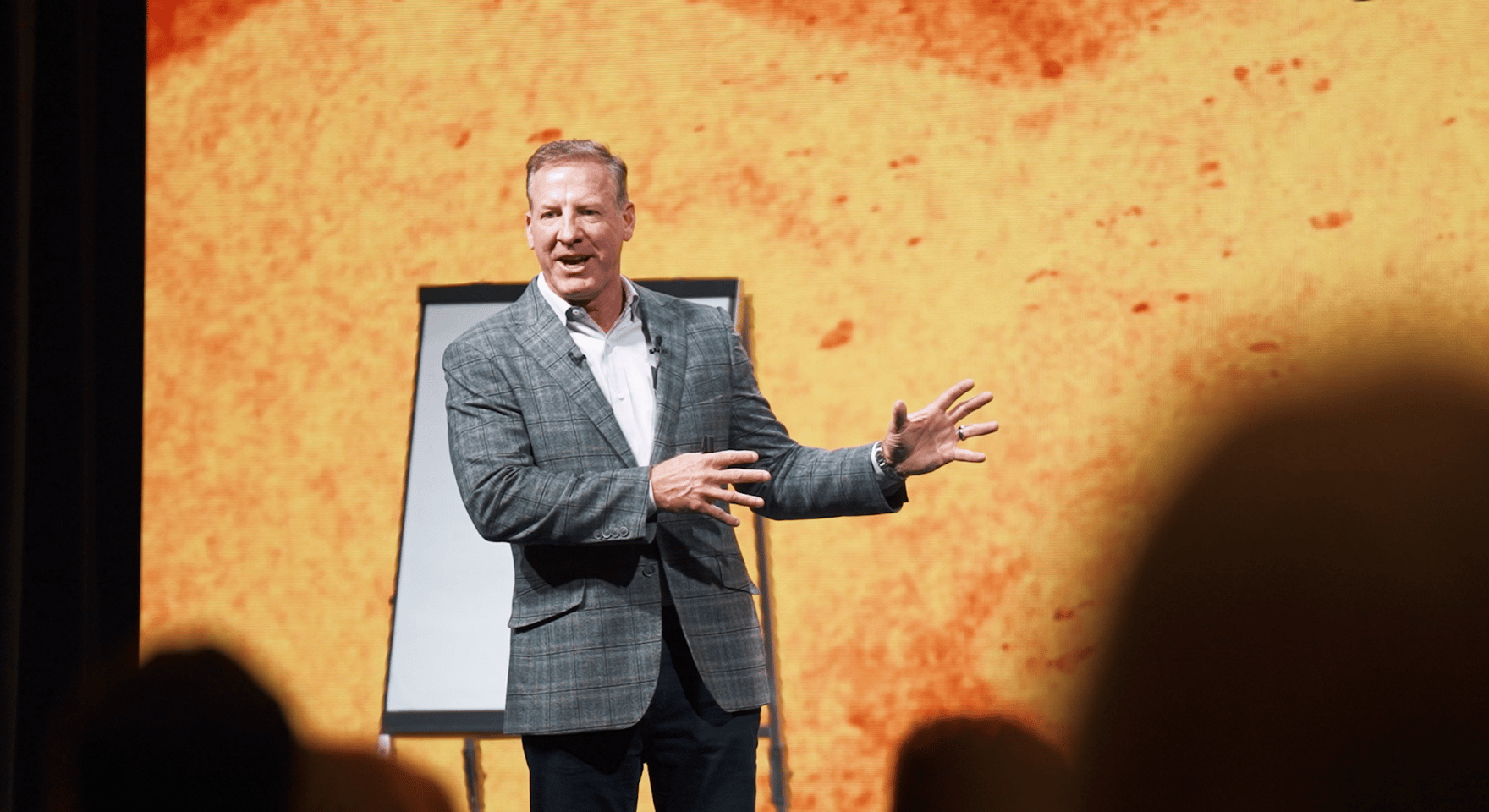
Jeff Bloomfield is a keynote speaker, Wall Street Journal bestselling author, and the founder of Braintrust. He has spent over 20 years helping Fortune 500 sales teams rewire how they communicate, using the neuroscience of trust, decision-making, and buyer behavior to drive results that training alone rarely produces. He speaks at corporate events, executive summits, and sales kickoffs across life sciences, financial services, software, and technology.
Experience Highlights
- NeuroSelling methodology and enterprise adoption
- Trust-based selling at the executive level
- Sales transformation in complex, long-cycle industries
- Keynote speaking and executive coaching
Areas of Expertise
An exceptional sales kickoff can ignite the energy, alignment, and confidence your revenue team needs to achieve ambitious growth targets, but the keynote speaker often determines whether that impact lasts beyond the event. The best speaker for a sales kickoff isn't simply motivational; they clarify strategy, equip teams with actionable frameworks, and embed behaviors that accelerate conversion, deal velocity, and customer trust.
Define Clear Commercial Priorities and Success Metrics
Before reviewing speaker options, define what success looks like for your SKO. Clear commercial priorities guide everything from message design to post-event reinforcement.
Start by identifying measurable outcomes tied directly to revenue performance, such as conversion rate improvement, shorter sales cycles, or customer retention increases. Pair these metrics with observable behavioral shifts you want the keynote to influence, like stronger discovery questioning, better objection handling, or consistent storytelling in pitches.
Establishing and sharing these metrics with stakeholders early helps align executive expectations and enables post-event ROI analysis. Speaker selection should begin with a defined set of success indicators that connect event inspiration to business execution.
Understand Your Audience Profile and Sales Roles
Every sales kickoff audience is a mix of roles and experience levels. Tailoring the keynote content to these differences is essential for engagement and application.
Profile your attendees early: identify whether your group is primarily enterprise account managers, business development reps, technical consultants, or sales leaders. Each group requires a different balance of strategic insight and tactical detail. Pre-event surveys can capture attendees' backgrounds, top deal challenges, and common customer objections.
Share these insights with potential speakers and ask how they would adapt their message to each role type. This ensures every participant, whether new or veteran, walks away with frameworks and stories they can immediately use in real conversations.
Evaluate Speaker Relevance to Your Sales Strategy and Industry
When evaluating candidates, relevance should outweigh recognition. A well-known name is not necessarily the most effective choice if they don't understand your market, customers, or go-to-market motions.
Review each speaker's professional background for direct alignment with your sales strategy, such as experience with complex B2B cycles, SaaS growth, multi-channel selling, or emerging technologies like AI in sales. Ask for examples of how they've previously tailored content to address specific client objectives or industry challenges.
Request video clips and case studies showing past impact. This reveals whether they translate concepts into measurable outcomes that reflect your goals, rather than delivering a one-size-fits-all motivational talk. Speakers who combine Fortune 500 experience with neuroscience-based methodologies are particularly equipped to connect science, story, and sales strategy in a way that resonates across industries.
Prioritize Practical Frameworks and Transferable Tools
Lasting behavior change comes from actionable models: frameworks your team can easily recall and replicate. Choose a sales kickoff speaker who equips your team with practical, structured tools rather than abstract inspiration.
A practical framework breaks down complex selling skills into specific, repeatable actions, like discovery question chains, objection-handling scripts, or brain-based trust-building models. These elements should be designed for immediate transfer and reinforcement across teams.
You can evaluate candidates by comparing how they deliver real-world value:
| Criteria | Speaker A | Speaker B | Speaker C |
|---|---|---|---|
| Proprietary framework provided | Neuro-based trust model | Standard motivational | Sales methodology toolkit |
| Evidence of team transfer | Shown in 6-month post-event KPI lift | No data shared | Case studies provided |
| Post-event reinforcement tools | Digital playbook + manager guide | None | Follow-up Q&A series |
Speakers with frameworks embedded into their programs ensure your kickoff delivers more than energy; it delivers execution.
Verify Speaker Delivery Skills and Engagement Techniques
Delivery drives retention. A speaker's credibility can be lost if their presentation fails to engage, simplify, or resonate.
Watch at least one full-length video of any potential speaker to assess their energy, clarity, and interaction with live or hybrid audiences. Look for storytelling that mirrors real sales scenarios and for adaptable delivery formats, including breakout sessions or virtual presentations.
Effective speakers use pacing, story arcs, and audience interaction to hold attention. Choose one whose message can be easily summarized by attendees afterward; simple, memorable frameworks stick long after the event. An approach blending neuroscience, narrative, and real-world coaching is designed to achieve exactly that stickiness and retention.
Request Customized Keynote Outlines and Reinforcement Plans
Customization transforms a keynote from motivational to mission-critical. Your chosen speaker should provide a detailed outline that maps directly to your kickoff objectives and supporting sessions.
Ask for an outline showing how their message connects to your sales goals, customer strategy, and leadership narrative. A strong partner will also propose a reinforcement plan: a post-event roadmap to embed their frameworks into daily operations. That might include short learning modules, sales manager coaching guides, or microlearning follow-ups.
Request examples of these resources upfront so you can confirm their commitment to measurable reinforcement rather than a single event moment. The strongest speakers integrate post-keynote tools that help managers and reps sustain new habits over time.
Prepare for Alignment and Technical Rehearsals
Even the most powerful content can fail without tight alignment and strong execution. Ensure the speaker's narrative supports, not competes with, your leadership themes and annual strategy.
Host a pre-event alignment call between the speaker and executive team to integrate strategic messages. Conduct technical rehearsals for both in-person and hybrid delivery to confirm stage logistics, transitions, and AV integrity. Align every presenter on shared language, slides, and themes focused on sustaining selling momentum long after the event ends.
Integrate Speaker Frameworks into Sales Coaching and Processes
The true ROI of a sales kickoff is realized months later, when the frameworks introduced on stage shape everyday customer conversations.
Work with sales enablement and leadership teams to weave the keynote's models into CRM processes, coaching sessions, and deal reviews. Build reinforcement into weekly meetings through quick application check-ins or success story highlights. Cross-functional collaboration among sales, marketing, and operations will further embed the event's message across your entire revenue engine.
A powerful SKO speaker doesn't just deliver a moment of excitement; they launch a repeatable language, mindset, and motion that endures. This is where brain-based frameworks like NeuroSelling excel, turning inspiration into repeatable, trusted communication patterns aligned with how buyers actually decide.
Frequently Asked Questions
Select a speaker whose expertise aligns with your revenue goals and who provides neuroscience-backed, actionable frameworks proven to create measurable sales results. The frameworks should be specific enough that reps can apply them the week after the event, not just remember the feeling of being motivated.
Identify metrics like conversion rates, pipeline speed, or retention, and connect them to desired behavioral changes such as improved discovery, storytelling, or objection handling. Share these with every speaker candidate and assess whether their proposed content speaks directly to those outcomes.
Review their process for tailoring material, ask for relevant case studies, and request an outline mapped to your SKO objectives. A speaker who can't show you how their message adapts to your industry and team structure is likely delivering the same talk everywhere they go.
Look for frameworks, playbooks, and manager coaching tools that sustain learning and behavior change beyond the event. The most effective speakers design their programs so that managers can reinforce the core concepts in one-on-ones and deal reviews for months after the kickoff.
Track performance metrics and behavioral adoption, gather feedback, and assess how consistently the introduced frameworks show up in everyday selling conversations. The clearest signal of real ROI is when your reps and managers start using the speaker's language in pipeline calls and coaching conversations without being prompted.
For more on science-backed communication and sales performance, explore Jeff Bloomfield's keynote programs. If you're evaluating speakers for an upcoming event, a short conversation is often the fastest way to determine fit. Reach out here and let's talk about what your team needs.
Keynote Speaker
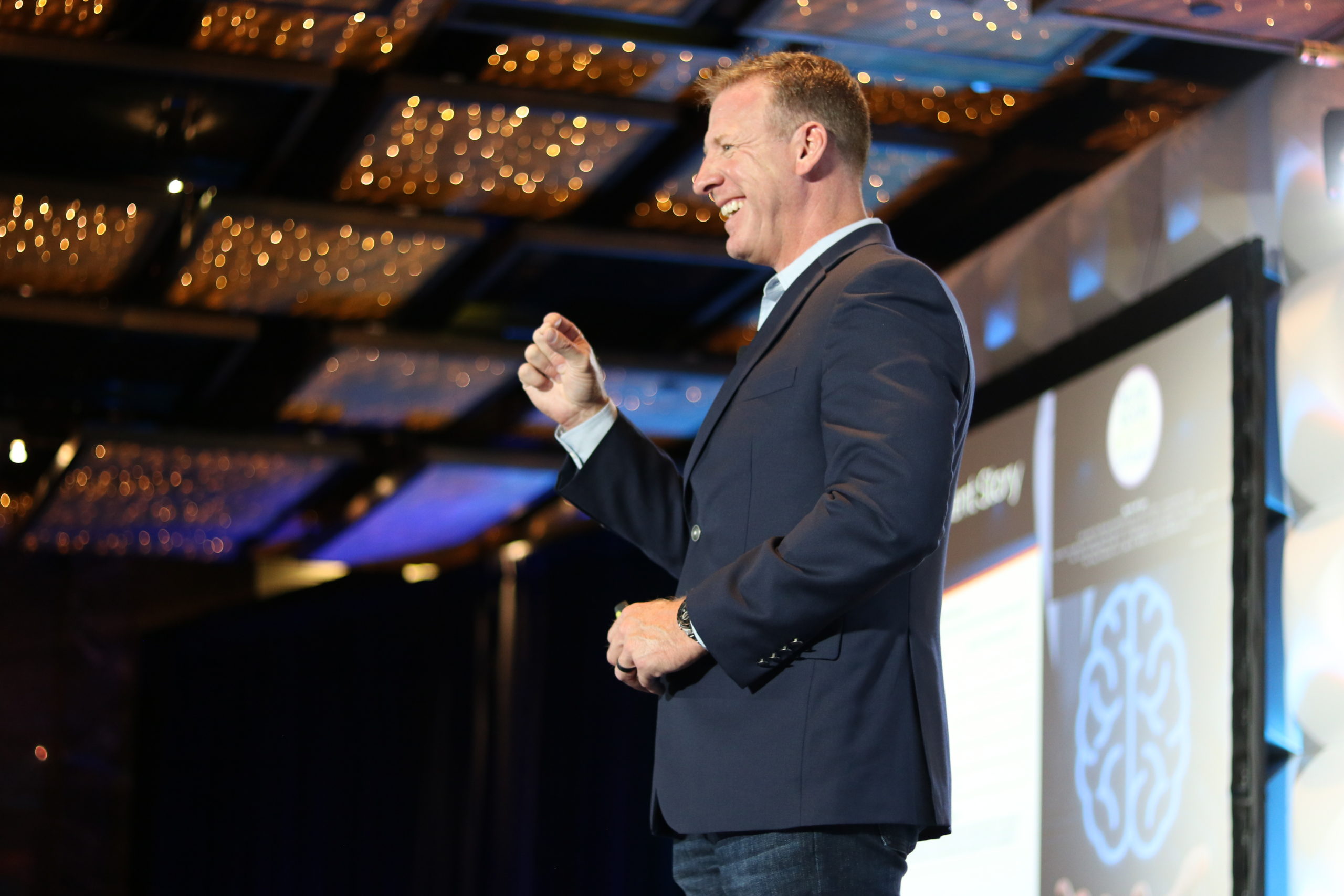
Jeff delivers keynotes at sales kickoffs, leadership summits, and corporate conferences, combining neuroscience, storytelling, and real-world selling experience into sessions that move people and stick long after the event ends.
