
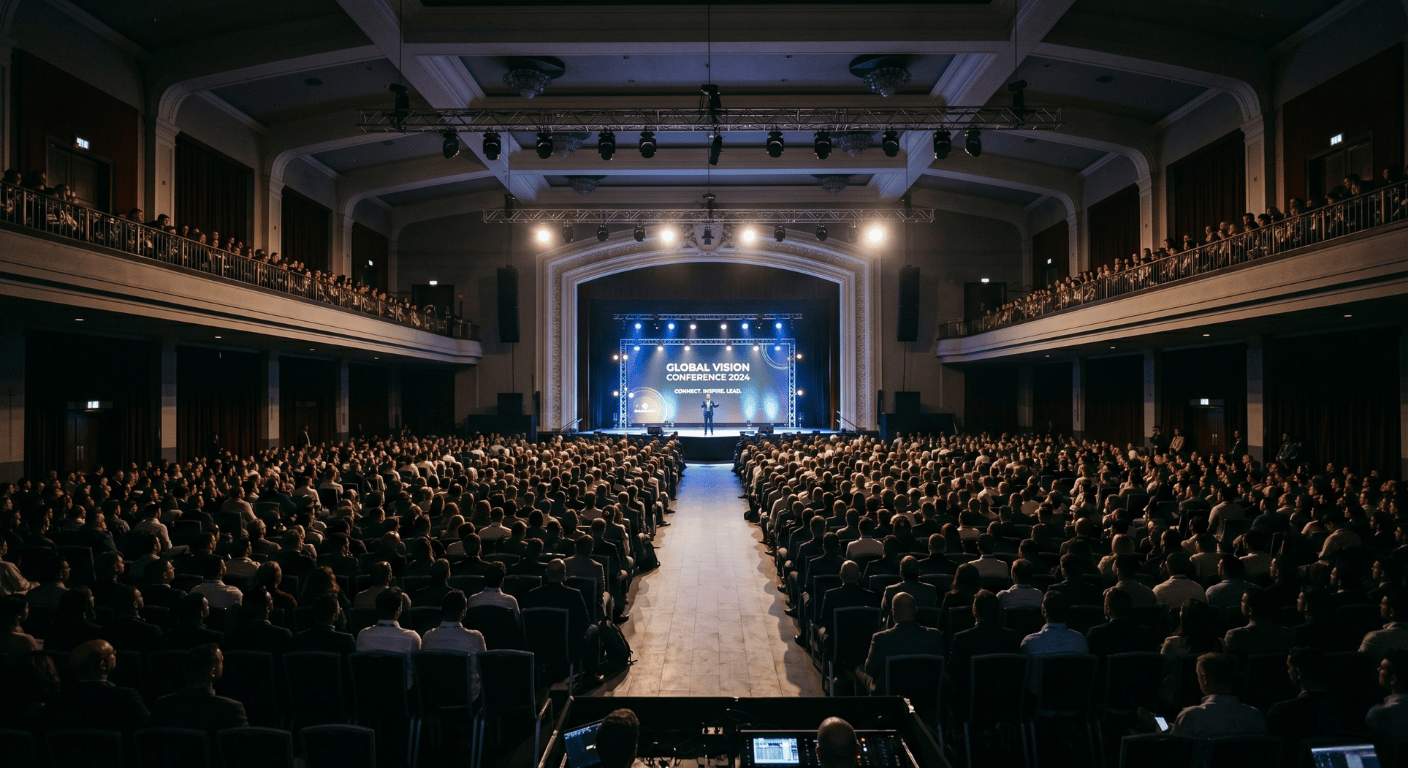
How to Choose a Conference Keynote Speaker Who Sets the Right Tone From Minute One

About
Jeff Bloomfield is a keynote speaker, Wall Street Journal bestselling author, and the founder of Braintrust. He has spent over 20 years helping Fortune 500 sales teams rewire how they communicate, using the neuroscience of trust, decision-making, and buyer behavior to drive results that training alone rarely produces. He speaks at corporate events, executive summits, and sales kickoffs across life sciences, financial services, software, and technology.
Experience Highlights
- NeuroSelling methodology and enterprise adoption
- Trust-based selling at the executive level
- Sales transformation in complex, long-cycle industries
- Keynote speaking and executive coaching
Areas of Expertise
The first 90 minutes of a conference determine whether attendees invest their full attention for the rest of the event, or spend the week checking email from the back row. That window belongs to the opening keynote speaker. Choose wrong and you've spent months of planning budget on a signal your audience reads immediately: this event isn't worth their full presence.
Conference organizers consistently underestimate this. They prioritize name recognition over audience fit, celebrity over craft, and social media reach over the ability to actually change the way a room thinks. The result is a sea of events with impressive agendas that produce mediocre outcomes, and attendees who don't come back next year.
The right conference keynote speaker does something precise and difficult: they make 1,500 strangers feel like a coherent community with shared stakes. They set a tone that elevates every panel, workshop, and conversation that follows. And they do it by understanding how the brain responds to the opening moments of a shared experience. This is a craft that requires more than charm, more than credentials, and more than an impressive demo reel.
What the Opening Keynote Does to an Audience's Brain
When people walk into a conference, their default neurological state is mild vigilance. They're surrounded by strangers, uncertain of what to expect, and their brains are in threat-detection mode, scanning for relevance and safety before committing attention. A conference keynote speaker has approximately three minutes to convert that default state into genuine engagement.
Research from the Laboratory of Neuro Imaging at USC shows that the brain's reticular activating system, the filter that determines what information gets through to conscious awareness, is primed by novelty, personal relevance, and emotional resonance. A speaker who opens with generic energy and vague inspiration triggers the brain's "not relevant to me" filter. A speaker who opens with a single, specific, emotionally urgent truth bypasses it entirely.
That neurological distinction is why some conference keynotes feel electric from the first sentence while others feel like a TED talk you've already seen. The content matters, but the sequencing matters more. How you earn the brain's permission to enter is everything.
Quality One: Radical Audience Specificity
The best conference keynote speakers don't just reference the industry. They speak with enough precision about the actual challenges, tensions, and aspirations in that specific community that attendees lean forward and think: this person has been in the room with us. That specificity requires deep pre-event research, including genuine conversations with conference leadership, attendee surveys, and sometimes frontline practitioners in the field.
The opposite is painfully obvious. A speaker who drops your logo into slide seven but delivers the same arc they used at three other events last month sends the room a signal that undermines everything the conference was designed to accomplish. Audiences are perceptive. They know when they're receiving a general-purpose message dressed up as customization.
Radical audience specificity means knowing not just the industry, but the specific fault lines inside it. What are attendees arguing about this year? What's the tension between field teams and leadership? What anxiety is sitting in the room unspoken? A speaker who addresses those specifics builds trust in the first ten minutes that sustains attention for the next fifty.
Quality Two: A Single Transferable Idea
Not a collection of insights. Not a five-part framework with equal weight on every piece. One big idea that anchors the entire event and gives attendees a shared language for every conversation that follows.
The best conference keynotes function like a tuning fork. They set a frequency that resonates through the rest of the event. When attendees leave the opening keynote and walk into breakout sessions, they carry a mental frame from the opening that shapes how they interpret everything else they hear. That frame only forms if the speaker has been disciplined enough to build toward one clear, transferable idea rather than a carousel of loosely related points.
Ask any speaker you're considering: what is the single thing my audience will take away from your keynote? The answer should come immediately, clearly, and without qualification. Hesitation on that question is diagnostic.
Quality Three: Physical and Emotional Command of the Stage
A large conference audience is a distributed attention system. 1,500 people, each arriving with different expectations, varying levels of engagement, and private agendas pulling at them from their phones. Holding that system together for 45 to 60 minutes requires something that goes beyond good material.
Physical presence, pacing, deliberate silence, and the strategic use of story determine whether attention stays unified or fragments into a thousand private conversations. This is not about charisma. It's about craft, and it can only be accurately assessed by watching someone work a large room in extended, unedited recordings.
Reel clips are designed to impress. They show the best 90 seconds from the best angles of a speaker's best performances. What you need to see is the full 45 minutes: how they handle a section that isn't landing, how they bring the room back after a quiet stretch, how they close. Extended recordings reveal what reels are designed to conceal.
The Hidden Cost of Booking the Wrong Speaker
Conference organizers rarely measure keynote failure directly. The costs show up elsewhere, in post-event survey scores, in next year's registration numbers, in the energy level of breakout sessions that follow a flat opening keynote.
A 2023 report from the Events Industry Council found that attendee satisfaction is most heavily correlated with perceived content relevance and opening session quality, ranking above networking opportunities, venue quality, and speaker celebrity. The attendees are already telling you what matters. The opening keynote is the single highest-leverage moment in your entire event.
Booking based on fame or social following is a common and costly mistake. A celebrity speaker who gives the same talk everywhere, with your logo dropped into slide seven, sends the audience a clear message: this organization didn't think carefully about us. That message undermines every relationship-building and brand investment your conference was designed to accomplish.
Why Name Recognition Is a Trap
The default evaluation heuristic for conference keynote speakers is: who do my attendees already know? It feels safe. It's easy to defend in a budget conversation. And it consistently produces mediocre outcomes.
Name recognition is a proxy for marketing, not for craft. A speaker who has built a large following by posting on LinkedIn, releasing a popular book, or appearing in media has demonstrated competence in audience-building, not in commanding a 2,000-person ballroom under conference conditions. Those are fundamentally different skills, and conflating them is where the expensive mistakes happen.
The question to ask is not "will my attendees recognize this person?" but "has this person proven they can transform a large room of strangers into a coherent community?" The answer lives in full-length recordings, in references from comparable events, and in the speaker's pre-event research process, not in follower counts.
Jeff Bloomfield has been described by conference organizers as "equal parts TED Talk, church revival, and locker room halftime speech," someone who brings the full spectrum of human engagement to a room and leaves audiences with content they can use immediately. He has delivered over 500 keynotes to some of the most demanding conference audiences in the country, including major events for GSK, John Deere, and UnitedHealthcare.
How to Evaluate a Conference Keynote Speaker Before You Book
Watch a minimum of 30 minutes of unedited stage footage. Reels are designed to impress. Extended recordings reveal whether a speaker can sustain energy, depth, and engagement across a full keynote. Watch for how they handle the middle section, not just the opening and close.
Ask for references from conference events specifically. A speaker who excels in a boardroom may struggle to command a 2,000-person ballroom. Verify with organizers at comparable-scale events, and ask them specifically about attendee energy after the keynote ended.
Ask what the speaker's pre-event research process looks like. The answer should involve direct conversations with your leadership team and attendee research. Anything less is generic preparation dressed up as customization.
Inquire about the single transferable idea. Ask the speaker: what is the one thing your audience will take away from your keynote? If they can't answer clearly and immediately, they likely don't know. That's not a speaker who has built the talk around your audience.
Check post-event survey language. Strong conference keynote speakers generate specific comments: not just "great energy" but "I'm going to change the way I approach X." Vague praise is a warning sign. Specificity in attendee feedback reflects specificity in the talk itself.
Frequently Asked Questions
What makes a conference keynote speaker different from other types of speakers?
Conference keynote speakers must work at scale, commanding large, diverse audiences who arrived with different expectations and varying levels of engagement. The skill set required is distinct from workshop facilitation or corporate keynotes for a single company. The best conference speakers combine platform mastery, deep audience psychology, and the ability to synthesize a single powerful idea that serves as a through-line for the entire event.
How do I choose a keynote speaker for an industry conference with a mixed audience?
Look for speakers who focus on universal human dynamics, such as decision-making, trust, communication, and change, and apply those dynamics to your specific industry context. Avoid speakers whose content is so niche it will only resonate with a portion of your audience. The opening keynote needs to be a shared experience, not a segmented one.
Should a conference keynote speaker be from our industry?
Not necessarily. Some of the most impactful conference keynotes come from speakers outside an industry who bring a fresh framework for familiar problems. What matters is that the speaker does the research to make their content deeply relevant to your attendees, regardless of their personal industry background.
How long should a conference opening keynote be?
The optimal length for a conference opening keynote is 45 to 60 minutes. This allows enough time for deep storytelling and framework delivery without overextending audience attention. Anything under 30 minutes risks feeling superficial; anything over 75 minutes risks losing the room, even with an elite speaker.
Your conference's opening moment is a choice about what your community deserves. It sets the standard for every conversation, connection, and idea exchange that follows. If you're looking for a speaker who brings that kind of intentionality to the stage, let's talk about what's right for your event.
Keynote Speaker
Jeff delivers keynotes at sales kickoffs, leadership summits, and corporate conferences, combining neuroscience, storytelling, and real-world selling experience into sessions that move people and stick long after the event ends.
