

How to Choose a Keynote Speaker for a Revenue Kickoff
About
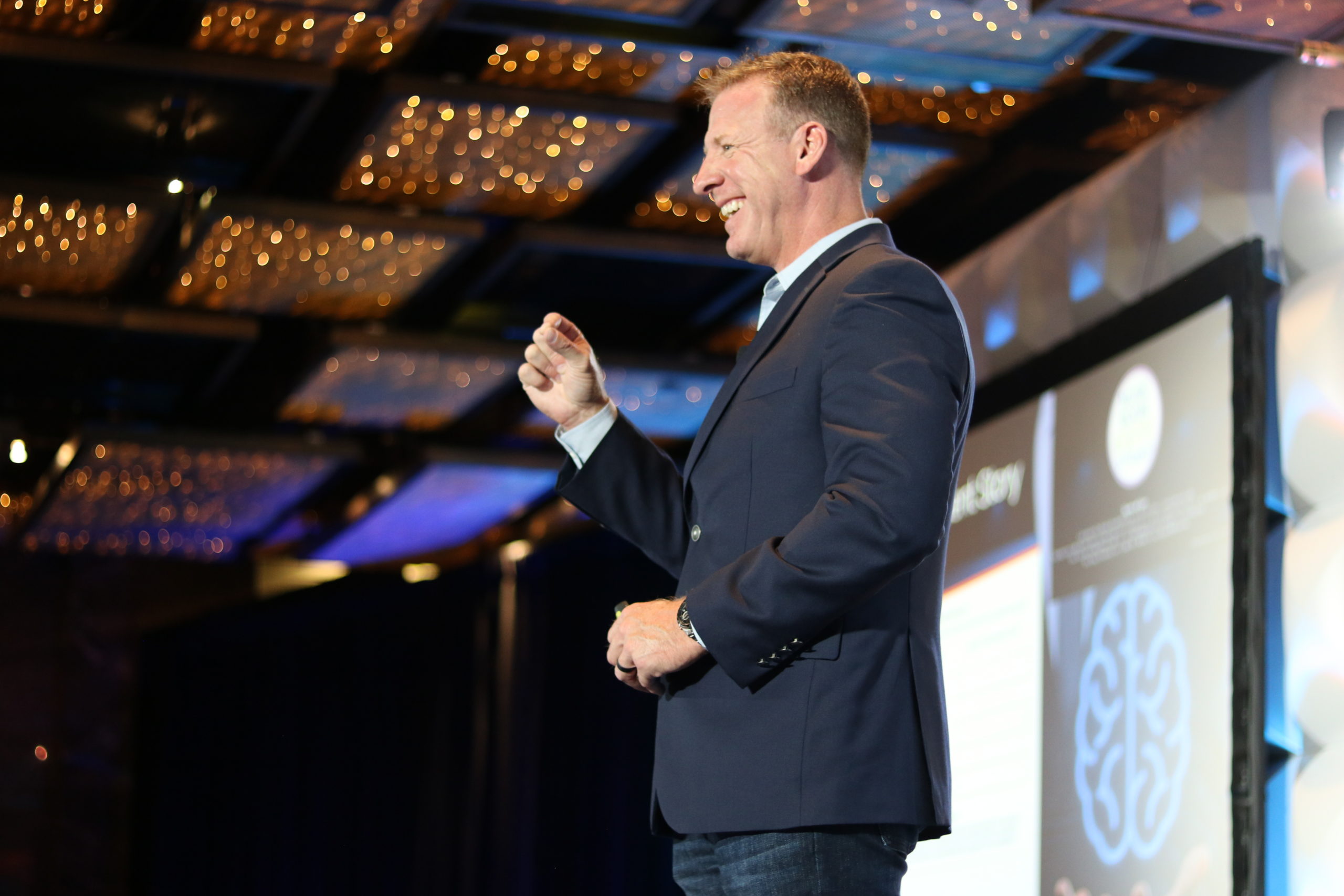
Jeff Bloomfield is a keynote speaker, Wall Street Journal bestselling author, and the founder of Braintrust. He has spent over 20 years helping Fortune 500 sales teams rewire how they communicate, using the neuroscience of trust, decision-making, and buyer behavior to drive results that training alone rarely produces. He speaks at corporate events, executive summits, and sales kickoffs across life sciences, financial services, software, and technology.
Experience Highlights
- NeuroSelling methodology and enterprise adoption
- Trust-based selling at the executive level
- Sales transformation in complex, long-cycle industries
- Keynote speaking and executive coaching
Areas of Expertise
More companies are turning the sales kickoff into a revenue kickoff, with marketing, customer success, RevOps, and sometimes product in the same room as sales. That changes the keynote decision. A speaker who only talks about closing techniques will lose half the room by the second slide. The right revenue kickoff keynote gives every function the same picture of how the buyer actually decides, and a shared reason to change what they do next.
What Is a Revenue Kickoff?
A revenue kickoff (RKO) is an annual go-to-market kickoff that brings every revenue-driving team together under one strategy, instead of running a sales-only event. Where a traditional sales kickoff centers on sales targets and selling skills, a revenue kickoff centers on the full customer journey, from first touch to renewal.
| Sales Kickoff (SKO) | Revenue Kickoff (RKO) | |
|---|---|---|
| Who attends | Sales, sales leadership, sometimes sales engineers | Sales, marketing, customer success, RevOps, often product and support |
| Central question | "How do we hit the number?" | "How do we win, keep, and grow customers together?" |
| Shared metric | Bookings or new revenue | Often net revenue retention or total revenue |
| What the keynote must do | Change seller behavior in front of buyers | Give every function one shared model of how buyers decide |
| Most common keynote mistake | A talk with no connection to the year's strategy | A sales-only talk that the rest of the room tunes out |
Why the RKO Keynote Is Harder to Choose
At a sales kickoff, everyone in the room carries a quota and wants the same thing from the keynote. At a revenue kickoff, the room is mixed. Marketers want to understand what makes a message stick. Customer success leaders want to understand why accounts stay or churn. RevOps wants evidence. Sales wants something they can use on Monday.
A keynote that serves one of those groups well and ignores the rest does more damage at an RKO than at an SKO. It quietly signals that the event is still a sales kickoff with guests. That's the opposite of what the planning team is trying to build.
The fix is choosing a speaker whose content sits underneath all of the functions: how the buyer's brain decides to trust, to act, and to stay.
Criterion 1: The Talk Is About the Buyer, Not the Sales Process
The common ground in a revenue kickoff isn't the sales process. It's the buyer. Every function touches the same decision from a different angle, so the keynote has to start there.
My sales keynote is built on a simple model of what moves a buyer. Buyers move when they (1) trust the seller, (2) feel the cost of inaction, and (3) see a safe path forward. Marketing shapes the first impression and the cost of inaction. Sales earns trust in the conversation. Customer success proves the safe path was real. When I put that model in front of a mixed room, every function finds its job inside it.
That's the test for any speaker on your shortlist. Ask them to explain their core idea in a way that applies to a marketer and a CSM, not just a rep.
Criterion 2: Every Function Can See Its Role in the Story
A strong RKO keynote makes each team feel specifically addressed without splitting the talk into four mini-talks. Here's what each function typically needs to hear, and the buyer-brain concept that lands with them.
| Function | What They Need From the Keynote | Concept That Lands |
|---|---|---|
| Sales | Why deals stall and what changes in the conversation | 60% of deals are lost to "no decision" |
| Marketing | Why some messages get remembered and acted on | Stories are 22x more memorable than facts alone |
| Customer success | Why trust has to be re-earned after the sale | Reliability is proven with consistency over time |
| RevOps and leadership | Why the numbers behave the way they do | Loss aversion is 5x stronger than the desire for gain |
| Product and support | How the customer experiences the "safe path forward" | Safety always comes before reasoning |
If a speaker can't map their content to a table like this on the planning call, they're probably giving you a sales keynote with a new title.
Criterion 3: The Keynote Creates One Shared Language
The biggest promise of a revenue kickoff is alignment. Alignment is impossible when each team uses different words for the same buyer moment. One of the most practical things a keynote can do is hand the whole room a common vocabulary.
My keynotes follow three movements designed to do that:
- Illuminate. The neuroscience of how buyers decide, shown live, so it feels true rather than theoretical.
- Elevate. The science becomes a repeatable skill with shared language across teams.
- Activate. The impact gets concrete enough to use immediately, in any function.
When marketing, sales, and customer success leave using the same words for why a buyer hesitated, the handoffs between them get easier. That's when the RKO starts paying off.
Criterion 4: The Science Holds Up in a Skeptical Room
Revenue kickoffs bring more analytical people into the audience. RevOps leaders, marketing analysts, and finance partners will test what they hear. A keynote built on anecdote and energy alone won't survive their scrutiny.
Look for a speaker who cites research accurately and explains the mechanism, not just the conclusion. For example, the finding that narrative activates 7 brain regions vs. 2 for data alone is useful to a marketer only if the speaker explains why that changes what gets remembered. Science explained well earns the skeptics. Science used as decoration loses them.
Criterion 5: The Speaker Builds the Talk Around Your Strategy
An RKO is usually anchored by a shared goal, often a retention or total-revenue metric the CEO or CRO presents. The keynote should connect to that goal directly, not run alongside it.
Ask every finalist whether a pre-event customization call is included and how much of the talk changes for your audience. Jeff includes a customization call with every booking, and 100% of his talks are custom-built for the audience. Before you brief any speaker, see how to brief your keynote speaker for maximum impact.
"Jeff's dynamic presentation set the tone for our entire conference. Jeff was proclaimed as the most outstanding keynote speaker we've ever featured!"
Kathy Thiel, Chairman, M&A Source
Where the Keynote Belongs on an RKO Agenda
Most revenue kickoffs run joint general sessions in the morning and function-specific breakouts later in the day. The keynote belongs in the joint session, because shared language only works if everyone hears it together.
| Slot | Session | Purpose |
|---|---|---|
| Day 1 opening | CEO or CRO strategy keynote | One goal, one plan, one "why now" for every team |
| Day 1, next | Outside keynote speaker | One shared model of how buyers decide, for every function |
| Day 1 afternoon | Function breakouts | Each team applies the shared language to its own work |
| Day 2 | Cross-functional sessions | Handoffs, joint account plans, customer panels |
| Close | Leadership commitments | Accountability across functions |
For more on sequencing, see how to build a sales kickoff agenda around your keynote. The same principles apply when the room is bigger than sales.
Questions to Ask on Your Shortlist Calls
- How would you adapt your keynote for marketing, customer success, and RevOps, not just sales?
- What shared language will every function leave with?
- How does your content connect to our retention or revenue goal?
- What research is your content built on, and how do you explain it to analytical audiences?
- Can you deliver both in person and virtually for distributed teams?
- What happens if the keynote doesn't land? (Jeff's performance guarantee: "if your attendees don't rate Jeff among the top speakers at your event, he'll work with you to make it right.")
Frequently Asked Questions
What is a revenue kickoff?
A revenue kickoff is an annual go-to-market event that brings sales, marketing, customer success, RevOps, and often product together under one strategy. It replaces or expands the traditional sales-only kickoff, with a focus on the full customer journey rather than new bookings alone.
How is a revenue kickoff keynote different from a sales kickoff keynote?
A sales kickoff keynote can focus entirely on seller behavior. A revenue kickoff keynote has to give every function the same model of how buyers decide, so marketing, sales, and customer success all see their role in winning and keeping customers.
What topics work best for a revenue kickoff keynote?
Buyer psychology, trust, and storytelling work well because they sit underneath every function. Topics tied to a single function, like closing techniques or campaign tactics, tend to lose part of the room.
Should the RKO keynote be the opening session?
Usually it follows the CEO or CRO strategy keynote in the opening general session. That way the speaker can connect the company's goal to how buyers actually decide, while every function is still in the same room.
Who is a good keynote speaker for a revenue kickoff?
Look for a speaker who works from how the buyer's brain decides, can map the content to every function, and builds each talk for the audience. Jeff Bloomfield has delivered 500+ keynotes, has 20+ years of Fortune 500 experience, and is rated #1 by Fortune 500 sales leaders, planners, and audiences.
Can one keynote really work for sales, marketing, and customer success?
Yes, if the content is about the buyer instead of the sales process. When the shared subject is how people decide to trust and act, every function finds its job inside the same talk.
How far in advance should we book a revenue kickoff keynote speaker?
Start four to six months out, especially for January and February kickoffs, which are peak dates. Jeff is now booking 2026 and 2027 events.
If you're planning a revenue kickoff and want one keynote every function will act on, it's worth a conversation about how your teams win and keep customers. See how Jeff builds every sales keynote around how buyers actually decide.
Keynote Speaker
Jeff delivers keynotes at sales kickoffs, leadership summits, and corporate conferences, combining neuroscience, storytelling, and real-world selling experience into sessions that move people and stick long after the event ends.
