

What Kind of Keynote Does a Sales Team Need After a Merger?
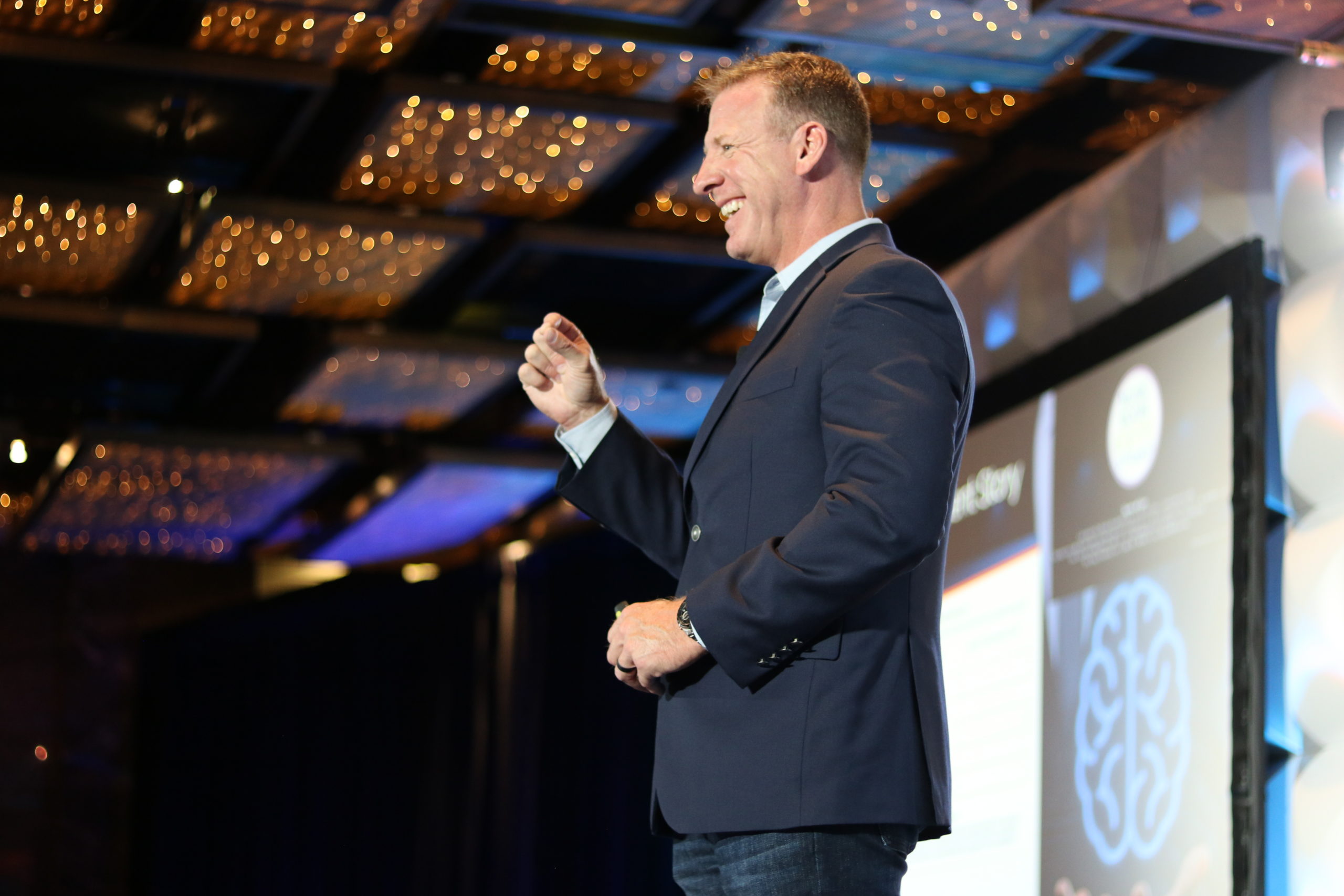
About
Jeff Bloomfield is a keynote speaker, Wall Street Journal bestselling author, and the founder of Braintrust. He has spent over 20 years helping Fortune 500 sales teams rewire how they communicate, using the neuroscience of trust, decision-making, and buyer behavior to drive results that training alone rarely produces. He speaks at corporate events, executive summits, and sales kickoffs across life sciences, financial services, software, and technology.
Experience Highlights
- NeuroSelling methodology and enterprise adoption
- Trust-based selling at the executive level
- Sales transformation in complex, long-cycle industries
- Keynote speaking and executive coaching
Areas of Expertise
The first sales kickoff after a merger or acquisition isn't a normal kickoff. Half the room used to compete with the other half. Territories are moving, comp plans are changing, and some people are quietly updating their resumes. The leadership team wants the event to say "one team." The sellers in the seats are asking a different question: "Am I safe here?" The keynote you book has to answer that question first, or nothing else on the agenda will land.
Why the First Combined Kickoff Is a Trust Event
Most post-merger kickoffs are planned as strategy events. New org chart, new product portfolio, new number. All of that matters. But the people receiving that strategy are running a faster calculation underneath it.
Trust is "the brain's permission slip to buy, follow, change, speak up and move forward." After a merger, that permission slip is suspended. Sellers from the acquired company don't yet know whether the new leaders are reliable. Sellers from the acquiring company aren't sure what the newcomers mean for their accounts. Until people feel safe, they don't fully process the plan, no matter how good it is.
That's why the keynote for a combined team is the session that makes the strategy hearable. Booking it as an energy slot misses the real job.
What's Happening in the Room: Trust in Four Stages
Jeff frames trust in four stages: Predicted, Earned, Broken, Rebuilt. A merger puts different people in different stages at the same time, which is exactly why one generic "we're one team" message rarely works.
| Trust Stage | What It Looks Like After a Merger | What the Keynote Has to Do |
|---|---|---|
| Predicted | Sellers size up new leaders and peers before any evidence comes in | Lower the threat level so people can listen |
| Earned | Leaders start building a record of keeping commitments | Name what consistency will look like in the first 90 days |
| Broken | Some sellers feel the deal broke promises about territory, comp, or culture | Acknowledge that trust can break without blaming anyone |
| Rebuilt | Teams start relying on each other on joint accounts | Show that rebuilt trust follows a different path than first-time trust |
A keynote speaker who understands these stages can speak to everyone in the room at once, including the people who are skeptical and won't say so.
The Three Trust Conditions a Merger Keynote Must Address
In his trust keynotes, Jeff organizes the science around three conditions. Each one maps directly to what a newly combined sales team is feeling.
- Safety Always Comes Before Reasoning. A faster-than-reasoning safety check gates everything else. If sellers are worried about their jobs or their accounts, they won't absorb the new go-to-market plan. The keynote has to lower that threat before the strategy can land.
- Reliability Is Proven With Consistency. People follow whoever's behavior has held up over time, not the most qualified person in the room. New leaders don't have that history yet with half the team. The keynote can name that honestly and set the expectation that trust will be earned through consistent action.
- Trust Is Earned When the Upside Is Clear. Missing confidence, not missing information, usually blocks a decision. Sellers need to see what the combination makes possible for them and their customers, not just for shareholders.
For a full explanation of each condition, see the three conditions of trust.
Why Customer Trust Is on the Line Too
A merger isn't only an internal event. Customers notice when their rep changes, when the product roadmap shifts, or when two sales teams call on the same account. Every one of those moments raises the question a buyer's brain asks first: is this still safe?
That matters because 60% of deals are already lost to "no decision." Uncertainty pushes more deals into that column. A strong post-merger keynote helps sellers see their customers' hesitation as a trust problem, not a pricing problem, so they don't respond to merger anxiety with discounts.
When I speak to a combined sales team, this is where I spend real time. The sellers in the room are going through the same uncertainty their customers are. Once they recognize it in themselves, they get much better at recognizing it in a buyer.
What the Wrong Keynote Looks Like After a Merger
The intent behind most post-merger keynote bookings is good. The format is often wrong for the moment. Watch for these mismatches:
- Pure celebration. A high-energy "we're unstoppable" talk can feel tone-deaf to sellers who just lost a territory or a manager they trusted.
- Slogans without science. "One team, one dream" messaging asks for trust instead of explaining how it's earned. Skeptical sellers notice the difference.
- A speaker who sells the deal. The keynote speaker shouldn't be a second voice for the deal rationale. That's leadership's job. The speaker's job is helping people work through what the change means for them.
- Ignoring the acquired team. A talk that only reflects the acquiring company's culture and language confirms the fears it should be easing.
What to Look for in a Speaker for a Post-Merger Kickoff
| What to Evaluate | Why It Matters After a Merger | What a Strong Answer Sounds Like |
|---|---|---|
| A clear definition of trust | People need a shared frame for what they're feeling | One sentence that points at behavior |
| Coverage of broken and rebuilt trust | Some of the room already feels let down | Specific explanation of how rebuilding differs from building |
| Sales application | The combined team has to sell together quickly | A direct line from trust to how buyers decide |
| Real-world credibility | Skeptical sellers tune out pure theory | Experience inside large, high-pressure organizations |
| Customization | Every merger has its own tensions | A pre-event call to learn what's known, unknown, and sensitive |
Jeff's background checks those boxes in a way that resonates with combined teams: 20+ years of Fortune 500 experience, a former biotech executive who led launches for genetic cancer therapies, a Wall Street Journal bestselling author, and 500+ keynotes delivered. His forthcoming book, TRUSTED, carries the subtitle "The Hidden Science of Becoming Worthy of What Cannot Be Demanded." That premise fits a merger exactly. Leadership can require attendance at the kickoff. It can't require trust.
"Jeff's scientific approach to decision making and the customer conversation has changed our approach forever."
Eddie Young, VP of Sales, Sunny Delight
How to Brief Your Speaker for a Post-Merger Kickoff
The pre-event customization call matters more after a merger than at any other kickoff. Share these with your speaker:
- What's decided and what isn't. The speaker should never promise anything leadership hasn't committed to.
- Where the tension sits. Territory overlap, comp changes, leadership changes, or cultural differences between the two teams.
- The language each company uses. Shared words matter. So do words that carry baggage for one side.
- What the CEO and CRO will say. The keynote should reinforce the strategy, not compete with it.
Jeff includes a customization call with every booking. For a broader checklist, see how to brief your keynote speaker for maximum impact.
Frequently Asked Questions
What kind of keynote speaker should we book after a merger?
Book a speaker who can address trust directly, not just energy or celebration. The first combined kickoff is a trust event: sellers need to feel safe before they can absorb a new strategy. Look for research-backed content on how trust breaks and rebuilds, with a clear connection to sales.
Should the first post-merger sales kickoff focus on strategy or culture?
Both, in separate slots. Leadership should own the strategy, the new structure, and the number. The keynote should address the trust and uncertainty underneath, so the strategy can actually be heard. Jeff's trust keynotes are built to sit alongside the executive strategy session.
How do you build trust between two merged sales teams?
Trust builds through safety, consistency, and a clear upside. A keynote can't build it alone, but it can give both teams a shared language for what they're feeling and set expectations for how leaders will earn trust over the following months.
When should we hold the first kickoff after an acquisition?
Many companies hold the first combined event soon after the deal closes, often at the next annual kickoff. Earlier is usually better, because uncertainty grows while people wait to hear what the combination means for them.
Can a trust keynote help with customer retention after a merger?
Yes. Customers feel merger uncertainty too, and many stall rather than leave outright. A trust keynote helps sellers see that hesitation as a trust problem and respond with clarity instead of discounting.
What should we avoid in a post-merger keynote?
Avoid pure celebration, slogans without substance, and any speaker who tries to sell the deal rationale. Also avoid content that reflects only the acquiring company's culture, which can deepen the divide you're trying to close.
Who is a good trust keynote speaker for a combined sales team?
Look for a speaker who combines neuroscience with real business experience. Jeff Bloomfield's trust keynote for sales audiences, The Trust Advantage, connects the science of trust directly to how buyers decide and why deals stall.
If you're planning the first kickoff for a newly combined sales team, it's worth a conversation about where trust needs to be rebuilt first. See how Jeff builds every trust keynote around the science of how people decide whom to follow.
Keynote Speaker
Jeff delivers keynotes at sales kickoffs, leadership summits, and corporate conferences, combining neuroscience, storytelling, and real-world selling experience into sessions that move people and stick long after the event ends.
