
Keynote vs. Fireside Chat: Which Format Should Your Sales Kickoff Use?
About
Jeff Bloomfield is a keynote speaker, Wall Street Journal bestselling author, and the founder of Braintrust. He has spent over 20 years helping Fortune 500 sales teams rewire how they communicate, using the neuroscience of trust, decision-making, and buyer behavior to drive results that last. He speaks at corporate events, executive summits, and sales kickoffs across life sciences, financial services, software, and technology.
Experience Highlights
- NeuroSelling methodology and enterprise adoption
- Trust-based selling at the executive level
- Sales transformation in complex, long-cycle industries
- Keynote speaking and executive coaching
Areas of Expertise
Fireside chats have become a fixture at sales kickoffs. Two chairs, a moderator, a guest, and a conversation that feels more personal than a presentation. Planners like the format because it's flexible and easy to staff. Sometimes it's exactly right. Sometimes it's chosen because it's easy, and the session that should have shaped the whole event drifts for 40 minutes.
This guide compares the two formats, explains when each one fits, and shows how many SKOs use both.
The Short Answer
Use a keynote when you need the room to leave with one clear idea and a shared language. Use a fireside chat when the value is the guest's personal perspective, credibility, or access, and the room wants to hear them answer real questions.
Both formats can be excellent. They do different jobs.
What Each Format Is
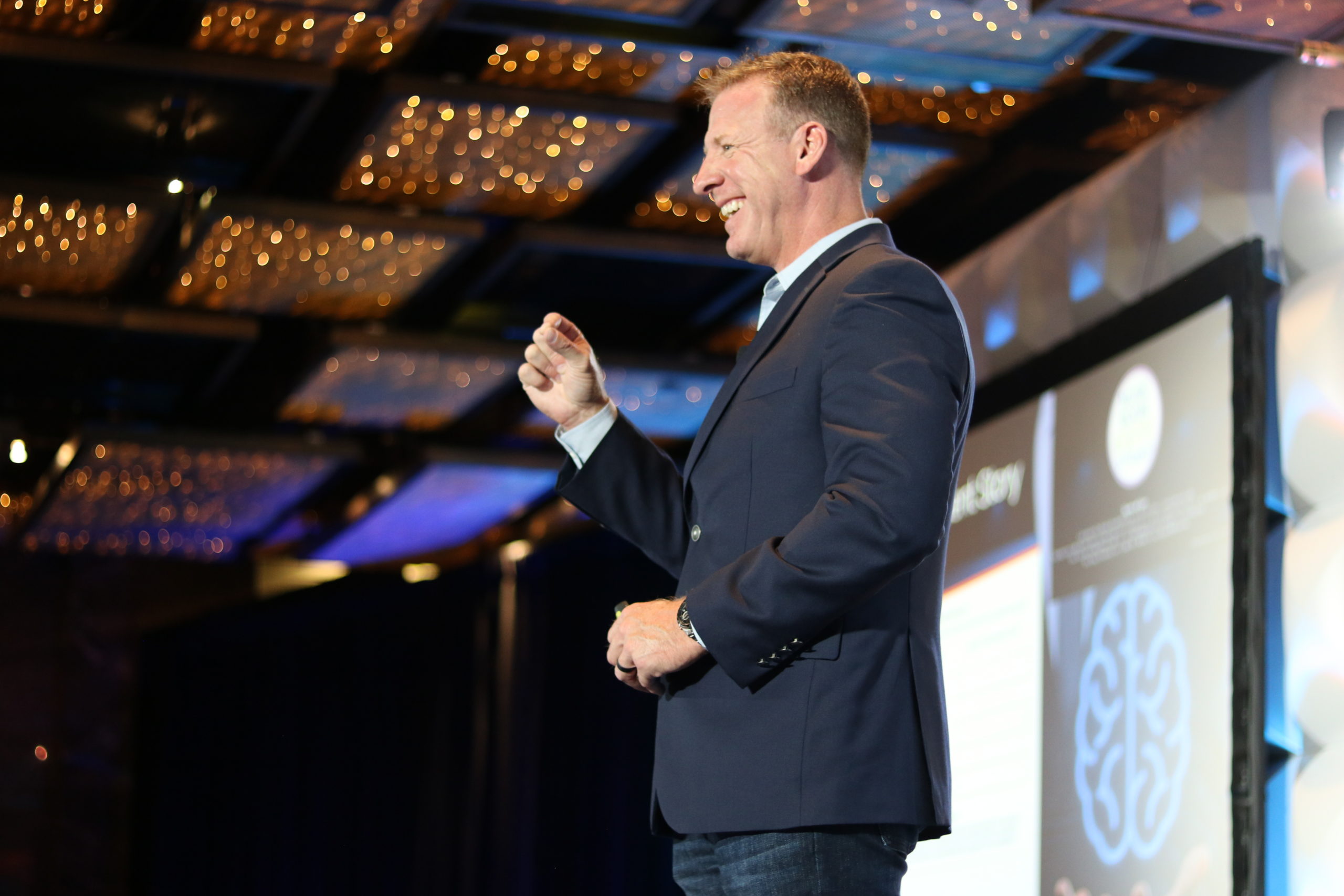
A keynote is a prepared presentation, usually 45 to 60 minutes, delivered by one speaker to the full audience. It's built around a central idea and designed to move the room from one point of view to another.
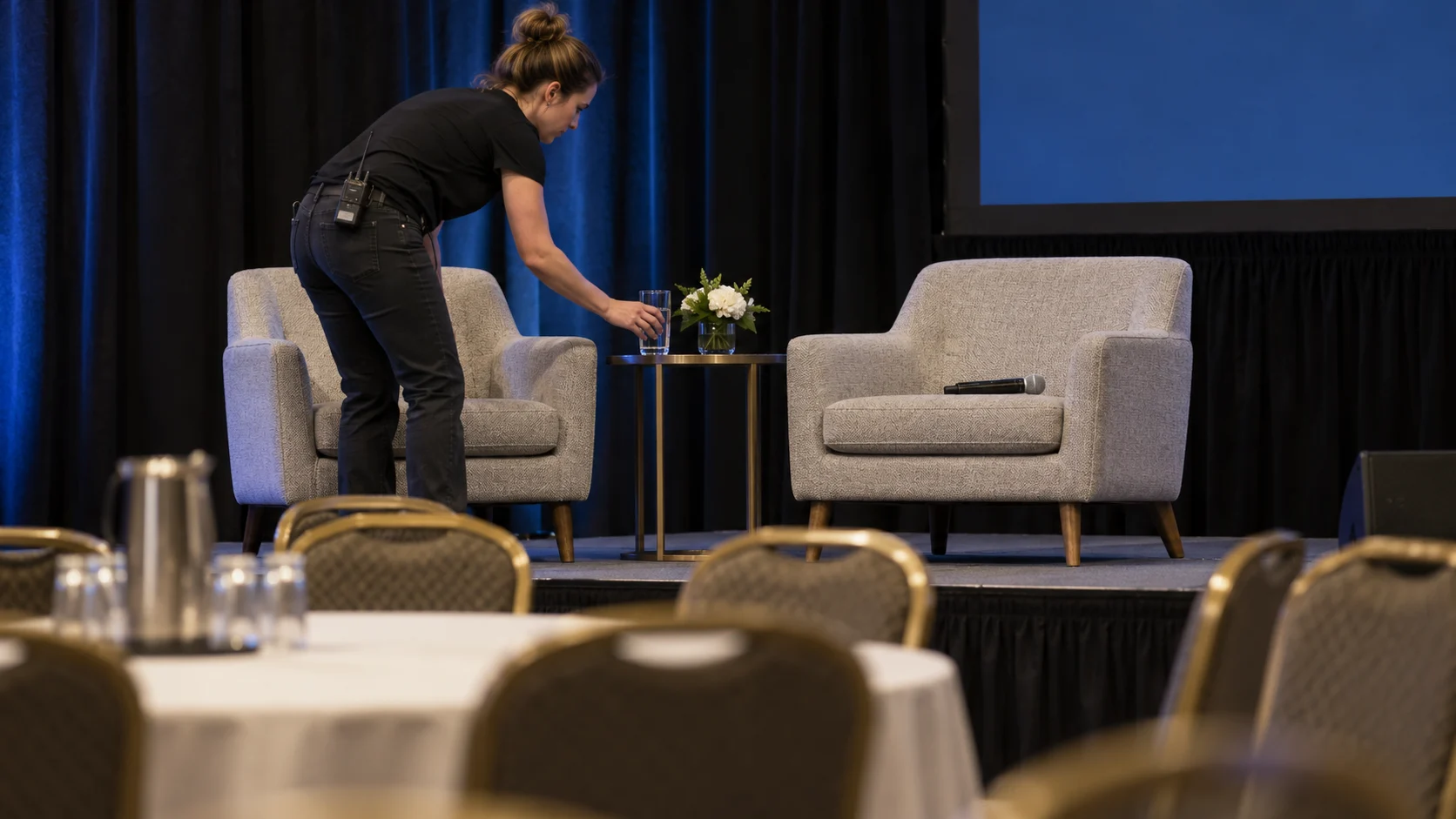
A fireside chat is a moderated conversation between a host and one or two guests, usually seated on stage. The moderator asks questions, the guest answers, and the session often closes with audience questions. It's more like a talk show than a lecture.
Side-by-Side Comparison
| What You're Comparing | Keynote | Fireside Chat |
|---|---|---|
| Structure | A designed arc from problem to idea to action | A series of questions and answers |
| Who controls the message | The speaker, built with you in advance | Shared between moderator and guest |
| Best at | Changing how the room thinks about one big idea | Revealing a person's perspective and experience |
| Energy | Builds deliberately to a peak | Steady, conversational |
| Risk | Can feel one-way if poorly delivered | Can drift without a skilled moderator |
| Prep required | Customization call and content build | Moderator prep, question plan, guest briefing |
| Shared language afterward | High, when built for it | Low to moderate |
| Typical guests | Subject-matter experts and professional speakers | Executives, customers, athletes, authors |
When a Keynote Is the Right Call
Choose a keynote for your main-stage slot when:
- The SKO has one central message the whole team needs to absorb
- You need a shared language that managers will reinforce all year
- The topic needs explanation, demonstration, or evidence, such as how buyers decide or why deals stall
- You want the session to open or close the event with a clear peak
- The audience is large, where a two-chair conversation can feel distant from the back of the room
Most outside experts booked for an SKO are hired for the keynote format for exactly these reasons. The structure is what makes the idea stick.
When a Fireside Chat Is the Right Call
Choose a fireside chat when:
- The guest's personal story or position is the draw, such as your CEO, a top customer, or a well-known athlete or executive
- You want candor, such as a leader answering hard questions about the year ahead
- The guest isn't a professional speaker but has something valuable to share
- The room needs a change of pace between longer sessions
- You want to put an outside expert's ideas in direct conversation with your own leaders
A fireside chat works best when the moderator is strong. A moderator who knows the audience, prepares sharp questions, and keeps time turns a pleasant conversation into a useful one.
Why Format Matters to the Brain
Format isn't just a staging choice. It changes how the brain takes in the session.
You have about 5 seconds to capture or lose an audience's attention, and average attention spans have dropped to around 8 seconds. A keynote is built to win those first seconds and then hold attention with a deliberate arc. Stories are 22x more memorable than facts alone, and a keynote can weave story, evidence, and live demonstration into one narrative.
A fireside chat wins attention differently. Conversation feels personal and unscripted, which makes it easy to listen to. The tradeoff is structure. Without an arc, the room remembers moments rather than a message.
I build every keynote as a designed arc. I use Illuminate, Elevate, Activate: Illuminate shows the neuroscience live, Elevate turns it into a repeatable, shared-language skill, and Activate makes it concrete enough to use immediately. That structure is hard to reproduce in a Q&A, and it's why I recommend the keynote format when an SKO needs one idea to carry the year.
Using Both: The Keynote-Plus-Fireside Pattern
Many sales kickoffs don't choose. They pair the formats. A common pattern looks like this. These are planning norms, not research findings.
| Session | Format | Length | Its Job |
|---|---|---|---|
| Opening keynote | Keynote | 45 to 60 minutes | Set the year's central idea and shared language |
| Follow-up conversation | Fireside chat with the keynote speaker and your CRO | 15 to 20 minutes | Connect the outside idea to your strategy, deals, and priorities |
| Executive fireside | Fireside chat with your CEO | 30 to 45 minutes | Candor about the company's direction |
| Customer fireside | Fireside chat with a customer | 20 to 30 minutes | Proof and perspective from the buyer's side |
The keynote-plus-fireside pairing is especially strong. The keynote delivers the idea with full structure. The short conversation that follows lets your sales leader translate it into your company's language, in front of the whole team. For more on sequencing, see how to build a sales kickoff agenda around your keynote.
Common Format Mistakes
- Booking an outside expert, then asking them to do a fireside instead. You'll get anecdotes without the structure you paid for. If you want both, schedule both.
- Running a fireside without a prepared moderator. The session drifts, and the best questions never get asked.
- Putting a fireside in the opening slot of a large SKO. It can work, but the opening sets the tone, and a conversation rarely builds the same peak.
- Stacking too many firesides. Three seated conversations in a row blur together.
- Skipping audience questions. Q&A is often the best part of a fireside. Leave time for it.
Questions to Ask a Speaker About Format
| Question | What a Strong Answer Shows |
|---|---|
| Do you recommend a keynote, a fireside, or both for our goals? | They think about your outcome, not just their usual format |
| Can you join a short fireside with our sales leader after the keynote? | Willingness to connect their content to your strategy |
| How do you prepare for a moderated conversation? | Respect for the moderator and the audience |
| How long should the keynote run for our agenda? | Practical judgment about attention and energy |
| What will managers be able to reinforce afterward? | A shared language, not just a good session |
For more on choosing a headliner's slot, see opening keynote vs. closing keynote. Every booking with Jeff includes a pre-event customization call, which is the right time to settle the format. See Jeff's conference keynote page for how he approaches the main stage.
"Jeff was proclaimed as the most outstanding keynote speaker we've ever featured!"
Kathy Thiel, Chairman, M&A Source
Frequently Asked Questions
What is the difference between a keynote and a fireside chat?
A keynote is a prepared presentation by one speaker, built around a central idea. A fireside chat is a moderated conversation between a host and a guest, usually with audience questions. A keynote is built to change how the room thinks. A fireside reveals a person's perspective.
Is a fireside chat better than a keynote for a sales kickoff?
Neither is better in general. A keynote is stronger when the SKO needs one central message and a shared language. A fireside chat is stronger when the guest's perspective, candor, or credibility is the main value.
Can a keynote speaker also do a fireside chat?
Yes. A common pattern is a full keynote followed by a short fireside with the company's sales leader. The keynote delivers the idea, and the conversation connects it to the company's strategy and deals.
How long should a fireside chat be at an SKO?
Most run 20 to 45 minutes depending on the guest and the agenda. A follow-up conversation after a keynote is often 15 to 20 minutes. Leave time for audience questions.
Who should moderate a fireside chat at a sales kickoff?
Someone who knows the audience, prepares sharp questions, and keeps time. Internal sales leaders, enablement leaders, and experienced emcees all work well. The moderator's prep often decides the session's quality.
Does Jeff Bloomfield do fireside chats?
Jeff's main format is the keynote, built around Illuminate, Elevate, Activate. He can pair it with a moderated conversation with your sales leader to connect the content to your priorities. The format is settled on the pre-event customization call.
Should the opening session of an SKO be a keynote or a fireside?
For most kickoffs, a keynote. The opening sets the tone and the central idea for the event, and a designed keynote builds that peak more reliably than a conversation does.
If you're deciding how to use your main-stage time, let's talk about your kickoff. See how Jeff approaches every conference keynote, from format to the final minute.
Keynote Speaker
Jeff delivers keynotes at sales kickoffs, leadership summits, and corporate conferences, combining neuroscience, storytelling, and real-world selling experience into sessions that move people and stick long after the event ends.
