

How to Choose a Keynote Speaker for a Product Launch Sales Meeting
About
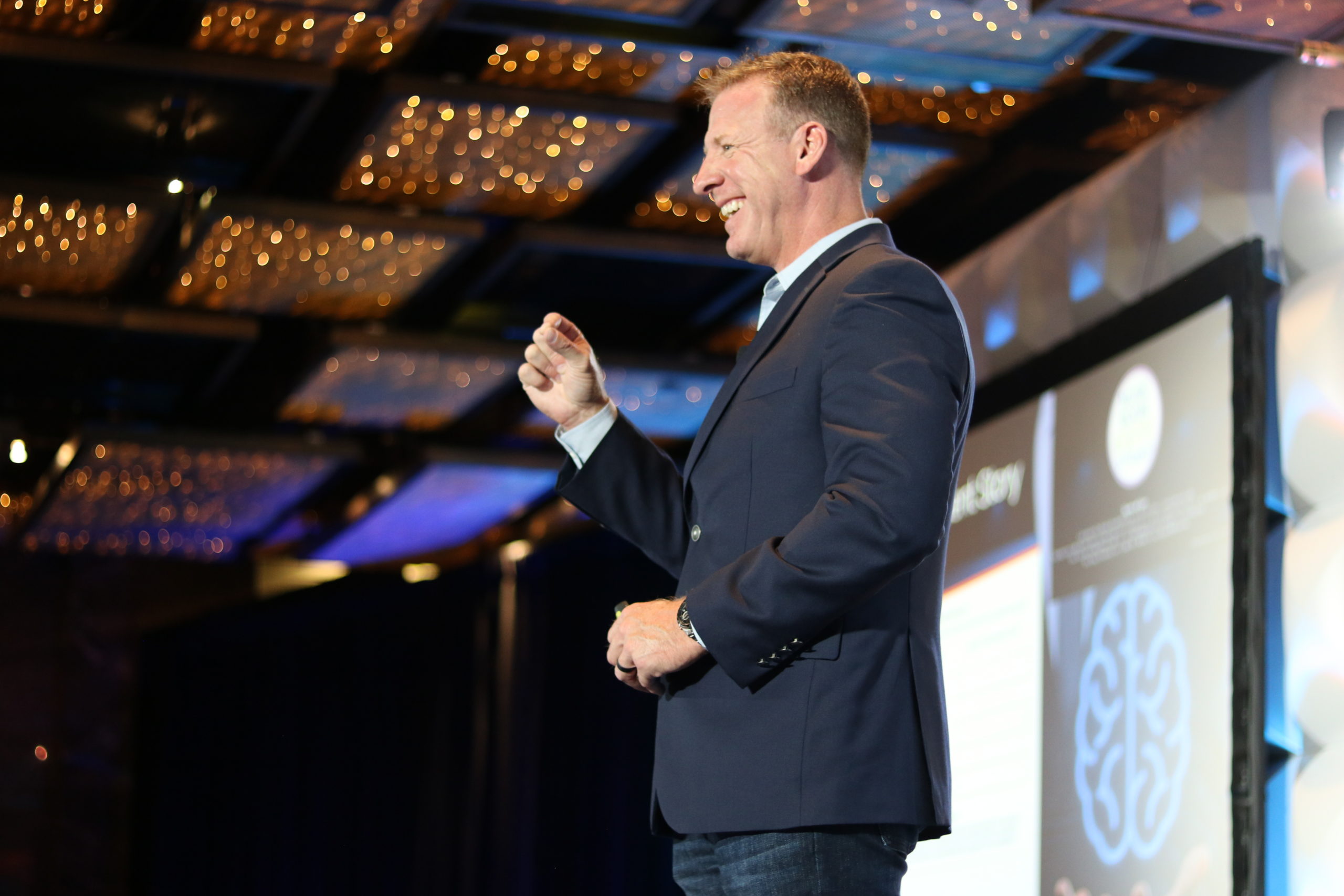
Jeff Bloomfield is a keynote speaker, Wall Street Journal bestselling author, and the founder of Braintrust. He has spent over 20 years helping Fortune 500 sales teams rewire how they communicate, using the neuroscience of trust, decision-making, and buyer behavior to drive results that last. He speaks at corporate events, executive summits, and sales kickoffs across life sciences, financial services, software, and technology.
Experience Highlights
- NeuroSelling methodology and enterprise adoption
- Trust-based selling at the executive level
- Sales transformation in complex, long-cycle industries
- Keynote speaking and executive coaching
Areas of Expertise
At most product launch meetings, sellers get a deck, a demo, a price sheet, and a certification deadline. What they rarely get is a story they can tell. A few weeks later, every rep is pitching a different version of the launch, or quietly going back to the product they already know how to sell.
The keynote is your best chance to change that. This guide covers why launches stall in the field, where a storytelling keynote fits in the agenda, and how to choose the right speaker.
What a Product Launch Sales Meeting Is For
A product launch sales meeting (sometimes called a launch kickoff, launch readiness event, or field launch meeting) is an internal event that prepares the sales team to sell a new product, platform, or major release. It can be a standalone meeting or a block inside a larger sales kickoff.
Its real job is adoption. Not customer adoption yet. Seller adoption. If the people carrying the bag don't believe in the launch and can't explain it simply, customers never hear about it the way you intended.
Why Launches Stall in the Field
Product teams usually do their part well. The features are real, the positioning is clear, and the materials are ready. The stall happens when the launch meets the field.
- Sellers default to what they know. Under quota pressure, the familiar product feels safer than the new one.
- The launch arrives as information, not a story. Feature lists are hard to remember and harder to retell.
- Every rep improvises a different pitch. Without a shared narrative, the market hears five versions of the same launch.
- Buyers resist new things too. A new product asks the buyer to change, and the brain treats change as risk.
That last point matters. 70% of change initiatives fail to achieve their goals, and a launch is a change initiative for both your sellers and your customers.
Where a Storytelling Keynote Fits in the Agenda
A keynote doesn't replace product training or certification. It makes them land. Here's how the pieces typically fit together.
| Session | Usually Owned By | Its Job |
|---|---|---|
| Launch vision | Product or executive leadership | Why the company built this and why now |
| Storytelling keynote | Outside keynote speaker | Why stories move buyers, and why the launch needs one sellers can tell |
| Product deep-dive and demo | Product marketing | What it does, who it's for, how it's positioned |
| Enablement and certification | Sales enablement | How to sell it, segment by segment |
| Customer or pilot stories | Customers or early adopters | Proof that it works |
Placing the keynote right after the launch vision works well. The room has just heard what's new. The keynote shows them why the way they tell it will matter more than the feature list.
The Brain Science Behind Launch Stories
Narrative activates seven brain regions, compared with two for data alone. That's why a story about one customer's problem stays with a buyer long after the spec sheet is gone. Researchers also find that 95% of persuasion happens at the unconscious level, and you have about 5 seconds to capture or lose an audience's attention.
In my storytelling keynote, I show sales audiences what those numbers mean in a real buying conversation. I demonstrate it live, so the room feels the difference between a feature pitch and a story before I explain it. For a launch, that experience gives sellers a reason to care about the story your product team built, not just the features.
I also connect storytelling to how buyers decide. Buyers move when they trust the seller, feel the cost of inaction, and see a safe path forward. A good launch story does all three. It names the problem, shows what waiting costs, and makes the new product feel like a safe step rather than a leap.
Six Criteria for Choosing a Launch Keynote Speaker
Use these to screen speakers for a product launch meeting.
- They'll serve your launch, not their own talk. Ask how they'll connect the keynote to your product story without trying to rewrite it.
- Their storytelling content rests on research. Sellers sit through a lot of launch hype. Brain science earns attention that enthusiasm alone doesn't.
- They speak to sales audiences. A storytelling speaker who usually addresses marketers or authors may not connect with a room full of quota carriers.
- They can handle confidential material. Launch details are often embargoed. Ask how they handle NDAs and pre-release information.
- They give the team a shared language. The best launch keynotes leave sellers with words they'll repeat to each other and to managers.
- They coordinate with your other sessions. Ask what they'll need from product marketing and enablement so the day feels like one message.
Storytelling Keynote vs. Other Launch Keynote Options
Launch meetings usually choose between three kinds of main-stage sessions. Each has a place.
| Option | What It Delivers | Watch Out For | Best Fit |
|---|---|---|---|
| Internal product executive | Credibility on the product and the roadmap | Can turn into a feature tour | Every launch, as the vision session |
| Celebrity or big-name draw | Excitement and attendance | Little connection to how sellers sell | Large, celebratory launch events |
| Storytelling keynote speaker | A reason and a method for sellers to tell the launch story | Needs coordination with product marketing | Launches where field adoption is the main risk |
Many launches use the product executive and a storytelling keynote together. The executive explains what's new. The keynote explains why the story matters.
Questions to Ask Before You Book
| Question | Why It Matters |
|---|---|
| How will you connect your keynote to our launch? | Confirms the talk serves the launch, not just the speaker's brand |
| What research is your storytelling content built on? | Separates substance from performance |
| Have you spoken to sales teams before a launch? | Launch rooms have specific pressures and skepticism |
| What do you need from product marketing? | Signals real customization |
| How do you handle confidential launch details? | Protects your embargo |
| What will sellers be able to say differently afterward? | Keeps the keynote tied to field adoption |
For more on storytelling at sales events, see how to use storytelling in a sales kickoff keynote. If the launch is a new sales methodology rather than a product, see how to use a keynote to launch a new sales methodology.
What to Share With the Speaker Before the Event
Every booking with me includes a pre-event customization call. For a launch meeting, come ready to share:
- The product, who it's for, and the problem it solves
- The launch narrative your product marketing team has built
- Where sellers are skeptical, and why
- Which customers or pilots you can reference, and what's still confidential
- Where the keynote sits on the agenda
- What success looks like 90 days after launch
"Jeff's approach turns lifeless teams into vibrant, creative, motivated forces for positive change!"
Steve Thompson, Area Dir. of Sales, Genomic Health
Frequently Asked Questions
What kind of keynote speaker is best for a product launch sales meeting?
A storytelling keynote speaker who works with sales audiences is often the best fit when field adoption is the main risk. The keynote gives sellers a reason and a method to tell the launch story, while product and enablement sessions cover the details.
Should the keynote speaker present our product?
No. Your product leaders should own the product story. The keynote speaker's job is to show why stories move buyers and why the way sellers tell the launch will decide how the market hears it.
Why do product launches fail with sales teams?
Usually because sellers default to familiar products under pressure, the launch arrives as information rather than a story, and every rep improvises a different pitch. A launch is a change initiative for sellers as well as buyers.
Where should the keynote go on a launch meeting agenda?
Right after the launch vision session works well. The room has just heard what's new, and the keynote sets up why the story matters before product deep-dives and enablement sessions begin.
Can a storytelling keynote work at a sales kickoff with a product launch?
Yes. Many launches happen inside a larger sales kickoff. A storytelling keynote can serve both the year's theme and the launch, as long as the speaker coordinates with product marketing ahead of time.
What does Jeff Bloomfield cover in a storytelling keynote for sales teams?
Jeff covers the neuroscience of narrative, why stories are far more memorable than facts alone, and how stories help buyers trust a seller, feel the cost of inaction, and see a safe path forward. Every keynote is customized on a pre-event call.
How far in advance should we book a launch keynote speaker?
As soon as the launch date is firm. Launch dates sometimes move, so ask speakers about flexibility. See how far in advance to book a keynote speaker.
If you're planning a launch meeting and want your sellers telling one story the market remembers, let's talk about your launch. See how Jeff builds every storytelling keynote around how the brain responds to narrative.
Keynote Speaker
Jeff delivers keynotes at sales kickoffs, leadership summits, and corporate conferences, combining neuroscience, storytelling, and real-world selling experience into sessions that move people and stick long after the event ends.
