

Leadership Keynote Speakers Who Drive Behavior Change vs. Speakers Who Just Inspire
About
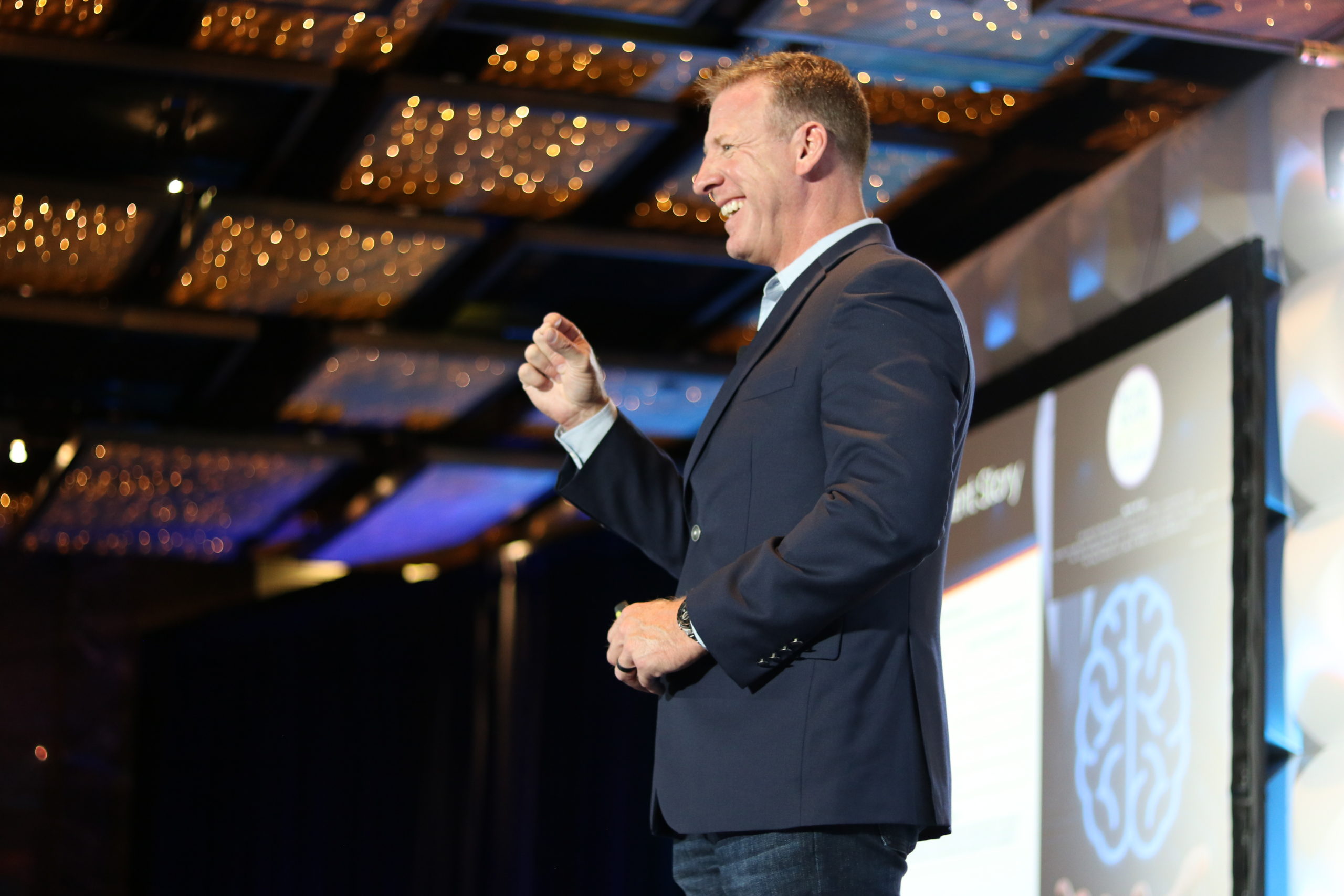
Jeff Bloomfield is a keynote speaker, Wall Street Journal bestselling author, and the founder of Braintrust. He has spent over 20 years helping Fortune 500 sales teams rewire how they communicate, using the neuroscience of trust, decision-making, and buyer behavior to drive results that training alone rarely produces. He speaks at corporate events, executive summits, and sales kickoffs across life sciences, financial services, software, and technology.
Experience Highlights
- NeuroSelling methodology and enterprise adoption
- Trust-based selling at the executive level
- Sales transformation in complex, long-cycle industries
- Keynote speaking and executive coaching
Areas of Expertise
Every leadership offsite ends the same way: a standing ovation, strong feedback scores, and a room full of executives who feel ready to lead differently. Six weeks later, the org chart looks the same, the same managers are avoiding the same hard conversations, and nobody can quite recall the framework from the keynote. The real difference between a leadership speaker who inspires and one who changes behavior isn't stage presence. It's whether the brain retained anything after the applause stopped.
What an Inspirational Leadership Speaker Actually Delivers
An inspirational keynote is built to produce a feeling. High energy, personal stories, a big emotional peak near the close, a room that's on its feet. Audiences leave lifted, and for a single-session event, that's often exactly what was asked for. The problem shows up later, when the feeling fades and nothing concrete was left behind to replace it.
Most talks in this category share the same traits:
- Energy and stage presence carry the session, not a transferable framework
- Content builds toward one memorable emotional moment rather than a repeatable process
- The focus is how the room feels, not what a manager does differently on Tuesday
- Success gets measured in applause and post-event survey scores, not workplace behavior
What a Behavior-Change Leadership Speaker Actually Delivers
Behavior-change keynote, as the term is used across leadership development, refers to a session built around a specific new behavior participants can practice starting immediately, not just a feeling they carry out of the room. The content still needs to move people emotionally. It just doesn't stop there.
A behavior-change speaker typically brings:
- A clear framework or model attendees can name and reuse after the event
- Language leaders can drop directly into their next coaching conversation or one-on-one
- Content tied to the specific leadership challenges the audience is actually living with, not a generic talk
- A point of view on what changes in the business, weeks or months out, if the session works
Why Inspiration Fades by Monday Morning
That statistic isn't really about strategy. It's about what happens to new information once people leave the room where they heard it. Most leaders don't fail to change because they lack motivation. They fail because inspiration without repetition and reinforcement rarely survives contact with a full inbox and a stacked calendar.
The brain doesn't build new habits from a single emotional peak. It builds them through repeated exposure, reinforced language, and identity-based framing, the sense that "this is who I am now," not just "this is what I heard once." Ninety-five percent of communication is processed unconsciously, which means most of what actually shapes future behavior isn't the part of the keynote people consciously remember. It's the pattern that gets reinforced, or doesn't, in the weeks that follow.
Side-by-Side Comparison: Inspirational vs. Behavior-Change Speakers
| Trait | Inspirational-Only Speaker | Behavior-Change Speaker |
|---|---|---|
| Primary goal | An emotional high in the room | A specific behavior participants can practice starting Monday |
| Content structure | Story-driven, built toward one emotional arc | Framework-driven, with repeatable language and steps |
| What audiences remember 30 days later | A feeling, a favorite story | A phrase, a question, a habit they've already started using |
| Follow-up built in | Rarely. The keynote is the entire engagement | Often includes a pre-event customization call or reinforcement tools |
| How success is measured | Applause and survey scores | Behavior observed in coaching conversations, retention, engagement |
| Best fit | Kickoffs, morale events, single-session conferences | Leadership offsites, manager development, culture-change initiatives |
Signs You're Booking an Inspirational-Only Speaker
- The proposal leans entirely on a personal story arc with no framework attached to it
- There's no mention anywhere of what leaders should do differently after the session ends
- The only deliverable is the keynote itself, with no pre-event call and no reinforcement material
- Past testimonials all describe energy and emotion, but none describe a changed behavior
- The topic could apply to almost any audience in almost any industry with the names swapped
Signs You're Booking a Speaker Built for Behavior Change
- The speaker asks detailed questions about your leadership challenges before the event, not after it's already booked
- The content includes a named framework or specific language leaders can reuse in real conversations
- There's a plan for what happens after the session, even something as simple as a manager guide or follow-up call
- The speaker can explain the research or neuroscience behind why the approach changes behavior, not just tell stories about it
- Success is framed around what changes in the business, not only how the room felt that day
When Inspiration Alone Is Actually the Right Call
Not every booking needs a full behavior-change framework attached to it. Inspiration-first content is the right call when:
- The keynote fills a single slot inside a larger conference where behavior change isn't the stated objective
- The event is a morale reset after a hard quarter, and the honest goal is to lift energy, not install new habits
- It's a kickoff opener designed to set tone before deeper working sessions later in the agenda
- The audience already has strong frameworks in place and needs energy more than new content
Most leadership buyers, though, sit somewhere between these two needs. They want a room that feels energized and leaves with something they'll still be using in a quarter. A leadership keynote built for that has to do both jobs at once, not choose one.
My Approach: Building Keynotes the Brain Actually Retains
My approach to a leadership keynote is grounded in behavioral neuroscience, not applause. I built my methodology, NeuroCoaching®, around one question: what does the brain actually need to sustain a new behavior once the room empties? The answer is rarely more information. It's repetition, identity-based framing, and reinforcement from a leader's own manager in the weeks after the event.
I show audiences the exact moment their brain decides whether to trust a new idea enough to act on it, and I send them home with language they can use in their next one-on-one, not just a story to remember. Over 20-plus years working inside Fortune 500 organizations and more than 500 keynotes delivered, I've watched the difference play out again and again between a room that claps and a room that changes. It comes down to whether people leave with a behavior, not just a feeling.
What to Ask a Speaker Before You Book, If Behavior Change Is the Goal
- What specific leadership behavior should our team be practicing differently 30 days after this session?
- What does your pre-event customization call cover, and how does it change the content for our audience?
- What happens after the keynote ends? Is there a framework, guide, or follow-up session attendees take with them?
- Can you explain the research or neuroscience behind why this approach changes behavior, not just why it's engaging?
- How do you define success for this engagement, beyond the post-event survey scores?
How to Measure Whether a Leadership Keynote Actually Changed Behavior
Applause is not a metric. If behavior change was the goal, look further out than the day of the event:
- Are managers reporting different coaching conversations with their teams weeks later?
- Is the language or framework from the keynote showing up unprompted in one-on-ones and team meetings?
- Has employee engagement moved? Employees are 3.5x more engaged when leaders communicate with empathy, and that shift is trackable.
- Has voluntary turnover on affected teams shifted at all? Fifty percent of employees have quit because of a manager at some point, which makes manager behavior one of the more measurable downstream effects of a leadership session.
None of these show up in a same-day feedback form. They show up 30, 60, and 90 days out, which is exactly why the plan for what happens after the keynote matters as much as the keynote itself.
Frequently Asked Questions
What's the difference between a motivational speaker and a leadership speaker who drives behavior change?
A motivational talk is built to create an emotional high in the room, with success measured by energy and applause. A behavior-change leadership speaker builds toward a specific, repeatable behavior the audience can practice after the event, using frameworks and language rather than emotion alone to make it stick.
Can one keynote realistically change how leaders behave, or does it need follow-up?
A single session can start the shift, especially if it gives leaders a concrete framework and language rather than just a story. But lasting change almost always depends on what happens afterward: manager reinforcement, repetition, and a workplace that rewards the new behavior rather than the old one.
How do I know if a leadership keynote actually changed behavior after the event?
Look past the day-of survey scores. Check whether managers are having different coaching conversations 30 to 90 days later, whether the framework or language from the session is showing up unprompted in meetings, and whether engagement or retention metrics move at all.
What questions should I ask a keynote speaker before booking a leadership offsite or summit?
Ask what specific behavior attendees should be practicing differently 30 days later, what the pre-event customization process looks like, what happens after the session ends, and how the speaker defines success beyond applause and survey scores.
Is Jeff Bloomfield a keynote speaker who inspires or one who drives behavior change?
Jeff Bloomfield builds both into the same session. As a Wall Street Journal bestselling author and the founder of Braintrust, he grounds every leadership keynote in behavioral neuroscience, giving audiences the emotional lift of a strong keynote alongside a framework they can actually use the next day.
Is a keynote or a full workshop program better for driving leadership behavior change?
A keynote can absolutely drive behavior change if it's built around a specific framework and paired with follow-up reinforcement, but a workshop or multi-session program will generally sustain change further out. Many organizations use a keynote to introduce the shift and a workshop or coaching cadence to reinforce it over time.
If you're evaluating leadership keynote speakers for an executive summit, offsite, or leadership development event, the real question isn't who will get the loudest applause. It's who will change what your leaders actually do once they're back at their desks. Reach out to Jeff directly to talk through what a behavior-change keynote could look like for your team.
Keynote Speaker
Jeff delivers keynotes at sales kickoffs, leadership summits, and corporate conferences, combining neuroscience, storytelling, and real-world selling experience into sessions that move people and stick long after the event ends.
