

The Science of Trust: What the Best Leaders Do That Others Don't
About
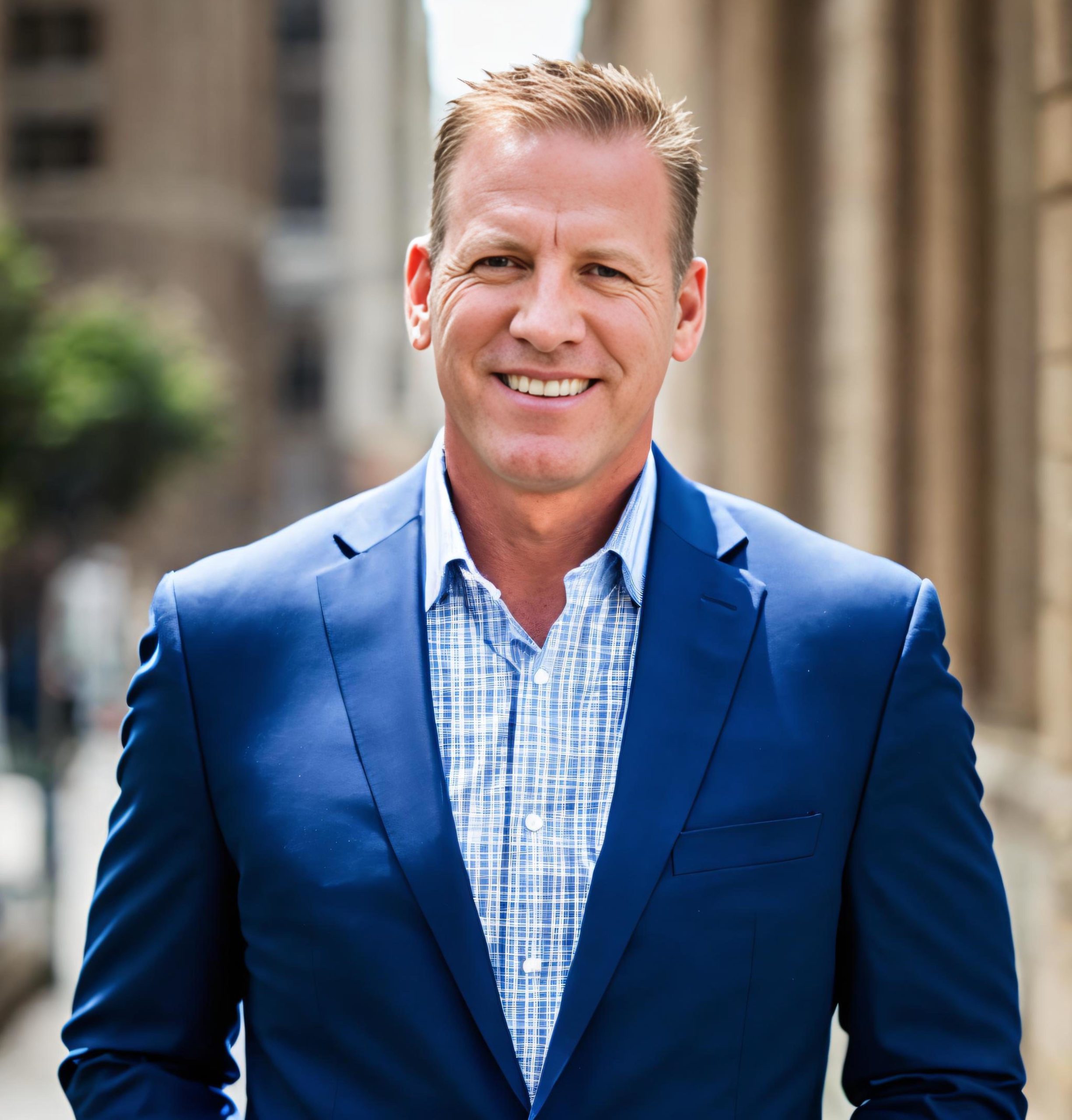
Jeff Bloomfield is a keynote speaker, Wall Street Journal bestselling author, and the founder of Braintrust. He has spent over 20 years helping Fortune 500 sales teams rewire how they communicate, using the neuroscience of trust, decision-making, and buyer behavior to drive results that training alone rarely produces. He speaks at corporate events, executive summits, and sales kickoffs across life sciences, financial services, software, and technology.
Experience Highlights
- NeuroSelling methodology and enterprise adoption
- Trust-based selling at the executive level
- Sales transformation in complex, long-cycle industries
- Keynote speaking and executive coaching
Areas of Expertise
Only 48% of employees trust their employer, according to the 2023 Edelman Trust Barometer, and that number has declined for three consecutive years despite record investment in leadership development. The problem, in almost every case, is not character. It is communication.
The leaders who consistently build high-trust cultures share a set of identifiable, learnable behaviors rooted in neuroscience, and almost none of them are taught in traditional leadership training. Trust, as neuroscientist Paul Zak's research at Claremont Graduate University demonstrates, is a biological response. It requires specific inputs to trigger. When those inputs are missing, no amount of transparency initiatives or town halls will close the gap.
This matters because trust is not a soft metric. A Harvard Business Review study found that employees at high-trust companies report 74% less stress, 76% more engagement, and 50% higher productivity than their peers at low-trust organizations. The ROI of trust is measurable. The pathway to it is learnable. Here is what the science says the best leaders do differently.
Trust Is a Biological Process, Not a Leadership Philosophy
Most organizations treat trust as a value: something declared in a mission statement or printed on a wall. Neuroscience treats it as a process. Paul Zak's research at Claremont Graduate University identified that the brain releases oxytocin, often called the "trust molecule," in response to specific social signals. Leaders who naturally generate those signals build trust faster. Leaders who don't, regardless of their intentions, trigger the opposite: the brain's threat response.
The amygdala, the part of the brain responsible for threat detection, processes social information before the rational brain ever gets involved. This means that how a leader enters a room, opens a conversation, or delivers feedback is processed emotionally before it is processed intellectually. Leaders who establish authority before establishing safety are working against the brain's wiring, not with it.
Having delivered more than 500 keynotes on the neuroscience of human communication to Fortune 500 companies including Johnson & Johnson, Deloitte, and GSK, I frame it this way: the trust deficit in most organizations is not a character problem; it is a communication sequence problem. The inputs are out of order. The good news is that sequence is entirely learnable.
What High-Trust Leaders Do in the First 90 Seconds
The opening of a conversation sets the neurological tone for everything that follows. High-trust leaders don't spend the first 90 seconds establishing their authority or their agenda. They invest it in establishing psychological safety, and the research is unambiguous about why this matters.
Google's Project Aristotle, one of the most comprehensive studies of team performance ever conducted, analyzed 180 teams over three years and found that psychological safety was the single most important factor predicting team effectiveness. Not talent. Not resources. Not strategy. Safety.
High-trust leaders consistently do three things in the opening of a conversation that lower-trust leaders don't:
- They signal curiosity before conclusion. They ask questions that demonstrate genuine interest in the other person's perspective before sharing their own. This is not a technique; it is a neurological signal that the other person's input matters in this conversation.
- They make the other person feel seen. A reference to something specific about the person, their recent work, a challenge they raised, a contribution they made, activates the brain's reward circuitry and signals that they belong in this exchange.
- They slow down when the stakes are high. Urgency signals threat. The leaders who earn the deepest trust are often the ones who appear unhurried, even when they aren't. Pace communicates safety.
None of these behaviors require a personality transplant. They require awareness and deliberate practice over time. That is the part most leadership development programs skip entirely.
The Communication Pattern That Destroys Trust Without Anyone Noticing
There is a communication pattern so common in leadership that most people never recognize it as a trust killer: the unsolicited opinion delivered as fact.
It sounds like this: "Here's what I think you should do." "The problem is..." "What you need to understand is..." Each of these constructions positions the leader as the authority and the listener as the subordinate, whether that's the intent or not. The brain reads dominance as threat. And when a person feels even mildly threatened, creativity shuts down, collaboration narrows, and the relationship loses ground.
Neuroscientist David Rock's SCARF model identifies five domains the brain continuously monitors for threat and reward: Status, Certainty, Autonomy, Relatedness, and Fairness. Most leaders unknowingly activate threat responses across all five. They communicate in ways that reduce others' perceived status, eliminate certainty, remove autonomy, damage relatedness, or signal unfairness, often in a single sentence.
High-trust leaders speak in ways that consistently protect and restore these five domains. They don't do it by accident. They do it deliberately, with an awareness of how specific words and sequences land in the brain of the person they are speaking with.
The distinction is subtle but consequential. Consider the difference between "Here's what you should do" and "What's your read on this?" The content may lead to the same conclusion, but the neurological experience is entirely different. One triggers a status threat. The other activates engagement. High-trust leaders have internalized this distinction to the point where it operates at the level of habit.
Why Trust Has to Be Built at the Team Level
Most trust-building advice is interpersonal: be consistent, keep your word, show vulnerability. This is true, but it addresses only half the problem. The other half is structural.
High-trust cultures form when trust behaviors are modeled at the leadership level and normalized across the entire team. A single high-trust leader surrounded by a low-trust culture will eventually burn out or be absorbed by it. A leadership team that collectively practices trust-building behaviors creates a self-reinforcing environment where psychological safety becomes the expectation, not the exception.
This is why leadership development programs focused solely on individual behavior change often fail to produce organizational results. The unit of change isn't the individual leader. It is the team's shared communication norms.
Amy Edmondson's research at Harvard Business School, she coined the term "psychological safety," shows that teams with high safety report mistakes more readily, learn faster, and consistently outperform their peers on complex tasks. But Edmondson is equally clear: safety is a team-level property. It doesn't emerge from one great leader. It is built through consistent, predictable, shared behaviors practiced over time.
The implication for leadership development is significant. If an organization invests in one leader's ability to build trust while leaving the surrounding culture unchanged, the individual may improve but the culture won't move. Sustainable change requires that trust behaviors become the visible, reinforced standard across the leadership tier, not just a personal virtue held by a few.
From Insight to Habit: How Trust Behaviors Actually Stick
Understanding the neuroscience of trust is necessary, but it is not sufficient. The Ebbinghaus forgetting curve shows that 87% of training content is gone within 30 days without reinforcement. Most leadership workshops and keynotes produce genuine insight in the room and minimal behavior change six weeks later. This is not a failure of content; it is a failure of architecture.
Behavior change that sticks requires three conditions. First, the new behavior must be immediately actionable: not just conceptually understood, but deployable in the next conversation a leader walks into. Second, it must be practiced in context, not rehearsed in a workshop and then shelved. Third, it must be reinforced through observation and feedback from someone who can identify when the pattern drifts back to default.
The leaders who make the most durable gains in trust-building don't just attend a session on the neuroscience of communication. They carry specific frameworks into their actual conversations, receive coaching on what is landing as safety and what is landing as threat, and build new defaults through repetition over time. The science gets absorbed through application, not through retention alone.
That is also what separates a keynote that moves people from one that merely informs them. The goal is not inspiration in the moment. The goal is a specific behavioral shift that survives the return flight home and shows up in Monday's staff meeting.
Trust is not built through annual surveys, culture decks, or good intentions. It is built through specific, repeatable communication behaviors that signal to the brain, in real time, that it is safe to engage fully. The best leaders don't earn trust by being likable. They earn it by being predictable, other-centered, and deliberate about the neurological impact of their words.
The organizations that consistently outperform their peers in engagement, retention, and execution are not the ones with the best perks or the loudest values statements. They are the ones where people trust their leaders enough to take risks, raise problems early, and commit fully to a shared direction. That kind of culture doesn't happen by accident, and it doesn't start with a poster.
If this resonates and you want to explore what a trust-building program could look like for your team or organization, start a conversation.
Frequently Asked Questions
What is the fastest way to build trust as a leader?
The fastest trust-building behavior is consistent follow-through on small commitments. Neuroscience research shows the brain's trust circuitry is more sensitive to patterns than to grand gestures. Leaders who do exactly what they say they will do, even in minor situations, create predictable, reliable signals the brain interprets as safe. One broken commitment can erase months of relationship equity.
Can trust be rebuilt after it has been damaged in a team?
Yes, but it requires explicit acknowledgment, not just behavioral change. Research on the neuropsychology of betrayal shows the brain continues to monitor for threat long after the triggering event. Quietly "doing better" is not enough. Leaders who rebuild trust most effectively name what happened, take unambiguous ownership, and make behavioral changes visible and consistent over time.
How does neuroscience explain why some leaders naturally build more trust than others?
Some leaders have unconsciously developed communication patterns that trigger oxytocin release and minimize amygdala threat activation, not because they are inherently more trustworthy, but because they have adopted behaviors that align with how the brain processes social signals. Paul Zak's research identifies eight specific management behaviors that consistently predict trust, including recognizing excellence, sharing information broadly, and intentionally building relationships. Every one of these behaviors is learnable.
What makes a leadership keynote on trust actually change behavior rather than just inspire?
A keynote changes behavior when it gives audiences the specific communication sequences, not just the concepts, and the neurological rationale that makes those sequences stick. The Ebbinghaus forgetting curve shows 87% of training content is gone within 30 days without reinforcement. The best leadership keynotes are designed to be immediately actionable, with frameworks people can deploy in their next conversation, not just their next annual review.
Keynote Speaker
Jeff delivers keynotes at sales kickoffs, leadership summits, and corporate conferences, combining neuroscience, storytelling, and real-world selling experience into sessions that move people and stick long after the event ends.
