

Top Sales Keynote Speakers for Retail and Consumer Goods Conferences
About
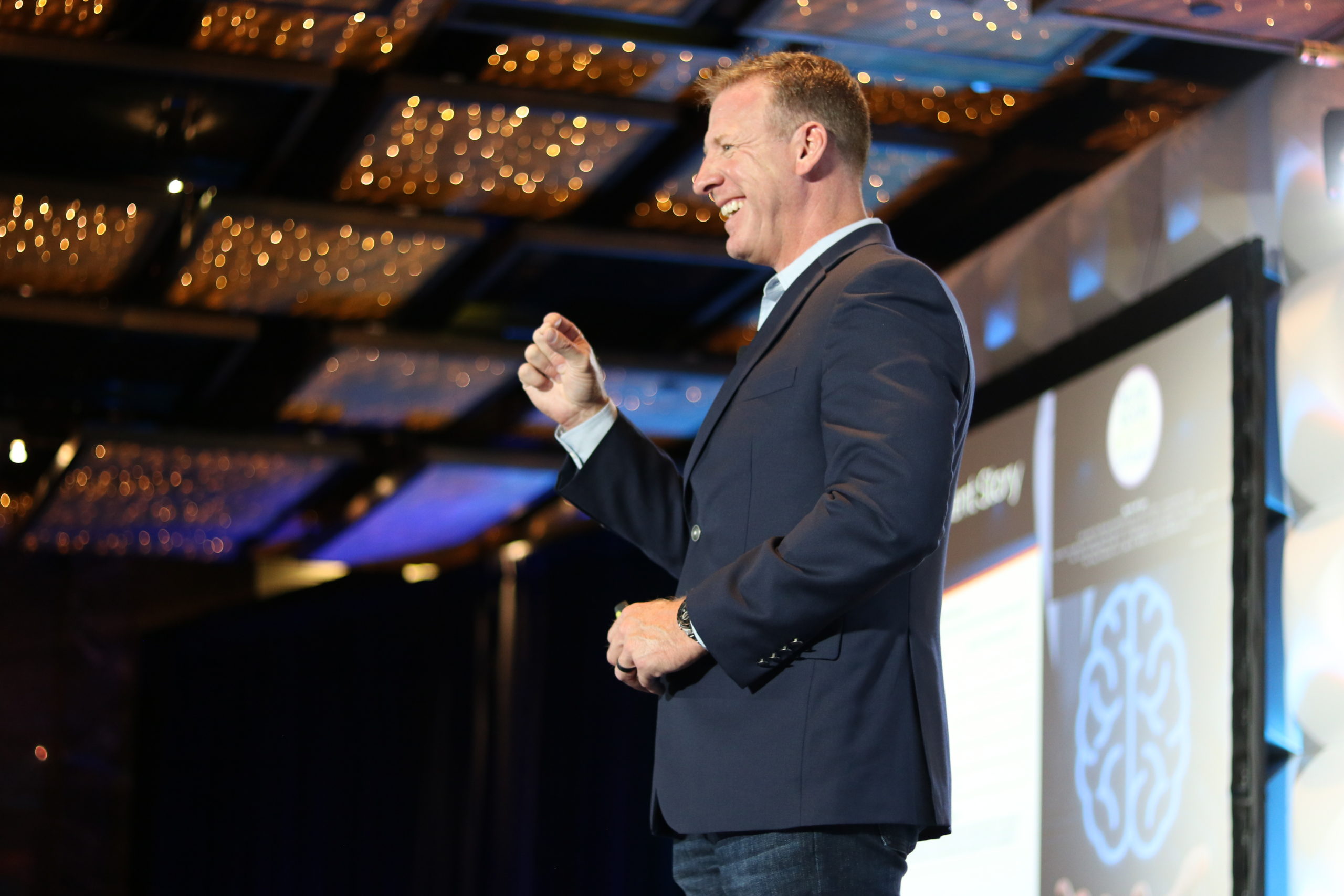
Jeff Bloomfield is a keynote speaker, Wall Street Journal bestselling author, and the founder of Braintrust. He has spent over 20 years helping Fortune 500 sales teams rewire how they communicate, using the neuroscience of trust, decision-making, and buyer behavior to drive results that training alone rarely produces. He speaks at corporate events, executive summits, and sales kickoffs across life sciences, financial services, software, and technology.
Experience Highlights
- 500+ keynotes delivered, rated the top speaker at virtually every event
- Wall Street Journal bestselling author
- Former biotech executive who led launches for genetic cancer therapies
- 20+ years of Fortune 500 client experience
Areas of Expertise
Retail and consumer goods sales teams face a buyer who is more distracted, more skeptical, and more emotionally driven than the sales training decks acknowledge. Choosing the right sales keynote speaker for a CPG sales kickoff, retail buyer summit, or brand conference means finding someone who understands that the modern purchase decision, whether it is a retail buyer stocking a shelf or a consumer deciding between brands, is not won with features and data alone.
Why Retail and Consumer Goods Events Need a Specialized Approach
Retail and consumer goods selling happens at two levels simultaneously: the B2B relationship between a brand's sales team and retail buyers, and the B2C emotional decision a shopper makes standing in front of a shelf. A sales keynote for this industry needs to speak to both, because the reps in the room are often trying to win trust with a retail buyer while also understanding the emotional psychology that ultimately drives the consumer sale downstream.
Buyer psychology, as it applies to retail and consumer goods, refers to the mostly unconscious, emotion-driven process behind purchase decisions, whether that decision is made by a retail category manager or an end consumer. Reps trained only on product features and pricing structure are working against how both audiences actually decide.
Key Challenges Retail and Consumer Goods Sales Teams Face
- Compressed decision windows. Retail buyers evaluate dozens of brand pitches in short meeting cycles, leaving little room for feature-heavy presentations.
- Consumer attention scarcity. With average attention span down to 8 seconds, both retail buyers and end consumers form snap judgments about trust and relevance.
- Loss aversion in category decisions. Retail buyers fear the downside of a bad shelf placement decision more than they value the upside of a great one, which changes how a pitch needs to be framed.
- Commoditization pressure. Many CPG categories are crowded with similar products, making trust and narrative the actual differentiators, not spec sheets.
- Rep turnover and onboarding speed. Retail and consumer goods sales organizations often ramp new reps quickly, leaving little time for deep sales methodology training.
What a Sales Keynote Should Address for Retail and Consumer Goods Teams
| Criterion | Why It Matters | What to Ask a Prospective Speaker |
|---|---|---|
| Buyer psychology grounding | Retail buyers and consumers both decide emotionally first, logically second | Does the talk explain the neuroscience behind the decision, not just tactics? |
| First-impression science | 0.07 seconds is enough to form a first impression that shapes the entire pitch | Does the speaker address how reps build trust in the opening moments of a meeting? |
| Loss aversion framing | Retail buyers weigh downside risk heavily in shelf and category decisions | Does the content teach reps how to address risk perception directly? |
| Category and brand relevance | Generic sales content rarely lands with CPG-specific buying cycles | Has the speaker worked with consumer goods or retail organizations directly? |
| Practical, repeatable frameworks | Fast-ramping sales teams need tools they can apply immediately | What specific language or framework does a rep walk away able to use? |
Jeff Bloomfield's Retail and Consumer Goods Experience
Jeff Bloomfield's client work includes Sunny Delight, where VP of Sales Eddie Young described the impact directly: "Jeff's scientific approach to decision making and the customer conversation has changed our approach forever." That kind of result, a measurable shift in how a consumer goods sales organization approaches the buyer conversation, is the standard Jeff's keynotes are built to deliver, not just a motivational moment on stage.
His NeuroSelling® methodology, Jeff's proprietary sales communication framework built on how the buyer's brain actually makes purchasing decisions, is particularly well suited to retail and consumer goods selling because it addresses the emotional, trust-based dynamics at play in both the B2B buyer relationship and the downstream consumer decision that relationship ultimately serves.
My Approach to This Audience
I show retail and consumer goods sales teams that the biggest mistake in their pitch is leading with features and pricing when the buyer, whether a retail category manager or an end consumer, has already made an emotional judgment about trust and fit before the logical argument even starts. My approach reshapes the buyer conversation from the first 90 seconds, building genuine trust and using strategic narrative to move buyers from resistance to commitment.
Reps leave my sessions with a specific, repeatable way to open a retail buyer conversation differently, not just motivation to sell harder. That distinction matters in an industry where the sales cycle repeats constantly and small shifts in the opening moments compound across hundreds of buyer meetings a year. Organizations exploring a sales keynote speaker for their next sales kickoff or buyer summit can expect content built around this exact dynamic.
How to Evaluate Sales Speakers for Your Retail or CPG Event
- Ask how the content addresses both B2B and B2C psychology. Retail and consumer goods sales sits at the intersection of both, and a speaker who only understands one side will miss half the room's reality.
- Confirm the talk goes beyond motivation into mechanism. Ask specifically what neuroscience or psychology principle underlies the frameworks being taught.
- Look for named, verifiable client results in retail or consumer goods specifically, not just general B2B sales experience.
- Check whether the content addresses loss aversion and risk framing, which are especially relevant to retail buyer decision-making.
- Request a customization call to align the keynote with your specific category, whether that is grocery, apparel, beauty, or another consumer goods segment.
Common Objections Retail Buyers Raise and What They Really Mean
Retail and consumer goods reps hear a familiar set of objections in almost every buyer meeting: not enough shelf space, the category is already full, this needs more data before we can commit. Traditional sales training treats these as arguments to be countered with better facts. Buyer psychology treats them as something else entirely, signals of unresolved risk that the rep has not yet addressed.
A buyer who says "we need more data" is often really saying "I am not confident enough in this decision to defend it internally yet." A buyer who says "the category is full" may be expressing loss aversion about removing an existing product more than genuine lack of interest in the new one. Reps trained to hear these objections at face value keep supplying more information, which rarely resolves the actual concern. Reps trained in buyer psychology learn to ask a different question entirely: what would need to be true for this decision to feel safe, then address that directly instead of piling on additional data points the buyer has not asked for.
Frequently Asked Questions
What makes a sales keynote speaker effective for retail and consumer goods events?
The most effective speakers for this industry understand both the B2B relationship between sales reps and retail buyers and the emotional psychology behind the end consumer's purchase decision. Jeff Bloomfield's NeuroSelling® methodology and direct consumer goods client experience, including Sunny Delight, make him well matched to this dual dynamic.
How is selling to retail buyers different from typical B2B sales?
Retail buyers often make faster decisions under significant loss aversion, since a poor shelf or category decision carries visible downside risk. A sales approach built around trust and emotional framing tends to outperform one built purely on feature comparisons and pricing.
What is NeuroSelling and how does it apply to retail and consumer goods sales?
NeuroSelling® is Jeff Bloomfield's proprietary sales communication methodology built on how the buyer's brain actually makes purchasing decisions, primarily through emotion, trust, and subconscious pattern recognition. In retail and CPG selling, this applies directly to how reps build credibility with buyers in short, high-stakes meetings.
How much of a retail buyer's decision is really emotional versus logical?
Research consistently shows that roughly 95% of purchase decisions are driven by emotion rather than logic, even in seemingly data-driven B2B categories like retail buying, which is why sales training focused only on specs and pricing tends to underperform.
What should a sales kickoff keynote for a CPG sales team focus on?
It should focus on practical, repeatable frameworks for building trust and addressing buyer psychology in the opening moments of a pitch, rather than general motivation. Reps in fast-cycling retail and CPG sales roles need tools they can apply the next meeting, not just inspiration.
How far in advance should we book a sales keynote speaker for a retail sales kickoff?
Most retail and consumer goods sales kickoffs book keynote speakers 4 to 6 months in advance, which also allows time for a pre-event discovery call to align the content with your specific product category and buyer dynamics.
Worth a Conversation
If you are planning a retail or consumer goods sales kickoff and want a keynote grounded in how buyers actually decide, it is worth a conversation.
Keynote Speaker
Jeff delivers keynotes at sales kickoffs, buyer summits, and revenue leadership conferences, combining neuroscience, storytelling, and real-world selling experience into sessions that move people and stick long after the event ends. Learn more about his sales keynote for corporate events.
