
What Should an AI Keynote Actually Cover for a Non-Technical Audience?
About
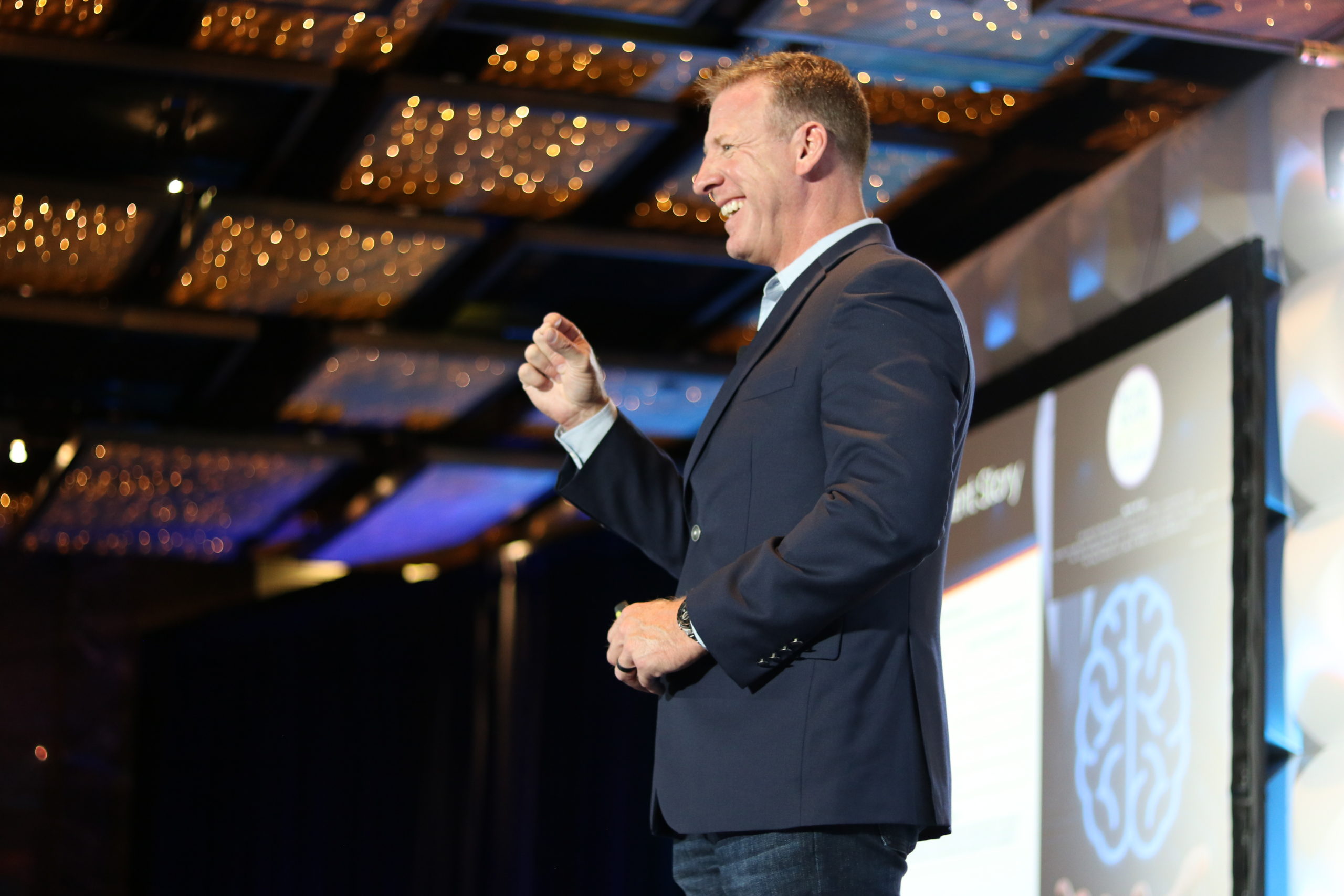
Jeff Bloomfield is a keynote speaker, Wall Street Journal bestselling author, and the founder of Braintrust. He has spent over 20 years helping Fortune 500 sales teams rewire how they communicate, using the neuroscience of trust, decision-making, and buyer behavior to drive results that training alone rarely produces. He speaks at corporate events, executive summits, and sales kickoffs across life sciences, financial services, software, and technology.
Experience Highlights
- 500+ keynotes delivered
- Wall Street Journal bestselling author
- 20+ years of Fortune 500 experience
- Founder of Braintrust
Areas of Expertise
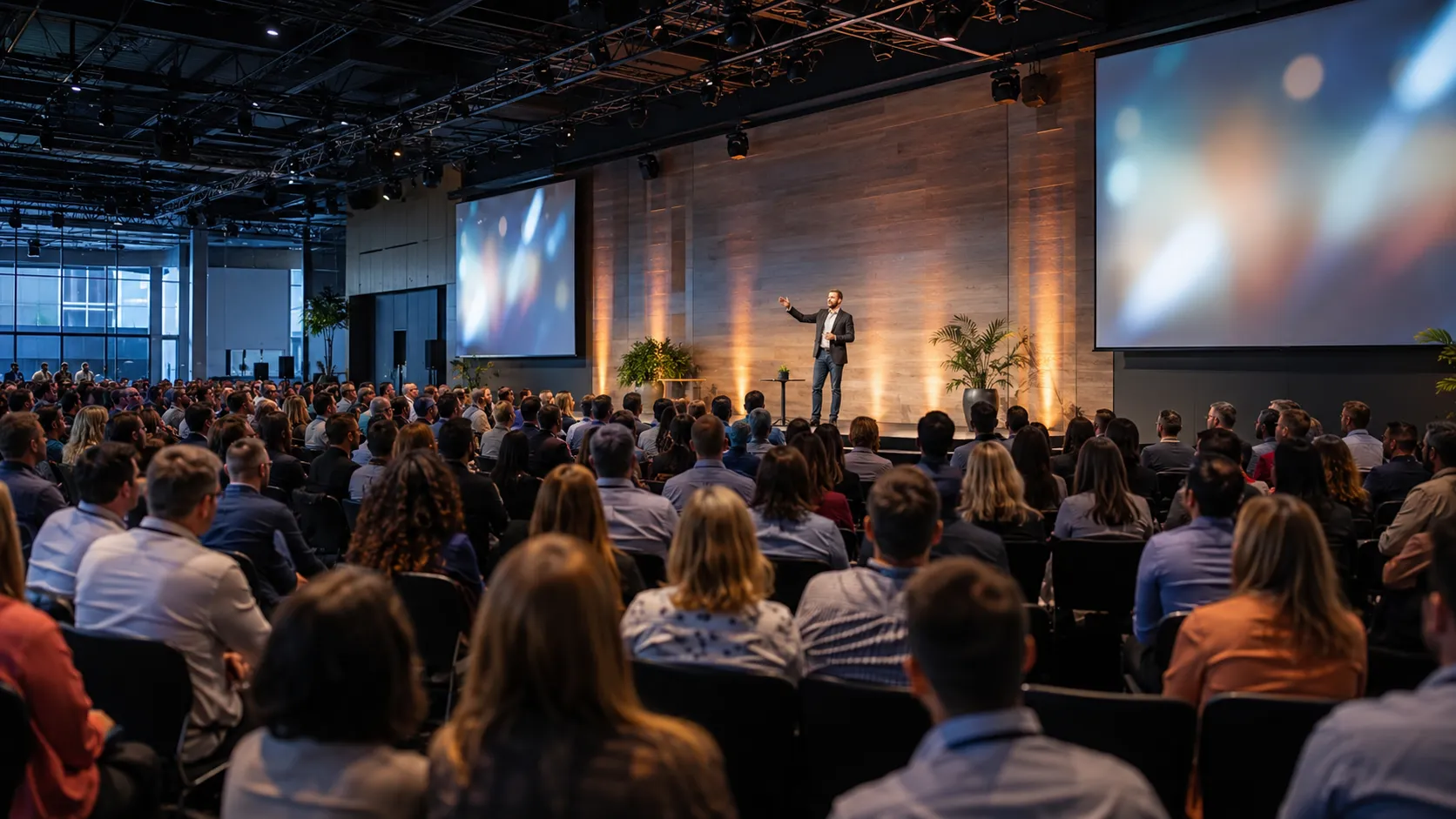
Most employees sitting in a corporate all-hands did not show up to hear about transformer architecture or the latest model release. They showed up because someone told them AI is about to change their job, and they want a straight answer about what that means for them. The right AI keynote for a non-technical audience is not a technology briefing. It is a conversation about change, judgment, and what stays uniquely human once the tools around us get smarter.
Understanding What a Non-Technical AI Keynote Should Actually Do
A non-technical AI keynote is a keynote built for employees who use AI tools but do not build them: customer service reps, finance teams, operations staff, HR, sales, and frontline managers. Its job is not to explain how large language models work. Its job is to translate what AI means for how people do their jobs, make decisions, and work with each other, in language that requires no technical background to act on.
That distinction matters more than most event planners realize. A keynote written for a technical audience measures success by how much the audience learns about the technology. A keynote written for a non-technical audience measures success by whether people leave with less anxiety and more clarity about what to do differently on Monday morning.
Why Generic AI Content Falls Flat With Non-Technical Employees
Most AI content aimed at corporate audiences is built by people who love the technology, for audiences who are worried about it. That mismatch shows up in three ways: too much jargon, too much hype about what AI can do, and almost nothing about what it means for the person sitting in seat 214. The result is a version of employee AI anxiety that never gets named, let alone addressed, which is exactly why so many AI town halls leave people more unsettled than when they walked in.
My approach to this starts with a simple assumption: the audience does not need to understand AI. They need to understand themselves, how their brain reacts to disruption, why uncertainty triggers a threat response before it triggers curiosity, and what it takes to move from resistance to engagement. Once people understand that reaction, the technology becomes a lot less frightening and a lot more workable.
Loss aversion, the tendency to fear losing something more than we value gaining something equivalent, explains a large part of why AI announcements land so badly inside organizations. Leadership sees efficiency. Employees hear "your role is at risk." A keynote that ignores that gap will lose the room in the first five minutes, regardless of how accurate the content is.
The Core Themes a Non-Technical AI Keynote Should Cover
A well-built AI keynote for a mixed, non-technical audience should move through five themes in this order:
- What is actually changing about daily work. Concrete, role-relevant examples, not abstract industry statistics.
- Why the anxiety is real, and where it comes from. Naming the fear directly does more to reduce it than avoiding the topic.
- What stays human. Judgment, relationship-building, trust, and complex decision-making do not disappear because a tool got faster.
- How to adopt AI without getting overwhelmed. Small, specific behaviors beat sweeping mandates.
- What leaders and teams need to communicate to each other during the transition. Change fails more often from bad communication than from bad technology.
I show audiences that the skills AI cannot replicate, empathy, persuasion, storytelling, and complex judgment under ambiguity, are the same skills that determine who thrives during any period of disruption. That reframes the entire session from a threat briefing into a skills conversation.
Tech-Centric vs. Human-Centric AI Keynotes
| Dimension | Tech-Centric Approach | Human-Centric Approach |
|---|---|---|
| Primary focus | How the technology works | How people adapt and decide |
| Audience takeaway | Impressed, sometimes overwhelmed | Informed, less anxious, has next steps |
| Tone | Futurist, feature-driven | Grounded, behavior-driven |
| Success measure | Novelty and demo reactions | Engagement scores, reduced uncertainty |
| Follow-through | Rarely translates to daily behavior | Built around specific, actionable habits |
Neither approach is wrong for every audience. A room full of engineers may want the tech-centric version. A corporate all-hands with finance, HR, sales, and operations in the same room needs the human-centric version, because that is the audience that actually has to change how it works.
Essential Criteria for Choosing AI Keynote Content
| Criteria | Why It Matters | How to Verify |
|---|---|---|
| Plain-language framing | Jargon shuts down non-technical listeners in the first two minutes | Ask for a sample outline and scan for undefined acronyms |
| Addresses anxiety directly | Avoiding the fear does not make it go away, it makes it louder | Confirm the talk names job security concerns explicitly |
| Customized to the audience's roles | A generic AI talk feels irrelevant to specific departments | Ask whether the speaker does a pre-event customization call |
| Gives practical next steps | Inspiration without action fades within a week | Look for a concrete framework or takeaway tool in the outline |
| Grounded in behavioral science, not just tech trends | Employees trust an explanation of their own reaction more than a forecast | Ask how the speaker frames the neuroscience of change |
How to Structure the Session
A non-technical AI keynote generally works best across five movements:
- Open with the real question in the room. Not "what is AI," but "what happens to me."
- Name the disruption honestly, using specific numbers and industry context rather than vague warnings.
- Shift to what stays human. This is the pivot point where anxiety starts to convert into curiosity.
- Give the audience a usable framework for how to think about AI in their specific role.
- Close with a call to action that individuals and managers can start using immediately, not a distant five-year vision.
"Jeff doesn't just talk about AI, he makes you rethink what it means to be human in the age of automation."
That reaction, from an attendee at one of Jeff's events, is the outcome a human-centric AI keynote is built to produce: less fear, more clarity about what actually matters when the tools change.
Formats and Session Options
| Format | Duration | Best For |
|---|---|---|
| Standard keynote | 45 to 60 minutes | Corporate all-hands, town halls, general sessions |
| Keynote plus live Q&A | 60 to 75 minutes | Leadership offsites, smaller executive audiences |
| Keynote plus workshop | Half-day | Organizations rolling out a specific AI adoption plan |
| Virtual keynote | 30 to 45 minutes | Distributed or hybrid workforces, multi-site companies |
Both virtual and in-person formats work for this topic, though in-person tends to produce stronger engagement when the goal is reducing anxiety, since the room reaction reinforces the message in real time.
Common Pitfalls to Avoid
- Leading with hype instead of relevance. Audiences tune out futurist predictions that never touch their actual job.
- Ignoring the anxiety in the room. Skipping the fear does not neutralize it, it just leaves people to sit with it unaddressed.
- Using one deck for every audience. A talk built for a tech company all-hands will not land the same way for a hospital system or an insurance carrier.
- Overloading the talk with jargon. If the audience needs a glossary to follow along, the content was built for the wrong room.
- Skipping the follow-through. A single session without reinforcement fades fast, especially on a topic this emotionally charged.
How to Measure the Impact Afterward
The clearest signals that an AI keynote worked are not applause or survey scores about the speaker. They are shifts in how employees talk about AI afterward: less catastrophizing in team meetings, more specific questions about tools and workflows, and managers reporting that their teams are willing to experiment rather than avoid the topic. Pairing a post-event pulse survey with manager check-ins over the following month gives a far more accurate read than a single satisfaction score collected at the exit doors.
Organizations that treat the keynote as the start of a conversation, not the end of one, see the strongest carryover. A dedicated AI keynote built around behavioral science, paired with a pre-event customization call, gives leadership a shared language to keep the conversation going long after the room empties. Jeff developed this human-centric lens through decades of work at Braintrust, applying the same behavioral principles behind NeuroSelling® and NeuroCoaching® to how people process disruption and change more broadly.
Frequently Asked Questions
What topics should an AI keynote for non-technical employees include?
It should cover what is actually changing in day-to-day work, why the anxiety around AI is legitimate, what human skills remain the differentiator, and specific, practical steps for adoption. It should avoid deep technical explanations of how the models themselves function.
How long should an AI keynote be for a corporate all-hands?
Most all-hands keynotes run 45 to 60 minutes, long enough to build the case for change and land a usable framework, short enough to hold attention in a large mixed audience. Adding a live Q&A segment extends that to 60 to 75 minutes and tends to increase engagement.
Should an AI keynote speaker have a technical background?
Not necessarily, and for a non-technical audience it can actually work against the speaker. What matters more is the ability to translate disruption into language people can act on and a grounding in how people actually process change, which is a communication and behavioral science skill rather than an engineering one.
How do you keep an AI keynote from causing more anxiety, not less?
Name the fear directly instead of avoiding it, then pivot quickly to what stays uniquely human and what specific actions people can take. I show audiences that the same skills that made them valuable before AI, judgment, empathy, and complex decision-making, are the skills that matter most now. Talks that skip the anxiety and jump straight to reassurance tend to feel dismissive rather than helpful.
Can an AI keynote be customized for different departments in the same audience?
Yes, and it should be. A talk built for a mixed audience of finance, sales, operations, and customer service needs examples that touch each of those roles, not one generic case study repeated for everyone. A pre-event customization call is the mechanism most keynote speakers use to build that relevance in.
What is the difference between an AI keynote and an AI training session?
A keynote builds shared understanding, reduces anxiety, and sets a common language across an entire organization in a single session. A training session teaches specific tools or workflows to a smaller group over a longer period. Many organizations use a keynote to open a broader AI adoption initiative, then follow it with department-level training.
How much does an AI keynote speaker cost for a corporate event?
Fees vary widely based on the speaker's experience, format, and event size, and most speakers provide a quote once they understand the audience size, format, and location. Comparing quotes side by side against what is included, such as a customization call or workshop add-on, gives a more accurate picture than fee alone.
If you are planning a corporate event and trying to figure out what an AI keynote should actually say to a room full of people who are not engineers, it is worth a conversation. Reach out to Jeff directly to talk through what that looks like for your audience.
Keynote Speaker
Jeff delivers keynotes at sales kickoffs, leadership summits, and corporate conferences, combining neuroscience, storytelling, and real-world selling experience into sessions that move people and stick long after the event ends.
