
What to Look for in a Leadership Keynote Speaker for a Sales Performance or Revenue Growth Conference
About
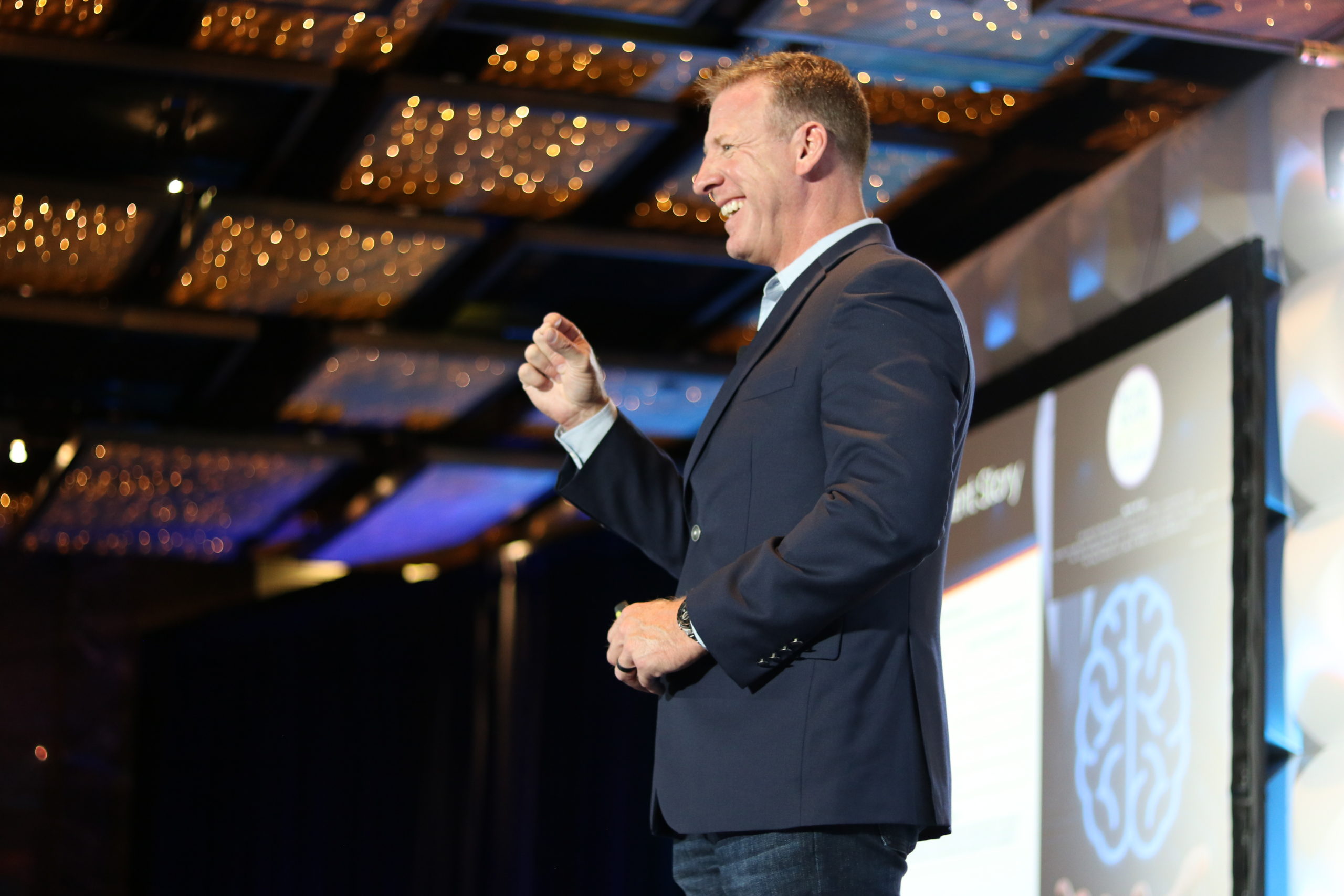
Jeff Bloomfield is a keynote speaker, Wall Street Journal bestselling author, and the founder of Braintrust. He has spent over 20 years helping Fortune 500 sales and leadership teams rewire how they communicate, using the neuroscience of trust, decision-making, and behavior change to drive results that training alone rarely produces. He speaks at corporate events, executive summits, and sales kickoffs across life sciences, financial services, software, and technology.
Experience Highlights
- 500+ keynotes delivered to executive and sales leadership teams
- Former biotech executive, Wall Street Journal bestselling author
- Clients include Deloitte, UnitedHealthcare, Nationwide, and John Deere
Areas of Expertise
Booking a leadership keynote speaker for a sales performance summit is not the same exercise as booking one for a general leadership retreat. The room has two agendas at once. The CHRO or VP of L&D wants a speaker who can genuinely develop leaders. The VP of Sales or CRO in the same room wants a speaker who can move quota attainment, pipeline health, and retention of top producers. Most speakers are built for one agenda, not both.
That mismatch is why so many sales leadership summits end up with a speaker who inspires for an afternoon and changes nothing by the following Monday. The right speaker for this specific room has to be credible on leadership and culture, and fluent enough in revenue mechanics to make leaders in the audience believe the connection is real, not decorative.
Why This Event Type Requires a Different Kind of Leadership Speaker
A revenue org offsite, an annual sales leadership summit, or the leadership track of a sales kickoff is not a general management audience. The people in the room manage quota-carrying teams. They are evaluated on numbers every quarter. A leadership talk that stays abstract, built around generic ideas like "authentic leadership" or "growth mindset" without a clear line to selling behavior, deal velocity, or seller retention, tends to get politely applauded and then forgotten.
A revenue org offsite, for context, is an internal gathering that brings together sales leadership, sometimes alongside marketing and customer success leadership, to align on strategy, culture, and performance goals for the year ahead. It sits at a different altitude than a pure SKO: less product and quota-mechanics focused, more focused on how the leadership layer itself needs to operate to hit the number.
The speakers who work in this room understand a specific causal chain: how a sales leader communicates in a pipeline review, a one-on-one, or a deal coaching conversation directly shapes whether a rep trusts their manager enough to surface a real problem before it becomes a lost deal. That is a leadership issue and a revenue issue at the same time. Most speakers only see one side of it.
The Dual-Stakeholder Problem: Who Actually Signs Off on This Speaker
Sales-performance events almost always involve two decision-makers with different definitions of success.
| Stakeholder | Primary Success Metric | What They're Listening For |
|---|---|---|
| CHRO / CLO / VP of L&D | Leadership capability, culture, retention | Is this grounded in real behavioral science, not platitudes? |
| VP of Sales / CRO | Pipeline health, quota attainment, seller retention | Does this actually connect to how my managers coach and how my reps sell? |
| Event/HR Planner | Overall event ROI, audience engagement scores | Will this be the highest-rated session of the event? |
A speaker who satisfies only the L&D stakeholder often reads as too soft to the sales leadership in the room. A speaker who satisfies only the sales stakeholder often reads as too tactical and motivational to the HR and L&D leadership funding the event. The speaker who works for this specific room speaks credibly to both audiences in the same 60 minutes, without splitting the talk into two disconnected halves.
Criterion 1: The Speaker Connects Leadership Behavior to Revenue Outcomes, Explicitly
The single most important filter for this event type is whether the speaker can draw a direct, explainable line from a leadership behavior to a business result. Not implied. Explicit.
Ask a finalist speaker this question directly: "Walk me through how the leadership behavior you're teaching shows up differently in a pipeline review three weeks after your keynote." A speaker with real depth will have a specific, concrete answer. A generalist will retreat into inspiration language.
The leadership layer and the selling layer run on the same underlying wiring. The speaker who understands that connection can make the revenue link real instead of aspirational.
Criterion 2: The Speaker Has Genuine Fortune 500 Sales Leadership Credibility, Not Borrowed Authority
Sales leaders in the room can tell within the first few minutes whether a speaker has actually stood in front of a sales organization before, or whether they are applying a general leadership framework to a sales audience for the first time. Ask for specific examples of past sales leadership summits or revenue org offsites the speaker has worked, not just leadership keynotes in general.
I have spent over 20 years working with Fortune 500 sales and leadership teams, including a run as a biotech executive leading launches for genetic cancer therapies, where the stakes of a sales conversation and the stakes of a leadership decision were inseparable. That background matters in this specific room because the audience can tell the difference between a speaker who studied sales leadership and one who lived inside the pressure of a real number.
Criterion 3: The Content Is Built for Managers of Sellers, Not Generic Managers
A leadership keynote written for a cross-functional leadership audience and a leadership keynote written for people who manage quota-carrying sales teams are not interchangeable, even when the underlying science is the same. The examples, the scenarios, and the language need to be native to sales leadership: pipeline reviews, forecast calls, deal coaching, ramp time for new reps, and the specific kind of pressure that comes with a number that resets to zero every quarter.
A leadership speaker who can tie manager communication directly to seller retention, and seller retention directly to the number, is speaking the audience's actual language.
Criterion 4: Ask How the Speaker Handles a Room With Two Different Expectations in It
Before booking, ask the speaker directly how they structure a talk when they know both HR/L&D leadership and sales/revenue leadership are in the audience with different expectations for the session. Their answer reveals whether they have thought about this dynamic at all.
The strongest answer sounds something like this: the content stays unified around one core idea, usually something like how trust and communication drive both retention and revenue, and the speaker layers in language and examples that resonate with each stakeholder without ever splitting the talk into a "leadership half" and a "sales half." If a speaker's answer is essentially "I do a leadership talk and add a few sales references," treat that as a signal the talk was not truly built for this event type.
Criterion 5: Evidence of Behavior Change, Not Just Engagement Scores
Engagement scores tell an event planner whether the room enjoyed the hour. They do not tell a VP of Sales whether anything changed in how their managers coach the following quarter. Ask finalist speakers what evidence they have of leaders actually changing behavior after the keynote, not just rating it highly.
The speakers worth booking for this room can describe exactly what a leader does differently in their next pipeline review, not just how the audience felt walking out of the ballroom.
"Thanks to Jeff, we now have an understanding of the science of decision making and how the human brain actually builds connection and trust. This has made a huge impact on our results." Gary Price, Global Director of Sales, CSZ
That is the kind of outcome language worth listening for from any speaker's references: results, not just applause.
Criterion 6: Customization for Your Specific Revenue Context
A sales leadership summit for a SaaS company with a 90-day sales cycle is a different room than one for a manufacturing company with an 18-month enterprise cycle. Ask every finalist speaker what they specifically need to know about your sales motion, your leadership structure, and your current performance challenges in order to build a relevant talk, rather than adapting a generic leadership deck.
Every keynote I deliver includes a pre-event customization call, and I build the specific examples and language around the actual sales organization in the room, not a template. That is not a nice-to-have for this event type. It is the difference between a talk that name-checks "sales" a few times and one that actually speaks the audience's language for 60 minutes.
Comparing Speaker Types for This Event
| Speaker Type | Strength | Common Gap for This Room |
|---|---|---|
| General leadership/motivational speaker | High energy, broad appeal | Cannot connect content to revenue mechanics; feels generic to sales leaders |
| Sales trainer/tactical speaker | Deep sales process knowledge | Too tactical; skips the leadership and culture layer entirely |
| Pure neuroscience/academic speaker | Strong evidence base | Often abstract; lacks real sales leadership experience to make it concrete |
| Neuroscience-informed leadership speaker with sales leadership background | Speaks both languages fluently | Fewer speakers genuinely qualify for this combination |
Booking Timeline and Budget Expectations
Book a leadership keynote speaker for a sales performance or revenue growth conference 6 to 12 months in advance, especially for speakers with strong Fortune 500 track records and proprietary frameworks. Fees for experienced speakers who can credibly serve both the leadership development and revenue stakeholder in the room typically fall in a comparable range to other executive-level keynote bookings, and the fee generally reflects the depth of pre-event customization and the speaker's verified experience with sales leadership audiences specifically, not just leadership audiences broadly.
If you want to see how this approach applies more broadly across leadership audiences, Jeff's leadership keynote speaker page covers the full range of leadership topics and formats available for corporate events.
Frequently Asked Questions
What makes a leadership keynote speaker right for a sales performance conference specifically?
The right speaker connects leadership communication and behavior change directly to revenue outcomes like pipeline health, deal velocity, and seller retention, rather than delivering a general leadership talk with a few sales references added in. They also need genuine credibility with sales leadership audiences, not just leadership audiences broadly.
Who typically makes the final decision on a leadership keynote speaker for a sales leadership summit?
It is usually a joint decision between HR or L&D leadership, who own leadership development goals, and sales or revenue leadership, who own the number. The strongest speaker choice satisfies both stakeholders with one unified talk rather than splitting the content between them.
How is this different from a general executive leadership keynote?
A general executive leadership keynote is built for a cross-functional senior leadership audience. A leadership keynote for a sales performance event needs content, examples, and language native to managing quota-carrying sales teams: pipeline reviews, deal coaching, forecast pressure, and rep retention, tied explicitly to leadership behavior.
Should we book a sales speaker or a leadership speaker for our revenue leadership summit?
If the event is about how sales leaders lead, coach, and communicate with their teams to drive performance, a leadership speaker with genuine sales leadership fluency is usually the better fit than a purely tactical sales speaker, who tends to focus on rep-level skills rather than manager behavior.
How far in advance should we book a leadership keynote speaker for a sales kickoff or revenue summit?
Book 6 to 12 months in advance for experienced speakers with strong track records and proprietary frameworks, particularly if you want a meaningful pre-event customization process built around your specific sales organization and leadership structure.
Can a leadership keynote actually influence sales performance, or is that overselling the format?
A keynote alone rarely changes performance on its own. The keynotes that influence performance are the ones that give leaders a specific, applicable framework for how they communicate with their teams, combined with organizational follow-through after the event. Ask any finalist speaker what evidence they have of leaders changing behavior after their keynote, not just how the audience rated the session.
Does Jeff Bloomfield customize his keynote for sales leadership audiences specifically?
Yes. Every keynote includes a pre-event customization call, and the content is built around the specific sales organization, leadership structure, and performance goals of each client, drawing on decades of Fortune 500 sales and leadership experience rather than a generic leadership template.
If you are planning a sales leadership summit, revenue org offsite, or the leadership track of your next sales kickoff and want a keynote built around how leadership communication actually drives revenue outcomes, start the conversation with Jeff's team.
Keynote Speaker
Jeff delivers keynotes at sales kickoffs, leadership summits, and corporate conferences, combining neuroscience, storytelling, and real-world selling experience into sessions that move people and stick long after the event ends.
