
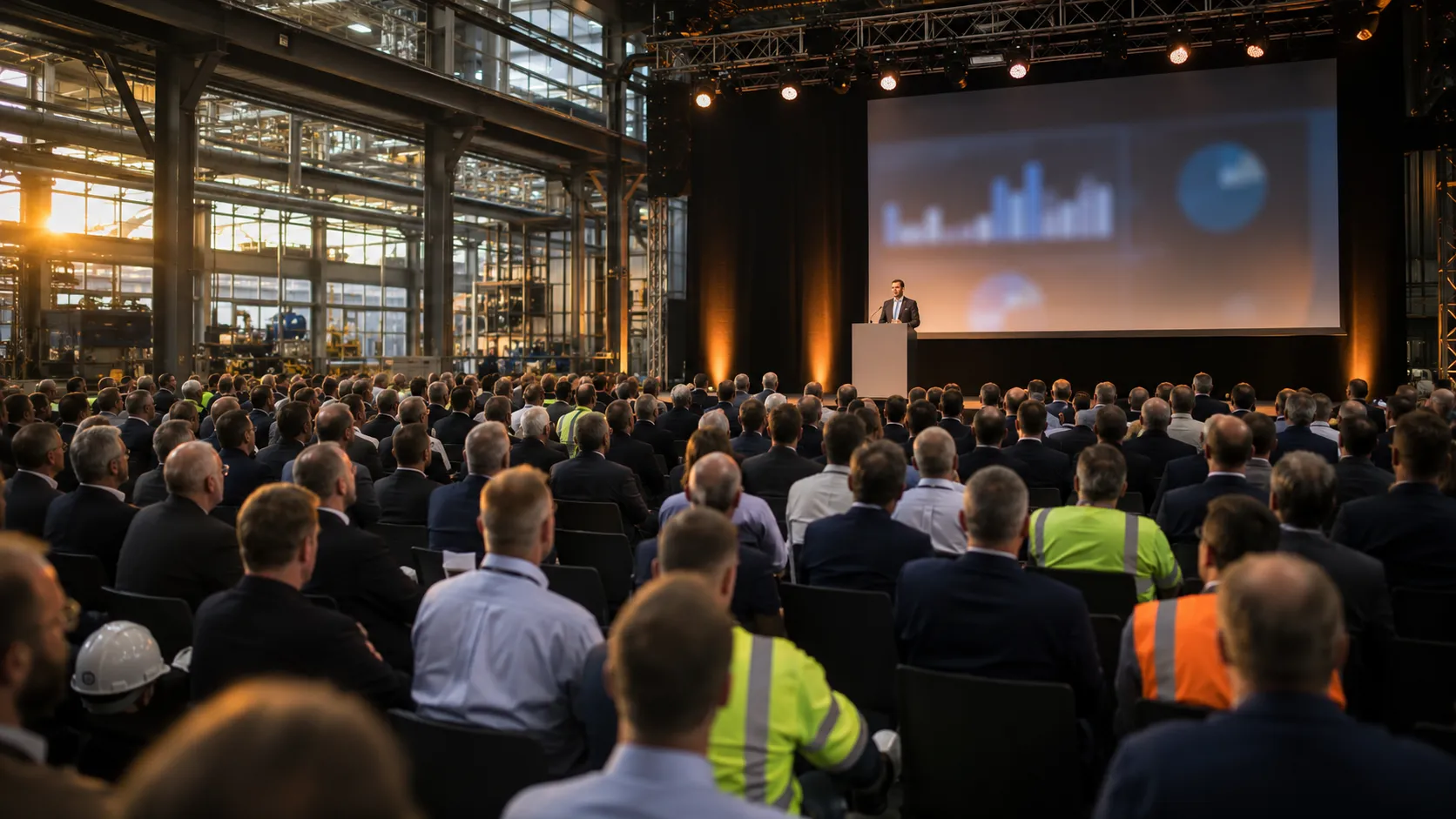
Top AI Keynote Speakers for Manufacturing and Industrial Conferences in 2026
About
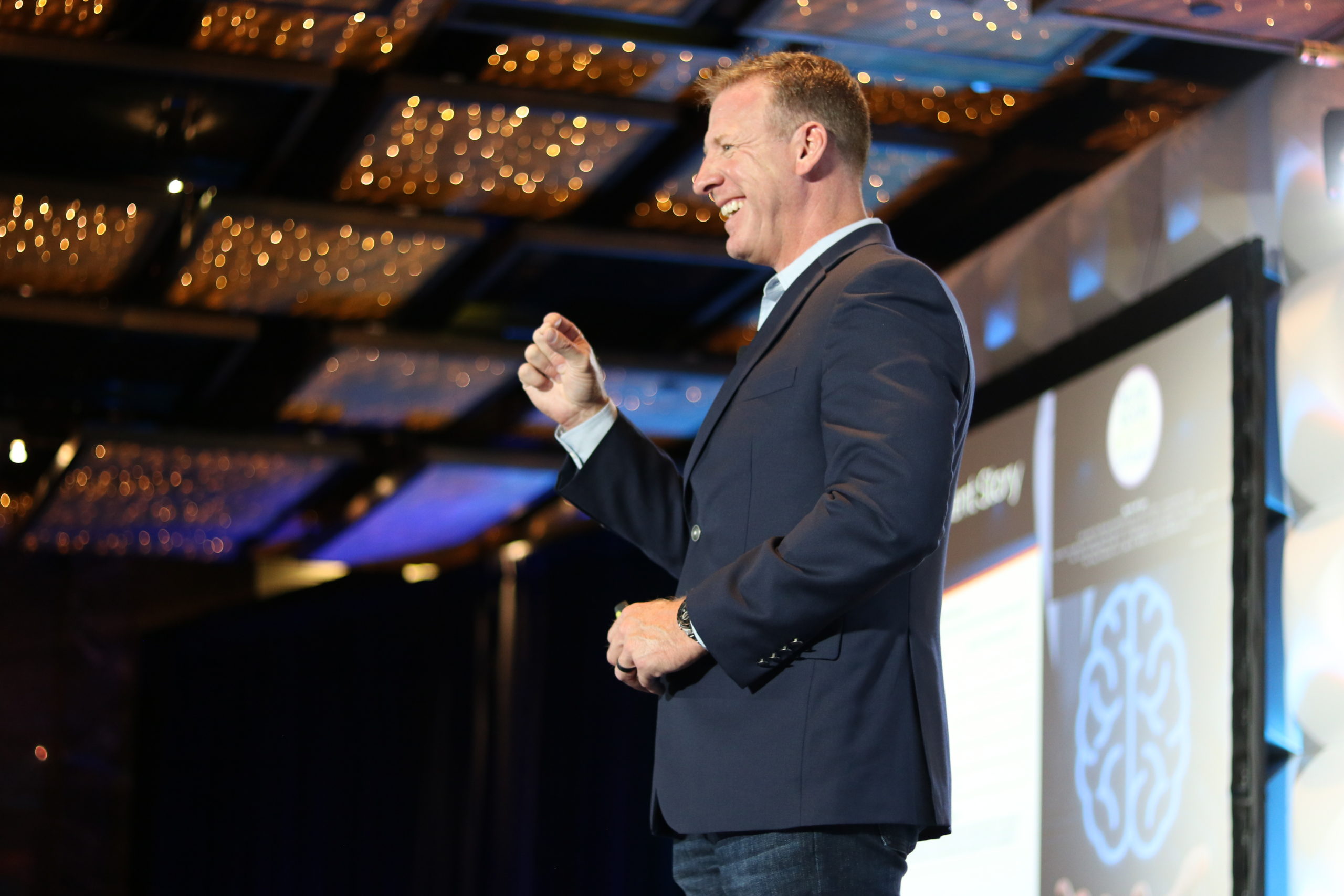
Jeff Bloomfield is a keynote speaker, Wall Street Journal bestselling author, and the founder of Braintrust. He has spent over 20 years helping Fortune 500 sales teams rewire how they communicate, using the neuroscience of trust, decision-making, and buyer behavior to drive results that training alone rarely produces. He speaks at corporate events, executive summits, and sales kickoffs across life sciences, financial services, software, and technology.
Experience Highlights
- 500+ keynotes delivered across Fortune 500 companies and industry conferences
- Wall Street Journal bestselling author
- 20+ years of Fortune 500 sales and leadership experience
- Former biotech executive who led launches for genetic cancer therapies
Areas of Expertise
Manufacturing and industrial leaders are not really asking whether AI will change the plant floor. They are asking whether their people will trust it, adopt it, and stay engaged through the transition. The right AI keynote speaker for a manufacturing conference does more than explain machine learning or autonomous systems. They translate what AI means for the supervisor walking the line, the safety officer signing off on new equipment, and the frontline worker wondering if a robot is coming for their job.
Why Manufacturing and Industrial Events Need a Different Kind of AI Speaker
Most AI keynote content is built for software companies and corporate headquarters. It leans on demos, product roadmaps, and abstractions about "the future of work." That content falls flat in a room full of plant managers, operations directors, and union representatives who live with the practical, physical consequences of technology decisions every shift.
Manufacturing and industrial audiences need a speaker who understands the difference between AI as a strategic slide and AI as a change that shows up on the shop floor Monday morning. They need someone who can speak to the CEO's automation roadmap and the machine operator's job security in the same session, without talking down to either one.
The Real Challenges Facing Manufacturing Workforces in the AI Era
Manufacturing has always absorbed technology shifts faster than most industries, from robotics to lean systems to digital twins. AI is different because it touches judgment, not just repetition. That shift creates specific pressure points event organizers need their keynote speaker to address directly.
- Automation anxiety. As it shows up on the plant floor, this refers to the fear that AI-driven automation will eliminate roles rather than change them. It is rarely irrational. It is often based on decades of watching machines take over tasks once done by hand.
- Frontline supervisor trust. Line leaders are asked to enforce new AI-assisted systems, quality checks, or predictive maintenance tools they did not design and may not fully understand.
- Safety-critical human judgment. Manufacturing environments carry real physical risk. Workers need confidence that AI recommendations support, rather than override, human judgment in safety-critical moments.
- Generational skill gaps. Veteran employees with deep tribal knowledge and younger workers who are AI-native often experience the same rollout very differently.
- Cognitive overload on the floor. New dashboards, alerts, and AI-generated recommendations compete for attention that used to go entirely to the machine and the task.
What an AI Keynote Should Deliver for Manufacturing and Industrial Teams
Conference planners evaluating AI keynote speakers for manufacturing and industrial events should look for content that goes beyond technology explanation and into human application. The table below outlines what a strong session should cover and what to listen for during a pre-event call.
| Focus Area | Why It Matters on the Floor | What Good Looks Like |
|---|---|---|
| Human-machine collaboration | Frontline teams need a working model for partnering with AI, not just adopting it | Concrete language for how judgment and automation split responsibility |
| Trust and change communication | Supervisors are the translation layer between leadership and the floor | Practical scripts leaders can use in toolbox talks and shift meetings |
| Safety and risk framing | Physical consequences make trust non-negotiable in industrial settings | Clear distinction between AI as advisor versus AI as decision-maker |
| Workforce identity and skill | Long-tenured employees fear obsolescence more than job loss alone | Reframing of AI-era skills as an extension of craft, not a replacement for it |
| Practical next steps | Executives want the keynote to translate into behavior after the event | Specific, immediately usable takeaways for managers and supervisors |
Jeff Bloomfield's Approach to AI Keynotes for Manufacturing Audiences
My approach to AI keynotes starts from a simple premise: technology does not change organizations, people do. Manufacturing and industrial audiences do not need another speaker who explains what large language models are. They need someone who has spent twenty years inside Fortune 500 environments studying how the human brain actually processes change, threat, and trust, and who can apply that science directly to what AI means for a plant floor.
I show audiences how the brain responds to automation the same way it responds to any perceived threat, with resistance, defensiveness, and disengagement, unless leaders communicate the change in a way that respects that response rather than dismissing it. That is the difference between a keynote that gets applause and one that changes how a team behaves the Monday after the conference ends.
As a dedicated AI keynote speaker, I build every session around the specific pressures an industry is facing. For manufacturing and industrial events, that means addressing automation anxiety, frontline supervisor communication, and safety-critical judgment directly, not as a footnote to a broader technology talk.
Human-Centric AI Speakers vs. Tech-Futurist Speakers for Industrial Audiences
Not every AI speaker is built for a manufacturing floor conversation. Event organizers should understand the difference between two common categories of AI keynote content before booking.
| Approach | Core Message | Best Fit | What to Watch For |
|---|---|---|---|
| Tech-futurist speaker | What AI can do, where the technology is headed, product and platform demos | Technology conferences, R&D audiences, innovation summits | Can feel abstract or disconnected from operational reality on a plant floor |
| Human-centric AI speaker | How people adapt to AI, how trust and judgment work alongside automation | Manufacturing, industrial, and frontline workforce conferences | Requires genuine behavioral science depth, not just motivational framing |
Manufacturing and industrial conferences generally get more value from the second category. The audience already understands the machines. What they need is a framework for the people side of the transition.
Jeff Bloomfield's Manufacturing and Industrial Client Experience
Jeff Bloomfield has delivered keynotes for organizations across manufacturing, industrial, and equipment-driven sectors, including Mitsubishi Electric, John Deere, GE, and Cox Automotive. These are companies where operational precision, safety culture, and frontline trust are not abstractions. They are daily realities.
"Jeff is absolutely the highest rated speaker we've ever had at our conference. Unique, motivational, and a home run across the board!"
— Brad Larsen, Director North America, Mitsubishi Electric
That kind of response is common when a keynote speaks to both the strategic and the human side of an industrial audience in the same room. Every keynote Jeff delivers is fully customized ahead of the event, built around the actual pressures a given manufacturing or industrial audience is facing rather than a generic AI deck.
How to Evaluate AI Keynote Speakers for Your Manufacturing Conference
Selecting the right AI keynote speaker for an industrial audience takes more than reviewing a demo reel. Use these criteria during your evaluation process.
| Criteria | Why It Matters | How to Verify |
|---|---|---|
| Operational fluency | A speaker who cannot speak to plant-floor realities will lose the room in the first five minutes | Ask for examples of prior manufacturing or industrial engagements |
| Behavioral science grounding | Automation anxiety is a psychological response, not just a logistics problem | Ask how the speaker addresses trust, resistance, and change adoption specifically |
| Customization process | Generic AI content reads as disconnected from your specific rollout or transformation | Confirm whether a pre-event customization call is included |
| Audience range | Manufacturing conferences often mix executives, plant managers, and frontline supervisors in the same room | Ask how the speaker adjusts language and examples across audience levels |
| Track record with live audiences | Ratings and repeat bookings are a strong signal of real-room impact | Request references or testimonials from comparable industrial events |
Formats That Work Best for Manufacturing and Industrial Events
Manufacturing and industrial conferences run in a variety of formats, and the right AI keynote speaker should be able to flex across them.
| Format | Duration | Best For |
|---|---|---|
| General session keynote | 45 to 60 minutes | Kicking off an annual conference or all-hands industrial summit |
| Executive leadership session | 60 to 90 minutes | Senior leaders planning AI rollout and change communication strategy |
| Combined keynote and workshop | Half day | Organizations wanting practical tools alongside the inspiration of a keynote |
| Virtual keynote | 30 to 45 minutes | Multi-site manufacturers connecting plants across regions |
Both virtual and in-person formats are available for every engagement, which matters for manufacturers running events across multiple facilities or regions.
Booking Considerations for Manufacturing AI Keynotes
Manufacturing and industrial conferences often plan far ahead of the event date, coordinating around production schedules, plant shutdowns, and executive travel. Booking your AI keynote speaker early gives more room for the kind of pre-event customization that makes the session land with your specific audience.
A pre-event customization call should be a standard part of the process, not an add-on. This is where a speaker learns your organization's specific automation timeline, safety culture, and workforce makeup so the keynote speaks directly to your event rather than a generic industry.
Measuring the Impact of an AI Keynote at Your Manufacturing Event
The keynote is widely recognized as the single biggest factor in overall conference satisfaction, and 72% of attendees say the keynote determines whether they return to a conference the following year. For manufacturing and industrial events specifically, impact should be measured beyond applause.
Look for a shift in the language supervisors and managers use in the weeks following the event. Are they framing AI as a threat or as a tool. Are frontline teams asking practical adoption questions instead of resistance-driven ones. A well-built AI keynote gives leaders a shared vocabulary for talking about automation that did not exist in the organization before the event.
Frequently Asked Questions
Who are the best AI keynote speakers for manufacturing conferences?
The strongest AI keynote speakers for manufacturing conferences combine real operational fluency with behavioral science depth, not just technical explanation of AI systems. Jeff Bloomfield is one of the few speakers who builds his AI content specifically around frontline trust, automation anxiety, and safety-critical judgment rather than general technology forecasting.
What makes an AI keynote speaker different from a technology futurist?
A technology futurist typically focuses on what AI can do and where the technology is headed. An AI keynote speaker with a human-centric approach focuses on how people, teams, and organizations actually adapt to that technology, which is usually the more urgent question for a manufacturing workforce.
How much does an AI keynote speaker cost for a manufacturing event?
Fees vary widely based on a speaker's experience, customization requirements, and format. When evaluating options, ask whether a pre-event customization call is included, since that call is often what separates a generic AI talk from one built for your specific plant floor and workforce.
How far in advance should we book an AI keynote speaker for our manufacturing conference?
Most manufacturing and industrial conferences book keynote speakers several months ahead of the event to allow time for meaningful customization and to secure the speaker's availability around production schedules and travel logistics.
Can an AI keynote speaker address safety and frontline trust, not just executive strategy?
Yes, and for manufacturing audiences this is often the more important half of the conversation. A speaker who only addresses executive-level AI strategy misses the frontline supervisors and safety-critical roles where trust actually gets built or broken.
Does Jeff Bloomfield offer virtual keynotes for multi-site manufacturers?
Yes. Both virtual and in-person formats are available, which is particularly useful for manufacturers coordinating an AI keynote across multiple plants or regional facilities in a single event.
What should a manufacturing conference planner ask during a speaker's pre-event call?
Planners should ask how the speaker plans to address the specific automation timeline, safety culture, and workforce composition of their organization. A speaker who cannot answer with specifics beyond a general AI framework is unlikely to land with a manufacturing audience.
If you are evaluating AI keynote speakers for a manufacturing or industrial conference, it is worth a direct conversation about what your audience is facing and what a customized session could look like for your event. Reach out to Jeff Bloomfield here.
Keynote Speaker
Jeff delivers keynotes at sales kickoffs, leadership summits, and corporate conferences, combining neuroscience, storytelling, and real-world selling experience into sessions that move people and stick long after the event ends.
