

Keynote Speaker vs. Sales Training: Which Format Drives Better ROI?
About
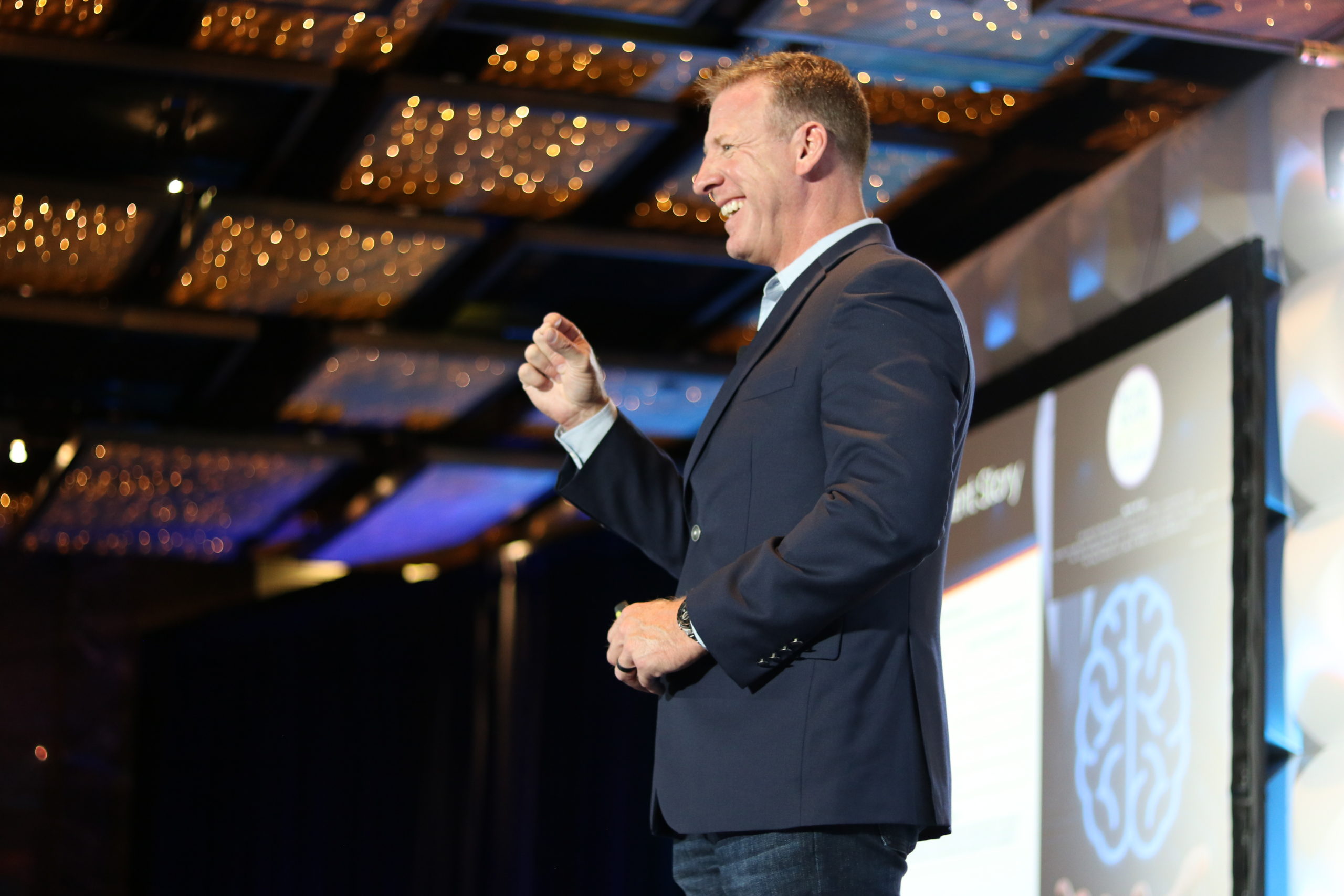
Jeff Bloomfield is a keynote speaker, Wall Street Journal bestselling author, and the founder of Braintrust. He has spent over 20 years helping Fortune 500 sales teams rewire how they communicate, using the neuroscience of trust, decision-making, and buyer behavior to drive results that training alone rarely produces. He speaks at corporate events, executive summits, and sales kickoffs across life sciences, financial services, software, and technology.
Experience Highlights
- 500+ keynotes delivered
- 20+ years of Fortune 500 sales experience
- Wall Street Journal bestselling author
- Founder of Braintrust
Areas of Expertise
Sales leaders planning a kickoff or annual investment in their team face a real budget decision: book a keynote speaker, fund an ongoing training program, or split the budget across both. Most vendors selling one format will tell you it beats the other. The truth is less convenient and more useful: a keynote and a training program solve different problems, and comparing their ROI in isolation misses how each one performs when it stands alone versus when it's sequenced correctly.
What Is a Sales Keynote?
A sales keynote is a single, high-impact presentation, typically 45 to 90 minutes, delivered to the full sales organization at a kickoff, summit, or all-hands event. It is built to create a shared emotional and intellectual starting point for the year, not to teach a granular skill in isolation.
| Characteristic | Detail |
|---|---|
| Format | Single speaker, large-group presentation |
| Duration | 45 to 90 minutes |
| Audience size | Works for 50 to 5,000+ reps |
| Primary goal | Emotional reset, shared mindset, unifying message |
| Delivery | In-person or virtual, one-time event |
| Cost structure | Flat fee per event |
The keynote's job is to shift how a room of sellers feels about the year ahead before anyone asks them to change a behavior. A good one gives reps language and a framework they can carry into the next conversation. A forgettable one gives them applause and nothing else.
What Is a Sales Training Program?
A sales training program is a structured, multi-session curriculum delivered over weeks or months, usually in smaller groups, with practice, feedback, and coaching built into the design. Where a keynote creates a moment, a training program builds a skill.
| Characteristic | Detail |
|---|---|
| Format | Multi-session curriculum, smaller cohorts |
| Duration | Weeks to months, often with coaching cadences |
| Audience size | Best at 10 to 50 participants per cohort |
| Primary goal | Skill transfer, behavior change, measurable practice |
| Delivery | Workshops, role-play, manager-led coaching, refreshers |
| Cost structure | Per-participant or per-cohort licensing |
Training works because it forces repetition. Reps get corrected in real time, practice the exact language they'll use on a call, and build muscle memory a single presentation cannot produce on its own.
Side-by-Side Comparison: Keynote vs. Training Program
Here is how the two formats stack up across the dimensions sales leaders actually weigh when they're deciding where the budget goes.
| Dimension | Sales Keynote | Sales Training Program |
|---|---|---|
| Cost | Lower total spend, one flat fee | Higher total spend, scales with headcount and duration |
| Timeline to impact | Immediate emotional shift, same day | Gradual, measured over weeks to a quarter |
| Retention without reinforcement | Fades within weeks if not reinforced | Builds durable skill if practiced consistently |
| Buy-in and emotional engagement | High, built for a large room at once | Lower initial energy, builds through repetition |
| Best measured by | Engagement, energy, quotes reps repeat afterward | Win rate, ramp time, discounting behavior, quota attainment |
| Ideal group size | Works at any scale, including thousands | Most effective at 10 to 50 per cohort |
Neither column wins outright. A keynote wins on speed and shared energy. A training program wins on durable skill. The mistake most sales leaders make is treating this table as an either/or scorecard instead of a sequencing map.
When to Choose a Keynote
A keynote is the right call when the goal is to reset how the team thinks and feels before asking them to do anything differently. Consider it when:
- You're opening a sales kickoff and need the entire org aligned on one message at once
- Morale, trust in leadership, or belief in a new direction needs a jolt before a rollout
- You're launching a new strategy, product line, or comp plan and need buy-in fast
- Budget or timeline doesn't allow for a multi-week program this cycle
- You already have a training curriculum in place but it has lost momentum and needs a spark
When to Choose a Training Program
A training program is the right call when the goal is measurable skill change that shows up in pipeline metrics. Consider it when:
- Specific behaviors, like discovery questioning or discounting discipline, need to change and stick
- Ramp time for new hires is too long and needs a structured curriculum to shorten it
- Win rates or deal cycle length point to a skill gap, not a motivation gap
- Managers need a shared coaching language to reinforce behavior between sessions
- The organization has the runway to invest weeks or months, not just a single event day
The Real Question Isn't Either/Or, It's Sequencing
Framing this as a competition misses what actually drives ROI. The research is consistent on one point: a keynote alone, without reinforcement, fades fast. A training program alone, without an emotional reset first, often struggles to get full buy-in from reps who show up skeptical or burned out from the prior year.
My approach is built around treating the keynote as the unlock, not the whole program. A keynote that lands well changes how a room of sellers feels about the year, their leadership, and their own ability to close the gap in front of them. That emotional shift is what makes reps want to sit through the training sessions that follow, rather than treating them as one more mandatory box to check.
Why a Keynote Alone Fades Fast
A single presentation, no matter how well delivered, competes with everything a rep has to do the following Monday. Without a follow-up mechanism, the energy in the room dissipates as pipeline pressure, quota anxiety, and daily habits reassert themselves. Retention, in this context, refers to how much of a message survives contact with a rep's actual workweek. A keynote with no reinforcement plan is optimized for the room, not the quarter.
Why Training Alone Often Fails to Get Buy-In
Training programs fail for a different reason. Reps who walk into a curriculum without an emotional reset often see it as compliance, not opportunity. Loss aversion is 5x stronger than the desire for gain, which means sellers who feel like training is being done to them, rather than for them, will resist even well-designed content. Skills training that starts from a place of skepticism has to fight the room before it can teach the room anything.
How to Combine Both for Maximum ROI
The sequencing that works best in practice looks like this: open with a keynote that resets the emotional and psychological frame, follow within days or weeks with structured training that gives reps the specific skills and language to act on that reset, then build a coaching cadence so managers reinforce the material for the rest of the quarter.
I show audiences the neuroscience behind why this order matters. The brain has to feel safe and motivated before it's receptive to learning something that requires it to change a habit. Open with training and skip the reset, and you're asking a skeptical brain to absorb new information. Open with the keynote and never follow up, and you're asking an inspired brain to retain something it never got to practice. Sequenced correctly, each format compensates for the other's weakness. If you're evaluating a keynote as the front end of that sequence, my sales keynote speaker page walks through how that first session is built to set up everything that follows.
How to Measure ROI Across Both Formats
Sales leaders often ask how to justify the spend on either format to finance or the executive team. The honest answer is that keynotes and training programs should be measured differently, then tied together at the pipeline level.
| What to Track | Keynote | Training Program |
|---|---|---|
| Immediate signal | Post-event survey scores, engagement, quotes reps repeat | Attendance, completion rate, role-play scores |
| 30 to 60 day signal | Whether managers report reps using the language from the session | Skill checks, manager coaching notes, call recordings |
| 90 day signal | Cultural shift, retention of top performers | Win rate change, ramp time for new hires |
| Full-cycle signal | Whether the year's kickoff message is still referenced | Quota attainment, discounting behavior, deal cycle length |
The keynote is never going to move a win-rate number by itself in a spreadsheet. That's not its job. Its job is to make the training that follows land with a room that actually wants to be there.
Common Mistakes That Waste the Investment
A few patterns show up repeatedly when either format underdelivers:
- Booking a keynote speaker as a standalone event with zero plan for what happens the next Monday
- Launching a training curriculum without addressing why reps are skeptical of change in the first place
- Treating the kickoff keynote as entertainment rather than the first session of a longer arc
- Measuring a keynote against pipeline metrics it was never designed to move
- Letting months pass between the keynote and the first training session, losing the emotional momentum entirely
Frequently Asked Questions
Is a keynote speaker or a sales training program a better investment?
Neither is universally better. A keynote is the stronger investment when the goal is a fast, organization-wide emotional and strategic reset. A training program is the stronger investment when the goal is measurable skill change over time. Most sales organizations get the best return by sequencing a keynote first, then following with training while momentum is still high.
How much does a sales keynote speaker cost compared to a training program?
A keynote is typically a single flat fee for one event, which usually makes it the lower total spend up front. A training program's cost scales with the number of participants, the length of the curriculum, and whether ongoing coaching is included, so total spend is often higher but distributed across weeks or months.
How long does it take to see ROI from a keynote versus sales training?
A keynote produces an immediate shift in energy and buy-in, visible the same day. Training produces a gradual, measurable shift in skill and pipeline metrics, usually over 30 to 90 days. The two operate on different timelines by design, which is part of why comparing them on a single ROI number can be misleading.
Can a single keynote actually change how a sales team sells?
A keynote can change how a team thinks and feels about selling almost immediately, which matters because behavior change starts with belief. What it cannot do on its own is build the specific skills a rep needs to execute differently on a call. That requires practice, which is where a training program picks up where the keynote leaves off.
What is the best way to combine a keynote and sales training?
Open the kickoff or planning cycle with a keynote that resets mindset and creates a shared message, then follow within a few weeks with structured training that gives reps the specific language and practice they need to act on that reset. Build a manager coaching cadence afterward so the material keeps getting reinforced instead of fading after the first month.
How do I measure the ROI of a sales kickoff keynote?
Measure a keynote on the signals it's actually built to move: post-event engagement, whether managers report reps repeating the language from the session weeks later, and whether the kickoff message is still being referenced at the 90-day mark. Trying to tie a single keynote directly to a quarter's win rate usually understates its real contribution, which is setting up the training and coaching that follow.
Does Braintrust offer both keynote and training formats?
Braintrust's programs are built around the same sequencing principle discussed here: a keynote that resets mindset, paired with training and coaching that reinforces it. Jeff's keynotes are designed as the first session of a longer arc, not a standalone event, so the emotional shift they create has somewhere to go.
If you're weighing a keynote against a training investment for your team, it's worth a conversation about which one your organization actually needs first. Reach out to Jeff directly to talk through what the right sequence looks like for your sales team this year.
Keynote Speaker
Jeff delivers keynotes at sales kickoffs, leadership summits, and corporate conferences, combining neuroscience, storytelling, and real-world selling experience into sessions that move people and stick long after the event ends.
