
What Kind of Keynote Does a Sales Team Need After a Customer Trust Crisis?
About
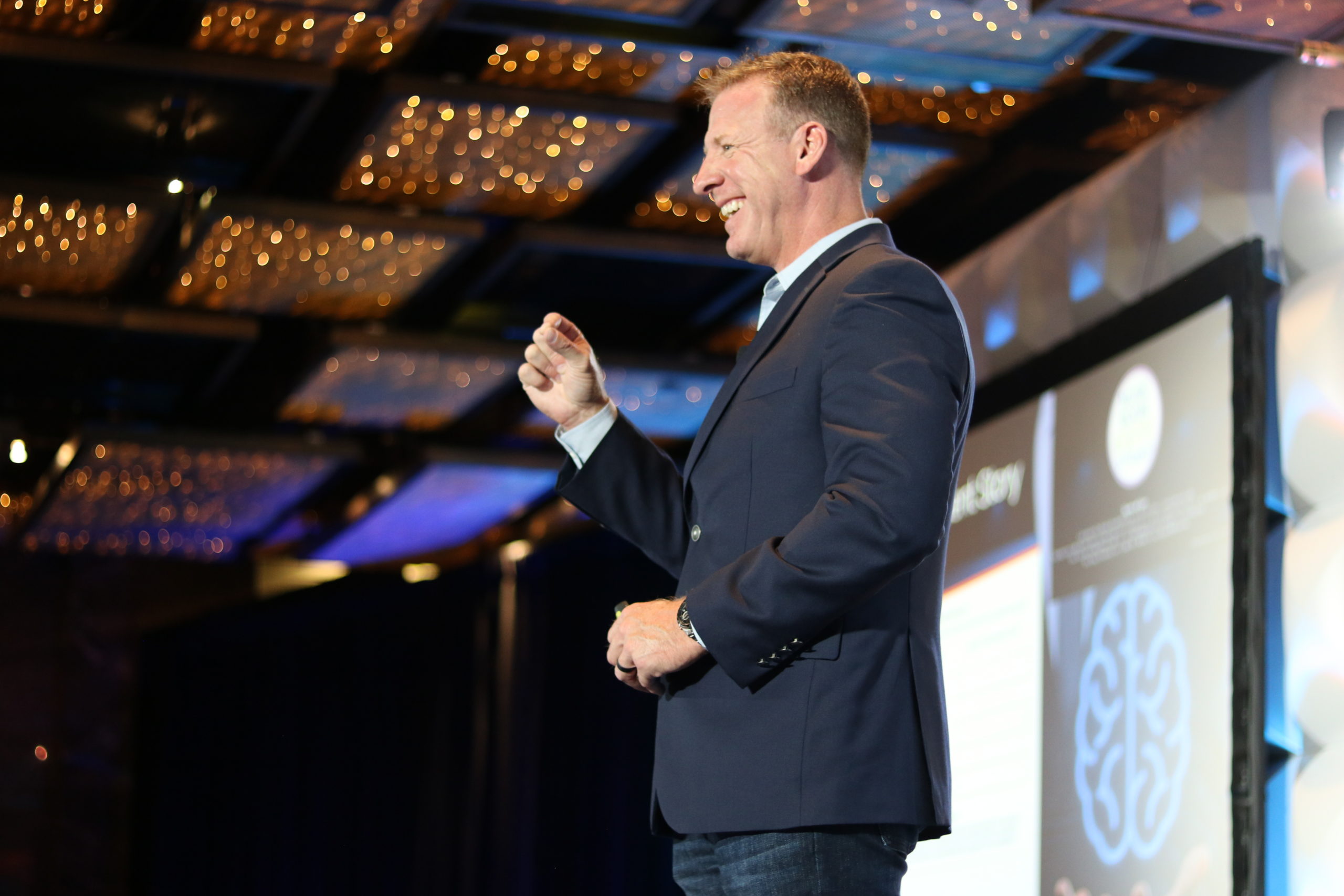
Jeff Bloomfield is a keynote speaker, Wall Street Journal bestselling author, and the founder of Braintrust. He has spent over 20 years helping Fortune 500 sales teams rewire how they communicate, using the neuroscience of trust, decision-making, and buyer behavior to drive results that last. He speaks at corporate events, executive summits, and sales kickoffs across life sciences, financial services, software, and technology.
Experience Highlights
- NeuroSelling methodology and enterprise adoption
- Trust-based selling at the executive level
- Sales transformation in complex, long-cycle industries
- Keynote speaking and executive coaching
Areas of Expertise
When something goes wrong for your customers, your sellers are the ones who take the calls. A major outage, a product recall, a security incident, a delivery failure, a quality problem that made the news. The company issues a statement. The sales team lives with the fallout for months.
If your company has been through a customer trust crisis and a sales kickoff or sales meeting is coming up, the keynote is one of the most important decisions on the agenda. This guide covers what that keynote needs to do, what it must avoid, and how to choose the speaker.
Why a Crisis Lands on the Sales Team
Customers rarely rebuild trust with a company. They rebuild it with people.
After a crisis, buyers want to know three things: Do you understand what happened to us? Will it happen again? Can I still defend this relationship to my own leadership? The seller is often the person they ask.
Your sellers carry their own questions too. Was I told the whole story? Can I stand behind what the company is promising now? Will customers I spent years earning walk away? A team carrying that doubt into customer conversations will show it, and customers will notice.
That's why the right keynote after a crisis isn't about the crisis. It's about trust.
How Trust Breaks and Rebuilds
Trust moves through four stages: predicted, earned, broken, and rebuilt. A crisis can move a long, stable relationship from earned to broken in a single day.
| Stage | What It Looks Like for a Customer | What Sellers Feel |
|---|---|---|
| Predicted | Early in the relationship, watching for risk | Cautious optimism |
| Earned | The vendor has delivered over time | Confidence and ease |
| Broken | The crisis hits. The customer questions the relationship | Defensiveness, guilt, avoidance |
| Rebuilt | Consistent action proves the relationship is still worth it | Steadier confidence than before |
Rebuilt trust isn't automatic, and it isn't a speech. It's earned through consistent behavior over time. A keynote helps the team understand that process so they can carry it into every conversation.
What Happens in the Customer's Brain
After a crisis, the customer's brain runs the same trust checks it always does. They just run harder.
- Safety comes first. The brain checks for risk before it weighs any explanation. Until the customer feels safe, the explanation barely registers.
- Losses loom larger. Loss aversion is 5x stronger than the desire for gain. The disruption feels heavier than years of good service.
- Consistency gets watched. Reliability is proven with consistency. Customers are watching whether what sellers say now matches what happens next.
None of this means customers will leave. It means they're deciding whether to stay based on trust, and the seller is the face of that trust.
What Happens in the Seller's Brain
Under pressure, sellers revert to old habits. In my keynotes, I call this the Behavior-Access Problem: they know what to do, but they can't access it when the stakes are high. After a crisis, those habits are easy to recognize:
- Avoiding calls with the most affected customers
- Over-apologizing until it sounds like the relationship is over
- Blaming another department to protect their own credibility
- Promising fixes they don't control
- Offering credits or discounts before the customer asks
Each move is human. Each one makes the customer feel less safe. For more on how trust breaks in a sales conversation, see what breaks trust in a sales conversation.
What the Keynote Needs to Do
A keynote after a crisis has a narrow, important job. It's not there to explain the incident or defend the company. It's there to help sellers understand how trust gets rebuilt and their role in it.
| Goal | Why It Matters | What the Keynote Addresses |
|---|---|---|
| Replace guilt with understanding | Sellers who feel responsible avoid the hard calls | How trust breaks and how it gets rebuilt |
| Reframe the customer's reaction | Anger and silence are trust signals, not rejection | The three conditions of trust |
| Name the pressure habits | Naming the pattern makes it easier to catch | The Behavior-Access Problem |
| Restore the team's own trust | Sellers need to believe in what they're representing | Why consistency rebuilds trust inside and outside the company |
| Give managers a shared language | Rebuilding takes months of reinforcement | A common vocabulary for account reviews and coaching |
The Three Conditions of Trust, After a Crisis
Trust is the brain's permission slip to buy, follow, change, speak up, and move forward. In my trust keynote, I break it into three conditions. Each one maps to a customer in the middle of a crisis.
| Trust Condition | What the Customer Needs Now | What the Keynote Helps Sellers See |
|---|---|---|
| Safety always comes before reasoning | To feel heard before hearing the fix | Why acknowledgment lands before any explanation |
| Reliability is proven with consistency | Evidence that promises are being kept, one at a time | Why follow-through outweighs a great apology |
| Trust is earned when the upside is clear | Confidence that staying is still the smart choice | Why missing confidence, not missing information, drives churn |
For a deeper look, see the three conditions of trust and what trust repair is.
What the Keynote Should Not Do
Some approaches can make a crisis worse.
- Spin. Sellers know what customers went through. A keynote that minimizes it costs the speaker and leadership credibility in the room.
- Talk about the incident itself. The facts, the root cause, and the remediation plan belong to your leaders, with legal and communications input. An outside speaker should never speak for the company on the incident.
- Hype. "Let's put it behind us!" energy can feel tone-deaf to sellers still fielding angry calls.
- Blame. A keynote that implies the sales team caused the problem, or should have prevented it, deepens the damage.
- Customer messaging from the stage. Account-specific talk tracks belong with sales leadership and enablement, where they can be tailored and approved.
When to Schedule the Keynote
Timing matters more after a crisis than almost any other time. These are planning patterns, not research findings.
| Timing | How It Works | Best Fit |
|---|---|---|
| After leadership addresses the facts | Leaders explain what happened and what's changing, then the keynote follows | Almost every situation |
| At the annual SKO | The keynote frames the year as a trust-rebuilding year | Crises in the second half of the prior year |
| At a sales leadership meeting first | Managers hear it before their teams | Large teams where managers carry the message |
| A dedicated virtual session | A shorter keynote for distributed teams | Fast timelines, ongoing recovery |
Avoid booking the keynote before the team has heard the facts from their own leaders. A speaker can't fill an information gap, and shouldn't try.
How to Choose the Speaker
Use these criteria to screen speakers.
- Their message is about trust, not resilience slogans. Ask what sellers will understand about trust when they leave.
- The content rests on real research. A shaken team needs substance, not reassurance.
- They take the moment seriously. The best speakers acknowledge the strain without dwelling on it.
- They won't speak for the company on the incident. Confirm this explicitly.
- They customize carefully. Ask how they handle confidential context on the pre-event call.
- They give managers something to reinforce. Trust is rebuilt over months, not in one session.
What to Share on the Pre-Event Call
Every booking with Jeff includes a pre-event customization call. After a crisis, come ready to share:
- What happened, at the level leadership has shared with the team
- What's confidential or under legal review
- Which customers and segments were most affected
- What sellers are hearing on calls, and how they feel about it
- What leadership has committed to fix, and the timeline
- What you want sellers to believe when they walk out
"Jeff not only inspired our leaders, but had everyone thinking differently about how we coach and communicate in every area of our company."
Matt E., CEO
Frequently Asked Questions
What kind of keynote should a sales team hear after a customer trust crisis?
A trust-focused keynote grounded in how people decide whom to believe. It should help sellers understand how trust breaks and rebuilds, why customers react the way they do, and why sellers fall into avoidance and over-promising under pressure.
Should the keynote speaker talk about the outage or recall?
No. Leaders should own the facts, the root cause, and the remediation plan, with legal and communications input. The keynote works best after the team has heard those facts, focusing on how trust gets rebuilt.
How soon after a crisis should we hold a sales keynote?
After leadership has addressed the facts and the plan, and before sellers face the hardest stretch of customer conversations. For many teams, that means the next SKO or a dedicated sales meeting.
Why do sellers avoid customers after a crisis?
Under pressure, people revert to protective habits. Jeff calls this the Behavior-Access Problem. Sellers who feel guilty or unsure avoid the most affected customers, often the ones who most need to hear from them.
Can a keynote rebuild customer trust on its own?
No. Trust is rebuilt through consistent action over time. The keynote helps sellers understand that process and their role in it, so every customer conversation supports the recovery plan instead of undercutting it.
Does Jeff Bloomfield customize a trust keynote for a sensitive situation?
Yes. Every booking includes a pre-event customization call, and Jeff works within what leadership has shared and what remains confidential. 100% of Jeff's talks are custom-built for the audience.
Should we hold the keynote for sellers only, or include customer success?
Many teams include customer success and account management, since they carry the same conversations. A shared session gives every customer-facing team one language for rebuilding trust.
If your team is rebuilding customer trust after a difficult year, let's talk about your event. Jeff will build the keynote around where your customers are now.
Keynote Speaker
Jeff delivers keynotes at sales kickoffs, leadership summits, and corporate conferences, combining neuroscience, storytelling, and real-world selling experience into sessions that move people and stick long after the event ends.
