

How AI Keynotes Have Changed Since 2023, and What to Book for 2027
About
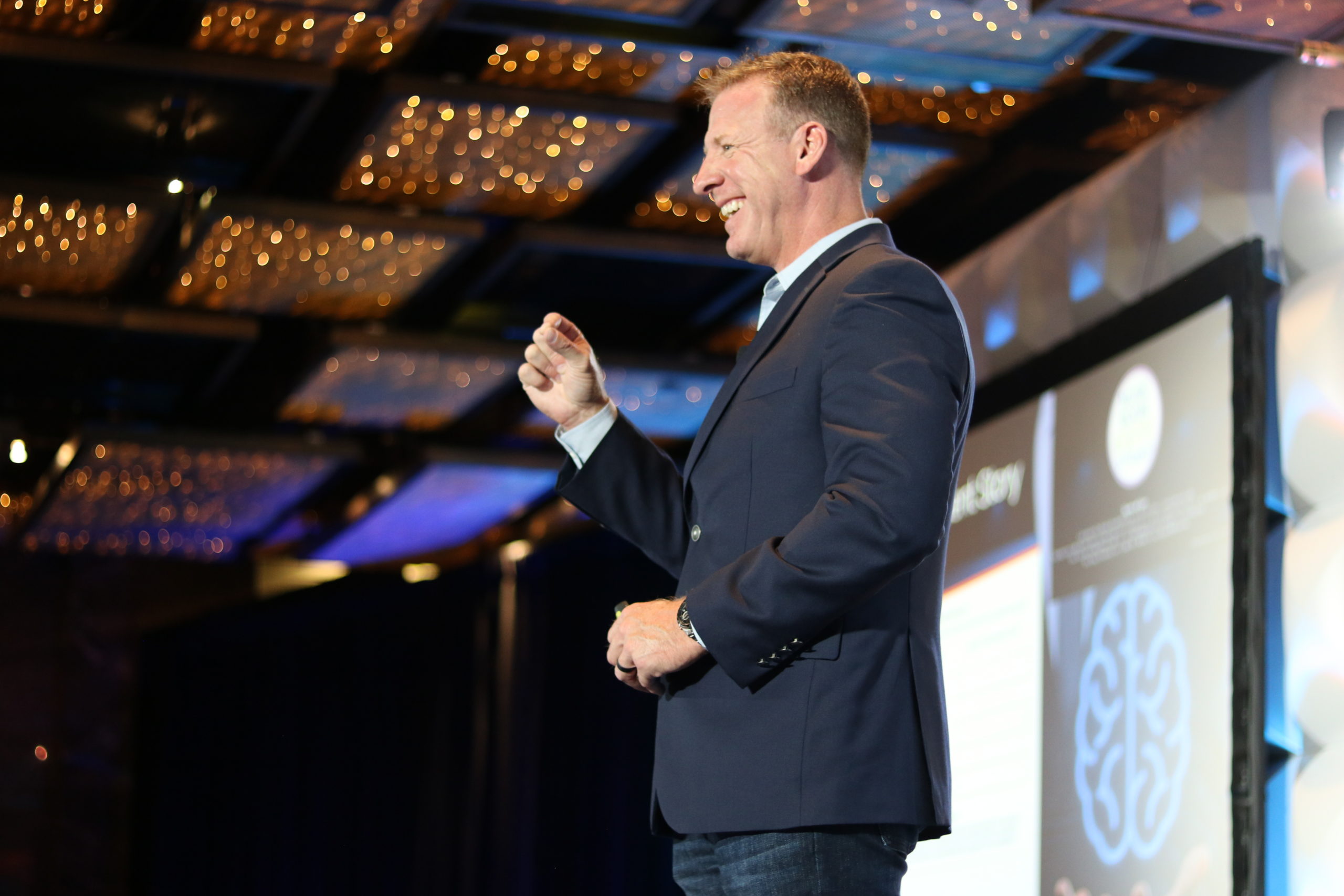
Jeff Bloomfield is a keynote speaker, Wall Street Journal bestselling author, and the founder of Braintrust. He has spent over 20 years helping Fortune 500 sales teams rewire how they communicate, using the neuroscience of trust, decision-making, and buyer behavior to drive results that last. He speaks at corporate events, executive summits, and sales kickoffs across life sciences, financial services, software, and technology.
Experience Highlights
- NeuroSelling methodology and enterprise adoption
- Trust-based selling at the executive level
- Sales transformation in complex, long-cycle industries
- Keynote speaking and executive coaching
Areas of Expertise
In 2023, almost any AI keynote could fill a room. The technology was new, the demos were startling, and audiences wanted to see what it could do. Heading into 2027, that same keynote would feel dated before the speaker finished the opening.
AI keynotes have changed fast because audiences have changed fast. If you're booking an AI keynote for a 2027 sales kickoff or conference, the question isn't whether to cover AI. It's which kind of AI keynote your audience is ready for now.
The Short Version
AI keynotes have moved through a clear arc. First came awareness: what is this? Then productivity: what can it do for us? Then adoption and anxiety: how do we roll it out, and what happens to us? The keynotes that hold up in 2027 answer a newer question: what stays human, and why does it matter more now?
The phases below are a general pattern in how AI keynote content has shifted for business audiences, not research findings. Your audience may sit in a different phase depending on how far along your company is.
How AI Keynotes Have Evolved
| Period | The Audience's Question | Typical Keynote | How It Ages |
|---|---|---|---|
| 2023 | "What is generative AI?" | Live demos, big predictions, awe | Dates quickly once everyone has used the tools |
| 2024 | "What can it do for us?" | Use cases, productivity, tool tours | Overlaps with vendor demos and internal enablement |
| 2025 | "How do we adopt it, and what happens to our jobs?" | Change, governance, workforce anxiety | Still relevant, but often heavy on fear |
| 2026 | "What do people do that AI can't?" | The human edge, trust, judgment | Strong, especially for customer-facing teams |
| 2027 | "How do we win when everyone has the same AI?" | Human differentiation in a world of equal tools | The most durable angle heading forward |
Phase 1: The Demo Era
Early AI keynotes ran on novelty. Speakers prompted a chatbot live, generated an image, and let the room react. For a while, that worked. Most audiences had never seen anything like it.
The problem is that novelty expires. Once your audience uses AI tools every day, a demo stops being a keynote. It becomes something they could have watched on their phone.
Phase 2: The Productivity Era
The next wave of AI keynotes focused on use cases: how teams could write faster, analyze more, and automate routine work. The content was practical, and many audiences needed it.
But productivity content overlaps heavily with what vendors, IT teams, and enablement programs already deliver. Tool walkthroughs fit better in breakouts and enablement sessions, where people can practice on the tools they'll actually use.
Phase 3: The Adoption and Anxiety Era
As companies rolled AI out, keynotes shifted toward change and workforce impact. Audiences wanted to understand what AI meant for their roles, and leaders wanted help getting adoption to stick.
This content still matters. But some keynotes in this phase leaned so hard on disruption that audiences left more anxious than equipped. For more on that balance, see how to frame AI for your workforce without creating fear.
Phase 4: The Human Edge
The strongest AI keynotes today ask a different question: as AI handles more of the work, what becomes more valuable about people?
For sales audiences, the data is clear on at least one answer.
And the preference for human interaction isn't fading. Gartner projects that 75% of B2B buyers will prefer sales experiences that prioritize human interaction over AI by 2030 (Gartner, 2025).
What to Book for 2027
When every competitor has access to the same AI tools, the tools stop being the advantage. The people using them become the advantage. That's the core of the AI keynote worth booking for 2027.
As a speaker, I make the case that AI raises the value of the most human parts of the sale: trust, judgment, and the ability to help a buyer feel safe making a decision. Buyers move when they trust the seller, feel the cost of inaction, and see a safe path forward. AI can inform all three. It can't create them on its own.
| What to Look For in a 2027 AI Keynote | Why It Matters |
|---|---|
| A clear point of view on what stays human | Audiences already know what AI can do |
| Connection to how customers buy | Customer-facing teams need to see where they add value |
| Grounding in research, not predictions | Bold forecasts age fast. Science holds up |
| Balance between opportunity and concern | Fear-heavy content leaves people stuck |
| Reinforceable language for managers | The message has to outlast the event |
Jeff's AI keynote is built around this human edge, framed for sales and customer-facing audiences.
How to Tell Which Phase Your Audience Is In
Before you book, figure out where your audience is. The right keynote meets them there.
| If Your Audience... | They're Likely In | The Keynote Should |
|---|---|---|
| Rarely uses AI tools at work | Early adoption | Build understanding without fear |
| Uses AI daily but inconsistently | Productivity | Connect tool use to the human work that matters |
| Feels uneasy about their role | Adoption and anxiety | Show where human value grows |
| Uses AI fluently with customers | The human edge | Sharpen what differentiates them from every competitor using the same tools |
For non-technical rooms, see what an AI keynote should actually cover for a non-technical audience.
Signs an AI Keynote Is Stuck in an Earlier Phase
Watch for these when you review a speaker's demo reel or session description:
- The keynote centers on live tool demos
- Most of the content is predictions about the next five years
- The speaker positions themselves mainly as a technologist
- The talk leans on disruption and job loss without a path forward
- Nothing in it connects to how your customers buy
None of these make a speaker bad. They make the keynote a better fit for an earlier phase than the one your audience is in. For more warning signs, see AI keynote speaker red flags.
Questions to Ask an AI Keynote Speaker Before You Book
A short conversation with each finalist usually tells you which phase their content lives in. Ask:
- What will our audience believe differently about AI when they leave?
- How much of the keynote is demos or predictions, and how much is about people?
- How will you connect the message to how our customers buy?
- How do you handle an audience that's anxious about AI?
- What language will our managers be able to reinforce afterward?
- How do you customize the keynote before the event?
Every booking with Jeff includes a pre-event customization call, so the keynote is built around your audience's phase, your customers, and the behavior you want to see after the event.
"Jeff doesn't just talk about AI, he makes you rethink what it means to be human in the age of automation."
Conference Attendee
Frequently Asked Questions
How have AI keynotes changed since 2023?
They've moved from demos and predictions, to productivity and use cases, to adoption and workforce anxiety, and now to the human edge: what people do that AI can't. The strongest 2027 keynotes focus on how people differentiate when everyone has the same tools.
What kind of AI keynote should we book for 2027?
Book a keynote that meets your audience where they are and focuses on what stays human. For sales and customer-facing teams, that means trust, judgment, and buyer behavior in an AI-informed buying process, not tool demos.
Are AI tool demos still a good fit for a keynote?
Demos fit better in breakouts and enablement sessions, where people can practice on the tools they'll use. A keynote slot works best for the perspective that makes those tools worth using well.
Is an AI keynote still relevant for sales teams in 2027?
Yes, if it's framed around the buyer. Gartner reports that 69% of B2B buyers still turn to a salesperson to validate AI-generated insights. An AI keynote for sales should show sellers where that human role matters most.
How do I know if an AI keynote speaker's content is current?
Ask what the audience will believe differently when they leave. If the answer is about what AI can do, the content may be dated. If it's about how people create value alongside AI, it fits where audiences are now.
Is Jeff Bloomfield a tech futurist?
No. Jeff is a keynote speaker grounded in neuroscience and human behavior. His AI keynote focuses on the human edge in sales and customer relationships, not technology predictions. See AI keynote speaker vs. tech futurist.
Should our SKO include an AI keynote in 2027?
Only if AI is changing how your buyers buy or how your sellers sell. If it is, the keynote should focus on what stays human in the sales conversation. Jeff customizes every keynote on a pre-event call to fit your team.
If you're planning an AI keynote for a 2027 event, let's talk about your audience. Jeff will build the keynote around where your people are now.
Keynote Speaker
Jeff delivers keynotes at sales kickoffs, leadership summits, and corporate conferences, combining neuroscience, storytelling, and real-world selling experience into sessions that move people and stick long after the event ends.
