

AI Keynote Speaker Red Flags: 7 Warning Signs to Catch Before You Book
About
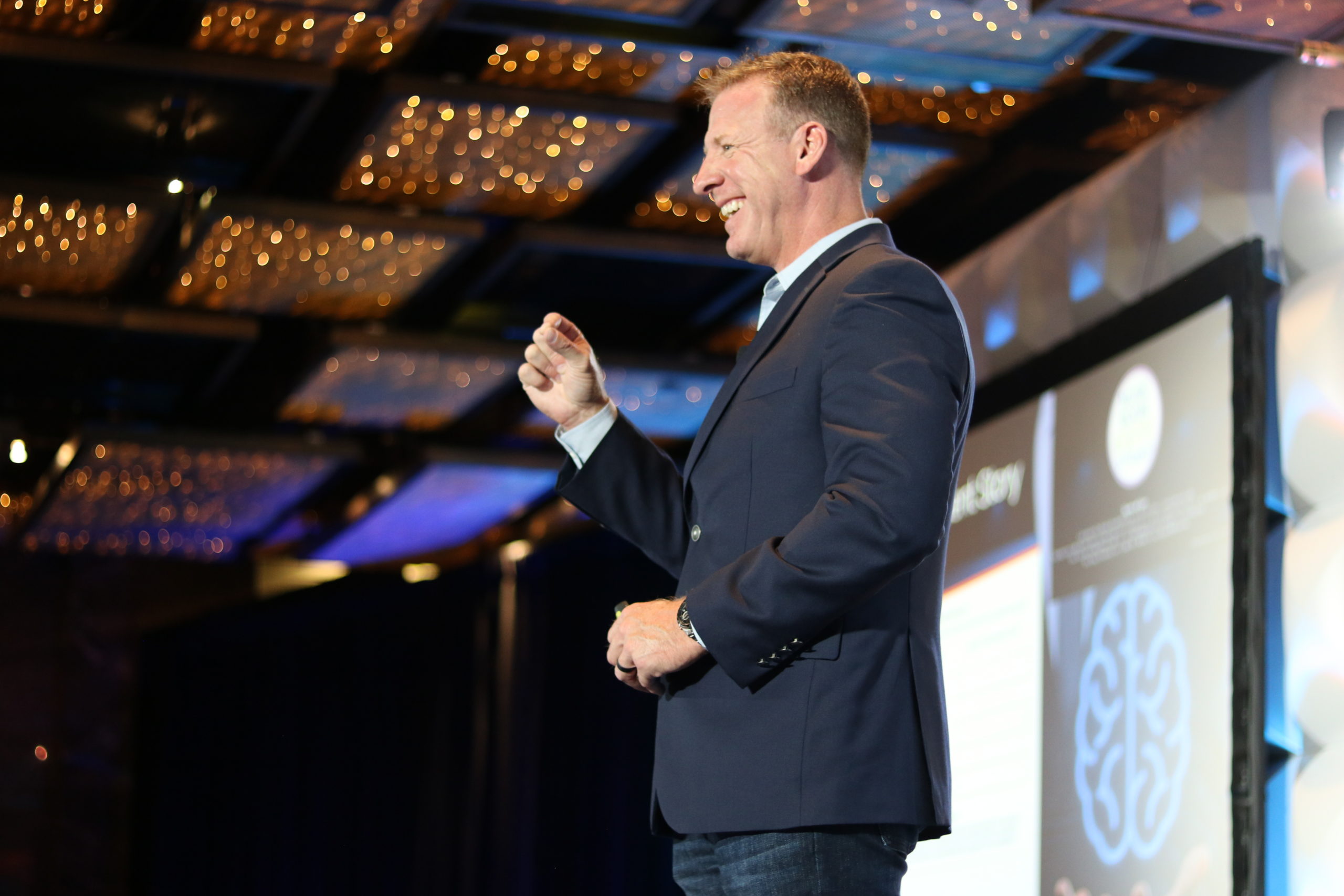
Jeff Bloomfield is a keynote speaker, Wall Street Journal bestselling author, and the founder of Braintrust. He has spent over 20 years helping Fortune 500 sales teams rewire how they communicate, using the neuroscience of trust, decision-making, and buyer behavior to drive results that last. He speaks at corporate events, executive summits, and sales kickoffs across life sciences, financial services, software, and technology.
Experience Highlights
- NeuroSelling methodology and enterprise adoption
- Trust-based selling at the executive level
- Sales transformation in complex, long-cycle industries
- Keynote speaking and executive coaching
Areas of Expertise
AI is the most requested keynote topic on many event calendars right now, and the supply of AI speakers has grown to match. That's good news for choice. It also means planners have to work harder to separate a talk that will help their audience from one that will leave them anxious, confused, or rolling their eyes.
This guide covers seven red flags to watch for, what each one looks like on a discovery call, and what to look for instead. It's written with sales and customer-facing audiences in mind, where the stakes of getting AI wrong are especially high.
Why AI Keynotes Need Extra Scrutiny
Most keynote topics change slowly. AI changes every quarter. That creates a few risks that don't apply to other topics:
- Content goes stale fast. A talk built a year ago may reference tools and claims that are already outdated.
- Hype is easy to sell. Big predictions draw applause in the room and confusion afterward.
- Audiences arrive anxious. Many attendees are worried about their roles, so tone matters as much as content.
- The topic attracts generalists. Plenty of speakers have added AI to their topic list without deep grounding in it.
None of this means AI keynotes are risky by default. It means planners should screen them a little more carefully. Here's what to look for.
The 7 Red Flags at a Glance
| Red Flag | What It Sounds Like | What to Look For Instead |
|---|---|---|
| 1. All prediction, no application | "By 2030, everything will change." | Clear ideas the audience can use now |
| 2. Fear as the hook | "Your job is next." | A grounded view of what stays human |
| 3. Tool demos as the keynote | "Let me show you 10 apps." | Principles that outlast any single tool |
| 4. One talk for every audience | "My AI talk works for anyone." | Content built for your room and industry |
| 5. No connection to your business | "AI is transforming the world." | A link to your customers and revenue |
| 6. Vague or missing sources | "Studies show..." with no detail | Named, current, credible research |
| 7. Can't talk about humans | All technology, no people | A clear view of trust, judgment, and relationships |
Red Flag 1: All Prediction, No Application
Futurism has a place. But a keynote that's all forecast and no application leaves the audience with nothing to do on Monday. Predictions are also the part of an AI talk most likely to age badly.
On a discovery call, ask what attendees will do differently after the session. If the answer is mostly about what the world will look like in ten years, the talk may be more spectacle than substance. For more on this distinction, see AI keynote speaker vs. tech futurist.
Red Flag 2: Fear as the Hook
Fear gets attention. It doesn't produce good decisions. When the brain senses threat, it shifts toward self-protection and away from learning. An audience that walks out scared is less likely to adopt new tools well, not more.
Listen for how a speaker opens. If the first few minutes are about job losses and disruption with no path forward, the session may drain the room rather than move it. Safety always comes before reasoning. An AI keynote should acknowledge real concerns, then give people a reason to lean in.
Red Flag 3: Tool Demos Dressed Up as a Keynote
Live tool demos can be fun. They also date quickly, vary in relevance by role, and often belong in a breakout or enablement session rather than on the main stage.
A keynote should deliver ideas that hold up regardless of which tools your company uses. Ask the speaker how much of the session is demo versus principle. If it's mostly demo, consider whether a workshop or your own enablement team is the better home for that content.
Red Flag 4: One Talk for Every Audience
Every speaker has a core message. That's fine. The red flag is a speaker who doesn't adapt it. An AI talk for a hospital system, a sales kickoff, and a manufacturing conference should not be identical.
Ask what the speaker needs to know about your audience before the event, and how the talk changes as a result. If they can't describe a real customization process, expect a generic session. See what an AI keynote should actually cover for a non-technical audience.
Red Flag 5: No Connection to Your Business
AI keynotes often stay at the level of "AI is changing everything." That's true and not very useful. Your audience needs to understand what it means for their customers, their roles, and your results.
For a sales audience, that connection is concrete. 69% of B2B buyers still turn to a salesperson to validate AI-generated insights (Gartner, 2026). Buyers are using AI to research, but they still want a trusted human to help them decide. An AI keynote for sellers should explain that shift and what it means for the sales conversation.
Red Flag 6: Vague or Missing Sources
AI is full of numbers that circulate without clear sources. A speaker who cites "studies" without naming them, or who uses statistics that sound too dramatic to be true, puts your event's credibility at risk.
Ask where the speaker's key claims come from. Good speakers can name their sources and explain them in plain language. They also know which claims are well supported and which are still emerging.
Red Flag 7: Can't Talk About Humans
The most useful AI keynotes aren't really about technology. They're about people: how humans decide, why they trust, and what stays valuable as machines take on more tasks. A speaker who can only talk about models and tools misses the part your audience cares about most.
How I Approach an AI Keynote
My AI keynote starts from the human side of the equation. I'm not a tech futurist and I don't do tool tours. My background is in neuroscience and in leading biotech launches, and my focus is on what happens in the brain when people face change, and what stays uniquely human as AI takes over more of the work.
For sales audiences, that means showing sellers why buyers still need a trusted human, even when they've done their own AI-assisted research. Trust is the brain's permission slip to buy. AI can speed up research, but it can't earn that permission. I show the room, live, how trust is built and why it matters more as buyers get more information, not less.
Every booking includes a pre-event customization call, so the talk reflects your industry, your audience, and where your company is with AI. More on the approach is on the AI keynote speaker page.
"I have never seen anyone combine storytelling, science and sales in such a unique way!"
Dave Nurre, VP of Sales, USI Insurance
Green Flags: A Quick Screening Checklist
Use this list on discovery calls. A strong AI keynote speaker will check most of these boxes.
- They ask about your audience, industry, and AI maturity before proposing a talk
- They can name what attendees will do differently afterward
- They cite specific, current sources for key claims
- They address fear honestly and then move the room forward
- They connect AI to your customers and your business results
- They spend as much time on human judgment and trust as on technology
- They can show you a full recent talk, not just a highlight reel
For a broader list, see 7 questions to ask a keynote speaker before you book. If you're weighing whether an AI session belongs at your kickoff at all, see should your sales kickoff include an AI keynote.
Frequently Asked Questions
What are the biggest red flags when hiring an AI keynote speaker?
The biggest red flags are talks built on predictions with no application, fear-based messaging, long tool demos, no customization, and vague sources. A strong AI keynote connects the topic to your audience's real work and to what stays human.
How do I know if an AI keynote speaker's content is current?
Ask when the talk was last updated and request a recent full recording. Ask how they keep content current between events. AI changes fast, so a good speaker updates material regularly and tailors it on a pre-event call.
Should an AI keynote include live tool demos?
A short demo can help, but a keynote built mainly on demos tends to date quickly. Principles about how people adopt AI and how trust works hold up longer. Detailed tool training usually fits better in a breakout or enablement session.
What should an AI keynote cover for a sales team?
It should cover how AI is changing buyer research, why buyers still turn to a trusted seller to validate what they find, and what stays human in the sales conversation. Jeff's AI keynote focuses on exactly that.
How do I avoid an AI keynote that scares my audience?
Ask how the speaker opens and how they handle job concerns. Look for a speaker who acknowledges real worries and then gives the audience a grounded, hopeful view of their role. Fear-based talks tend to drain the room.
Is Jeff Bloomfield a tech futurist?
No. Jeff is a keynote speaker whose AI talk is grounded in neuroscience and human behavior. He focuses on how people adapt to change and why trust and human judgment become more valuable as AI advances.
How do I evaluate an AI keynote speaker's demo reel?
Look past the energy and listen for substance: clear ideas, credible sources, and a connection to real audiences. See how to evaluate a keynote speaker's demo reel.
If you're screening AI keynote speakers and want a talk that leaves your team more confident, not more anxious, let's talk about your event.
Keynote Speaker
Jeff delivers keynotes at sales kickoffs, leadership summits, and corporate conferences, combining neuroscience, storytelling, and real-world selling experience into sessions that move people and stick long after the event ends.
