

What Kind of Keynote Speaker Should You Book for a Customer Conference?
About
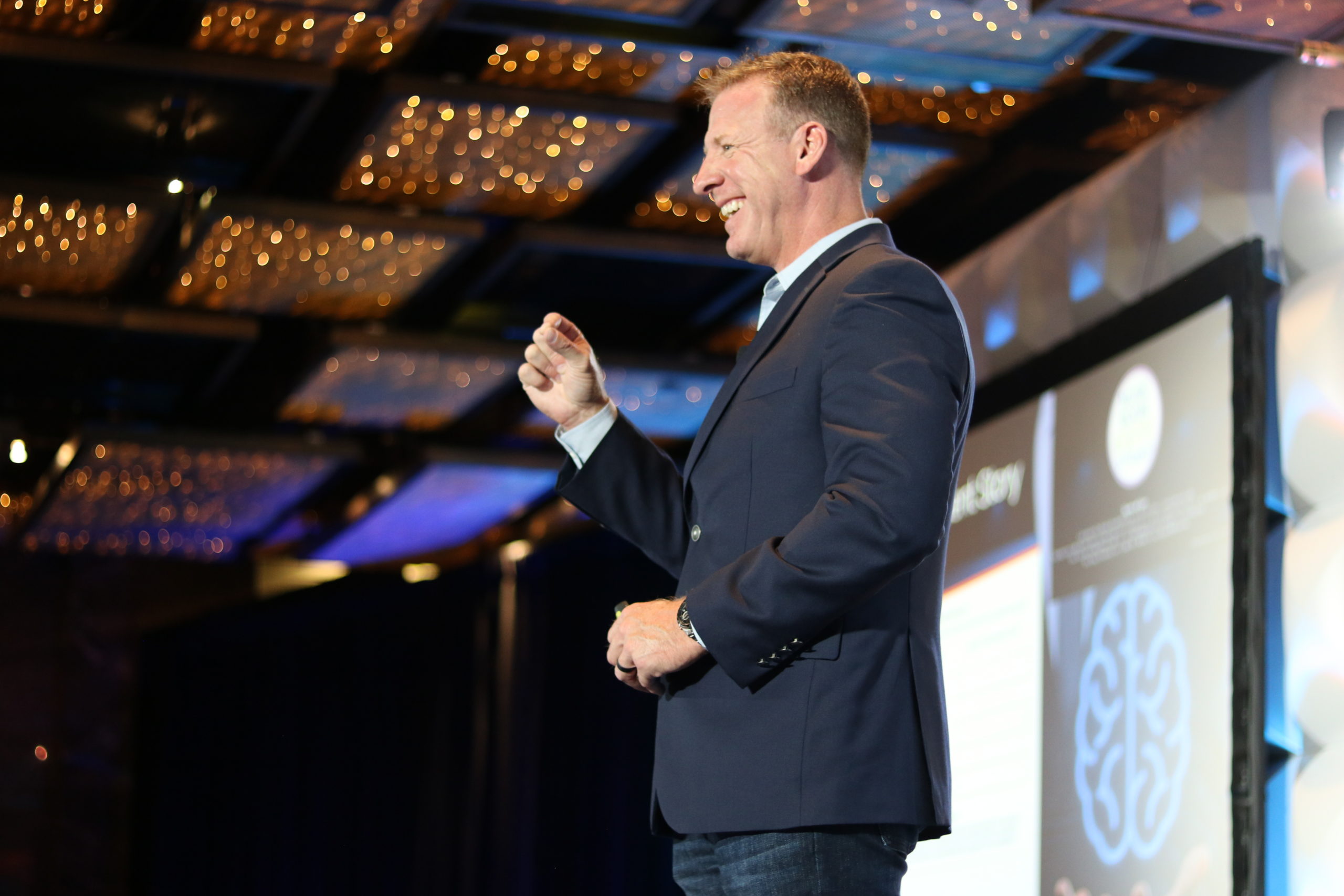
Jeff Bloomfield is a keynote speaker, Wall Street Journal bestselling author, and the founder of Braintrust. He has spent over 20 years helping Fortune 500 sales teams rewire how they communicate, using the neuroscience of trust, decision-making, and buyer behavior to drive results that last. He speaks at corporate events, executive summits, and sales kickoffs across life sciences, financial services, software, and technology.
Experience Highlights
- NeuroSelling methodology and enterprise adoption
- Trust-based selling at the executive level
- Sales transformation in complex, long-cycle industries
- Keynote speaking and executive coaching
Areas of Expertise
A customer conference looks like a celebration. Underneath, it's a trust test. Every customer in the room is quietly deciding whether you're still the right partner, whether to expand, and whether to recommend you to a peer. The keynote speaker you choose either helps that decision or gets in its way.
This guide covers what customers want from the main stage, why trust is the right lens for choosing a speaker, and how to screen the options.
Why a Customer Conference Is a Trust Event
A customer conference (also called a user conference, client summit, or customer advisory event) is an event a company hosts for its own customers. It usually includes product news, customer stories, training sessions, and at least one main-stage keynote.
On paper, the goals are education and community. In practice, the business case usually rests on retention, expansion, and advocacy. All three depend on trust. Customers renew when they believe you'll deliver. They expand when the upside is clear. They recommend you when they're confident it won't make them look bad.
That's why the keynote matters so much. It's often the moment with the most customers in one room, and it sets the emotional tone for everything that follows.
What Customers Want From the Main Stage
Customers didn't travel to your event to be sold. They came to get better at their jobs, see what's coming, and connect with peers. A keynote that respects that earns attention. A keynote that feels like a long ad loses it.
| What Customers Want | What Erodes Trust on Stage |
|---|---|
| Ideas they can use in their own work | A sales pitch dressed up as a keynote |
| A speaker with real expertise | A celebrity with no link to their world |
| Honesty about challenges in their industry | Hype and big promises |
| Something worth sharing with their team | A talk that only makes sense to your staff |
| A session that respects their time | An overlong, overproduced block |
Why a Trust Keynote Fits a Customer Conference
Most customer conferences book speakers on two tracks: a big-name draw to boost registration, or a topic expert tied to the product category. A trust-focused keynote offers a third option, and it serves both the customer and the host.
For customers, trust is directly useful. They're trying to win buy-in from their own executives, lead their teams through change, and build stronger relationships with their own customers. A keynote on how trust works in the brain gives them something they can apply right away.
For the host, the topic does quiet work. A speaker who explains how trust is earned, broken, and rebuilt models the kind of relationship you want with every customer in the room. The session itself becomes evidence that you care about their success, not just their renewal.
The Science Customers Respond To
Trust is the brain's permission slip to buy, follow, change, speak up, and move forward. In my keynote, I break it down into three conditions.
- Safety always comes before reasoning. The brain runs a fast safety check before it weighs any argument. If that check fails, nothing else lands.
- Reliability is proven with consistency. People follow whoever's behavior has held up over time, not the most impressive person in the room.
- Trust is earned when the upside is clear. Missing confidence, not missing information, usually blocks a decision.
I also walk through how trust moves through four stages: predicted, earned, broken, and rebuilt. Customers recognize every stage from their own work, and from their relationships with vendors. That recognition is what makes the session stick.
In a Princeton study, people judged a face's trustworthiness in about a tenth of a second. That speed is one reason first moments on stage, and first moments with customers, matter so much.
How a Trust Keynote Supports Revenue
A customer conference is a sales event, even if nobody calls it one. Account teams use it to deepen relationships, open expansion conversations, and line up references.
A trust keynote helps in two ways. It gives customers useful content, which makes the event feel worth their time. And it gives your own customer-facing teams a shared language for the conversations happening in the hallways. When your account managers and customers have just heard the same talk on trust, the follow-up conversation starts from common ground. For more on why buyers trust people before brands, see why buyers trust the rep more than the brand.
How to Choose the Right Speaker: Six Criteria
Use these to screen speakers for a customer conference.
- Their content is useful to your customers' work. Ask how the talk helps attendees with their own teams and their own customers.
- They won't sell from the stage. Not your product, not their own programs. The keynote should be a gift to customers.
- They have real research behind the message. Customers are professionals. They'll notice if the content is thin.
- They can speak to mixed roles. User conferences often draw executives, managers, and hands-on users in the same room.
- They customize to your customers. Ask what they'll want to know about your customer base, industry, and the year you've had together.
- Their message aligns with how you want to be seen. The keynote is part of your brand experience. Choose a message you'd stand behind.
See how to choose a trust keynote speaker for a deeper buyer's guide.
Matching the Keynote to the Moment
Different customer events call for different keynote emphasis. These are planning judgments, not research findings.
| Situation | What the Keynote Should Emphasize |
|---|---|
| A strong year with high satisfaction | Building on trust: how to deepen relationships and expand |
| A year with outages, delays, or price changes | Trust repair: acknowledging reality and showing a path forward |
| A major product launch | Trust in change: why people resist new things and what helps them adopt |
| A new customer base after an acquisition | Earning trust from people who didn't choose you |
| A first-ever customer conference | Setting the tone for the relationship you want long term |
If your company has had a hard year with customers, talk to the speaker about it directly. A trust keynote can acknowledge reality without making the event about the problem. See what trust repair is and how leaders rebuild credibility.
What to Share With the Speaker Before the Event
Every booking with me includes a pre-event customization call. For a customer conference, come ready to share:
- Who your customers are: industries, roles, and company sizes
- What the relationship looks like now, including anything hard
- What's being announced at the event and when
- Where the keynote sits on the agenda
- What you want customers to feel and believe when they leave
- Any topics to avoid, such as unannounced pricing or roadmap items
"Jeff's message is entertaining, engaging, and motivating, and he left a huge positive impression on the audience. It was truly one of the best sessions we've ever had!"
Andy Drennan, SVP, FPSA
Frequently Asked Questions
What makes a good keynote speaker for a customer conference?
A good customer conference keynote gives attendees ideas they can use in their own work, rests on real expertise, and never sells from the stage. The best speakers customize to your customers and support the relationship you want with them.
Should a customer conference keynote be about our product?
Usually not. Product news belongs in your own sessions. The main keynote works best as a gift to customers: useful content that makes the event worth their time and reflects well on your brand.
Why choose a trust keynote for a customer event?
Trust is what customer conferences are really about. Retention, expansion, and referrals all depend on it. A trust keynote gives customers useful content and models the relationship you want with them.
Can a keynote help after a hard year with customers?
Yes, if it's handled carefully. A trust keynote can acknowledge that trust is tested and show how it's rebuilt, without turning the event into a complaint session. Leaders still need to address specifics directly.
Who should attend a trust keynote at a customer conference?
Everyone. Customers benefit from the content, and your own account managers, customer success leaders, and executives benefit from hearing the same message. Shared language makes the follow-up conversations easier.
What does Jeff Bloomfield cover in a trust keynote?
Jeff covers the three conditions of trust, how trust moves from predicted to earned, broken, and rebuilt, and why the brain decides whom to believe before it weighs any argument. Every keynote is customized on a pre-event call.
How far in advance should we book a customer conference keynote?
Customer conferences often lock their agenda months ahead to support registration marketing. Book as early as you can. See how far in advance to book a keynote speaker.
If you're planning a customer conference and want a keynote that earns trust from the first minute, let's talk about your event. See how Jeff builds every trust keynote around how people decide whom to believe.
Keynote Speaker
Jeff delivers keynotes at sales kickoffs, leadership summits, and corporate conferences, combining neuroscience, storytelling, and real-world selling experience into sessions that move people and stick long after the event ends.
