
How to Choose a Keynote Speaker for a Global Sales Kickoff
About
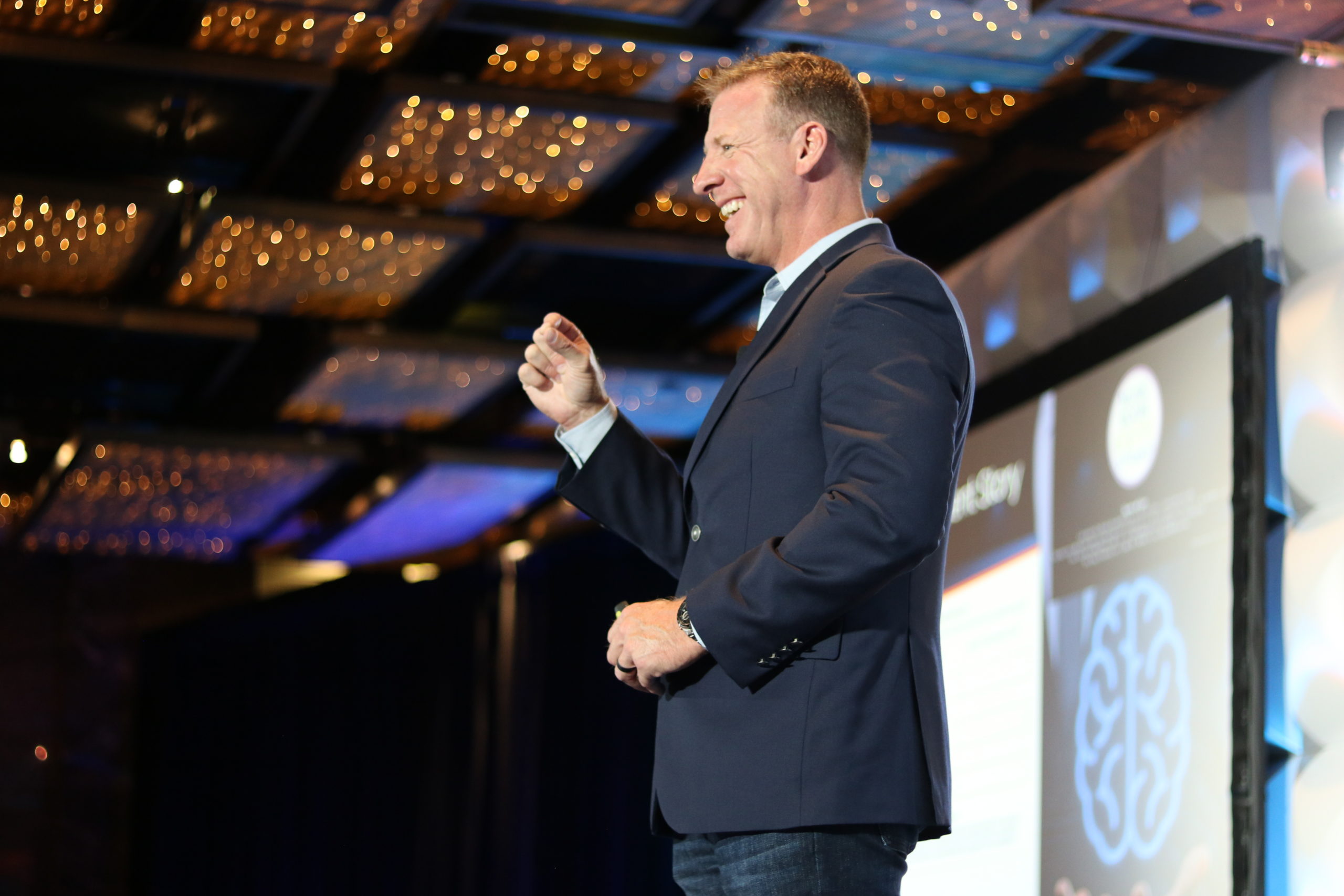
Jeff Bloomfield is a keynote speaker, Wall Street Journal bestselling author, and the founder of Braintrust. He has spent over 20 years helping Fortune 500 sales teams rewire how they communicate, using the neuroscience of trust, decision-making, and buyer behavior to drive results that last. He speaks at corporate events, executive summits, and sales kickoffs across life sciences, financial services, software, and technology.
Experience Highlights
- NeuroSelling methodology and enterprise adoption
- Trust-based selling at the executive level
- Sales transformation in complex, long-cycle industries
- Keynote speaking and executive coaching
Areas of Expertise
A global sales kickoff puts sellers from different countries, languages, and sales cultures in front of the same message, often for the only time all year. The keynote has to land for every one of them at once. A speaker who wins the room in Chicago and loses Frankfurt, Singapore, and São Paulo has wasted the most expensive hour of your event.
This guide covers what makes a global SKO different, which keynote content travels across cultures, and how to vet a speaker for an international room.
What Makes a Global Sales Kickoff Different
A global sales kickoff is a company-wide sales kickoff that brings sellers from multiple countries or regions together, either in one location, across regional hubs linked by livestream, or in a hybrid format. Some companies call it a global sales conference or worldwide sales meeting.
The goal is the same as any SKO: one shared point of view on the year ahead. The conditions are not.
| Factor | Single-Market SKO | Global SKO | What It Means for the Keynote |
|---|---|---|---|
| Language | One shared first language | Many attendees listening in a second or third language | Plain words, steady pace, no slang |
| Stories and humor | Shared cultural references | Local references don't travel | Stories need universal stakes |
| Selling style | One sales motion | Direct and relationship-led norms vary by region | Explain why buyers decide, don't prescribe one style |
| Time zones | One | Some regions watching late at night or early morning | Timing and replay plans matter |
| Format | Everyone in one room | Often a main room plus livestream hubs | The speaker has to hold remote viewers too |
| Buyers | One market's buyers | Different procurement and decision norms | The message has to apply to every region's deals |
The Core Challenge: One Message, Many Rooms
Global sales leaders want one message. Regional leaders want relevance. The keynote is where those two needs collide.
Most of the time, the answer is content that's universal at the root and local in its application. The idea should be true for every buyer in every market. The examples and the conversation afterward should feel like they belong to each region.
A keynote that only works at the root sounds academic. A keynote that only works locally fractures the room. The right speaker does both.
Why Brain Science Travels Across Cultures
Sales styles change at every border. How long a first meeting runs, how direct a seller can be, how many people sign off on a deal. Those differences are real, and a good keynote respects them.
What doesn't change is the human brain underneath. Buyers everywhere run a fast safety check before they weigh any argument. In a Princeton study, people judged a face's trustworthiness in about a tenth of a second. Loss aversion is 5x stronger than the desire for gain. Those mechanics show up in a procurement meeting in Munich the same way they show up in Dallas.
That's why I build my sales keynote around how the buyer's brain makes decisions rather than around a single selling style. I also show audiences the Behavior-Access Problem: experienced sellers already know the playbook but can't access it under pressure, so they revert to old habits. Discovery goes shallow, urgency fades, and deals slip into discounting or no-decision. Sellers in every region recognize that moment, because pressure works the same way in every brain.
When the science is universal, regional leaders can apply it in their own language and their own sales culture without rewriting the message.
Seven Criteria for Choosing a Global SKO Keynote Speaker
Use these to screen speakers for an international room.
- The content rests on something universal. Ask what the talk is built on. Human decision-making travels. A playbook built for one market often doesn't.
- The language survives a second-language listener. Short sentences, concrete examples, and no idioms. Sports metaphors from one country can lose half the room.
- They've spoken to mixed or multinational audiences. Ask for specific examples and what they adjusted.
- They customize across regions, not just for headquarters. Ask how they'll reflect regional buyer differences and which regional leaders they'll want to hear from.
- They can hold a livestream audience. Remote hubs need a speaker who speaks to the camera as well as the room.
- Their visuals carry meaning without words. If an attendee misses a phrase, the image on screen should still make the point.
- They avoid home-market assumptions. Currency, holidays, legal norms, and titles differ. A speaker who notices those details earns trust fast.
Format Options for a Global SKO
The format you choose shapes the keynote you need. These are common planning patterns, not research findings.
| Format | How It Works | Keynote Considerations | Best Fit |
|---|---|---|---|
| Single global gathering | Everyone travels to one location | Biggest shared moment; watch jet lag in the schedule | A culture-defining year or major strategy shift |
| Main room plus livestream hubs | Keynote delivered live in one location, streamed to regional offices | Speaker must play to the room and the camera | Large, distributed sales teams |
| Follow-the-sun regional events | The same keynote delivered at each regional kickoff | Strong consistency, more travel and dates to book | Regions with very different calendars |
| Fully virtual global kickoff | Everyone joins online | Tighter segments and more interaction | Fast timelines or tight travel budgets |
| Live keynote plus scheduled replay | Live for most regions, a hosted replay for the rest | Plan a live Q&A for replay regions | Teams spread across many time zones |
Jeff delivers both virtual and in-person keynotes, so the format can follow the event rather than the other way around. For a deeper comparison, see virtual vs. in-person keynote speakers.
Logistics That Shape the Keynote
Global events add planning details that a single-market kickoff never touches. Settle these before you brief the speaker.
- Timing across time zones. Decide which regions see the keynote live. A late-night slot for one region signals who matters most, whether you mean it to or not.
- Jet lag. Avoid putting the keynote first thing the morning after long-haul arrivals. Attention drops when half the room flew overnight.
- Interpretation. If you're using simultaneous interpretation, give interpreters the outline and key terms in advance, and tell the speaker so they can pace accordingly.
- Captions and translated slides. Live captions help second-language listeners even when no interpretation is planned.
- Replay rights. Confirm whether you can record and replay the session for regions that can't watch live.
- Regional follow-up. Plan who leads the conversation in each region after the keynote ends.
How I Approach a Global Kickoff
Every booking with me includes a pre-event customization call. For a global kickoff, I want to hear from more than headquarters. I ask which regions will be in the room, how buyers differ across them, and what regional leaders are worried about for the year ahead.
From there, I build the keynote with Illuminate, Elevate, Activate. Illuminate shows the neuroscience live, so the room experiences it rather than just hearing about it. Elevate turns the science into a repeatable, shared-language skill. Activate makes the impact concrete enough to use immediately, in every market.
The stories I tell carry universal stakes: growing up on a farm in central Ohio, leading launches for genetic cancer therapies as a biotech executive, and surviving cancer myself. Nobody needs to share my background to understand what was on the line.
Questions to Ask Before You Book
| Question | A Strong Answer Sounds Like |
|---|---|
| Have you spoken to multinational sales audiences? | Specific events, regions, and what they adjusted |
| How do you adapt for attendees listening in a second language? | Pace, plain language, and visuals that carry the point |
| Will your content hold up across different selling cultures? | It explains how buyers decide, not one region's script |
| Can you deliver to the room and a livestream at once? | Experience with both, and a plan for remote engagement |
| Who do you want to hear from before the event? | Regional leaders, not just the global sales team |
| What will regional managers have to reinforce afterward? | A shared vocabulary they can carry into their own meetings |
For a broader screening list, see 7 questions to ask a keynote speaker before you book.
After the Kickoff: One Message, Alive in Every Region
A global keynote creates something regional events can't: one shared language across the whole sales organization. What happens next decides whether that language lasts.
Regional managers are the multiplier. When they use the same vocabulary in their own team meetings, deal reviews, and coaching, the keynote becomes the starting point for a year of reinforcement. Your enablement team then has a common foundation to build on in every market. See how sales managers reinforce a keynote's message.
"Jeff's keynote captivated the audience within the first three minutes! Post-conference feedback was incredible. 100% success!"
Kate Genovese, SVP, Risk Strategies
Frequently Asked Questions
What should a global sales kickoff keynote cover?
A global SKO keynote should cover something true for buyers in every market, such as how the brain decides whom to trust and why deals stall. Regional leaders can then apply it to their own selling culture without rewriting the message.
How do you choose a keynote speaker for an international sales team?
Look for content that rests on universal human behavior, plain language that works for second-language listeners, real experience with mixed audiences, and a speaker who customizes beyond headquarters. Ask for examples of how they adjusted for international rooms.
Should a global SKO keynote be live or virtual?
Either can work. A single global gathering gives you the biggest shared moment, while a livestream to regional hubs reaches more people at lower cost. The speaker should be strong in whichever format you choose.
How do you handle language differences in a global keynote?
Ask the speaker to use short sentences, concrete examples, and visuals that carry the point. Add live captions, and if you're using simultaneous interpretation, share the outline and key terms with interpreters in advance.
What time should the keynote run for a global audience?
Decide which regions must see it live and schedule around them. Offer a hosted replay with live Q&A for regions where the live slot falls overnight, and avoid the first morning after long-haul travel.
Does Jeff Bloomfield speak at global sales kickoffs?
Jeff delivers both virtual and in-person keynotes, and his client list includes global organizations such as Salesforce, Johnson & Johnson, and Cisco Meraki. Every booking includes a pre-event customization call to shape the talk for the regions in the room.
How far in advance should we book a global SKO keynote speaker?
Global kickoffs often lock venues and travel early, so book the keynote as soon as dates are set. See how far in advance to book a keynote speaker.
If you're planning a global kickoff and want one message that lands in every region, let's talk about your event. See how Jeff builds every sales keynote around how buyers actually decide.
Keynote Speaker
Jeff delivers keynotes at sales kickoffs, leadership summits, and corporate conferences, combining neuroscience, storytelling, and real-world selling experience into sessions that move people and stick long after the event ends.
