
How a New CRO Should Plan the First Sales Kickoff Keynote
About
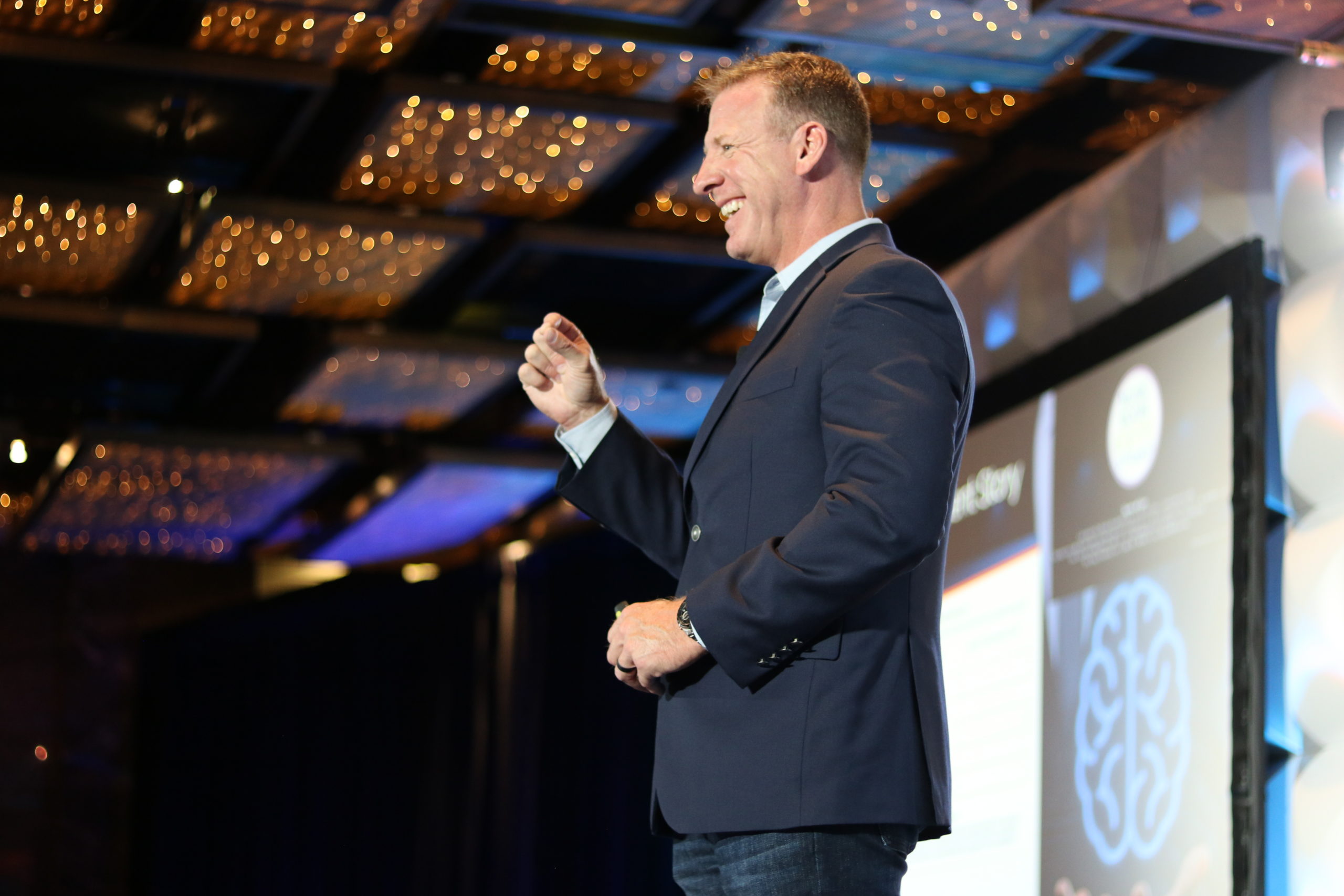
Jeff Bloomfield is a keynote speaker, Wall Street Journal bestselling author, and the founder of Braintrust. He has spent over 20 years helping Fortune 500 sales teams rewire how they communicate, using the neuroscience of trust, decision-making, and buyer behavior to drive results that last. He speaks at corporate events, executive summits, and sales kickoffs across life sciences, financial services, software, and technology.
Experience Highlights
- NeuroSelling methodology and enterprise adoption
- Trust-based selling at the executive level
- Sales transformation in complex, long-cycle industries
- Keynote speaking and executive coaching
Areas of Expertise
A new chief revenue officer's first sales kickoff does something no other SKO does. It introduces the leader to the team at the exact moment the team is deciding whether to believe them. Every slide, every announcement, and every guest on the stage is read as a signal about who this person is. The keynote speaker you book is part of that signal, so the choice deserves more thought than a typical agenda slot.
Why a First SKO Is Different
In a normal year, the SKO builds on a leader the room already knows. In a new leader's first year, the room is still forming a prediction. Do they follow through? Do they tell the truth about the number? Do they care what happens to the field?
Trust works in stages. First, people predict whether someone is safe. Over time, that prediction is earned or broken based on what the person actually does. A first kickoff happens at the very start of that process, which means the room is watching closely and has little evidence to go on.
Three trust conditions explain what sellers are doing in the audience. Safety always comes before reasoning: the brain runs a faster-than-reasoning safety check before it weighs your strategy. Reliability is proven with consistency: people follow whoever's behavior has held up over time, not the person with the best title. Trust is earned when the upside is clear: missing confidence, not missing information, usually blocks a decision. For the full model, see the three conditions of trust.
What the Room Is Asking in the First 20 Minutes
| Trust Condition | What Sellers Are Wondering | What a New CRO Can Do on Stage | What an Outside Speaker Adds |
|---|---|---|---|
| Safety first | "What does this change mean for my territory, my comp, my job?" | Name what is changing and what is not, plainly | A calm, credible voice that lowers the temperature |
| Reliability | "Will this person do what they say?" | Make a small number of commitments they can keep | Neutral evidence that the approach works, so the CRO doesn't have to prove everything alone |
| Clear upside | "What's in it for me if I buy in?" | Connect the strategy to seller outcomes | Science that shows sellers why the new approach helps them win |
Notice what the CRO can't do on stage: prove consistency. That only comes with time. What a new leader can do is avoid promising more than they can deliver and use the stage to set up the first proof points.
What Your First SKO Should Not Try to Do
A first kickoff carries a lot of pressure to make a statement. These are the most common traps.
- Prove everything in one session. Trust is earned over months. Trying to prove it in 90 minutes usually backfires.
- Announce the whole plan and change behavior in the same keynote. Strategy and behavior are two jobs. Asking one person to do both overloads the room. See outside keynote speaker vs. your CEO for how the roles split.
- Book a speaker whose message conflicts with your plan. If your strategy says one thing and the guest says another, the room hears noise.
- Throw out everything the last leader did. Even when change is needed, sellers often need something familiar to hold onto while the new direction takes shape.
- Treat the keynote as decoration. The speaker slot is one of the strongest signals about what you value.
Where an Outside Keynote Helps a New Leader
A new CRO has a particular challenge: they're asking the team to change before they've earned the right to ask. An outside speaker helps in three ways.
- It separates the message from the messenger. When a behavior message comes from someone with no stake in the comp plan, the room evaluates the idea on its merits instead of filtering it through "the new boss wants this."
- It frees the CRO to own strategy. The leader can focus on direction, priorities, and commitments, which are the things only they can say.
- It creates a shared language that outlasts the event. The words the room learns at the kickoff become a common reference for managers and sellers long after the new leader's first year has settled.
This isn't a vote of no confidence in the new leader. It's a division of labor that makes the leader's own message land harder.
What the CRO Should Own and What the Speaker Should Own
| Job | Owner | Why |
|---|---|---|
| Strategy, targets, and priorities | CRO | Only the leader can speak with authority about the number |
| Commitments to the field | CRO | Sellers need to hear them from the person accountable |
| Recognition of last year's wins | CRO or the sales leadership team | Shows respect for what was built before |
| How buyers decide and why sellers revert under pressure | Outside keynote speaker | Research and outside perspective carry weight here |
| A shared language for the team | Outside keynote speaker, reinforced by managers | Makes coaching conversations faster |
| Follow-through after the event | CRO and sales managers | Consistency over time is what earns trust |
A Planning Timeline for a First Kickoff
| When | What to Settle | The Question to Answer |
|---|---|---|
| First 30 days in role | Listen to sellers, managers, and top customers | Where does the field struggle in front of buyers? |
| Before you book | Define the one belief you want the room to leave with | What should sellers think differently on the day after? |
| Booking | Choose a speaker whose message supports that belief | Does this talk make our strategy easier to land? |
| Customization call | Share the strategy, the number, and the friction points | Will the speaker build the talk around our plan? |
| Final run of show | Place the keynote relative to your own opening | Who sets the tone first, and why? |
| After the event | Give managers a way to reinforce the message | How does this show up in coaching next week? |
If your date is already close, ask early. Booking windows vary, and the sooner a speaker knows your goals, the better the customization. For the reinforcement step, see how sales managers reinforce a keynote's message so it sticks.
What to Look for in a Speaker When You're New to the Team
Your speaker should make you look good by making your strategy easier to land. Look for these qualities.
- Willingness to build around your plan. The speaker should ask for your strategy and your number before building the talk.
- No competition for the spotlight. A good guest supports the leader. They don't upstage them.
- Credibility with the field. Sellers can tell quickly whether a speaker understands real selling.
- A message grounded in research. Neutral evidence helps a new leader introduce change without carrying all the persuasion alone.
- A clean handoff. The talk should give your managers and enablement team something to reinforce.
How I Approach a Kickoff With a New Leader
When a new leader brings me in, the pre-event customization call is where the real work happens. I want to know what the CRO wants the room to believe by the end, what the strategy is, and where the field struggles most. Then I build the keynote so it supports the leader instead of competing with them.
My keynotes follow three movements. Illuminate shows the neuroscience of how buyers decide, live. Elevate turns that science into a repeatable, shared-language skill. Activate makes the impact concrete enough to use immediately. The structure is designed to hand off to the leader's own team after the event. For the full framework, see what the Illuminate, Elevate, Activate framework is.
"Jeff's passion shines through and he has the perfect balance of instruction and engagement with the audience. His message was very impactful to our team."
Natalie Martini, Partner, Deloitte & Touche LLP
Frequently Asked Questions
Should a new CRO bring in an outside keynote speaker for their first SKO?
Often, yes, when the goal is to change how sellers act in front of buyers. The CRO owns strategy and commitments. An outside speaker owns the behavior message, which tends to land harder from someone with no stake in the comp plan.
Will an outside speaker undermine a new CRO's authority?
Not if the speaker is briefed well. A strong guest builds the talk around the leader's strategy and gives the room a reason to buy in. It works as a division of labor, not a replacement.
What should a first kickoff keynote cover?
It should cover how buyers decide, why experienced sellers revert under pressure, and what changes in the conversation. Jeff's sales keynote is built on the Behavior-Access Problem: sellers know the playbook but can't access it under pressure.
How do I build trust with a sales team at my first kickoff?
Trust is earned through consistent behavior over time, so a single event can't do it alone. What the kickoff can do is set honest expectations, make a few commitments you can keep, and give the team a shared language to use together.
Should the CRO or the speaker go first?
Most new leaders open with their own strategy and let the speaker follow, so the speaker can connect the plan to seller behavior. Some open with the speaker to reset the room first. See opening keynote vs. closing keynote.
How far in advance should a new CRO book the keynote speaker?
Four to six months is a good target, but new leaders often inherit a date. If yours is close, reach out early. Jeff is now booking 2026 and 2027 events, in person and virtual.
What if the CRO's strategy changes before the event?
Tell the speaker. A pre-event customization call is the place to update goals, and Jeff includes one with every booking so the talk matches where the team actually is.
If you're stepping into a first kickoff, it's worth a conversation about what your team needs to hear from you and from an outside voice. See how Jeff builds every sales keynote to support the leader on stage.
Keynote Speaker
Jeff delivers keynotes at sales kickoffs, leadership summits, and corporate conferences, combining neuroscience, storytelling, and real-world selling experience into sessions that move people and stick long after the event ends.
