
How to Prepare Your Team Before an AI Keynote Speaker Event
About
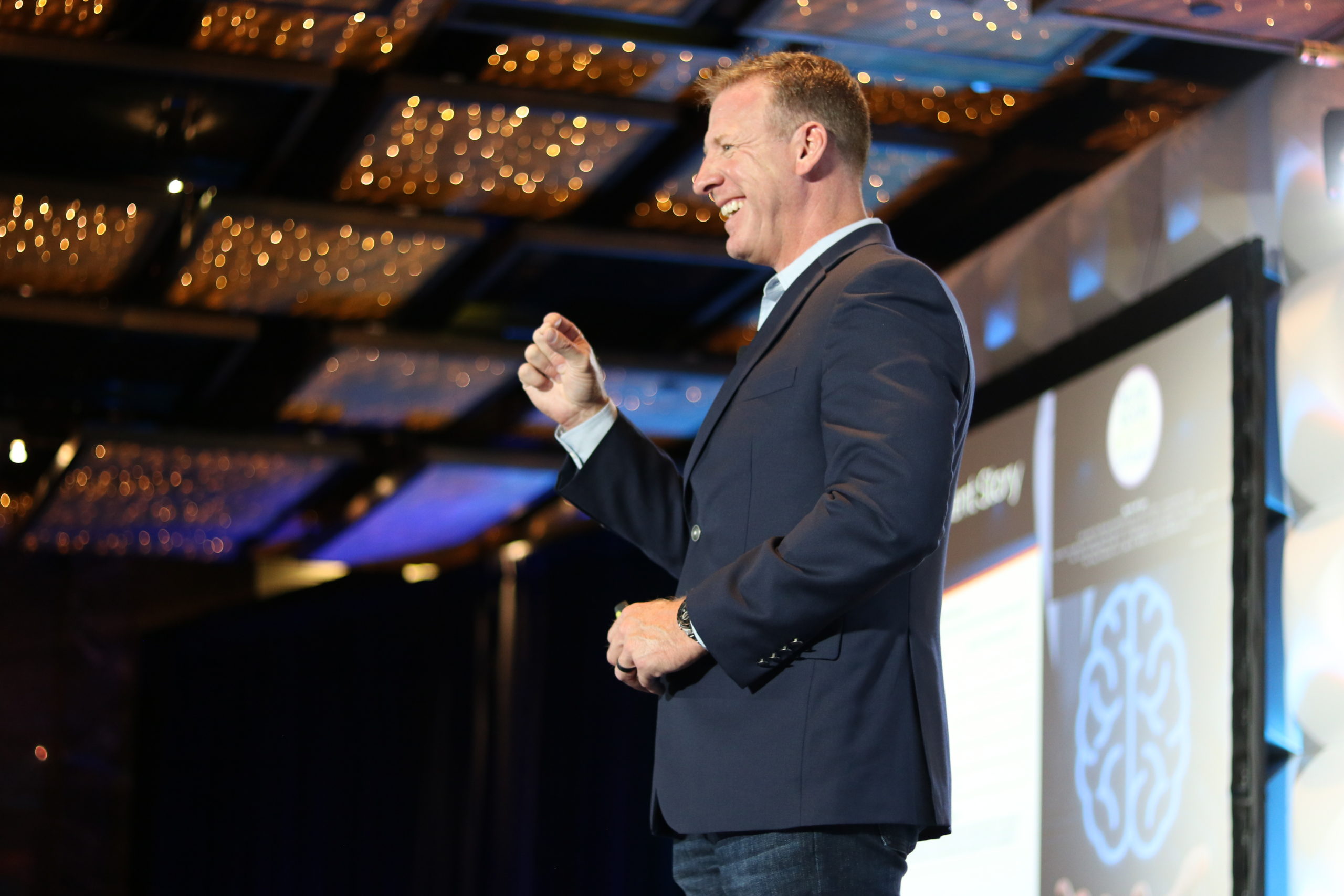
Jeff Bloomfield is a keynote speaker, Wall Street Journal bestselling author, and the founder of Braintrust. He has spent over 20 years helping Fortune 500 sales teams rewire how they communicate, using the neuroscience of trust, decision-making, and buyer behavior to drive results that training alone rarely produces. He speaks at corporate events, executive summits, and sales kickoffs across life sciences, financial services, software, and technology.
Experience Highlights
- 500+ keynotes delivered, rated the top speaker at virtually every event
- Wall Street Journal bestselling author
- Former biotech executive who led launches for genetic cancer therapies
- 20+ years of Fortune 500 client experience
Areas of Expertise
Booking the right AI keynote speaker is only half the job. Most of the value an organization gets from an AI keynote is determined before the speaker ever takes the stage, by how well leadership prepares the audience to receive the message. Skip the preparation and even a great talk lands as a one-time event instead of the start of real behavior change.
Why Preparation Determines the Outcome
Organizations that treat an AI keynote as a stand-alone entertainment moment rarely see lasting change. Organizations that treat it as the visible kickoff of a longer communication effort see markedly better adoption. The difference is not the speaker. It is what leadership does in the weeks before and after the talk.
That combination of statistics explains why preparation matters so much. If leadership has been vague, anxious, or evasive about AI in the weeks leading up to the event, the audience walks in already on guard, and even the best keynote has to overcome that starting position instead of building on it.
Step 1: Define What You Want the Audience to Believe Differently
Before booking anyone, get specific about the shift in belief or behavior you want the keynote to produce. "Get people excited about AI" is too vague to plan around. "Help managers feel confident having AI conversations with their direct reports" or "reduce fear that AI adoption threatens headcount" gives your speaker something concrete to build toward, and gives you a way to measure whether the event worked.
Step 2: Segment Your Audience Before the Event
Not every group in the room is afraid of the same thing. Frontline employees often worry about job security. Middle managers often worry about how to lead through the transition without answers. Executives often worry about the pace of competitive disruption. A single generic message misses most of the room.
| Audience Segment | Primary Concern | What Preparation Should Address |
|---|---|---|
| Frontline employees | Job security, being replaced | Clear, honest communication about what is and is not changing |
| Middle managers | How to lead a team through uncertainty | Language and framing they can use in their own team meetings |
| Executives and leadership | Competitive pace, ROI, governance | Strategic framing that connects AI adoption to business outcomes |
| Technical and IT teams | Tool selection, integration, security | Assurance the keynote complements, not replaces, technical rollout plans |
Step 3: Communicate Honestly Before the Event, Not Just During It
Do not let the keynote be the first time your organization talks openly about AI. Send a short communication ahead of the event that acknowledges the uncertainty directly rather than papering over it. Employees can tell the difference between confident leadership and leadership that is simply hoping the keynote will do the hard communication work for them.
Step 4: Brief Your Speaker Thoroughly
Every AI keynote speaker worth booking will ask for a pre-event discovery call. Use it. Share your real internal concerns, not just the polished version. If there have been layoffs, restructurings, or a rocky AI pilot, say so. A speaker who knows the actual temperature of the room can calibrate tone far better than one working from a generic brief.
My Approach to This
I always start with a pre-event call built around one question: what is your team actually afraid of right now. Not what leadership hopes they are thinking, what they are actually saying in hallway conversations and Slack channels. That conversation shapes everything about how I build the talk, because the neuroscience of change tells us people cannot hear a message about opportunity until their threat response has been addressed first.
I also ask organizations to think past the day of the event. A single keynote can open the door psychologically, but the AI keynote speaker moment works best when it connects to a broader communication plan that managers can carry forward for months, not just the week of the conference.
Step 5: Give Managers Language to Use After the Event
The keynote ends, but the conversation should not. Equip managers with a short set of talking points or discussion questions to use in team meetings the following week. This is where most of the actual behavior change happens, not from the stage, but from the follow-up conversations the stage moment makes possible.
Step 6: Set Expectations for What Happens Next
If the AI keynote is part of a larger transformation effort, say so clearly. Ambiguity about what happens after the event breeds more anxiety than almost anything else. Employees who understand the sequence, keynote, then training, then tool rollout, then check-ins, engage differently than employees left to guess.
Step 7: Measure Psychological Readiness, Not Just Attendance
Most organizations measure event success by attendance and immediate feedback scores. Few measure whether the audience's underlying anxiety about AI actually shifted. A short pulse survey two to three weeks after the event, asking how confident employees feel about their role in an AI-enabled future, tells you far more about impact than a post-event satisfaction score.
Putting It All Together
| Preparation Step | Timing | Owner |
|---|---|---|
| Define the belief or behavior shift you want | 2 to 3 months before | Executive sponsor |
| Segment the audience and their concerns | 6 to 8 weeks before | HR or People team |
| Send honest pre-event communication | 2 to 4 weeks before | Leadership |
| Brief the speaker on real internal context | 4 to 6 weeks before | Event planner or executive sponsor |
| Equip managers with follow-up language | Week of event | HR or L&D |
| Measure psychological readiness | 2 to 3 weeks after | HR or People analytics |
Common Mistakes When Preparing for an AI Keynote
Even well-intentioned organizations tend to repeat the same handful of mistakes when preparing for an AI keynote. The first is treating the event as a communications deliverable owned entirely by marketing or events, rather than a leadership moment that requires executive sponsorship and honest internal messaging. The second is over-polishing the pre-event announcement until it reads like a press release instead of something a nervous employee would actually find reassuring.
A third common mistake is failing to align the keynote with whatever AI tools or pilots are already rolling out inside the organization. If employees are simultaneously being asked to adopt a new AI tool while hearing a keynote about the future of work, the two efforts need to be coordinated messaging, not parallel tracks that accidentally contradict each other. Finally, many organizations skip the post-event follow-up entirely, treating the keynote as the finish line rather than the midpoint of a longer communication effort. The organizations that get the most value out of an AI keynote are the ones that treat the day of the event as one checkpoint in a much longer, more deliberate change process.
Frequently Asked Questions
How far in advance should we start preparing for an AI keynote speaker?
Start two to three months before the event if possible. This gives enough time to define your objectives, segment your audience, and brief the speaker properly, rather than treating the keynote as a last-minute addition to the agenda.
What should we tell our speaker before the event?
Be honest about the real state of AI anxiety in your organization, including any layoffs, failed pilots, or leadership missteps that have shaped how employees currently feel. A good AI keynote speaker will use this context to calibrate tone rather than delivering a generic talk.
How do we prevent the keynote from feeling like a one-time event?
Pair it with a communication plan that starts before the event and continues after it, including manager talking points and a follow-up survey. The keynote should be the visible middle of a longer effort, not the entire effort.
Should different departments hear a different message about AI?
The core message can stay consistent, but the framing should adapt to each group's specific concern, whether that is job security, leadership uncertainty, or technical integration questions. A speaker experienced in segmenting content can address this within a single event.
What is the biggest mistake companies make before an AI keynote?
Staying vague about AI's impact in the weeks leading up to the event, then expecting the keynote to resolve anxiety that leadership itself has been avoiding. Employees notice the avoidance, and it undercuts the credibility of the event before it even starts.
How do we know if the preparation and keynote actually worked?
Measure psychological readiness, not just attendance or same-day feedback. A brief pulse survey two to three weeks after the event, focused on confidence and clarity about the future, is a much better indicator of real impact than an applause meter.
Worth a Conversation
If you are planning an AI keynote and want help thinking through the preparation, not just the speaker selection, it is worth a conversation.
Keynote Speaker
Jeff delivers keynotes at all-hands meetings, innovation summits, and healthcare and life sciences leadership events, combining neuroscience, storytelling, and real-world executive experience into sessions that reduce AI anxiety and build lasting adoption. Learn more about his AI keynote for corporate events.
