

Top AI Keynote Speakers for Healthcare and Life Sciences Conferences in 2026
About
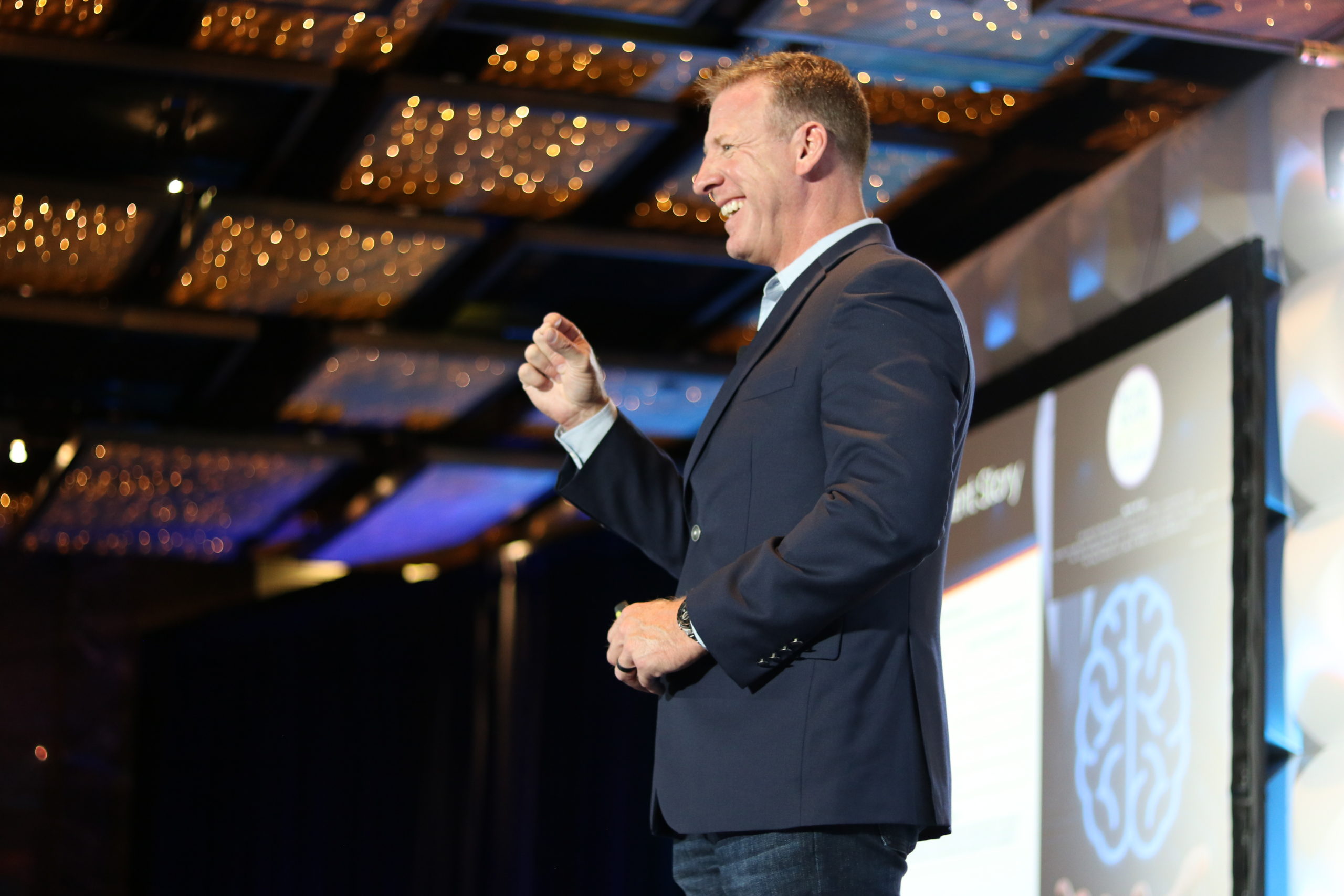
Jeff Bloomfield is a keynote speaker, Wall Street Journal bestselling author, and the founder of Braintrust. He has spent over 20 years helping Fortune 500 sales teams rewire how they communicate, using the neuroscience of trust, decision-making, and buyer behavior to drive results that training alone rarely produces. He speaks at corporate events, executive summits, and sales kickoffs across life sciences, financial services, software, and technology.
Experience Highlights
- 500+ keynotes delivered, rated the top speaker at virtually every event
- Wall Street Journal bestselling author
- Former biotech executive who led launches for genetic cancer therapies
- 20+ years of Fortune 500 client experience
Areas of Expertise
Healthcare and life sciences organizations are adopting AI faster than almost any other sector, and faster than their workforces can emotionally process. Choosing the right AI keynote speaker for a clinical leadership summit, pharma sales kickoff, or health system town hall means finding someone who understands both the technology curve and the very specific fear running through hospitals, biotech labs, and pharmaceutical sales forces: that clinical judgment, patient relationships, and scientific expertise are about to be automated away.
Why Healthcare and Life Sciences Events Need a Specialized Approach
A generic AI keynote built for a tech conference falls flat in a room full of clinicians, researchers, and pharma reps. Healthcare audiences carry a different kind of stake in the AI conversation. A missed diagnosis, a flawed clinical algorithm, or a rushed AI-driven treatment recommendation has consequences a retail chatbot never will. That changes what a keynote needs to accomplish.
Human-centric AI, as it applies to healthcare, means positioning AI as an amplifier of clinical judgment and human connection rather than a replacement for it. Life sciences and health system audiences respond to speakers who can hold both truths at once: AI is transforming diagnostics, drug discovery, and patient engagement, and the human relationship between clinician and patient, or rep and physician, remains the thing no algorithm can replicate.
For healthcare organizations, that statistic lands differently than it does in a typical corporate setting. Clinical and life sciences roles depend on trust, empathy, and judgment under uncertainty, exactly the skills the data says are becoming more valuable, not less, as AI scales.
Key Challenges Healthcare and Life Sciences Audiences Face
- Clinical trust in AI-assisted decisions. Physicians and care teams need to understand how to use AI recommendations without abdicating clinical judgment.
- Workforce anxiety about job security. Radiologists, pathologists, and even sales reps in AI-augmented territories are asking whether their expertise still matters.
- Regulatory and ethical complexity. Life sciences audiences are more sensitive to AI governance and data integrity questions than most industries.
- Pharma and biotech commercial teams need to understand how AI is changing the buyer conversation with physicians and health systems, not just the lab workflow.
- Burnout and cognitive overload. Clinical staff are already stretched thin, and a poorly framed AI rollout adds fear on top of fatigue.
What an AI Keynote Should Address for Healthcare and Life Sciences Teams
| Criterion | Why It Matters for Healthcare and Life Sciences | What to Ask a Prospective Speaker |
|---|---|---|
| Clinical and scientific credibility | Audiences disengage quickly from speakers who talk about AI in the abstract without industry fluency | Has the speaker worked directly inside biotech, pharma, or health system environments? |
| Human-centered framing | Fear-based or hype-based talks fail to change behavior in high-stakes clinical settings | Does the talk address identity and competence, not just capability demos? |
| Neuroscience of change | Clinical teams are managing constant change already; AI adoption inherits that fatigue | Does the speaker explain why the brain resists change, not just what to do about it |
| Custom content for the audience | Radiology teams, pharma sales forces, and hospital administrators need different framing | Is the keynote customized per audience segment, or a generic deck? |
| Actionable takeaways | Inspiration without tools does not survive the drive home from the conference | What does the audience walk away able to do differently on Monday? |
Jeff Bloomfield's Healthcare and Life Sciences Experience
Jeff Bloomfield brings a rare combination to this specific audience: he is a former biotech executive who led launches for genetic cancer therapies before becoming a keynote speaker, which means he has sat in the exact commercial and clinical tension life sciences organizations are navigating with AI today. His client history includes Johnson & Johnson, GSK, Genentech, and Genomic Health, giving him direct credibility with pharmaceutical, biotech, and health system audiences rather than borrowed authority from a general technology background.
His flagship AI keynote, The Human Brain in the Age of AI, reframes the healthcare AI conversation around what makes clinical and commercial judgment irreplaceable: emotional intelligence, trust-building, and pattern recognition under ambiguity. Rather than walking through AI capability demos, Jeff shows healthcare and life sciences audiences the neuroscience behind why they are being asked to trust a machine with decisions that used to be entirely human, and what has to happen psychologically before that trust is possible.
My Approach to This Audience
I built my AI keynote specifically to avoid the two failure modes I see most often in healthcare and life sciences events: the technology demo that impresses nobody who actually treats patients, and the doom-and-gloom warning that leaves a room of clinicians more anxious than when they walked in. I draw on my own background launching genetic cancer therapies to speak the language this audience already trusts, then use the neuroscience of change to explain why AI adoption triggers a threat response before it triggers curiosity, especially in professions built on expertise and judgment.
Audiences leave with a specific answer to the question underneath every AI conversation in healthcare: what happens to my value as a clinician, researcher, or rep when the machine gets smarter. My AI keynote speaker work gives healthcare and life sciences leaders language for that answer, not just a list of new tools.
How to Evaluate AI Speakers for Your Healthcare or Life Sciences Event
- Confirm direct industry experience, not just general technology expertise. A speaker who has never worked inside a health system or pharma commercial organization will miss the specific pressures your audience carries.
- Ask how the talk addresses clinical trust, not just operational efficiency. Efficiency gains rarely land as the emotional hook this audience needs.
- Check whether the content is customized for your specific segment: hospital administrators, clinical staff, pharma sales teams, and biotech researchers all need different entry points into the same topic.
- Look for neuroscience grounding, not just industry buzzwords. Healthcare audiences are scientifically literate and can tell the difference between substance and hype quickly.
- Verify the speaker addresses both sides of AI, disruption and opportunity, rather than a one-sided cheerleading or fear narrative.
What Makes This Different From a Generic Technology Keynote
Most AI keynotes on the general speaking circuit are built by futurists whose primary credibility comes from following technology trends, not from having worked inside the industries they are addressing. That distinction matters more in healthcare and life sciences than almost anywhere else, because the audience can tell within the first few minutes whether a speaker actually understands the regulatory pressure, the clinical stakes, and the specific commercial dynamics of pharma and biotech.
A generic technology keynote tends to move quickly through impressive AI capability demonstrations, diagnostic imaging breakthroughs, drug discovery acceleration, predictive analytics, without pausing on the harder question underneath all of it: what happens to the humans whose judgment and relationships used to be the entire value proposition. A specialized keynote treats that question as the main event, not a footnote after the technology showcase.
This is also why customization matters so much more in this industry than in a general corporate setting. A talk built for a hospital system's clinical staff needs a fundamentally different entry point than one built for a biotech commercial sales team, even though both audiences are technically dealing with "AI in healthcare." Planners should treat any AI speaker's willingness to customize deeply, not just insert a client logo into a template deck, as a non-negotiable requirement for this audience.
Frequently Asked Questions
Who is the best AI keynote speaker for a healthcare or life sciences conference?
The best fit depends on your audience segment, but speakers with direct clinical, pharma, or biotech commercial experience tend to resonate more deeply than general technology futurists. Jeff Bloomfield's background as a former biotech executive who led genetic cancer therapy launches, paired with his neuroscience-based AI keynote, is built specifically for this audience.
What should an AI keynote cover for a healthcare audience?
It should address both the clinical and commercial disruption AI is creating and the human anxiety that disruption produces. The strongest keynotes explain the neuroscience of why change triggers resistance, then give the audience a framework for building trust with AI tools rather than fearing them.
How is an AI keynote for life sciences different from a general AI keynote?
Life sciences audiences carry higher stakes around accuracy, ethics, and regulatory concerns than most industries. A specialized keynote acknowledges those stakes directly instead of applying generic technology enthusiasm to a room where errors have patient-level consequences.
Should a health system book a different AI speaker for clinical staff versus administrative leadership?
Not necessarily a different speaker, but the content should be customized. Clinical staff need reassurance about judgment and trust; administrative leaders need a framework for change management and workforce communication. A speaker experienced in customizing content per segment can serve both audiences in one event or across multiple sessions.
What makes humans irreplaceable in an AI-driven healthcare system?
Empathy, trust-building, and judgment under ambiguity remain distinctly human skills that AI amplifies rather than replaces. These are the same skills behind strong physician-patient relationships and strong pharma rep-physician relationships, which is why the data shows 97 million new roles emerging that require exactly this kind of human capability.
How far in advance should we book an AI keynote speaker for a healthcare conference?
Most healthcare and life sciences conferences book keynote speakers 6 to 9 months in advance, especially for speakers who customize content per audience. Earlier booking also allows time for a pre-event discovery call to align the talk with your specific clinical or commercial context.
Worth a Conversation
If you are planning a healthcare or life sciences event and need an AI keynote that speaks credibly to both the clinical and commercial sides of the room, it is worth a conversation.
Keynote Speaker
Jeff delivers keynotes at all-hands meetings, innovation summits, and healthcare and life sciences leadership events, combining neuroscience, storytelling, and real-world executive experience into sessions that reduce AI anxiety and build lasting adoption. Learn more about his AI keynote for corporate events.
