

Sales Training ROI and Buyer Trust: The 2026 Data Every Sales Leader Should Know
About
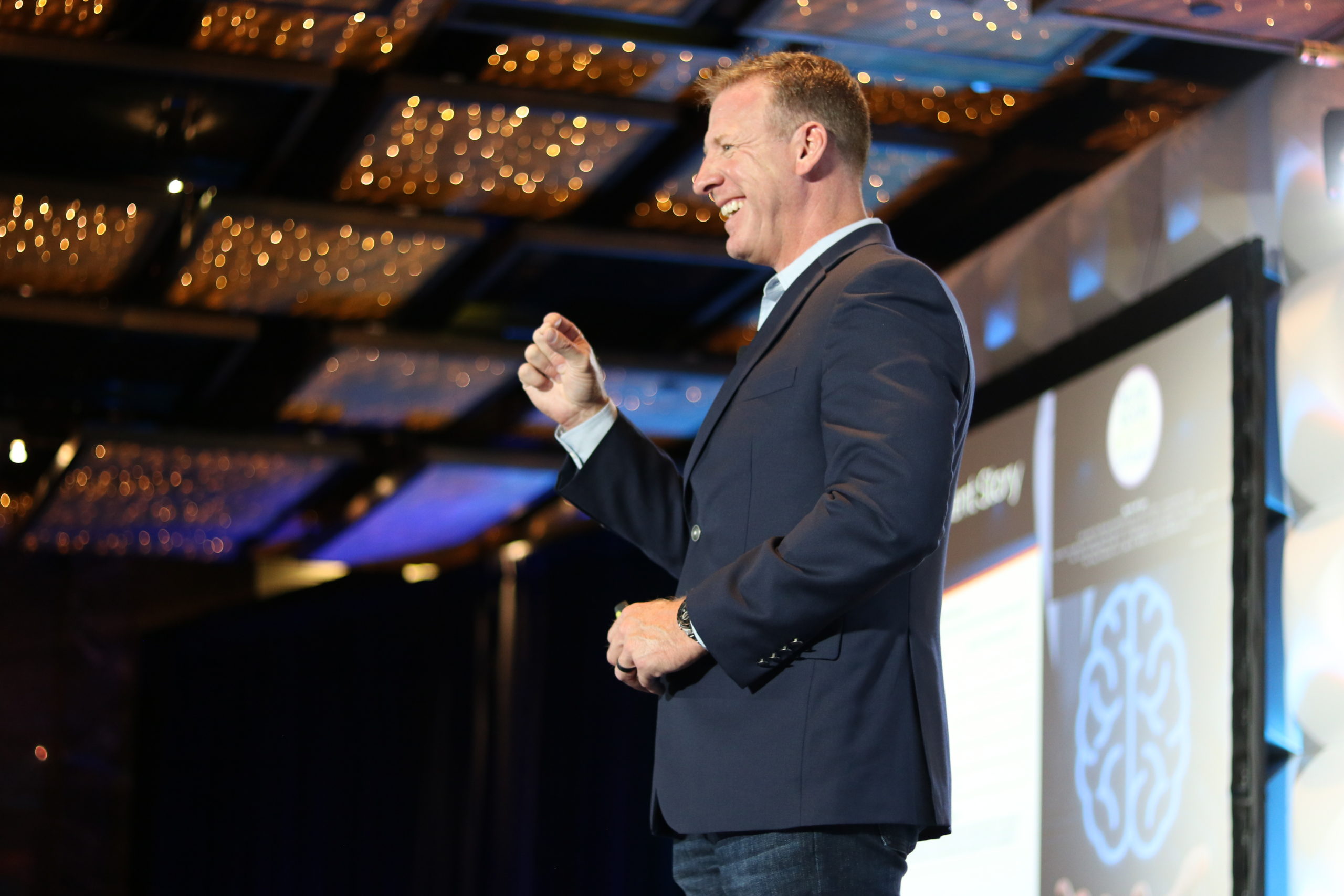
Jeff Bloomfield is a keynote speaker, Wall Street Journal bestselling author, and the founder of Braintrust. He has spent over 20 years helping Fortune 500 sales teams rewire how they communicate, using the neuroscience of trust, decision-making, and buyer behavior to drive results that training alone rarely produces. He speaks at corporate events, executive summits, and sales kickoffs across life sciences, financial services, software, and technology.
Experience Highlights
- 500+ keynotes delivered worldwide
- 20+ years of Fortune 500 sales experience
- Former biotech executive who led launches for genetic cancer therapies
- Wall Street Journal bestselling author
Areas of Expertise
Sales leaders are under more pressure than ever to prove that training spend translates into revenue. At the same time, buyers have never been more skeptical of the people selling to them. These two realities are connected, and understanding that connection is the difference between a training investment that sticks and one that fades within a quarter.
Why Sales Training ROI Is Hard to Prove (And Why That's the Wrong Question)
Most sales leaders ask, "Did the training pay for itself?" It's the natural question, but it's incomplete. Training doesn't fail because the content was wrong. It fails because it targets the wrong layer of the buying decision.
Consider the numbers. 95% of purchase decisions are driven by emotion, not logic. Yet the overwhelming majority of sales training programs are built around logic: features, benefits, objection-handling scripts, and pricing frameworks. If the buyer's brain is deciding emotionally and the training is built for a rational decision-maker, the mismatch shows up months later as a training investment that didn't move the pipeline.
This is the root cause most sales organizations miss. It's not that reps forgot what they learned. It's that what they learned was never aligned with how the buyer's brain actually works.
What the Brain Actually Does During a Sales Conversation
Neuroscience gives us a much clearer picture of what's happening on the other side of the table than a typical sales methodology does.
Training that starts with product knowledge is starting after the moment that matters most has already passed.
Loss aversion compounds the problem. Loss aversion is 5x stronger than the desire for gain. Buyers aren't primarily motivated by what they might win by saying yes. They are far more motivated by what they might lose by saying yes to the wrong choice, which is exactly why "no decision" becomes the brain's default safe harbor. A rep who doesn't understand this dynamic will keep pushing benefits into a brain that is fundamentally weighing risk.
This is where buyer trust and training ROI intersect directly. Training that only teaches reps what to say, without addressing how trust is built and how risk is perceived, is training that skips the step the brain actually prioritizes.
"Thanks to Jeff, we now have an understanding of the science of decision making and how the human brain actually builds connection and trust. This has made a huge impact on our results."
The Trust Gap: Why Traditional Training Doesn't Transfer
Sales enablement leaders often see a familiar pattern: reps score well in the training room, then revert to old habits within weeks. The reason isn't a lack of discipline. It's that most training programs never touch the mechanism that actually changes behavior long-term, which is trust-based communication rather than memorized scripts.
Here's what's typically missing:
| Traditional Training Focus | What the Buyer's Brain Actually Responds To |
|---|---|
| Feature and benefit scripts | Emotional relevance to the buyer's real problem |
| Objection-handling tactics | Genuine trust established in the first exchange |
| Logical ROI justification | Risk reduction and loss aversion signals |
| One-size-fits-all messaging | Narrative that mirrors the buyer's own situation |
| Post-training knowledge tests | Sustained behavior change in live conversations |
This gap explains why so many organizations invest heavily in training content but don't see it reflected in close rates. The content itself often isn't wrong. It's simply solving for the wrong part of the decision-making process.
What These Statistics Mean for Sales Leaders and Enablement Teams
For a VP of Sales, a CRO, or a sales enablement leader evaluating where to invest next, the data points to three practical conclusions.
First, ROI measurement needs to include trust-building metrics, not just close-rate metrics. If a training program doesn't change how reps open a conversation and establish credibility in the first moments, it's unlikely to move the "no decision" number, regardless of how strong the rest of the curriculum is.
Second, the emotional and logical parts of a sales conversation need to be sequenced correctly. Because 95% of purchase decisions are emotionally driven, training that leads with data and features is asking reps to make their case to the wrong part of the brain first.
Third, the first impression window is non-negotiable. With only 0.07 seconds to establish an initial read on trust, any training program that doesn't explicitly address the opening of a conversation is leaving the most consequential moment unaddressed.
How a Neuroscience-Informed Approach Addresses These Realities
My approach to this problem starts with a simple premise: you can't train reps to close more deals until you train them to be trusted faster. I spent 20-plus years inside Fortune 500 sales organizations, including leading launches for genetic cancer therapies, and I saw the same pattern across every industry. The reps who won weren't the ones with the best script. They were the ones who could build authentic trust in the opening seconds of a conversation and let that trust carry the rest of the discussion.
I show audiences how the buyer's brain processes a sales conversation in real time, why loss aversion so often wins over the desire for gain, and what it actually takes to move a buyer from resistance to commitment. This isn't theory delivered from a podium. It's a practical, research-grounded framework rooted in NeuroSelling®, my proprietary approach to sales communication built on how buyers actually decide, not how sales training has traditionally assumed they decide.
Organizations that bring this framework into a sales kickoff or ongoing enablement motion typically see the shift show up in a very specific place: the quality of the first 90 seconds of a sales conversation. That's where trust is won or lost, and it's the leverage point that most training programs never touch.
"Jeff's scientific approach to decision making and the customer conversation has changed our approach forever."
If your organization is evaluating a sales keynote speaker for a kickoff, annual meeting, or enablement summit, this is precisely the gap worth closing before the next fiscal year's training budget is finalized.
Turning the Data Into a Training Strategy
Sales leaders who want their next training investment to actually show up in pipeline movement should treat these three data points as their starting checklist:
- Audit the opening. Does current training address how reps build trust in the first 90 seconds, or does it jump straight to discovery questions and product positioning?
- Reframe the ROI conversation. Instead of measuring only close rates, track whether "no decision" outcomes are declining, since that 60% figure is often the real leak in the pipeline.
- Sequence emotion before logic. Restructure conversation frameworks so reps validate the buyer's underlying concern before presenting data, features, or pricing.
None of this requires abandoning a sales process that already works. It requires layering in the science of how trust and decisions actually form, so the process works with the brain instead of against it.
"I have never seen anyone combine storytelling, science and sales in such a unique way!"
Frequently Asked Questions
What is the biggest reason sales training fails to produce ROI?
Most sales training targets logical decision-making, such as features, benefits, and objection handling, while 95% of purchase decisions are actually driven by emotion. When training doesn't address trust and emotional relevance first, the skills rarely transfer into better close rates.
How does buyer trust affect sales training ROI?
Buyer trust is often the missing variable in ROI calculations. A buyer forms a first impression in as little as 0.07 seconds, and that early trust judgment shapes whether anything a rep says afterward is even considered credible. Training that ignores this window is training that skips the moment with the most leverage.
Why do so many B2B deals end in "no decision" instead of a loss to a competitor?
Because loss aversion is roughly five times stronger than the desire for gain, buyers frequently choose the safest option, which is often no decision at all. Sales training that only emphasizes the upside of a purchase, without addressing the buyer's perceived risk, misses this dynamic entirely.
What should sales leaders measure to know if training is actually working?
Beyond close rates, sales leaders should track how conversations open, how quickly reps establish trust, and whether "no decision" outcomes are decreasing over time. These are better early indicators than knowledge retention scores from the training itself.
How is NeuroSelling different from traditional sales training?
NeuroSelling® is Jeff Bloomfield's proprietary sales communication methodology built on how the buyer's brain actually makes purchasing decisions, primarily through emotion, trust, and subconscious pattern recognition rather than logic or features alone. It focuses on the root cause of stalled deals rather than layering on more objection-handling tactics.
Is this approach only useful for sales kickoffs, or does it apply to ongoing coaching?
While it's a popular keynote topic for annual sales kickoffs, the underlying principles apply just as well to ongoing coaching and enablement programs, since the goal in both settings is the same: helping reps build trust faster and align conversations with how buyers truly decide.
What industries has this data and framework been applied to?
The framework has been applied across a wide range of B2B and B2B2C sales organizations, including consumer goods, insurance, financial services, and healthcare, wherever complex buying decisions and long sales cycles make trust and emotional alignment especially critical.
If your sales organization is planning its next kickoff, enablement push, or annual sales meeting and wants a keynote grounded in real behavioral science rather than generic motivation, it's worth a conversation. Reach out to Jeff Bloomfield directly to talk through your event and how this data-backed, human-centric approach can be tailored to your team.
Who This Is For
This data is built for sales leaders who need more than anecdote to justify a training investment: VPs of Sales, CROs, and Sales Enablement leaders planning a kickoff, annual meeting, or ongoing coaching motion who want the numbers behind why trust-based selling outperforms script-based training.
