
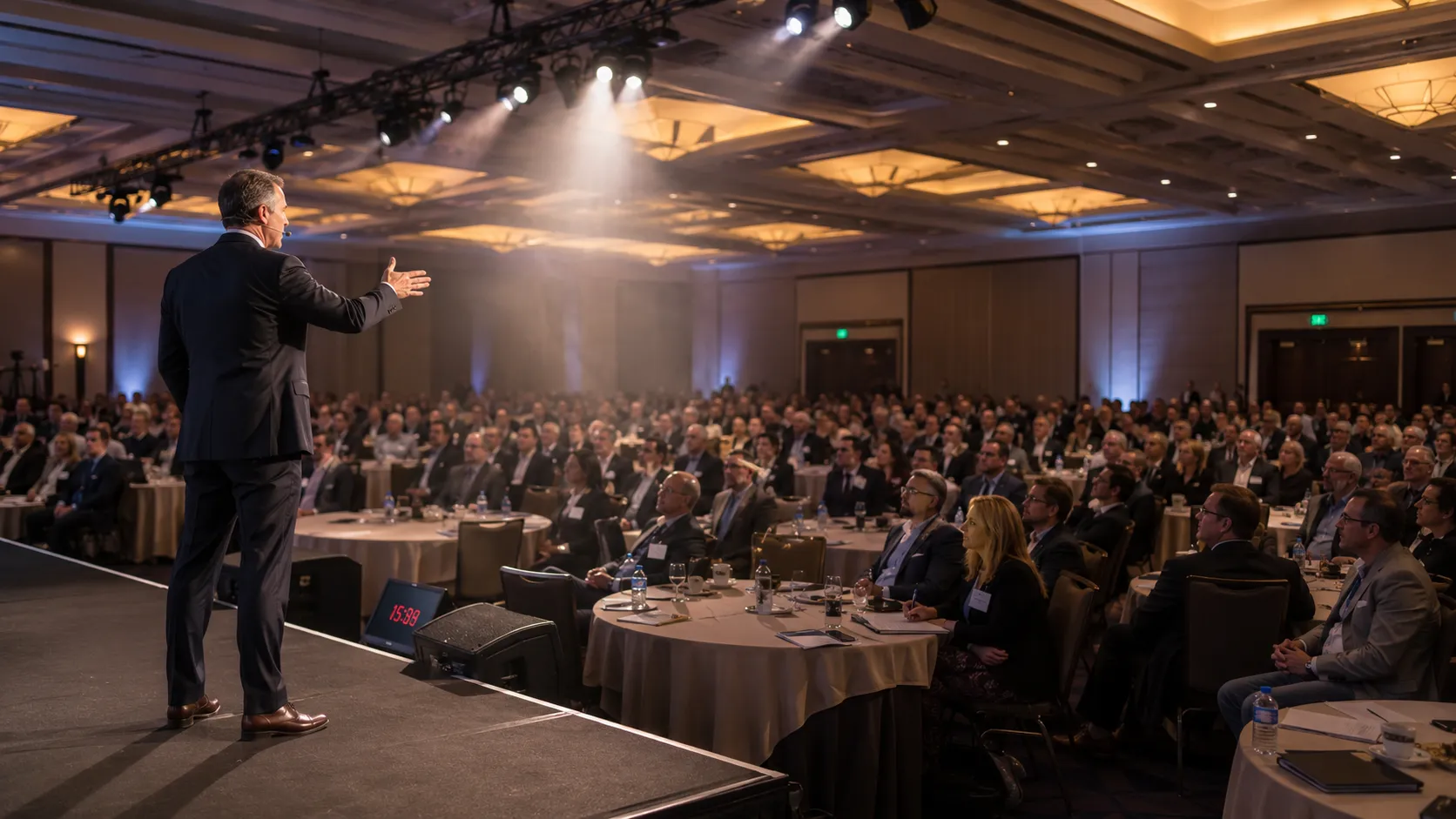
Top AI Keynote Speakers for Professional Services and Consulting Firms
About
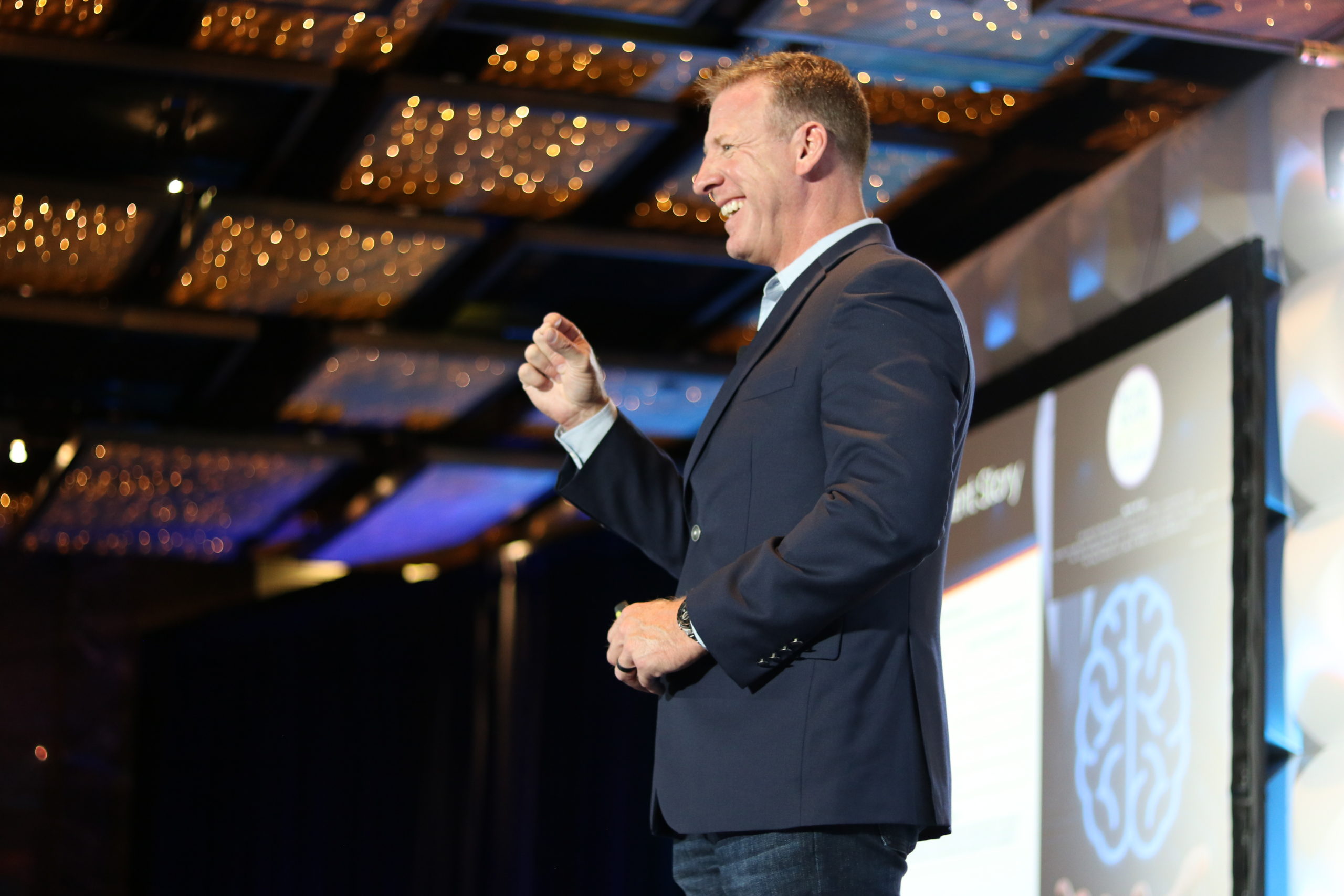
Jeff Bloomfield is a keynote speaker, Wall Street Journal bestselling author, and the founder of Braintrust. He has spent over 20 years helping Fortune 500 sales teams rewire how they communicate, using the neuroscience of trust, decision-making, and buyer behavior to drive results that training alone rarely produces. He speaks at corporate events, executive summits, and sales kickoffs across life sciences, financial services, software, and technology.
Experience Highlights
- 500+ keynotes delivered to Fortune 500 and association audiences
- Wall Street Journal bestselling author
- Former biotech executive who led launches for genetic cancer therapies
- 20+ years of Fortune 500 experience
- Founder of Braintrust
Areas of Expertise
Every professional services firm sells the same product: judgment. Clients pay for a partner's read on a merger, a tax position, a restructuring. That is why the search for the best AI keynote speakers for professional services firms plays out differently than it does inside a manufacturer. AI does not threaten a step in your workflow. It threatens the thing you invoice for, and every associate and staff accountant in the room already suspects it. The right keynote replaces that anxiety with a clear answer about where human judgment still wins.
Why Professional Services Firms Need a Different Kind of AI Keynote
Most industries treat AI as a workflow question. Professional services firms cannot. A manufacturer automates a process and still sells the product. A firm that automates the analysis has automated the product.
That creates a problem no other vertical has in the same shape. The tasks AI handles best inside a firm are the tasks that have always trained the next generation. First-pass document review. Reconciliation. The initial draft of the deck. Precedent research. Nobody did that work because it was valuable in itself. They did it because ten thousand repetitions is how a person learns to notice the thing that is off.
Call it the apprenticeship gap: the widening distance between the judgment a firm needs its people to have and the volume of routine work that used to produce it. Automate the bottom of the pyramid and you improve this quarter's realization rate while quietly defunding the next decade's partner bench.
So the real question here is not how to adopt AI. It is two harder ones. How do we still develop expert judgment when the work that built it is automated? And how do we keep clients trusting advice they suspect a model could have drafted?
A senior manager who doubts her value is not worried about losing a task. She is worried about whether the thing she spent a career becoming still exists.
The Partnership Problem: You Are Persuading Owners, Not Informing Employees
The second wrinkle should change how you brief whoever you book.
In most organizations a keynote informs employees while a separate conversation persuades executives. In a partnership those are the same audience. Partners are owners. They control the P&L, vote on the technology budget, and absorb the cost of any investment that will not pay back before they retire.
Three things follow. Your speaker has to make the economic case and the human case in one talk. They have to respect the intelligence in the room, because condescension in front of partners ends a keynote in about ninety seconds. And they need to handle succession, because the partner two years from retirement and the one twelve years out hear different talks.
How This List Is Organized
This is not a ranking. The right speaker is a function of the problem sitting in your room. So the list is organized by problem solved. Find your situation, then read the profiles that fit.
| Speaker Profile | Problem It Solves | Outcome for the Room |
|---|---|---|
| The structural futurist | Leaders assume the profession survives unchanged | A sober view of expertise |
| The economist | Partners want evidence before funding anything | Data they can defend upward |
| The judgment and trust specialist | Relevance anxiety, and clients questioning advice | Where judgment wins, plus language for Monday |
| The learning culture researcher | Associates hide AI use and mistakes | Permission to test and report honestly |
| The simplification provocateur | Bloat means AI accelerates busywork | A shorter list of things to stop |
| The leadership amplifier | Senior people hoard judgment | Habits that grow capability in others |
| The operator at scale | Owners doubt anyone has done this | Credibility from someone who ran it |
| The talent and pipeline voice | The junior development path is disappearing | A rebuilt view of sponsorship |
| The rethinking psychologist | Experts dismiss AI or over-trust it | Updating conclusions without losing conviction |
| The business model challenger | Efficiency punishes hourly billing | Honest debate about pricing |
Richard Susskind: The Structural Future of Professional Work
Richard Susskind is among the most cited authors on the future of legal services and co-authored The Future of the Professions with Daniel Susskind. His argument: professions exist to distribute expertise, and technology changes that distribution whether or not incumbents cooperate. He has advised firms, courts, and governments through the shift for decades.
Who he fits: bar associations, legal conferences, and strategy retreats that need the long view rather than a tools demo. Format: research-led presentation and moderated conversation.
Erik Brynjolfsson: The Economics Partners Will Argue With
Erik Brynjolfsson directs the Stanford Digital Economy Lab and co-authored The Second Machine Age with Andrew McAfee. He works in terms of task-level automation, analyzing which activities inside a job change rather than whether the whole job disappears. For a firm redesigning staffing models, that is the useful lens.
Who he fits: consultancies advising clients on AI economics, and partner meetings whose real objection is a request for evidence. Format: data-forward keynote with Q&A.
Jeff Bloomfield: Human Judgment, Client Trust, and the Skills That Survive
Jeff Bloomfield is a Wall Street Journal bestselling author, founder of Braintrust, and a former biotech executive who led commercial launches for genetic cancer therapies. He has delivered more than 500 keynotes and works from behavioral neuroscience rather than technology forecasting, which is why firms book him for the two questions this audience cares about: how expert judgment gets built, and how trust gets earned when the client can draft the first version alone.
His flagship AI keynote, The Human Brain in the Age of AI, sits alongside AI, Judgment & Decision-Making and The Skills That Survive Automation. Jeff's applied frameworks, NeuroSelling® and NeuroCoaching®, come out of the same research on how the brain builds trust and commits to new behavior, which gives partners something concrete to do with the insight.
In his own words: professional services audiences are the most honest rooms I work in. Nobody pretends this is only an efficiency story. A partner will tell me in the hallway that her third-year associates produce better memos than she did at that stage and understand them less well. That is the actual problem. So I spend my time on the mechanics of judgment: what the brain does when an expert notices something is off, and how a firm rebuilds those reps on purpose once the daily work stops supplying them.
Who he fits: partner retreats and annual conferences across consulting, accounting, insurance, and advisory organizations, including audiences at Deloitte & Touche, Gartner, Risk Strategies, and USI Insurance. His style has been described as equal parts TED Talk, church revival, and locker room halftime speech, and 100% of his talks are custom-built, with a pre-event customization call in every booking. Format: 45 to 60 minute keynote, half-day workshop, or virtual session. More on his AI keynote speaker page and his leadership keynote page.
"Jeff's passion shines through and he has the perfect balance of instruction and engagement with the audience. His message was very impactful to our team."
— Natalie Martini, Partner, Deloitte & Touche LLP
Amy Edmondson: Safety to Admit What People Already Do
Amy Edmondson is a Harvard Business School professor who introduced psychological safety, later writing The Fearless Organization and Right Kind of Wrong. Psychological safety is a shared belief that a team is safe for interpersonal risk-taking, which is missing in firms where associates quietly use AI and cannot verify the output.
Who she fits: firms whose AI policy is followed on paper and ignored in practice, plus audit and risk audiences where an unreported error becomes a claim. Format: research keynote plus leadership workshop.
Lisa Bodell: Kill the Complexity Before You Automate It
Lisa Bodell founded FutureThink and wrote Kill the Company and Why Simple Wins. She targets the accumulated process, approval layers, and busywork that consume professional time, and it applies directly to AI: automate a bloated process and you produce bloat faster.
Who she fits: firms heading into a rollout that never audited what they should stop doing, plus operations and practice management audiences. Format: interactive keynote that ends in a decision list.
Liz Wiseman: Getting Senior Judgment Out of Senior Heads
Liz Wiseman wrote Multipliers, Rookie Smarts, and Impact Players, and her research examines why some leaders amplify the intelligence around them while others diminish it. The question sharpens when AI supplies answers instantly, because a leader who just hands over conclusions competes with a faster tool.
Who she fits: firms with a bottleneck at the senior manager level, and programs shortening the path to independent judgment. Format: keynote with assessment-based follow-through.
Ginni Rometty: The Operator Credibility Owners Respond To
Ginni Rometty is the former chairman and CEO of IBM, where she led the Watson era and the pivot into enterprise AI, and she wrote Good Power. Her value with owner-operator audiences: she personally carried the cost, timeline, and internal resistance of a large AI bet.
Who she fits: partner audiences, boards, and committees whose unspoken objection is that nobody present has seen this work at scale. Format: fireside chat more often than standing keynote.
Carla Harris: Rebuilding the Path Junior Professionals Used to Climb
Carla Harris is a former vice chairman at Morgan Stanley and the author of Expect to Win and Strategize to Win. Her material covers sponsorship, performance currency, and how careers get built inside demanding firms. Sponsorship is not mentorship: a mentor advises you privately, while a sponsor spends political capital on your behalf in rooms you are not in.
Who she fits: firms staring at a thinning associate pipeline, and conferences asking who gets the shrinking pool of developmental work. Format: high-energy keynote or fireside.
Adam Grant: How Experts Update Without Losing Conviction
Adam Grant is an organizational psychologist at Wharton and the author of Think Again, Originals, and Hidden Potential. His most relevant work here concerns rethinking: how confident experts revise conclusions, and why expertise can make someone slower to change their mind.
Who he fits: firms split between senior professionals dismissing AI and juniors trusting it completely. Both failures share one root cause, a reluctance to hold conclusions loosely. Format: keynote plus moderated Q&A.
Ron Baker: The Uncomfortable Conversation About Billing
Ron Baker founded the VeraSage Institute and has spent his career arguing that the billable hour misprices professional work. That argument moves from philosophical to urgent the moment AI compresses the hours, because a firm that bills for time and then halves the time has engineered its own revenue decline.
Who he fits: accounting and advisory owner summits where pricing is genuinely on the table. Format: provocation-style keynote, often paired with a pricing workshop. Book him when leadership is ready to argue.
Matching Your Firm's Situation to the Right Speaker Profile
Most booking mistakes come from choosing for the topic instead of for the room. Use the situation, not the vertical.
| Your Firm's Situation | What the Room Needs to Hear | Profiles to Shortlist |
|---|---|---|
| Law firm, associates fear review work is gone | Where legal judgment still compounds | Judgment and trust specialist, structural futurist |
| National accounting firm, partner retreat | Economics plus the succession consequence | Judgment and trust specialist, business model challenger |
| Boutique strategy consultancy | Differentiating advice a model can draft | Judgment and trust specialist, rethinking psychologist |
| Mid-market firm moving into advisory work | Client conversation skill and pricing courage | Business model challenger, judgment specialist |
| Global consultancy advising clients on AI | Defensible economic framing | Economist, structural futurist |
| Firm recovering from a stalled rollout | Why adoption stalls at the human layer | Judgment specialist, learning culture researcher |
| Succession cliff inside five years | How judgment transfers on purpose | Leadership amplifier, talent and pipeline voice |
| AI use is quiet and unreported | Safety to disclose, test, and correct | Learning culture researcher |
A Five-Step Framework for Choosing Your Speaker
- Name the decision the keynote is supposed to unlock. Not the theme. The decision. A technology budget, a training model, and a repriced engagement call for different speakers.
- Decide whether the room needs permission or pressure. Anxious audiences need permission to see a future for themselves. Complacent partner groups need pressure.
- Confirm the speaker will address billing. A talk that avoids how the firm makes money reads as naive to the people who control the budget.
- Ask what happens Monday morning. Request the specific behaviors or frameworks attendees take with them. If the answer is inspiration, keep looking.
- Test for customization, not just credentials. Ask what the speaker wants to know beforehand, whether they will interview partners, and how the content shifts for a legal audience versus an accounting one.
Briefing and Format Notes for Firm Events
Lead time matters more here than in most verticals. The right fit for a partner retreat is often booked twelve to eighteen months out, and partner interviews take time to schedule around client work. Research consistently shows that customization drives attendee ratings, and customization requires access.
When I prepare a firm event, the most useful thing a planning committee gives me is one genuinely skeptical partner, because that person tells me in ten minutes what a survey takes a month to surface. Give your speaker the firm's real language for practice groups and levels, since a keynote that says "employees" to a room of principals loses the room. Then decide between a plenary keynote, practice-group breakouts, or a leadership workshop the next morning, because that choice changes who you book. Jeff's conference keynote page covers how those formats work in practice.
Frequently Asked Questions
Who are the best AI keynote speakers for professional services firms?
They fall into three groups: structural thinkers such as Richard Susskind and economists such as Erik Brynjolfsson, human-side specialists such as Jeff Bloomfield, Amy Edmondson, and Liz Wiseman who address judgment and trust, and business model voices such as Ron Baker who force the pricing conversation. Most firms need the second group, because adoption stalls on human resistance more often than on technology.
What should an AI keynote cover for a law firm audience?
Three things at minimum: what happens to legal judgment when first-pass research and review are automated, how associates still build that judgment without the routine volume, and what changes about client trust and fee structure. Ethics, confidentiality, and verification duties belong in the talk rather than in a footnote. Avoid speakers who spend the hour demonstrating tools your practice technology group knows better.
How do you talk about AI to accounting firm partners without triggering pushback?
Lead with the economics and the succession math instead of the technology. Partners are owners, so any message that reads as spend now and trust us fails immediately. Speakers who succeed here make the cost of inaction concrete and separate what the near-retirement partner needs to hear from what the mid-career partner does.
Is Jeff Bloomfield a good fit for a consulting or professional services audience?
Yes, particularly where the concern is human rather than technical. Jeff is a Wall Street Journal bestselling author and former biotech executive whose AI keynotes focus on judgment, trust, and the skills that survive automation, and he has spoken to audiences at Deloitte & Touche, Gartner, and Risk Strategies. Every talk is custom-built and includes a pre-event customization call. Review his AI speaking topics or read more about his background.
How do we keep training junior professionals if AI does the entry-level work?
The training has to become deliberate rather than incidental. Firms handling this well separate the output from the learning: juniors reason through a problem before seeing the model's version, then compare and defend the difference. Jeff Bloomfield's AI, Judgment & Decision-Making keynote argues that pattern recognition requires productive struggle and cannot be installed by reading a finished answer.
How far in advance should we book an AI keynote speaker for a partner retreat?
For a marquee name, twelve to eighteen months is realistic, and for most experienced speakers six to nine months works. Build extra runway for customization, since partner interviews get scheduled around client commitments. Inside ninety days, prioritize a real customization process over a bigger name with a fixed talk.
Bring the Right Conversation to Your Firm
If your next partner retreat or annual conference has to address what AI does to judgment, trust, and how your firm develops people, start a conversation with Jeff. Every talk gets built around the decision your firm faces.
Keynote Speaker
Jeff delivers keynotes at sales kickoffs, leadership summits, and corporate conferences — combining neuroscience, storytelling, and real-world selling experience into sessions that move people and stick long after the event ends.
